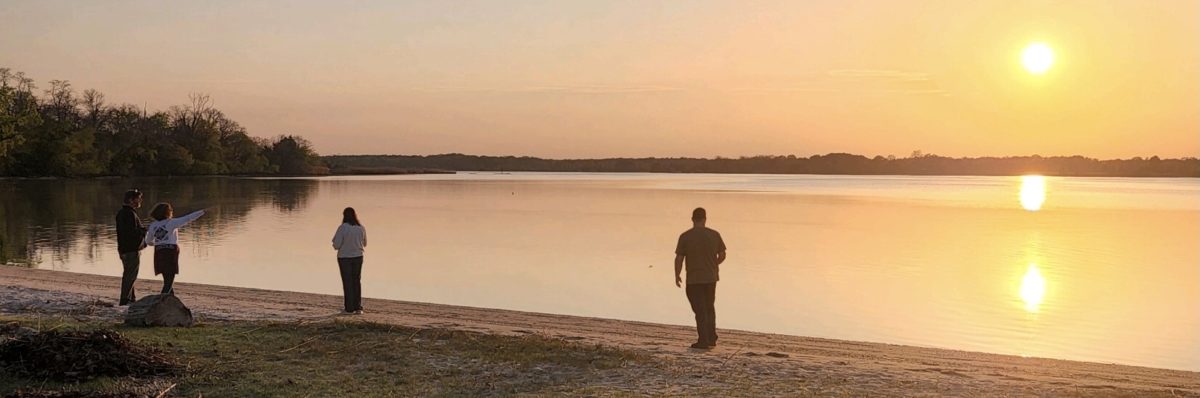
It is Strange to Be Here

John O’Donohue’s book, “Anam Cara,” begins: “It is strange to be here. The mystery never leaves you.”

And that’s maybe as true a statement as we will ever encounter. Take our consciousness, the fact that we are thinking, feeling beings inhabiting bodies, add science, add faith, add civilization, observations–when you sit and think about it, it is strange to be here. There is no way around it.

At Christ Church Easton, we’ve just begun a six-week study of “Anam Cara.” Rev. Susie Leight and I and 20+ curious and daring friends embarked this week on the first section of the book, “The Mystery of Friendship,” and a power-packed prologue to help set the tone.

O’Donohue was a poet, theologian, philosopher, and former Catholic Priest. When I read about him and his life, I am jealous, thinking–that’s it, that’s how I want to live my life. His way of bringing together Celtic spirituality and Christianity infuses life and sacredness into everything we encounter–God, each other, Creation and the landscape we are a part of–in ways that mainstream western Christianity could do well to remember and to look more closely at. Which is part of what we are doing.

“Anam Cara” is a Gaelic expression translatable as “soul friend.” And O’Donohue lets us know that what he hopes to do with his book is to explore friendship in a “lyrical-speculative” form. His writing is a meandering, meditative way through beauty, friendship, the senses, that can leave me stunned and spinning at times.

It is strange to be here. And given that, friendship, reaching out to an other, another person, is maybe the only sensible thing to do, to find other people to walk through life with.

O’Donohue says that:

“Human presence is a creative and turbulent sacrament, a visible sign of invisible grace. Nowhere is there such intimate and frightening access to the mysterium. Friendship is the sweet grace that liberates us to approach, recognize, and inhabit this adventure.”

Thinking of friendship as a grace, as sacramental, puts us in an open frame of mind. In this strange, lonely world putting ourselves out there, finding friendships with other people, is a courageous and necessary act.

As he wanders through the first section of the book, O’Donohue focuses on light.

“Light is the secret presence of the divine. It keeps life awake. Light is a nurturing presence, which calls forth warmth and color in nature. The soul awakens and lives in light. It helps us to glimpse the sacred depths within us. Once human beings began to search for a meaning to life, light became one of the most powerful metaphors to express the eternity and depth of life.”

This week, reflecting on some of our “Anam Cara” reading, Susie used some of O’Donohue’s thoughts on light and darkness in her own musings. She writes:

“Inspired by JOD’s words, I decided to wake up just before dawn a few mornings a week, to watch “how the darkness breaks” and observe how “light can coax the dark” while pondering & praying the question, “I wonder what this will be?”

Many changes are on the horizon (all very good & exciting, but there is anxiety too) & so rather than placing all sorts of expectations around what is next (which is my tendency) I have decided to sit, watch and listen, trying to separate the artificial from the real, what is of God and the Spirit, of the world or my own. the question seems large enough to hold what is and what may be… ‘just as darkness brings rest and release, so the dawn brings awakening and renewal. In our mediocrity and distraction, we forget each day that we are privileged to live in a wondrous universe. Each day, the dawn unveils the mystery of this universe…’

sometimes my camera does stuff without me trying, thought this was a cool shot. more to come.”

That is wonderful. When we read something challenging, we should let it challenge us, inspire us, help us think. If it doesn’t seep into our everyday lives, our hopes, our dreams, our friendships, then why are we studying it together and discussing it?

In “Anam Cara” we are talking about friendship, we are talking about light, and we are talking about love. Anytime we are talking about God, we should be talking about love. God is love, and love is what unites us in friendship. O’Donohue writes:

“Love is the nature of the soul. When we love and allow ourselves to be loved, we begin more and more to inhabit the kingdom of the eternal. Fear changes into courage, emptiness becomes plenitude, and distance becomes intimate.”

Love is what brings us together, what unites us. And coming together as friends to discuss, to be opened up by, a book about the nature of and need for friendship stands out as significant, in and of itself.

O’Donohue closes the section on “The Mystery of Friendship” with a friendship blessing, which is beautiful, profound, and inspiring. I read it out loud to close our first class. I would encourage you to read it out loud as you read it, and I hope that its words and sentiments bless you today and every day. The photo after it is one of Rev. Susie at her ordination to the deaconate earlier this year, along with our dear friend, the deacon Rev. Barbara Coleman. Soul friends in action.

“A Friendship Blessing”
By John O’Donohue

May you be blessed with good friends.
May you learn to be a good friend to yourself.
May you be able to journey to that place in your soul where there is great love, warmth, feeling, and forgiveness.
May this change you.
May it transfigure that which is negative, distant, or cold in you.
May you be brought in to the real passion, kinship, and affinity of belonging.
May you treasure your friends.
May you be good to them and may you be there for them;
may they bring you all the blessings, challenges, truth, and light that you need for your journey.
May you never be isolated.
May you always be in the gentle nest of belonging with your anam cara.

A Sermon in the Books

Prologue

Sunday morning, I walked up to the church about an hour before the 8:00am service. The evening before, I preached a sermon–still a very new-to-me experience–on Luke’s gospel story of Jesus healing a man possessed by demons.

Christ Church Easton has multiple worship services each weekend and Saturday is the most casual. People in the service, priest included, wear regular clothes. I was myself–talking in jeans and a Hawaiian-ish shirt and Vans. On Sundays, those serving are vested/robed. I was on my way inside to get robed up for three Sunday services.

The sunlight was dancing in the garden next to the church and I almost walked by it, feeling like a needed to be on task. And then I thought about being in the moment, for as many moments as we can, and I stopped and walked over. And perched on a flower was a dragonfly, who stayed, and didn’t fly away.

The dragonfly, the sunlight, and the flowers set the tone. Be in the moment.

A little background.

This past year, I became a first-year seminary student discerning a call to the priesthood. I’ve been a full-time church educator for the past five years. Our rector/pastor is giving a co-worker/fellow seminarian and I opportunities to preach, each of us being scheduled one weekend every other month. We have an incredible congregation/community, who are encouraging us.

So there’s that.

In the Episcopal Church, what the readings are each week comes from a common lectionary, which rotates over a three-year cycle. Generally speaking, an Episcopal service on a given weekend anywhere you go, will likely have the same Gospel reading. And if you are preaching, that is the Gospel you want to make sense of for folks in some way.

The reading for my preaching weekend was Luke 8:26-39, the story of Jesus healing the Gerasene demoniac. You know, a story that anyone would be keen to talk about 🙂

But as I thought about the reading during the week, an angle presented itself–talking about why a seemingly dated, archaic reading, which to many people might not seem to be at all relevant, actually matters here and now.

So I set out to look at demon possession through a modern lens. And here is what I came up with.

Personally, I retain more by reading than I do from listening. So the text is below. A friend was able to record the sermon portion of our 10:00am traditional music service, which you can watch here. Bear in mind that this is among the earliest sermons of someone not inclined to speak in front of gatherings of people.

An alternative to being demon possessed

Leading up to today’s reading, in Luke’s Gospel story, Jesus has been walking through cities and towns “proclaiming and bringing the good news of the kingdom of God.”

The crowds are everywhere around him, so much so that when his mother and brothers come to see him, they can’t even get to him.

So Jesus does something that plenty of people on the Eastern Shore can relate to: he gets on a boat.

And he says, “Let’s go over to the other side of the lake.” Jesus falls asleep in the boat, and Luke gives us his account of the storm coming up, the disciples waking Jesus and Jesus calming the storm. The disciples are blown away that he can even command the wind and the waves.

So in our reading for today this boat ride takes them to the country of the Gerasenes. Jesus has gone over to the other side of the lake to get away from the crowds. And as soon as he steps on land, a man with demons meets him.

The funny thing, reading about the demon-possessed people in Scripture is that I think we dismiss these stories. Because we don’t talk like that anymore. Most of us aren’t worried about demons when we go into the grocery store or walk across town. So we say, okay, this story doesn’t apply to me. It’s not relevant.

Let’s think for a bit on this man and his demons. Here is a guy who is not in his right mind. His mind has been taken over by so many demons, they identify themselves as “Legion.” Here is a man on the opposite side of the lake from Galilee, meaning he is a gentile, not Jewish, which we further see by the fact that there are pigs around, which anyone Jewish wouldn’t have had. But what this area did have in common with Galilee, Jerusalem, the whole region, is that it had been taken over by Rome. And legions of Roman soldiers. So here is a man whose people had been conquered by foreign powers, and whose lives would have been affected accordingly. We might say that he was dealing with the spirit of the times.

Do we feel like the spirit of the times, of our times, might take over our minds sometimes? As Fr. Bill mentioned last week, do we feel like an unholy trinity of fear, leading to anger, leading to violence might carry us away with it sometimes?

Social media offers us more than a peek inside something like this. I have seen people who I know to be loving, caring, do anything for anyone people, say things on social media that certainly point to something taking over their minds and hearts—things full of blame and hate and anger and fear. Those are things, especially when they take over people who are otherwise loving and giving and caring, that lead us nowhere we want to go. And I get it, I feel those things too, I can be overcome with thoughts and feelings I don’t know where they came from and I wish they weren’t there.

We have dear friends and brothers and sisters at Christ Church who have shared their addiction stories and their journeys in recovery. Addiction is a disease that takes over someone, in a way that someone in Jesus’s time might well have described as demon possessed.

And when we look around the country at a new mass shooting each week, now including St. Stephens Episcopal Church in Alabama—it is not hard to make the case that we have people, here and now, who are not in their right minds; we are struggling and trying to understand and to help people through mental health crises, to help them know that they are loved and valued, at times when they are having trouble finding themselves.

We can see all around us that there are forces at work that have nothing to do with love, grace, forgiveness, or God.

All of this is to say, when we run into the demon possessed in Scripture, don’t be so quick to dismiss these stories—they still happen today, to us, just as much—with things taking over the way we think, feel, and act—which cause us to act in ways we normally wouldn’t.

And so in today’s reading, what do we see immediately with Jesus: these demons know him, and know that he has authority over them. They know he can get rid of them. Which he does and puts this man back into his right mind. And that is a great line, I think, when the people came out to see what happened, “they found the man from whom the demons had gone sitting at the feet of Jesus, clothed and in his right mind.”

And then there is one of the most curious, interesting lines. Seeing this guy back in his right mind, how did this make the people feel? “They were afraid.”

Let’s circle back to our times. If we know that love conquers all; if somewhere in our hearts, we know we could live differently, be more loving, but we would have to put down this armor, this way of seeing and being that we’ve become accustomed to… if we were asked to stop blaming people we disagree with, if we were asked to love our neighbor who lives differently or votes differently than we do: would we? If we are asked to love and forgive and do something about the state of the world around us—will we?

If we get so used to looking at the world through certain lenses, taking those lenses off, and trying on a different way of seeing, of living, can be scary. It requires us to change. It asks something of us.

So into this demon-possessed way of being, Jesus comes, and frees this man from the legion of things that cloud his heart and mind. Jesus, with power and authority, gives him, and gives us, an alternative way to be. A different way of seeing things and being in the world.

Jesus restores the man who was possessed by demons. And in the next chapter of Luke’s Gospel, we see Jesus calling the twelve together and giving them power and authority over all demons and to cure diseases and sending them out.

We are called to be disciples of Jesus, right? I am going to speak for probably most of us, when I say I don’t know how well equipped I am for casting out demons and healing the sick. But there is some good news for those of us who don’t feel up to those tasks. And this season of Pentecost gives us a clue: He hasn’t left us alone to do this kind of work. He has sent us the Holy Spirit as our advocate, as our comforter, as our helper. We are never alone, especially when we are doing the work that God has given us to do.

A number of us have begun a three-week study of former Archbishop of Canterbury, Rowan Williams’ book “Being Disciples.” And at the end of the first chapter, Williams has this profound thing to say about discipleship. He says:

“A disciple is, as we have seen, simply a learner; and this, ultimately, is what the disciple learns: how to be a place in the world where the act of God can come alive.”

We are learning how to be a place in the world where the act of God can come alive.

No pressure, right?

Let me tell you a quick story. Over the past month and a half, I have taken 20 minutes each morning for centering prayer. What that is, at base, is breathing, clearing my mind, and being in the presence of God. One of the ways I try to keep that focus is when I breath in, I think about breathing in God’s love. And that makes me smile. And when I breathe out, I think about filtering God’s love through me, and breathing out compassion, empathy, and love for others. And if I sit with that for a minute, and wrap my mind around spending more time breathing love into the world, than I do fear, or hate, or anger, that should certainly change how I act, how I see other people, and how I treat others.

This is maybe the exact opposite of demon possession. Instead of taking in all these things of the world that keep us from God, I try to take in, to dwell on, to feel God’s love and grace.

I’m not saying that centering prayer is the answer to evil in the world. But let’s ask ourselves, what are those things we can do to help us focus on God, on love, on healing and forgiveness, rather than the different forces at work that want to keep us from the power of God’s love.

Rowan Williams has a few suggestions as to things that can help. He says: 1) attending to Scripture, following the Gospels so we can better understand this life we are called to live. 2) He says coming together to worship, to baptize, to celebrate Communion together and to welcome others to do the same. 3) And he says looking to the lives of others around us that help us to have faith. We need each other for that, to help us focus on God.

And so what if all of us who think of ourselves as Christians spent even a little time each day trying to focus on God’s gifts for us; on God’s grace and his love, in whatever ways we find most nourishing.

And then what if, by our breath, by our thoughts, by our actions, we tried to put more love into the world—taking in God’s love for us—and putting that love, in our own special and unique ways, into our community, into our world. Would that make a difference? And if it would, are we willing to put the time in, to put the work in, to do it?

We are called to be those people. We are called to be that community. We are called to further this work.

Today’s story of a demon-possessed man should resonate with us in today’s world, if we use the language of our time. And Jesus having the power to heal, to drive out the demons that tormented this man, and many others, is still as true today as it was then.

The world we live in is a frightening and heart-breaking place too much of the time. Helping to set it right, helping to be places where the acts of God can happen in the world is the work we have been given to do.

But we don’t do it alone. We have each other, and we have the Holy Spirit. And that is enough.

Amen.

Oh, also. It helps to wear your preaching Vans.

Morning Snapshots

Eastern Bluebirds are flying in front of and behind me as I skate onto the Oxford Conservation Park loop. I’ve had their shade of blue and orange in my head since I first saw a bluebird years ago and they still quicken my heart.

It is a Saturday with nothing on the morning calendar and temperatures looking to move into the mid-90s. This early though, there is a breeze and it’s perfect sitting outside weather.

Books frequently open my mind and expand my worldview. The path I am walking (or skating) I owe in part to a Trappist monk named Thomas Merton. Recently I’ve encountered another Trappist monk Thomas, Thomas Keating.

“Grace is a participation in the Divine nature, it’s not just something added on like an overcoat. It’s a radical transformation of the whole of human nature so that it can be a divine human being, meaning it can exercise freedom, compassion, love…”

Fr. Thomas Keating

From reading his books to watching the documentary, “A Rising Tide of Silence,” Keating and a former student of his, an Episcopal priest named Cynthia Bourgeault, have pointed me to the practice of centering prayer. I’ve made this type of silent prayer part of my mornings for the past month or so, and I hope to keep it in my daily routine.

This morning, I want to go outside, to make this time under my sitting tree. After my bluebird greeting, I have a deer run across the cemetery loop about 10 feet in front of me.

I’m traveling light, just a notebook, pen, and binoculars, and I sit on my skateboard on the shoreline looking out onto the cove.

For centering prayer, they recommend picking a word that can bring you back to the moment, Bourgeault describes the word as being like windshield wipers to wipe away the thoughts that always jump in the way for attention. The word I have been using is “rest.” In Matthew’s Gospel, Jesus says, “Come to me, all you who are weary and burdened, and I will give you rest.” (Matthew 11:28). Psalm 37:7 says “Rest in the Lord,” which can also be translated as “Be still in the Lord,” meaning be at peace. I find that to be the right approach and mindset for me.

Sitting by the water, I breathe and close my eyes. A breeze is across my skin and in my ears like a conversation and listening, there is a constant concert of songbird voices. I can hear a fish jump in front of me to the left, and I open my eyes to see the rings it left–a cardinal flies low over the water, like it’s his cue to go on. The ascending sun reflects off the water to the right.

I am new to centering prayer, but even with my limited experience, I find that when I let my passing thoughts go, it gives me an opportunity to be closer to God. Keating’s quote that grace is for us a chance to participate in the work God is doing in the world and the love He has for us and for creation. And I can feel that this morning. And sitting alongside a cemetery, where my grandparents, family, and friends are buried, remembering and feeling them, I feel re-connected over and through time, like we are all sharing these remarkable moments.

Keating writes:

“When the presence of God emerges from our inmost being into our faculties, whether we walk down the street or drink a cup of soup, divine life is pouring into the world.”

For most of my life, this kind of quiet prayer time, these morning moments and experiences have been solo endeavors, an introvert’s delight. And I still need plenty of those. But I also find that I can be around people and still be at peace; I can even delight in what other people are doing. Like Keating says, walking down the street, or having a cup of coffee (too early for soup), I want to take those moments with me into the world, to be a part of that divine life pouring into the world . And I am not ready for the next phase of the day to start, so I head to the Oxford Park.

I stop through Oxford Social, the cafe right next to the park, for the first time. A birding friend from my Oxford Community Center days gets in line and we talk birds a bit, and about Third Haven Quaker Meeting House, and about seminary. I walk down to a bench by the river and sit with coffee, the view, conversations off to my right, kids playing on the swings to my left, and a young boy running with his dog.

I pick up John O’Donohue‘s book “Anam Cara,” a favorite book, which Rev. Susie Leight and I will be leading a book study of starting in July, and I come across this:

“Love is absolutely vital for a human life. For love alone can awaken what is divine with in you. In love, you grow and come to your self. When you learn to love and to let yourself be loved, you come home to the hearth of your own spirit… Love begins with paying attention to others, with an act of gracious self-forgetting. This is the condition in which we grow.”

John O’Donohue, “Anam Cara”

And it’s this openness, this paying attention to others, this self-forgetting, letting go of ourselves, letting go of myself, where I seem to be spending a lot of my time of late. O’Donohue continues:

“Once the soul awakens, the search begins and you can never go back. From then on, you inflamed with a special longing that will never again let you linger in the lowlands of complacency and partial fulfillment. The eternal makes you urgent.”

Maybe this has been a slow build over the last 50 years. Maybe all those different moments I can look back on and feel sitting here now, have all been hints and flickers, breadcrumbs or candles of encouragement. And each epiphany adds to a longing, pushes further into the search. Maybe with the state of the world, the worry, the suffering, the confusion, the time is coming that we need to look at differently and help others do the same; we need to live differently and help others do the same.

Maybe when we have moments of sitting quietly and emptying ourselves out, what’s there that we connect to, is Love (God is Love). And what could be more important to share with each other?

Sediment, Tents, Hot Dogs and the Holy Spirit

Shake a snow globe full of sediment and you’ll have to wait a while for the sediment to settle. Only then can you see through it. Clarity comes from letting the sediment settle. Now think of the sediment as all the demands and distractions in our daily lives–and there is always something or someone shaking our snow globes.

The weekend retreat during The Alpha Course is designed to help us settle, unwind, and unplug so we can plug into something that will recharge us. It’s a time to connect with the Holy Spirit and with each other.

Five years to the weekend after Christ Church Easton‘s first Alpha retreat, we took a group of more than 20 people to Pecometh’s Riverside Retreat Center outside Centreville, MD, for a weekend to reconnect. The weather was in the 70s during the days, the night skies were starry and clear, and the waterfront campus is full of trails, woods, and structures to get you dialed-in to creation.

Saturday morning, we had a group gathered on benches outside by the river for morning prayer. We read from Padraig O’Tuama‘s “Daily Prayers,” in which we pray, in part:

We resolve to live life in its fullness:
We will welcome the people who’ll be a part of this day.
We will greet God in the ordinary and hidden moments.
We will live the life we are living.

We set our intention to be present, open, and to appreciate one another and our lives.

Weekends like this are about moments; they are about relationships; they are about laughter and tears from being overfilled; they are made up of sharing meals, of taking hikes and walks or going skateboarding; they are built around small group discussions and big questions and shared experiences and being vulnerable.

The Alpha Weekend five years ago is the first time I reflected on advice that St. Paul gave in his letter to the Romans where he said:

“Do not be conformed to the pattern of this world, but be transformed by the renewing of your mind.”

Romans 12:2 (NIV)

In a world that wants us to conform, we are encouraged to live differently. In a series of videos over the weekend, we meet Jackie Pullinger, a missionary who went from England to Hong Kong more than 50 years ago, who has worked to help prostitutes, gang members, and the poor. She has done amazing work and points out that what we need to spread God’s love in the world are “soft hearts and hard feet.” And she says that maybe the only way our hearts soften is by being broken.

An Alpha Weekend is about relationships and downtime and making memories, including the debut of a non-existent band called “Skater Dads.” It’s skipping stones at sunset and exploring the campus for the camp’s famed outdoor chapel.

The Alpha Weekend is about sitting around a campfire singing songs, roasting marshmallows and hot dogs and being awestruck when someone reaches their hand into the fire to successfully rescue a fallen hot dog and comes out unburned (don’t try this at home or around a youth director) ; it’s about feeling seen simply by someone noticing that you are almost done cooking your hot dog and being asking if you want a bun.

It’s what happens when a group of people gather in a beautiful place for the sacred purpose of being together, worshipping God, and being open to the Holy Spirit.

Sunday morning, the ending of such a powerful and peaceful weekend, the big feelings were about not wanting the weekend to end. A conversation made me think about the transfiguration of Jesus on the mountaintop, this absolutely incredible experience of Jesus, Elijah, and Moses, and Peter’s immediate response is to build tents–“Master, it is good for us to be here; let us make three dwellings” (Luke 9:33)–he wants to stay in that moment, he wants to keep it going, just like each of us wanted the weekend to keep going. But Jesus knew differently. He knew that as incredible as those experiences are, it is not about building tents and trying to hold the moment–it is about carrying the moment back into the real world, because we have work to do. We have to spread that Holy Spirit experience. I mentioned all this to our collected groups. Which gave Rev. Susie Leight an idea.

Susie expounded on the theme of leaving, going back to the world, by opening our Sunday morning worship service with a blessing/prayer from Jan Richardson:

Dazzling

A Blessing for Transfiguration Sunday

“Believe me, I know how tempting it is to remain inside this blessing, to linger where everything is dazzling and clear. We could build walls around this blessing, put a roof over it. We could bring in a table, chairs, have the most amazing meals. We could make a home. We could stay. But this blessing is built for leaving. This blessing is made for coming down the mountain. This blessing wants to be in motion, to travel with you as you return to level ground. It will seem strange how quiet this blessing becomes when it returns to earth. It is not shy. It is not afraid. It simply knows how to bide its time, to watch and wait, to discern and pray until the moment comes when it will reveal everything it knows, when it will shine forth with all it has seen, when it will dazzle with the unforgettable light you have carried all this way.”

This weekend was a blessing made for coming down the mountain, back into the world; it was an experience, it was moments, it was deepened relationships. It is a blessing for us to share with those we meet, with those who are a part of our days.

There’s Nothing As Whole As a Broken Heart

“There’s nothing as whole as a broken heart.” I read that sentence and just stopped. And sat. And let it wash over me. We have two different small groups reading Rachel Held Evans’ book “Wholehearted Faith,” during Lent at Christ Church Easton.

In a chapter titled “Where Stone Becomes Flesh,” she quotes Ezekiel:

“A new heart I will give you, and a new spirit I will put within you; and I will remove from your body the heart of stone and give you a heart of flesh.” (Ezekiel 36:26)

If there is anything we need in the world today, it’s to be able to cast off our hard hearts and start working and living with hearts of flesh.

Evans explains it further. She quotes Rabbi Ariel Burger from an interview.

“There’s a Hasidic teaching, from Rebbe Nachman of Breslow: ‘There’s nothing as whole as a broken heart… In these traditions you cultivate a broken heart, which is very different from depression or sadness. It’s the kind of vulnerability, openness, and acute sensitivity to your own suffering and the suffering of others that becomes an opportunity for connection.”

On Thursday night discussing the chapter, someone read this passage, and then added, “I’ve got a broken heart. And if through that, I could help someone else…”

And that’s it. Right there. When we take what we’ve been through, the hurt, the pain, the suffering, and see it and use it and offer it as a way to help others, then love wins.

That’s part of what we are here for. That’s the work that God has given us to do. To love one another.

Amen.

Connected to God’s Family

The evening before Christmas Eve, two of us were asked by our Rector if we’d be willing to pinch-hit and lead prayer services and give short sermons on December 25 and 26. The 26th was my day. The Gospel reading for the day, which I needed to discuss was John 1:1-18, “In the beginning was the Word.” Not the one I would have picked for a first-ever sermon, but it was the right one. Part of a continually unfolding story.

An 11th hour, first sermon seems like something worth documenting and sharing, so here it is, with a few edits. And a quick note explaining the top photo: A few years back in a class led by Fr. Bill Ortt, he drew two circles–one with arrows all pointing inward, one with arrows all pointing out. And he asked, which circle looks like love?” The one with the arrows pointing out, away from ourselves to others. And (now) Rev. Barbara Coleman put her hands on her head, fingers out, looking like the circle showing apostolic, outgoing love. And her “apostolic antlers” have been a symbol/sign with a number of us since. Her husband John, pictured on the right, led prayers of the people at the end of the service, and Barbara told him he needed to get a picture of the two of us giving the sign. So there it is 🙂

“Connected to God’s Family”
December 26, 2021

Being called to do something is to be invited. It’s always an invitation. Studying Scripture, we learn that there is actually a right answer to being called—“Here I am, Lord.” When you try to make a point to answer, “Here I am,” you find yourself in some situations you aren’t prepared for. Like being asked the night before Christmas Eve services if you would lead morning prayer the day after Christmas. And have something to say about the prologue to John’s Gospel.

And here we are.

So what can we say about the opening of John’s Gospel?

If someone was to make a nativity play out of John’s introduction to the good news, it would not be a hit with families and kids. There are no shepherds, no wise men, no manger. It’s just words. But John is up to something at the beginning of his story that might just give us the most hope in the end.

Each of the four Gospel writers does something different with how they begin their stories.

Matthew gives us Jesus’s family tree, wise men traveling from afar, and does his best to make sure his readers know that this is the guy who is fulfilling prophecy; he is the King of Kings.

Mark skips any kind of birth narrative and gets straight to the story. I like to think of Mark’s storytelling approach as pulling up to the curb, opening the car door and saying, “Get in… Immediately!”

Luke is where we get shepherds and some of Mary’s joyful experience as an expectant mother, and Jesus’s connection to John the Baptist.

John goes back. Way back. To the Beginning. And he does it with incredible poetry. When I first sat down to really study the Gospels, John’s prologue gave me goosebumps. I am a sucker for language, but there is more.

The beginning John takes us back to is Genesis.

When you read Matthew, his genealogy for Jesus goes back to Abraham. Luke traces Jesus’s family tree back to Adam. One of the things John is telling us is that Jesus goes back even further—to the very beginning.

There is a Franciscan friar or monk named Richard Rohr who has written about the “Cosmic Christ.” He points out that Christ is eternal, that he has always been here. And that the incarnational Jesus, when he became human and lived with us in bodily form, happened at a particular time and place. But Christ as part of the Trinity is so much bigger than we can comprehend. And that’s where John takes us.

In our Bible studies, we have found NT Wright to be a wonderful guide for making sense of Scripture. He says this about John:

“that’s the theme of this gospel: if you want to know who the true God is, look long and hard at Jesus… The rest of the passage clusters around this central statement. The one we know as Jesus is identical, it seems, with the Word who was there from the very start, the Word through whom all things were made, the one who contained and contains life and light.”

That’s the goosebumps part of John for me. When I read him, I get that sense of awe, that sense of Jesus as the Word, Jesus as God. And that he has given us that same gift, of knowing God through him.

Do you ever get that sense of being connected to something so much bigger than yourself? There are times when I am watching a sunrise or a sunset; or it could be reading poetry—it actually happens a good bit here at Christ Church, listening to music during a worship service, or finding myself trying to scribble down notes about something Fr. Bill or Fr. Charlie mentions in a sermon. I have a sense, something I know but can’t explain, that I am, that we all are connected to the Divine.

I woke up today and learned that Archbishop Desmond Tutu died yesterday at the age of 90. I have a good friend and mentor that spent part of a semester at sea with Archbishop Tutu and he has such wonderful stories to share from that experience. Desmond Tutu is one of those people who I point to as being a huge inspiration and who has made me look and listen to what a calling in ministry might be. This summer and fall we had an outdoor evening prayer service on Thursdays, one of which fell on Archbishop Tutu’s 90th birthday and we included several of his prayers to honor him.

Tutu spoke to this exact thing, that transcendent feeling of connecting to God in different moments of our lives, if we pay attention. He said:

“We were made to enjoy music, to enjoy beautiful sunsets, to enjoy looking at the billows of the sea and to be thrilled with a rose that is bedecked with dew… Human beings are actually created for the transcendent, for the sublime, for the beautiful, for the truthful… and all of us are given the task of trying to make this world a little more hospitable to these beautiful things.”

These things, these experiences are reminders that we are wired to feel something more than just going through the motions of daily life.

I’ve talked recently about crying at Christ Church—and about how I have cried more in the past five years than maybe any other time. That it’s the kind of crying that comes from your heart being too full, so that something has to come welling up and out. And that welling up comes from being connected—both to God and to each other. That’s part of the package deal about loving God and loving your neighbor.

And that connection is what caring about each other looks like. That caring is love. And that love, that’s what was there in the beginning, that creative force that built and sustains the universe and that built and sustains us.

And that’s what John’s about. And that’s what God’s about. And that’s what we are supposed to be about.

I’ve seen that connecting and caring on full display at this church. We have all seen it in Bruce Richards and the last 18 years—it’s what the (pastoral care) Stephen Ministry is all about. That kind of caring, that kind of loving is what we are here on this earth to do. That’s the gift we are given of this life, the one that goes back to the beginning, goes back to the Word, goes back to Christ.

But it’s not meant to stop inside these walls. It’s meant to go out, apostolically. It’s the work that God has given us to do. And it feels right to end this morning’s message with words from Desmond Tutu to that effect:

“We are made for goodness. We are made for love. We are made for friendliness. We are made for togetherness. We are made for all of the beautiful things that you and I know. We are made to tell the world that there are no outsiders. All are welcome: black, white, red, yellow, rich, poor, educated, not educated, male, female, gay, straight, all, all, all. We all belong to this family, this human family, God’s family.”

Amen.

Companions on the way

If we’re lucky, we don’t do life alone. We have help. On his livestream sermon this week, Fr. Charlie Barton talked about having “companions on the way.” That feels like the right way to think about this past week.

Last Sunday, while in church, I got calls from my cousin and my sister, back to back. Something didn’t seem right, so I stepped outside. Our parents’ house was on fire. My mom made it out and so did her dogs. That was the report I heard before running to my car and driving to Oxford. I learned on the drive that my father was at work.

When I got there, firefighters from Oxford, Trappe, and Easton were actively fighting the fire, neighbors and friends were up and down the street, everyone seeing how they could help. The kitchen and living room were gone, smoke had been pouring out of the house; firefighters had to cut a hole in the roof to fight the fire which had spread into the attic. The cats did not survive the fire.

It was and is surreal. My parents bought that house in the late 1960s, it’s where my sister and I grew up, and all of our family memories have been, and everything my parents own. Displaced doesn’t begin to describe what they are going through.

And all this is the first part of companions on the way. From the firefighters, to the auxiliary, to concerned neighbors and friends, to people at Christ Church reaching out, showing up, bringing food, asking how to help; insurance companies helping with the process of next steps; real estate agents helping them to find a place to live for the the next year–it’s been companions on the way.

The view from the 12th floor at Johns Hopkins Hospital. Hope shining through clouds.

On Monday it was neurosurgery at Johns Hopkins Hospital. For the past few months, Holly has been struggling with Chiari Malformation, where the back of the brain blocks the spinal column. There were maybe three good days in 60+, taking someone who has been in great health and hitting her with vertigo, dizziness, skull-splitting headaches, nausea, no energy, not being able to drive at times. Surgery was the clear answer.

Companions on the way, part two. From family, to work, to friends, to prayer teams, to surgeons, doctors, nurses and medical staff, people showed up, and are showing up, to help, to pray, to bring food, to do what they can. We brought Holly home on Wednesday after a successful surgery, and recovery is underway.

A group of more than 100 bikers rolled up to A.I. DuPont on Saturday morning to drop off toys for kids in the hospital.

Part three. On Thursday, Ava and I made our way to A.I. DuPont Children’s Hospital in Wilmington. Her medicine has not been controlling her seizures this spring/summer and they wanted to keep her for an overnight EEG to monitor what is going on. As we checked in, we met a nurse practitioner who has worked in Easton and who has mutual friends. Talking to her and the neurologist on call this weekend, who is a specialist in pediatric epilepsy, someone who we had hoped to see but who has been scheduled too far out, they quickly asked if we could stay longer so they could cut back her medicine and work with some of her triggers so that they are more likely to be able capture some of her seizures to figure out the best course of action for her–whether surgery or different medications, or what.

So we find ourselves with a longer-than-anticipated stay at A.I. DuPont. We’ve watched the first Harry Potter movie and James Gunn’s new Suicide Squad (thank you HBO Max); Ava has beaten me multiple times at Connect 4 and I partially redeemed myself at Scrabble. She has a mummy headwrap on and the doctor said her EEGs are showing “sparks” (the conditions for/beginning of seizures) all over the place, much more than when we got here. So we wait, and oddly hope for seizures, knowing she is in good hands and that they can give the doctors here information that could hugely help her moving forward.

So that’s Sunday to Sunday this week. At every turn and at every corner, companions on the way have stepped up and made their presence known. Family, friends, and co-workers check in.

And I am carried by gratitude: for my parents both being okay after a devastating fire and for their finding a way forward to what is next; for Holly being able to have surgery to come back to herself and be healthy; for Ava being in great care and now on the radar screens of incredible doctors who have met her, are beginning to know her, and be personally involved in her case.

And for far too many companions on the way for me to name here. I feel frustrated for not being able to be in multiple places, this week especially, but can’t thank enough everyone who is there and helping.

Here to Wonder

Do you ever get to wondering? I seem to spend a lot of time that way, wondering. There is a conversation towards the end of Alice Walker’s novel “The Color Purple,” where Albert gets to wondering:

“You ast yourself one question, it lead to fifteen. I start to wonder why us need love. Why us suffer. Why us black. Why us men and women… It didn’t take long to realize I didn’t hardly know nothing. And that if you ast yourself why you black or a man or a woman or a bush it don’t mean nothing if you don’t ast why you here, period.”

Now we’re getting somewhere. Our lives are often defined by the questions we ask. So let’s ask the big ones, the juicy ones. And the right ones. So why does Albert think we’re here?

“I think us here to wonder, myself. To wonder. To ast. And that in wondering about the big things and asting about the big things, you learn about the little ones, almost by accident. But you never know nothing more about the big things than you start out with. The more I wonder, the more I love.”

Albert, via Alice Walker, “The Color Purple”

The more I wonder, the more I love. Yes to that, and so much more of it.

I wanted to read “The Color Purple” because of a quote; a quote I read and loved immediately; a quote that spoke directly to my soul and I have thought and used and felt so many times since, that I knew I needed to read the book where it came from.

And when I read it in context of the story, it was even better and deeper. Two of the main characters, Celie and Shug Avery are talking about God. And about how God is not an old white man in robes sitting on a throne. And how “God is inside you and inside everybody else. You come into the world with God. But only them that search for it inside find it. And sometimes it just manifest itself even if you not looking, or don’t know what you looking for.” Shug talking. And what a wonderful way to describe the Holy Spirit.

And Celie asks what God looks like, if not an old white man. And Shug says:

“Don’t look like nothing, she say. It’ ain’t a picture show. It ain’t something you can look at apart from anything else, including yourself. I believe that God is everything, say Shug. Everything that is or ever was or ever will be. And when you feel that, and be happy to feel that, you’ve found It.”

Shug says people “come to church to share God, not find God.” And I love that thought and thinking that sharing God is what church is for.

But none of those are the quote that made me want to read the book. Here’s the conversation:

Shug: God love everything you love–and a mess of stuff you don’t. But more than anything else, God love admiration.
Celie: You saying God vain?
Shug: Naw. Not vain, just wanting to share a good thing. I think it pisses God off if you walk by the color purple in a field somewhere and don’t notice it.

And there it is. “I think it pisses God off if you walk by the color purple in a field somewhere and don’t notice it.” That quote has been a part of me since I first read it years ago. It describes how I go through life. God made a flower, a field, a planet, a universe for us to wonder at. To ask about. And the more we wonder, the more we ask, the more we love.

And God made us for each other. He made each of us, to love each other and to love Him. And I don’t and won’t ever claim to speak for God, but it seems in the same way, it pisses Him off when we don’t love each other; when we spew hate and not kindness; when we divide, point fingers, and blame, instead of helping each other up, lifting each other’s spirits, using our gifts and His gifts to connect us to each other and to God.

Celie and Shug keep talking (Celie writing) –

What it do when it pissed off? I ast.
Oh, it make something else. People think that pleasing God is all God care about. But any fool living in the world can see it always trying to please us back.
Yeah? I say.
Yeah, she say. It always making little surprises and springing them on us when we least expect.
You mean it want to be loved, just like the bible say.
Yes, Celie, she say. Everything want to be loved. Us sing and dance, make faces and give flower bouquets, trying to be loved.

Everything wants to be loved. Everyone wants to be loved. God is giving us opportunities–what are we doing with them?

What if we try to notice the color purple? What if we try to see, to really see, and get to know each other? What if we wonder? What if we ask? What if the more we wonder, the more we love.

What does love look like?

It’s hard to know what to say, so I can only speak from my life and experiences. And my life is one of privilege. I haven’t earned the life I live based on my own sweat and effort–I was given a gift of an upbringing and a social and economic status that I had nothing to do with. I try to live up to and into that gift, and I am grateful for it daily. I try to dream and picture what my daughters’ lives might look like, and I know they are only limited by themselves.

When I run through town, I am the maybe overly friendly guy who says good morning or hello to everyone I pass. And I have never gotten weird looks–usually a wave or smile back. People aren’t generally intimidated by or suspect of me at first encounter. Again, none of this has much of anything to do with anything I have done. If my skin were a different color, I’m not sure reactions would be the same.

In my teens and early 20’s, we were troublemakers often enough and had run-ins with police, but I never feared for my life. We live in a small community and over the years, I have come to know more and more police officers as friends, and I know them all to be amazing human beings who help people at an instant. Theirs are friendships I am blessed to have–getting to know the people and not just their jobs. And they have seen me for who I am.

Over the years my heart has hurt and my mind has been jarred by so many events on the news, or listening to others’ experiences of the world. And these stories rise up, make their rounds, and then life goes on. For those not directly affected. But each time, it is only a glimpse; only a flicker. Too many people can change the channel and not have to face something directly.

When people speak up and speak out, they are quickly silenced. Yes, you can protest, but not like that. And no, not like that. Yes, we believe in your right to be heard, but we are watching football right now. How about some other time, some other place, where I can still watch what I want and think how I want and not have to pay attention?

Right now, there is attention. We are not promised tomorrow, so right now is what we have. I can’t know or understand what it is to be black, but I can listen and I can stand.

I am a part of a faith community where I know that people of any race, culture, or religion are welcome, and I consider that a blessing. I have watched our rector befriend a Hindu man who was working in Easton and loved coming to our 5:00pm service. He was happy in his faith, he just loved the music and energy of the service, and it was a beautiful thing.

After the murder of George Floyd and the ensuing protests and riots, the Presiding Bishop of the Episcopal Church, Michael Curry, an African-American man, on Sunday published an op-ed in The Washington Post about choosing love over hate. He also talked about what the path of love might look like in these times:

“Love looks like all of us — people of every race and religion and national origin and political affiliation — standing up and saying “Enough! We can do better than this. We can be better than this.”

“What does love look like? I believe that is what Jesus of Nazareth taught us. It looks like the biblical Good Samaritan, an outsider who spends his time and money healing somebody he doesn’t know or even like.”

There is a way forward through this that looks like love. That looks like the self-sacrificial love that Jesus showed us, taught us, and modeled with his life. And it looks like coming together, in love.

In Bible studies over the past months, we have been studying Paul’s letter to the Ephesians, in which Paul is emphatic about the unity of the church. In his commentary on Chapter 2, scholar and former bishop N.T. Wright says:

“If our churches are still divided in any way along racial or cultural lines, (Paul) would say that our gospel, our very grasp of the meaning of Jesus’ death is called into question. How long will it be before those who claim to follow Jesus, not least those who claim also to love Paul’s thinking, come to terms with the demands he actually makes?”

The way forward in love right now is not about doctrine. If we look at Jesus, when he dealt with the hurting, the sick, the lonely, the disenfranchised–he saw them, he healed them, he loved them, he brought them into the fold. Where Jesus is love, Paul also calls that love into unity.

I don’t know exactly what that looks like yet. But I know I can’t really think or write about anything else with it so large on my heart and mind right now.

In talking about love and faith, Krista Tippett, author and the host of “On Being,” writes:

“Every time I let myself go deeper into the mess and mystery of human loving, I am hit over the head again by theology–an insistence that the love of God is so much fuller than we can usually imagine or take in… I keep pursuing faith, if for no other reason than because it is the place in our common life that keeps reminding me of the necessity of love–not the romantic love of poets, but the practical love of sacred texts–however fraught and imperfect our practice of it may ever and always be… love is not the starting point, but the goal. It is not something we are born knowing how to do, not something we fall into. It is something we spend our whole lives learning.”

That is a love I want to learn to do better. I want to spend my life learning and practicing it. Right now it feels like it starts with listening and with standing.

I hope my daughters figure out time travel

Empty parking lot off Idlewild Avenue. Parking curbs. Concrete. Asphalt. No people, so I pull out my time machine, step on, and the sound of polyurethane on pavement spins back decades. The sound, the vibration under foot, the feeling of cruising carelessly, for no reason except that it’s fun.

What are the things you do regardless of what anyone else thinks? Things you can’t wait to do, that bring you happiness, just by doing them.

Rolling up to a curb, I sit down with a pen, notebook, Mary Oliver’s “Thirst.” I look up.

“Clouds are not only vapor, but shape, mobility, silky sacks of nourishing rain. The pear orchard is not only profit, but a paradise of light. The luna moth, who lives but a few days, sometimes only a few hours, has a pale green wing whose rim is like a musical notation. Have you noticed?”

When Mary O. asks you a question, you do well to consider it. Do I take the time to notice what goes on around me? Really notice? There are everyday miracles, right here on Idlewild Avenue in an empty parking lot on a Sunday afternoon.

Those things that you do for you–how did you figure out what they were? And how long have you been doing them?

When I think back, some of the things I most love doing today, I started in my early teenage years: comic books, skateboarding, writing, reading, running, being on the water, just being outside. And it’s some form of those things that still fill me up a few decades later. Those things maybe as close to time travel as I will get. They connect me to past and future versions of myself. They mark a moment in time, but revisiting them, they create moments outside of time.

I don’t know if my daughters will figure out time travel. I hope they do. I hope they walk the same beaches (and new ones) over decades, and remember when their feet were smaller, their minds saw more colors, and there were fewer distractions. I hope they remember, connect, and see outside of time.

I land in the parking lot again. It’s not supposed to feel this warm in February. The day is a gift. I can hear life in the back yards of Aurora Street. If I get quiet enough I can hear the universe.

“He or she, who loves God, will look most deeply into His works.”

Mary Oliver

Maybe that’s it. We don’t need to stay at the surface. If we look deeper, we can lose ourselves. We find ourselves connected; to our past through memory; to our future through hope; to each other through God, who is Love.