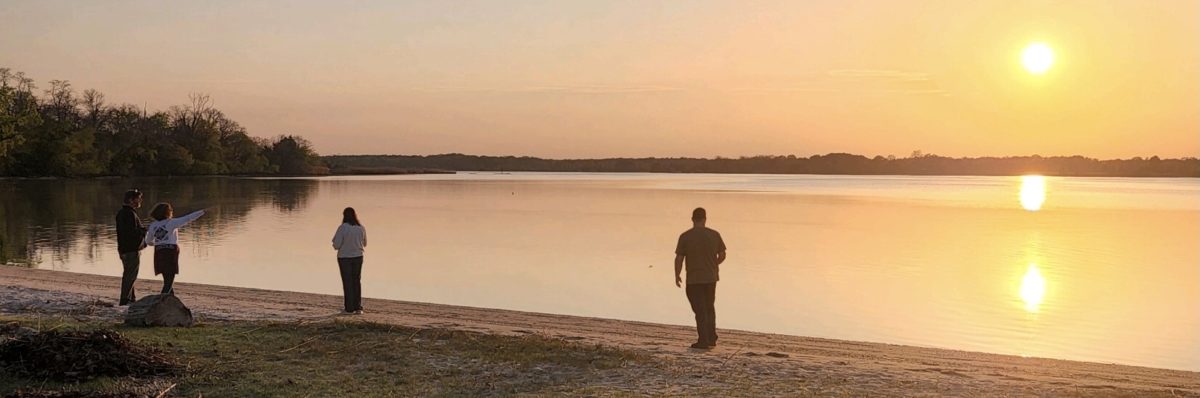
“Barring love I’ll take my life in large doses alone–rivers, forests, fish, grouse, mountains. Dogs.”
People can be difficult. Dogs are different. Dogs bring love to our lives unconditionally and with no questions asked.
Earlier this week, we had to say goodbye to our dog Harper. She was spring-loaded with love and energy; she bounded and leaped in place like Tigger from Winnie the Pooh when her people came to the door.
A growth in her stomach changed her over the last couple weeks, which we hoped might be pancreatitis and tried to treat with our fingers crossed. It wasn’t. When we got home Wednesday night, she couldn’t get off the couch. She was shaking and panting and suffering in constant pain. She let us know it was time.
Harper changed our lives. When life hit the restart button in 2014, I moved into a guest house down a long winding road that had a no pets policy. The family pets stayed with the girls’ mom, and the girls spent equal time with each of us. This was the first time in my life, and theirs, that any of us had lived without pets.
After a year we moved to Oxford into another no pets house. A year later, the girls and I talked and decided our house needed a dog. We weren’t a family without one. Our landlord agreed to a dog, up to 35 pounds.
Through Operation Paws for Homes, we learned about an “Australian Shepherd Mix” who had been found on the streets of Columbia, SC, and who was now being fostered in York, PA. We knew from the picture that she was our dog.
Six-month-old Harper on the drive to her forever family.
I drove to pick her up on June 4, 2016. They guessed she was about six months old. My older daughter Anna wanted to name her Harper after her favorite baseball player, Bryce Harper—when he was still a “good guy” and played for the Washington Nationals 🙂 I told Anna that players don’t often stay with one team, so we need another namesake, which was writer Harper Lee, of “To Kill a Mockingbird” fame.
Harper made our house a home instantly. She zoomed around the fenced in yard, loved walks around Oxford, and enthusiastically greeted dogs and people as they walked by the house. Two years later we moved to Easton and she patrolled the yard; learned to begrudgingly deal with cats, and kept our house safe from walkers and dog walkers in the neighborhood. Harper was a big fan of the pandemic lockdown in 2020–it meant we were always home.
Pandemic walks with the girls were a Harper favorite.
Walks around Tuckahoe State Park, Wye Island, and Easton’s Rails to Trails or Easton Point Park were Harper dreams turned reality. With her herding personality, she stuck close to her people, even in the house, or the writing shed out back, always lying next to one of us, always where the people were.
Seven years ago she met Holly’s black Lab puppy Luna and the two hit it off and loved to play at each other’s houses. We called Harper the “hall monitor,” as she didn’t tolerate off-hand behavior and would tell on Luna if she was trying to get food off the counter, get into the trash, or engage in any behavior that seemed suspicious.
Harper brought unconditional love and unbridled energy and enthusiasm to our lives. Every night, she slept against me, and every 0’Dark:30 alarm clock, she bounded out of bed ahead of me to go out and then curl up for morning coffee, reading, and writing.
I come back to this Milan Kundera quote frequently:
“Dogs are our link to paradise. They don’t know evil or jealousy or discontent. To sit with a dog on a hillside on a glorious afternoon is to be back in Eden, where doing nothing was not boring–it was peace.”
There is a stillness here now, a silence that is not peace, though Harper is at peace. We have loved and been privileged to share life with her. Her presence was her gift. She made us more of a family.
“Coming Down the Mountain (We’re Not Finished Yet)”
This is our last reading before Lent; our last reading for the Season After Epiphany, and it really bookends how we started the season, with the magi searching for and acknowledging Jesus. The transfiguration on the mountaintop is the vision, the revelation to Jesus’s closest friends as to his true identity as the Messiah.
Let’s get ourselves into the scene a bit. Since our last couple readings out of Luke’s Gospel, Jesus has healed people, cast out demons, taught and told parables, calmed a storm, and brought back a girl thought to be dead.
He has called the Twelve together, given them power and authority over all demons and to cure diseases and sent them out to proclaim the Kingdom of God and to heal the sick. And they have gone out and done just as Jesus commanded. They came back to together and were excitedly telling Jesus about all they had done. As they were telling these stories, crowds gathered around Jesus and he welcomed them, taught them, healed them, and then working with the disciples and just a little bit of food, Jesus feeds 5,000 people.
Jesus then goes off by himself to pray, with only the disciples nearby and he asked them, “Who do the crowds say that I am?” And then he asks the disciples straight up, “Who do you say that I am?” And Peter says, “The Messiah of God.”
Hearing Peter’s answer, Jesus says don’t tell anyone. “The Son of Man must undergo great suffering and be rejected and killed and on the third day be raised.” He gives them some more mind-blowing, scandalous sounding teaching, which they can’t possibly make sense of, and then eight days later, Luke tells us, Jesus takes his closest friends, Peter, James, and John, and they go up the mountain to pray.
While Jesus is praying, his three friends have the ultimate epiphany. This isn’t just Peter saying “You are the Messiah,”—this is Jesus with his face changing and his clothes becoming as bright as lightning; Moses and Elijah appearing and talking to Jesus. There is a big difference between saying something and seeing it in miraculous form in front of you.
Peter, James, and John are weighed down with sleep, not sure if this is a dream or really happening. And Peter gives the line that we can all relate to, “Master, it’s good for us to be here; let’s set up three tents.”
A cloud overcomes them and out of the cloud they hear God’s voice saying, “This is my Son, my Chosen, listen to him!”
I feel Peter here. Let’s stay in this moment. What else do we need. We’ve got the law, the prophets, and the Messiah, everything has been revealed, what else can there be? This is the ultimate!
Mountaintop moments. Have you ever had moments like that, where everything makes sense, everything is lined up, all the most amazing feelings—awe and wonder so much that you can barely contain it.
We’ve seen Holy Spirit moments at Alpha Retreats we’ve taken into the hills of the Claggett Center outside DC. Joy, laughter, the good kind of tears overflowing, a sense of community and connection to where no one wants to leave and go back home. We all wanted to stop time and stay in those mountaintop moments.
Wow, do we need those moments. We need those moments, those epiphanies, where we feel connected to God, where our doubts are erased, where darkness and pain are left behind and God’s love in the person of Jesus is as bright as lightning.
But we can’t stay there yet. Just as Jesus had been talking to Moses and Elijah, he had work to do—his exodus, which would be achieved in Jerusalem—was still ahead of him.
It’s back down the mountain. We’re not finished yet.
And no time is wasted, the very next day, a big crowd meets Jesus. A man shouts, “Teacher, I beg you to look at my son. Suddenly a spirit seizes him and all at once he shrieks. It convulses him until he foams at the mouth. It mauls him and will scarcely leave him.”
In all the synoptic accounts of the Transfiguration—in Matthew, Mark, and Luke—coming down the mountain is each timefollowed by the encounter with the father and his child who is seized by demons. In Matthew’s account, the father says instead, “Lord, have mercy on my son, for he has epilepsy and suffers terribly.”
As the father of a daughter with epilepsy, who has seizures, I can tell you exactly what that looks like and how helpless you feel. Something happens to her and it’s not her there in front of me for a while. I don’t mind calling it seized by a demon, though we have a better understanding of it now.
The father tells Jesus that he brought his son to the disciples and they couldn’t cure him. Jesus gets miffed and says, “Bring him here to me,” and he casts the demon out, cures the boy, and gives him back to his father.
It’s interesting to think about: the disciples, who had been sent out to proclaim the kingdom and heal the sick, but couldn’t help the boy—they didn’t go up the mountain with Jesus. They weren’t there for his transfiguration and to hear God confirm his identity. They weren’t there for the mountaintop experience.
Something happened up there that came back down the mountain withJesus and his three friends. This is how former Episcopal Bishop of Alaska, Steven Charleston puts it:
“The Spirit’s vision always takes us down from the mountaintop and out into the world. Our personal relationship with the Spirit opens us up to engage with others. In doing that, we begin with the one thing we all share in common: HOPE. Hope is the catalyst, the tipping point where what we believe becomes what we do.”
They came down the mountain with hope. And when we have our mountaintop experiences, our moments of certainty, our epiphanies—they give us hope that we can hold onto. Hope that lasts through the valleys, through the dark stretches we go through.
Jesus comes back down the mountain because he isn’t finished—there is work to be done. He gives us hope and the Holy Spirit because we are PART of that work. The hope we feel in our hearts is part of the way that His hope gets spread out into the world.
I wish with everything that life were all mountaintop moments. That we could dwell in them, build our tents with Peter and stretch them out. But the Kingdom isn’t the Kingdom until everyone is in it, until it fills the hearts of the poor, the sick, the confused, the outcast. All of us.
Jesus isn’t finished. And so neither are we. We come back down the mountain because the world needs that hope, that epiphany, that encouragement.
We can make the hope of the mountaintop our home on the ground.
Steven Charleston continues:
“When we claim hope for our home—when we make it the guiding energy of our faith—we transition from being scattered individuals who wish things would get better into being active partners with the Spirit, reshaping the balance of life toward mercy, justice, and peace. Hope becomes our goal. Once that hope has been released in the human heart, it cannot be forced back into the darkness. It is spiritually incandescent. The faith which we see penetrates the shadows around us like a searchlight seeking the future. Hope becomes a force that will not be denied.”
Incandescent. Like a searchlight. In the Old Testament reading, Moses came down the mountain with his skin shining because he had been talking to God. With Jesus it was more than that: Jesus’s face BECAME light. He was and is the light.
When we open ourselves to the Spirit, we allowthat same light to shine in us. We can take that light into the world. What a privilege, what an opportunity, and what a challenge when life feels dark.
How do we keep in touch with the light? How can we find it when it seems distant?
We remember. Remember those mountaintop moments. Keep them in your heart.
We pray. We get vulnerable with God and open ourselves so that we can be filled with God’s love and light.
We share our stories, we share our hope, we come together in community.
My story as a father doesn’t have the healing in it that the father in today’s reading has. Yet. The demon of epilepsy is still in my daughter, and it breaks my heart at times.
But I’ve been on the mountaintop. I’ve seen and known that light, that incandescence, bright as lightning. I have hope and the Spirit.
And Jesus is coming down the mountain. He’s not finished yet. And neither are we.
08/06/15 was the date of Ava’s first seizure and the beginning of our lives with epilepsy. She hopes to get a second tattoo of the date where she knows it is behind her.
Background: The lectionary readings for Sunday, February 23 include Genesis 45:3-11, 15, where Joseph is merciful to his brothers who threw him into a pit and sold him into slavery, and Luke 6:27-38, where Jesus tells his disciples to love your enemies, as part of his Sermon on the Plain. This is a quick homily I gave at the Wednesday Healing Service at Christ Church Easton, as these are both readings I think we need to discuss more.
“Living with Mercy and Grace“
Jesus’s teaching today is a continuation of the “Blessings and Woes” or Beatitudes that Patrick talked about last week. Let’s remember that Luke’s version of the Beatitudes is different than the one we find in Matthew’s Gospel, both in nuanced ways and in that Matthew shows Jesus going up a mountain to teach, whereas Luke has Jesus going down to a level place. Matthew’s version is often referred to as the Sermon on the Mount; this speech in Luke is often called the Sermon on the Plain. That’s an intentional setting for Luke, who shows Jesus among the people, not above them, lifting up the poor, and being visited by shepherds, not wise men.
After Jesus has bowled the disciples over by calling the poor, the hungry, and those who weep “blessed,” now he’s gone totally off his rocker telling them to love their enemies, do good to those who hate you, bless those who curse you, and pray for those who abuse you.
If we think Jesus is just speaking theoretically, no, he gives examples: if someone hits you on the cheek, give them the other one too; if someone takes your coat, give them your shirt as well; give to everyone who begs from you; and if anyone takes your stuff, don’t ask for it back.
Then Jesus drops a version of what we call the Golden Rule: “Do to others as you would have them do to you.”
How do you want to be treated? With love? With kindness? Then treat people that way. That’s a teaching we can get behind. We get something out of that, we think about how we want to be treated, which of course is to be treated well.
What about mercy? Hhhmmm… there is something to that. If only we had a case study, an example, something from the Old Testament maybe, to refer to…
Oh wait, we’ve got Joseph and his brothers from our Genesis reading. Joseph’s story is well known, even turned into a musical. Joseph was a dreamer and favored by his father; his brothers were jealous, decided to kill him, thought better of it, threw him into a pit; then got the bright idea to sell him into slavery; they took his robe or coat and put blood all over it and took it to their father, who assumed Joseph had been killed by wild animals.
From being a slave, Joseph works his way up to becoming the Pharoah’s top advisor in Egypt. He is able to see the tough times coming, store up food in times of famine; and in our reading today, his brothers come before him, in need. Joseph has all the power and can do with them whatever he wants. How many Hollywood movies would have this scene being sweet revenge, just retribution. But it’s not.
Joseph is merciful. And then some. The brothers don’t ask for forgiveness, they don’t fall down at his feet. It’s Joseph who initiates it:
“I am your brother, Joseph, whom you sold into Egypt. And now do not be distressed, or angry with yourselves, because you sold me here; for God sent me before you to preserve life… God sent me before you to preserve for you a remnant on earth, and to keep alive for you many survivors”… And he kissed all his brothers and wept upon them.”
It’s okay. You didn’t know what you were doing. But God did. This is where I was supposed to end up, so I could save us. It had nothing to do with how his brothers acted; it had everything to do with who Joseph was and how he acted.
Joseph was merciful. Even when he had every right to get back at them. And he showed mercy in a way that let his brothers save face.
Franciscan and best-selling author Richard Rohr in talking about today’s Gospel reading gives us a thought that connects both readings. He says that Jesus doesn’t forgive in a way that makes him look good and sinners look bad. Jesus doesn’t say look how great I am and how sinful you are.
Rohr writes:
“Forgiveness is loyalty to the truth of who you are. To forgive someone is to recognize who they are, to admit and affirm who they are, and to know that their best selves will be brought out only in the presence of an accepting and believing person. Forgiveness is basically the act of believing in another person and not allowing that person to be destroyed by self-hatred. Forgiveness involves helping people uncover their self-worth, which is usually crusted over by their own self-hatred.
“This is a way of forgiving people that does not make you look goodbut makes them look good. That’s the way God forgives us. In the act of forgiveness, God gives us back our dignity and self-worth. God is loyal to the truth of who we are. God affirms that we are good persons who have sinned. God asserts that we aren’t bad.”
Joseph doesn’t wait for his brothers to grovel and plead. He jumps right out and says, don’t be angry with yourselves. This isn’t your fault. God needed me here to help.
Let’s move back to the Gospel. Jesus says, loving people that already love you? You want credit for that? Doing good to those who do good to you? Giving to those who you expect to get something back from? That’s not love, it’s business. We’ve got plenty of that going around.
“But love your enemies, do good, and lend, expecting nothing in return. Your reward will be great, and you will be children of the Most High; for he is kind to the ungrateful and the wicked. Be merciful, just as your Father is merciful.”
Jesus is a teacher whose actions back up his words. If the disciples, or if we think, yeah Jesus, that sounds great and all, but mercy isn’t how the world works. Jesus’s response, with his life, is to show mercy and to love those he encounters, to walk himself straight to Jerusalem, into the hands of those who will persecute and execute him and as he is dying on the cross, being mocked by the thieves on either side of him, as Luke tells it, one thief wises up and says, “Jesus remember me when you come into your kingdom.”
And Jesus replies, “Truly I tell you, today you will be with me in paradise.”
Mercy. Forgiveness. Right up to his death. And in his Resurrection, does Jesus ask for retribution? Does God want justice? No. Again, and again, and again, God shows mercy. Jesus forgives.
“And what do we call this kind of love, this completely free, above-and-beyond, gratuitous giving? We call it “grace.” We may think of grace primarily as the unmerited, saving love of God — and well we should, Jesus says, for God “is kind to the ungrateful and the wicked.” But at the same time, this is exactly the love Jesus calls us to live out, not as gods or angels but as “children of the Most High,” human beings created in God’s image: “Be merciful, just as God is merciful” When we love this way, we embody the imago Dei (the image of God). This is the love we were made for.”
Background: We have just finished a series of three Blue December services at Christ Church Easton for anyone who is having a difficult time during this season. We’ve had a heartening turnout, more people each week, and wonderful feedback from those who attended. The services have been put together and led by a Lutheran Deacon (Mike Hiner) and an Episcopal Deacon (Michael Valliant). This is the text of the reflection/homily in third service on Dec. 18.
“Healing, Letting Go and Sunrise”
St. John of the Cross was a Christian mystic and monk who lived in Spain the 1500s. He is most known for talking about “the dark night of the soul.” John thought it was necessary for us to experience or go through dark nights of our souls in order to fully know, appreciate, and experience the love of God.
It’s a memorable phrase, but it’s not a great marketing campaign. No one is going to line up at the door to go through dark nights of the soul. The reason the phrase and the idea is memorable is not because it sounds desirable; it’s because we can relate to it. I would guess when I say “dark night of the soul” there are a number of us here who understand what that feels like in our own lives.
The fact that we are sitting in a church might mean that we are willing to look to God, look to Jesus for some help with those times.
When you are going through a difficult time, parables don’t seem like the most helpful thing you can come across. But Jesus frequently uses them. That must have been annoying to his disciples and friends.
Jesus, could you please just tell me what I need to do? I don’t have time for another story, another riddle.
Jesus’s parables frequently work on our expectations and our sense of time. The one I come back to over and over again is the Parable of the Sower. And the notion of planting seeds—all over the place, on every kind of soil. The thing about seeds is that they take time to grow. And that, though we can help, we can’t make them grow.
Healing what troubles us is sometimes like planting a seed and/or waiting for it to grow. It doesn’t happen quickly, certainly not fast enough for us when we are hurting. Often we find ourselves waiting.
In my most uncomfortable waiting, I am left with the idea that all I can do is show up, let go of my expectations and desired outcomes, and let God work on them.
I want to talk for a minute about healing. Henri Nouwen was a gifted priest, teacher, and author, who taught at Notre Dame, Yale, and Harvard. But where he came alive was when he left those prestigious institutions and became the pastor at L’Arche Daybreak, a community for people with intellectual disabilities in Ontario. It was working with this community where Nouwen got a sense for what work was most important.
He wrote that:
“When we honestly ask ourselves which person in our lives means the most to us, we often find that it is those who, instead of giving advice, solutions, or cures, have chosen rather to share our pain and touch our wounds with a warm and tender hand.”
Someone who shares our pain and touches our wounds. Have you ever had that kind of friend? Have you ever been that kind of friend?
The season of Advent finds us in a time of waiting. There is something about the patience of waiting and the patience of healing that goes together.
Rachel Held Evans was a best-selling author and speaker who died in 2019 at 37 years old from an allergic reaction to a medication she was given for an infection. She wrote a lot about bringing people and groups into the church who felt outcast and unwanted. And she wrote about healing: how the church is called to the “slow and difficult work of healing… being with people in their pain and sticking around no matter the outcome.”
Healing is something that takes time and it is relational. Held Evans wrote:
“Rarely does healing follow a straight or well-lit path. Rarely does it conform to our expectations or resolve in a timely manner. Walking with someone through grief, or through the process of reconciliation, requires patience, presence, and a willingness to wander, to take the scenic route.”
During my lowest times, the immediate thing I want to do is fix whatever is wrong, make it go away and move on. How do I get rid of it?
The only way I have been able to get out of that space is by realizing I can’t fix myself and that ultimately I have to let go of whatever I am holding too tightly—in order to be able to breathe, in order to be able to heal.
In this letting go, I have actually felt weight lift off my shoulders and a sense of being free from whatever it was that had me start to take shape.
This is what Jesus invites us to when he says:
“Come to me, all you who are weary and are carrying heavy burdens, and I will give you rest. Take my yoke upon you, and learn from me, for I am gentle and humble in heart, and you will find rest for your souls. For my yoke is easy, and my burden is light.” (Matthew 11:25-30, NRSV)
We might come to the church, come to Jesus asking to make this hurt go away, and Jesus asks us to set it down, to give it to him… breathe… take a minute… readjust. Taking Jesus’s yoke upon us—being gentle, humble in heart, is how we find rest for our souls.
It takes letting go and it takes time. But we can get there.
I don’t know if you’ve had this experience, but there are times when I can get so worked up, so upset about something that I can physically feel it—it’s a tension, like a clenched fist. Jesus invites us to open that fist. Let it go, give it to him. “Learn from me, for I am gentle and humble in heart.”
Jesus is offering us rest, both by taking our burdens and by giving us his approach—gentleness and being humble in heart, letting go of the tension and anxiety that we’re holding onto.
Jesus is inviting us into a new way of life, a new way of dealing with suffering—letting it go into God’s love, by which our suffering, our pain, is what helps us experience this love.
St. John of the Cross had his dark nights of the soul. But he didn’t stop there, he didn’t stay there, he used them to come to know God’s love. He waited out the darkness until the light came.
Jesus experienced his own darkness and death on the cross. But he didn’t stay there. He became the sunrise.
Becca Stevens is an Episcopal priest who founded Thistle Farms, a community in Tennessee where women come out of prison and are loved, supported, and taught life skills. They come out of their own dark nights of the soul and into light.
Stevens relates this new light, this sunrise, to the Easter story, and to our lives. She says:
“Sunrise in the story of Easter is not just a time of day; it is a state of the heart. Sunrise is the space where nighttime fears move aside for hope, where we feel peace about our mortality in the scope of the universal truth that love abides and where we feel light crest the dark horizons of hearts we have kept barricaded.”
Sunrise is a state of the heart, where nighttime fears move aside for hope. It takes time. It takes love. It takes letting go. Jesus invites us to give our pain, our fears, our anxiety to him. To try his way of being. And to sit with each other, and him, to help us get there.
Background: This month at Christ Church Easton, we are offering Blue December services on Wednesday evenings leading up to Christmas. These services recognize that people have a difficult time leading up to Christmas for any number of reasons–loneliness, grief, depression, anxiety, or just feeling out of step and out of place in a commercially-consumed culture. These services include lighting of candles, prayers, quiet music and singing, Scripture readings and reflections, some silence, Communion with previously sanctified elements (often called a Deacon’s Mass), and they are for are for anyone going through something this time of year who might want to come together for a quiet worship service in the evening in the middle of the week, and have some fellowship and discussion after. Our hope is that people will feel God’s presence and love and experience the company, care, and fellowship of other people.
The cards are stacked against us if we are going through a hard time in December. It’s getting colder, it’s basically dark after lunch, Christmas movies and music are streaming 24-7, and we feel like we are supposed to act like we are happy, even when we are the farthest thing from it.
States of being that include loneliness, grief, depression, and anxiety are all connected, we can move back and forth between them. And I say states of being because these aren’t things we can just change our mind about and decide, “I am not going to be lonely or sad,” “I am not going to grieve anymore,” or “I am tired of being depressed.”
But we can reach out. We can show up. We can give ourselves permission, allow ourselves to be low or hurting, or questioning. It may be counter to what we see when we look around this time of year, but it’s honest. Let’s start where we actually are.
How’s it going? Fine. How are you doing? Good. Granted, when someone asks us that when we run into them at the grocery store, that may not be the time and place to bare our souls. But we need to have some place we can do that.
Different people have different ways of coping with life. I don’t know where I would be without distance running and reading, two things that have helped me keep going through some of my darkest times. Reading, in part, because I find people who are describing the same thing I am feeling—someone who helps me give words to something I feel but can’t describe.
There is a poet named David Whyte. In his book “Consolations,” he talks about loneliness.
“Loneliness can be a prison, a place from which we look out at a world we cannot inhabit; loneliness can be a bodily ache and a penance, but loneliness fully inhabited also becomes a voice that asks and calls for that great unknown someone or something we want to call our own.”
One of the questions that led me to searching and to the journey I am on now was wondering in my bones and in my soul, “am I really and ultimately alone—are we only ever truly alone in the Universe?” It’s a question I came back to often enough, and one of the times that it had legs and kicked me in the gut was when my marriage was ending. I knew that even together, I felt alone, I knew that even among friends, I felt alone, like no one was out there, or really understood who I was.
But I wanted there to be. The fact that I didn’t want to be and feel alone, sent me both inside myself and out into the world.
This is David Whyte again:
“Loneliness is the very state that births the courage to continue calling, and when fully lived can undergo its own beautiful reversal.
“Loneliness is the place from which we pay real attention to voices other than our own; being alone allows us to find the healing power.”
Lonely human beings are lonely because we are made to belong. Feeling alone is hard because we aren’t made to be alone. As many times as I feel like living as a hermit would be a lifestyle-change I would embrace—even for an introvert, there are times I need connection.
In one of the most counter-intuitive sermons in the Bible, Jesus says that these low times we experience have a purpose. We call this section of Matthew’s Gospel, the Beatitudes, for its use of the word “blessed.” This is one of the key parts of Jesus’s Sermon on the Mount. He tells us:
“Blessed are the poor in spirit, “Blessed are those who mourn, “Blessed are the meek, “Blessed are those who hunger and thirst for righteousness…”
Ummm… Jesus, what are you talking about? I’ve felt those things, and no offense, but I’d like to be done with all that.
In her book, “Into the Mess & Other Jesus Stories,” Debie Thomas writes:
“What Jesus bears witness to in the Beatitudes is God’s unwavering proximity to pain, suffering, sorrow, and loss. God is nearest to those who are lowly, oppressed, unwanted, and broken. God isn’t obsessed with the shiny and the impressive. God is too busy sticking close to what’s messy, chaotic, and unruly.”
What our faith tells us, what Jesus showed again and again with his teaching, his healing, his life, is that it was the outcast, the low, the hurting, the people no one wanted to think about or deal with, who were his people.
Self-reliance and independence are very American values. I can take care of myself, I got this, I don’t need anyone’s help. Those ideas are NOT Christian values. They are not love-centered values.
One of the biggest Christian values we hold is surrendering. Realizing that we don’t control the Universe; that there are so many things in our own lives that we don’t have control of and that we are helped when we surrender our need to be in control to a higher power, to God.
It often happens that we don’t experience a need for God, a need to accept that we aren’t always in control, until things start to fall apart.
And it’s those times that God is closest to us. It’s those times when what we’ve been fed by society—that if we have the right house, the right family, the right job, the right car—then we ‘ll be happy. When that turns out not to give us what we are looking for, or pursuing those things stops making sense, and we are looking for something more substantial, then we are open to another way of thinking about life.
One of the most useful things I’ve run into in thinking about the Beatitudes is the novelist Alice Walker, who wrote “The Color Purple,” in coming up with a similar list for a character of hers, changed the word “blessed” to “helped.” Listen to Jesus’s teaching like this:
“Helped are the poor in spirit, for theirs is the kingdom of heaven. “Helped are those who mourn, for they will be comforted. “Helped are the meek, for they will inherit the earth. “Helped are those who hunger and thirst for righteousness, for they will be filled. “Helped are the merciful, for they will receive mercy. “Helped are the pure in heart, for they will see God. “Helped are the peacemakers, for they will be called children of God.”
The world wants us to be hard, tough, to put our heads down and be productive. To be good, to be fine, to be surface level.
Jesus wants us to have soft hearts. To go deep. To care for one another, to help one another, to love one another. Our ability to do these things is part of what constitutes the Kingdom of Heaven.
We are not meant to go through life alone. We need each other. We need to be there for each other.
To have soft hearts, to be able to be there for someone, we are helped by knowing what they are going through.
Brene Brown describes herself as a storyteller and social worker. This is how she talks about empathy:
“Empathy is feeling WITH people. I always think of empathy as this kind of sacred space. When someone’s in a deep hole and they shout from the bottom and they say “I’m stuck. It’s dark. I’m overwhelmed.” and we look and we say “Hey” and climb down and say “I know what it’s like down here, and you’re not alone… Empathy is a choice and it’s a vulnerable choice. In order to connect with you, I have to connect with something in myself that knows that feeling.”
Background: Last week I preached at Christ Church Easton’s weekly Wednesday healing service and led our Zoom Prayer service and Gospel discussion. The lectionary Gospel was Mark 12:28-34, where a scribe asks Jesus, “What is the first (greatest) commandment?” This is the text of the homily and what we used to get us discussing the reading on Zoom.
“Love God, Love Your Neighbor”
What is the first/greatest/most important commandment?
“You shall love the Lord your God with all your heart, and with all your soul, and with all your mind, and with all your strength.’ The second is this, ‘You shall love your neighbor as yourself.’ There is no other commandment greater than these.”
How many people have heard this answer from Jesus? It’s one of his teachings we’ve become pretty familiar with, I think.
I’m curious, if you’d never heard Jesus say this and someone put a list of the commandments in front of you, which one would you think is the most important commandment?
Jesus always seems to understand what is behind the questions that people ask. To use a saying that goes around, the scribes, Pharisees, and Sadducees are all playing checkers while Jesus is playing chess. And I’ve always laughed at the line Mark gives us at the end of this reading, “After that no one dared to ask him any question.”
I’m serious when I say that I thank Jesus for this teaching every day. In part, because I hate having to memorize long lists, particularly of rules to follow. Two is a good number for me to remember.
The reason there are only two is because Jesus has taken it down to the very essence of all the laws. And he’s done it with one action verb: LOVE.
“Love the Lord your God with all your heart, and with all your soul, and with all your mind, and with all your strength.”
If we were to paint a picture with words, what would it look like in our world and in our lives if we loved God with all our heart, soul, mind, and strength? Can you give me any examples that pop into your minds?
Part of it for me is that we would love what God loves. Have you had the experience of loving someone so much that their love of something becomes your love of it too? When there is something that your loved one gets so charged and excited about that you then come to love it as well?
What if we allowed ourselves to love God so much that what God loved, we loved as well, feeling the joy that God gets out of something.
How about Creation. The universe, the world—Creation of which we are a part. In the creation story in Genesis, God looks around at the end of each day and says, it’s good. And as he is finished, he looks at mankind and says, you are in charge. Take care of it.
If there is anything we have royally screwed up in modern times, it’s caring for Creation. But darned if we aren’t willing to ruin the world for lower gas prices, a better economy, and convenience for ourselves.
I can remember reading Dr. Seuss’s book, “The Lorax” to my girls when they were little and thinking that we should be reading this book to grown-ups every day in regular conversation. That and Shel Silverstein’s “The Giving Tree.”
Under Michael Curry as our Presiding Bishop (whose nine year term ended on October 31), the Episcopal Church prioritized a few core initiatives to focus on along with its program ministries. What it picked as the key things we need to focus on as a church to further the work of Jesus are: evangelism, racial reconciliation, and Creation Care.
“In Jesus, God so loved the whole world. We follow Jesus, so we love the world God loves. Concerned for the global climate emergency, drawing on diverse approaches for our diverse contexts, we commit to form and restore loving, liberating, life-giving relationships with all of Creation.
“The Episcopal Church’s Covenant for the Care of Creation is a commitment to practice loving formation, liberating advocacy and life-giving conservation as individuals, congregations, ministries and dioceses.”
“We follow Jesus, so we love the world God loves.” That’s it in a nutshell. We’ve got our work cut out for us. To form and restore, loving, liberating, life-giving relationships with all of Creation. I can’t think of anything more important than that when it comes to living out what it looks like to love God with all our hearts, souls, minds, and strength.
Don’t forget, Jesus gave us a second commandment—whether we want to call it number two, or 1-A, because it is absolutely connected to the first. How about loving our neighbors as ourselves? What does it look like if we take this commandment seriously?
One of the things you are taught not to do when preaching is not to use a different Gospel, say Luke, to make or prove a point when talking about Mark’s Gospel. So let me tell you a parable:
A man was going down to Oxford and fell into the hands of robbers, who stripped him, beat him, and took off, leaving him half-dead. Now, it happened a priest was going down Oxford Road, and when he saw the man beaten and in the ditch, he crossed over and passed by him on the other side. Likewise a deacon came to the place, saw him, and passed by on the other side. But a pagan biker while traveling down Oxford Road saw him and was moved with compassion. She went to him and bandaged his wounds and spared no expense of her own money. Then she put him in her sidecar, took him to an inn, and gave the innkeeper money and said take care of him, and if it costs more than this, I’ll pay you when I come back.
Which one of theses three, do you think, was a neighbor to the man who fell into the hands of robbers?
If you’ve ever heard a different version of that story, the Samaritan, or pagan biker, is the one least likely in the minds of those hearing the story, to stop and offer help.
And yet, we can all agree that the biker is the one who treated the wounded man as her neighbor.
If we take a point from the story, it might be that everyone is our neighbor, when it comes to caring and being cared for. It doesn’t matter how rich or poor, what race, how they vote, who they love, how they dress: we are all created in the image of God and we are all neighbors to each other, and if we are to take the commandments by their name, we are commanded to love our neighbors as ourselves. In the same way we look after our own self-interests, we are charged to look out of our neighbors’ care and well-being.
Our Mark reading today begins with a scribe asking Jesus a question. This wasn’t a scribe who was trying to trick Jesus, as we’ve seen in some other cases. This was a scribe who saw people arguing and heard Jesus answer questions so well, that he put the question to him: which of the commandments is the most important?
And hearing the answer Jesus gave, the scribe thinks about it and says, “You are right, Teacher; you have truly said that ‘he is one, and besides him there is no other’; and ‘to love him with all the heart, and with all the understanding, and with all the strength,’ and ‘to love one’s neighbor as oneself,’ —this is much more important than all burnt offerings and sacrifices.”
When Jesus saw that he answered wisely, he said to him, “You are not far from the kingdom of God.”
What an amazing answer. Not nice job, or ‘atta boy’, or even ‘your faith has made you well.’ You are not far from the kingdom of God.
We’ve heard this throughout Mark’s Gospel, and we can agree that the kingdom of God is what we are all aiming for—that’s the end result we want.
The scribe, in taking Jesus’s words to heart, letting them sink in, letting them work on him, has moved close to the kingdom of God.
If we are to take Jesus as his word, wouldn’t the same thing be true for us? If knowing and fully understanding that loving God and loving our neighbor are the most important commandments God has given us, and that Jesus has summarized and made easier for us to remember; that if we have this understanding, then the only thing standing between us and the kingdom of God is actually putting it into practice, actually living it out in our daily lives—that fully realized and lived, LOVE of God and loving our neighbor is what brings us to the kingdom of God…
If that’s the case, and Jesus says it is, shouldn’t we spend a bit more of our time, effort, and resources trying to do so?
At this point in Mark’s Gospel, Jesus has already entered into Jerusalem. He’s already cleansed the Temple. He’s about to get arrested and be put to death. He’s put his life on the line for us. What are we willing to do for him?
‘Hear, O Believers: the Lord our God, the Lord is one; you shall love the Lord your God with all your heart, and with all your soul, and with all your mind, and with all your strength.’ The second is this, ‘You shall love your neighbor as yourself.’ There is no other commandment greater than these.”
Background: October 5-6 was a preaching weekend for me at Christ Church Easton. The Gospel reading for the lectionary was Mark 10:2-16, where Jesus is questioned about divorce and he goes on to say, “whoever does not receive the kingdom of God as a little child will never enter it.” This is the text of the sermon I gave.
“Let’s Get Back to Love”
In the not quite three years I have been preaching, this is the second time I’ve landed on one of Jesus’s divorce readings. As someone who has been through a divorce, last time out I bounced off personal experience to talk about how devastating divorce can be and how it is to be avoided if at all possible.
This time I want to take a step back and look at why Jesus always seems to make our lives harder by making the laws and rules even more strict than what the Pharisees and scribes bring to him.
Something to keep in mind: Jesus fully engaged and answered everyone who came to him with an honest question or concern. We’ll see that next week in the case of the rich, young ruler. But Jesus is wary when the Pharisees try to test him or trick him into saying something that will get him in trouble. He is wise to what they are up to.
The Pharisees ask: is it lawful for a man to divorce his wife? Jesus asks: what did Moses command you? They said: Moses allowed a man to write a certificate of dismissal and to divorce her.
And now Jesus gets to the crux of the matter: “Because of your hardness of heart he wrote this commandment for you.”
The law gives us the least we have to do to in order to play by the rules and to get what we want. The Pharisees who repeatedly question Jesus are concerned with the law for the sake of the law. They aren’t concerned with the why behind the law, the intent of the law.
First of all, if you are approaching marriage with the attitude and question, is it legal to get divorced? You probably shouldn’t be thinking about marriage.
People then, and now, want to know what rules or code do I have to follow to be considered righteous, to be a good person, and to go to heaven, right? We’d all like to know that, and to know if we are on the right path, or if we need to make some adjustments.
That’s putting the cart before the horse. Jesus, then and now, is concerned about our hearts, about our relationships, with God and with each other. About us living life and living life abundantly. If we are going to do that, our abundance can’t be at someone else’s loss, pain, or cost.
Jesus was aware of what happened back then to a woman who had been divorced. It would be hard for her to find protection, provision of any kind, dignity, or to have much of a future. That does not give her much of a chance to live life abundantly, to be in right relationship with God and her neighbors.
The laws are the lowest standard. Let’s look just quickly at the commandments that are concerned just with how we treat each other:
Honor your mother and your father
Don’t commit murder
Don’t commit adultery
Don’t steal
Don’t give false testimony against your neighbor
Don’t covet anything that belongs to your neighbor
If we live and follow those laws, does that sound like a happy life? Does that sound like abundant life? That sounds like the bare minimum you can do to stay out of trouble.
All of these laws address the hard-heartedness of people; what they had become, what we are still, and where we fall short in needing clear-cut rules to keep us straight and spell out how to treat each other.
That’s why in the Sermon on the Mount, Jesus says, “murder? That’s a pretty low bar. You’ve got to deal with and address that feeling when it’s still anger, long before it gets anywhere close to murder.” It’s not about the law, it’s about the heart. We need soft hearts to love.
Here is what we’ve lost: LOVE IS OUR DEFAULT SETTING. Jesus gets that.
In Mark Chapter 12, one of the scribes asks Jesus, which commandment is first (or greatest) of all? And Jesus gives the response we’ve come to know: “Love God with all your heart, with all your soul, with all your mind, and with all your strength, and love your neighbor as yourself.”
Love. Be passionate. Care for each other. Live life to the fullest. There is no, “thou shalt not…”; there is no, “is it legal if…”
Jesus is trying to help us get back to our default settings. But we’ve put so much in the way of that, even as the church, which is the issue Jesus kept having with the Temple leadership who cite laws left and right, but keep out the people—the poor, the sick, the marginalized; the sinners and the tax collectors, who Jesus was at the table with and caring for.
In last week’s Gospel, we heard Jesus say, “If any of you put a stumbling block before one of these little ones who believe in me, it would be better for you if a great millstone were hung around your neck and you were thrown into the sea.”
These little ones, who are learning to believe, learning to love, don’t go quoting Scripture, quoting laws at them, don’t belittle them or cause them to stumble. Help them. Encourage them.
But how? How are we supposed to do all that? People are so weird and hard to deal with. They’re too people’y.
On the road with his disciples, Jesus has been trying to get it through to them. You’ve got to put down, you’ve got to give up, these lives that society is trying to hand to you. You’ve got to put down the things that divide us and put barriers between us.You’ve got to give up the lives you’ve been living, pick up your cross, and follow me.
If we put down the crap that we’re being fed, if we give up the lives that are full of judgment, hatred, power, and status, we are free to pick up and be filled with Jesus’s love. We give up our small, ego selves so that we can be filled with the Holy Spirit.
When we let go of the doubt, the fear, the skepticism and pessimism we are being handed, we become like children: free to love.
“Let the little children come to me; do not stop them; for it is to such as these that the kingdom of God belongs. Truly I tell you, whoever does not receive the kingdom of God as a little child will never enter it.”
As a little child. Open, innocent—not jaded, tainted, asking which laws are the ones that really count.
Love is our default setting. Jesus and gift of the Holy Spirit are the reset button. God’s grace is our fresh start.
Well, sure, that’s easy for Jesus to say; He’s Jesus. What about us, who are flawed and human and who mess up? What does it look like for us to let go and start again?
Let me introduce you to Francis. Saint. Francis. Of Assisi. October 4 was the Feast of Saint Francis, who is often held up as the human being who most fully lived a life of Christ-like love. He saw the divine in everything and everyone and lived his life in a simple way. He didn’t start out that way, he found it as a new way of being.
Francis let his love of Christ guide him, rather than rules or laws. Franciscan Friar and author Richard Rohr describes Francis like this:
“Creation itself—not ritual or spaces constructed by human hands—was Francis’ primary cathedral. His love for creation drove him back into the needs of the city, a pattern very similar to Jesus’ own movement between desert solitude (contemplation) and small-town healing ministry (action). The Gospel transforms us by putting us in touch with that which is much more constant and satisfying, literally the “ground of our being,” which has much more “reality” to it, rather than theological concepts or ritualization of reality. Daily cosmic events in the sky and on the earth are the Reality above our heads and beneath our feet every minute of our lives: a continuous sacrament, signs of God’s universal presence in all things.”
Wow. Not a bad way to live and look at the world.
Imagine being so filled with God’s love that when we go out the doors of the church, we carry it with us and give it to everyone and everything we encounter. Imagine someone’s impression of us being, “wow, they were full of love and light”—where did they get that? How can I get some too?
The Pharisees and scribes asked Jesus questions to try to trip him up and to get him in trouble. They were the law-abiding citizens. They wanted to know if it is legal for a man to divorce his wife.
That’s one end of the continuum: following the rules for the rules’ sake. Righteousness is following the law. Now listen to the words that St. Francis is most known for, the prayer that is attributed to him:
“Lord, make us instruments of your peace. Where there is hatred, let us sow love; where there is injury, pardon; where there is discord, union; where there is doubt, faith; where there is despair, hope; where there is darkness, light; where there is sadness, joy. Grant that we may not so much seek to be consoled as to console; to be understood as to understand; to be loved as to love. For it is in giving that we receive; it is in pardoning that we are pardoned; and it is in dying that we are born to eternal life.”
That’s not about the law, it’s about love; the self-sacrificing love that Jesus modeled for us with his life and through his death—the love that overcame death. The love that opens the door for us.
Which do you want your life to be about? Let’s go with Jesus and Francis. Let’s get back to love.
Context: October 4 is set aside as the Feast of St. Francis. It’s a day I celebrate by both remembering him and by trying to be outside and honor the environment and creatures he so loved. The image at the top of the page is from artist Sue Betanzos, who creates art for people who love animals and nature, and whose portrayals of St. Francis, I rather dig. At this week’s healing service at Christ Church Easton, I gave a short homily on Francis, the text of which is below.
“A Francis Experience”
I first experienced God outside, in Creation. And that is still where I experience God’s presence most frequently. So when I first came across St. Francis of Assisi years ago, in context of being the patron saint of the environment and of animals, I was drawn to him.
If you dig into his life and teachings, Francis (1181/82 – 1226) is fascinating. He was the son of a wealthy merchant and he lived it up until he was taken prisoner in battle and held captive for a year. Following his release, he was sick for a year and during that time he had dreams and visions that caused him to transform his life. He was in his early 20s when this happened. And he proceeded to live a life most of us couldn’t handle or live up to. He embraced and marveled in all of God’s creation.
We hear stories and picture Francis preaching to animals and wandering around in fields taking in and basking in God’s love. But that misses so much of who he was. People who lived at the same time he did said Francis lived out the Sermon on the Mount better than anyone besides Jesus. Taken that a step further, it is St. Francis who many hold up as the human being who most fully lived out what it is to live a life of Christ-like love.
The current Pope adopted the name Francis after St. Francis, and there is an order of Franciscan friars or monks, among whom Richard Rohr—who is one of my go-to theologians and writers—is one of the most widely published public figures. About Francis, Rohr says:
“The truth of Francis’ respect for animals is far more profound than mere “birdbath Franciscanism” lets on. Everything was a mirror for Francis. What he saw in the natural world, in the sky, in animals, and even plants was a reflection of God’s glory. His first biographer, Thomas of Celano, writes about how Francis was constantly praising creatures for giving God glory just by their very existence. They could simply be and be themselves. Eventually, nature mirrored back the same message to Francis himself: He could just be and be himself in all of his freedom and joy and poverty.”
In my experience, teenagers don’t often get excited about things that their parents get excited about. This past Saturday, Holly and I were sitting on the deck, in a wonderful light breeze, reading and watching and listening to birds at the feeders in the back yard. My 19-year-old daughter Ava came out to join us. She knows how I get worked up over sunrises and sunsets and birds.
We sat outside having a wonderful conversation and laughing. And using the Merlin Bird App Sound ID, we were hearing a new-to-us bird, an American Redstart, a migratory warbler, that are coming through the area in big numbers right now. The adult males are black and orange similar to a Baltimore Oriole (the bird, not the baseball team). We started seeing two small gray and yellow birds and Ava became fascinated by them, and was able to spot them everywhere they went around the yard—she was totally absorbed and dialed-in to their presence. It was like watching a little kid follow a butterfly around. Turns out they were immature and/or female Redstarts, which is how most of them look in the fall.
Photos are from the Merlin Bird App from Cornell Lab.
It was the simplest, most incredible afternoon and Holly and I looked at each other and said, “This is the very best stuff.”
One more story. Seventeen years ago a friend and I decided we wanted to run an ultramarathon, a race longer than a marathon, and we picked a 34-mile trail race around Holiday Lake in Appomattox, Virginia. The race was directed by a guy who once held the records for fastest hikes of the Appalachian Trail and the Pacific Crest Trail.
It was early February. It was 14 degrees and the race started in the dark, a few hundred of us running through the woods on singletrack trails with headlamps. It’s hilly, and beautiful, and we’re winding along next to the frozen lake.
As the sun comes up, there is fog lifting off the lake and this crazy, loud sound, which sounds just like whales communicating back and forth, is echoing through the woods. I’ve never heard anything like it. It’s the ice beginning to melt and cracking and shifting the length of the lake.
We move just away from the lake, into an opening field and meadow, the sun is moving into the sky and reflecting off frost all over the trees and ground. The group of us running together have never met, don’t know each other at all, and as we are all taking this scene in, in awe and wonder, a woman says, “This is why I do this.” And that begins a conversation with a handful of us, new friendships over the next several miles.
Backyard birding with Ava and running around the lake in the winter, these are what I call having a Francis Experience. I can describe so many of them, with new ones each week. I wonder if you have had your own Francis experiences, outside, in Creation, where you felt love and connection in a simple and deep way.
When we remember St. Francis in our prayer book, it is with the prayer that is attributed to him, “Lord make me an instrument of your peace, where there is hatred, let us so love” and so on.
Today, I will leave you with some of Francis’s words you may not have heard, an excerpt from his “Canticle of Brother Sun and Sister Moon,” which give you a sense of how he looked at and revered God, Creation, and everything and everyone therein:
“Praised be You my Lord with all Your creatures, especially Sir Brother Sun, Who is the day through whom You give us light. And he is beautiful and radiant with great splendour, Of You Most High, he bears the likeness.
Praised be You, my Lord, through Sister Moon and the stars, In the heavens you have made them bright, precious and fair.
Praised be You, my Lord, through Brothers Wind and Air, And fair and stormy, all weather’s moods, by which You cherish all that You have made.
Praised be You my Lord through Sister Water, So useful, humble, precious and pure.
Praised be You my Lord through Brother Fire, through whom You light the night and he is beautiful and playful and robust and strong.
Praised be You my Lord through our Sister, Mother Earth who sustains and governs us, producing varied fruits with coloured flowers and herbs.
Praise be You my Lord through those who grant pardon for love of You and bear sickness and trial.
Blessed are those who endure in peace, By You Most High, they will be crowned.”
This Feast of St. Francis, today and every day, may we have, may we cultivate, and may we share our Francis Experiences.
Thank you for breakfast with Anna this morning at Rise Up.
Thank you for laughter and conversation taking Ava to work.
Thank you for the slow driver on Oxford Road who reminded me to slow down.
Thank you for the Oxford Conservation Park.
Thank you for the body and energy to skateboard and for the joy I get from it.
Thank you for the Eastern Bluebirds who cut across my path.
Thank you for the tree I sit under to think and pray and listen.
Thank you for the Great Blue Heron who squawked and landed on the dock across the cove.
Thank you for the hammock on the point across the way, which has been there for years and always reminds me to rest.
Thank you for the Bishop’s words on Wednesday that “Every day is a conversion experience.”
Thank you for giving me new eyes to see familiar places afresh.
Thank you for giving me words when I frequently don’t know where they come from.
Thank you for making my path clearer and clearer for me each day, even though I don’t fully know where it leads.
Thank you for companions on the way.
Thank you for the everyone I have crossed paths with, people walking their own paths, walking together for a time; thank you for those who have encouraged me and for those who I have struggled with.
Thank you for forgiveness for the countless times I have screwed up and the countless times I will screw up in the future.
Thank you for your Creation and for making me feel at home and at peace in it.
Thank you for the wisdom and inspiration that comes from your Word and from the words you’ve given to poets, mystics, artists, musicians, and prophets, known and unknown.
Thank you for the conversation this morning, under the tree, through Mary Oliver:
(Note: I was compelled to pick up Mary Oliver’s book “Devotions” when I left home this morning. I always start reading at the bookmark, where I stopped reading last time. I opened to “When I Am Among the Trees” and it picked up steam from there.)
“Oh, feed me this day, Holy Spirit, with the fragrance of the fields and the freshness of the oceans which you have made, and help me to hear and to hold in all dearness those exacting and wonderful words of our Lord Jesus Christ saying: Follow me.”
Thank you for your Son and for his invitation to “Follow me.”
Thank you for your love, which always comes from you, and your love that comes through others.
Lord, help me use my life and myself to serve you, to glorify you, to be your love and to shine your light in the world.
Background: Labor Day weekend was a preaching weekend for me at Christ Church Easton. The Gospel reading was Mark 7:1-8, 14-15, 21-23, where the Pharisees and scribes call Jesus out for his disciples not washing their hands before they eat (not following the tradition of the elders) and Jesus explains how it is not what goes in a person that defiles, it is what comes out of us that does that.
“It’s About the Heart”
For the record: Jesus was not against washing your hands.
Jesus was not against the tradition of the elders.
Jesus had a problem with making traditions for the sake of traditions and acting without the heart being in the right place.
Particularly human traditions that went against commandments God put in place. He says:
“You abandon the commandment of God and hold to human tradition.”
This lectionary reading skips over verses 9 through 13 of Mark’s Gospel, where Jesus gives them an example of this. He says:
“You have a fine way of rejecting the commandment of God in order to keep your tradition! For Moses said, ‘Honor your father and your mother,’ and, ‘Whoever speaks evil of father or mother must surely die.’ But you say that if anyone tells father or mother, ‘Whatever support you might have had from me is Corban’ (that is, an offering to God), then you no longer permit doing anything for a father or mother, thus nullifying the word of God through your tradition that you have handed on. And you do many things like this.”
There was a Jewish tradition that allowed you to make a donation to the Temple, which would absolve you from having to financially care for your parents as they got older. This goes against the whole idea of honor your mother and your father.
Do you think we still have some human traditions that we follow, possibly in spite of the commandments of God?
I will grab some low-hanging fruit here:
“Remember the Sabbath, keep it holy.” Unless your child or grandchild has sports. Or you need to go grocery shopping. Or you want to go out to eat. Or you have work to do….
How about make no idols? Don’t covet? Adultery? Well, these aren’t the big ones, right? These things happen, it’s not like murder. But we can even make murder okay if it’s on foreign soil, and if it’s in the name of national security, if it’s sanctioned by the government (also known as war).
If we stick just to the Ten Commandments, we’ve pretty much found loopholes or ways to justify any kind of behavior we want to normalize.
‘This people honors me with their lips, but their hearts are far from me;’
Jesus has no issue with washing your hands and ritual purity. But when he and his disciples are hungry and tired and eating, and that’s the human tradition the Pharisees want to call someone out on, when their holy people are doing things so much worse all while staying within their established traditions, Jesus is going to call them out.
In many ways, our traditions define us—as a country, as a people, as a community, as a church. Even inside our liturgy, we pray a certain way, we say confession together, we celebrate the Eucharist. We consider our traditions in the church to be holy, and they are. Our traditions can also become a form of gatekeeping—if you don’t do things this way, you’re not one of us, you don’t belong.
What would be a good litmus test to ask, are these traditions the kind of thing we want to be known for? Do we like what they say about us as a community? Would God condone/endorse what our traditions look like?
In her book, “Into the Mess & Other Jesus Stories,” Debie Thomas asks a few questions along these lines:
“Does your version of holiness lead to hospitality? To inclusion? To freedom? Does it cause your heart to open wide with compassion? Does it lead other people to feel loved and welcomed at God’s table? Does it make you brave? Does it ready your mind and body for a God who is always doing something fresh and new? Does it facilitate another step forward in your spiritual evolution? …Like everything Jesus offers us, his encounter with the Pharisees is an invitation. An invitation to consider what is truly inviolable in our spiritual lives.”
Our human traditions may not be physical food, but we take them in, they go into us and become part of us. And this is where the rubber hits the road for Jesus. When what becomes a part of us effects what comes out of us.
Jesus isn’t signing on to become our dietician: he’s not sitting in our car and giving us a lecture when we go through the McDonald’s drive thru. But it’s fair to say he cares how we treat the person working in the drive thru.
“Then he called the crowd again and said to them, “Listen to me, all of you, and understand: there is nothing outside a person that by going in can defile, but the things that come out are what defile.” For it is from within, from the human heart, that evil intentions come… these evil things come from within, and they defile a person.”
Over and over again, in each of the Gospels, Jesus talks about and is concerned about hearts. He never tries to legislate what we do, he wants our hearts to be in the right place, and then what comes out of us will be in line with having loving hearts.
How many of us, before we eat, make a habit of washing our hands first? That’s a smart practice, we want our hands to be clean before we take food into our bodies.
How many of us have a similar practice before we say something, before we post something online, before we comment about something we disagree with? Do we have a practice like washing our hands, before something comes out of us?
What if before something comes out of us, we asked ourselves a few questions:
Do I know this to be true? Does it bring me closer to God? Does it help me love my neighbor? Does it bring my neighbor closer to God? Does it help my neighbor love me? Would I want someone saying this to someone I love? Does this sound like something Jesus would say or do or condone?
What comes out of us, both individually and collectively, is largely unchecked and not considered. And we are approaching a boiling point in our country with a Presidential election in a couple months.
I had to dig back in my mind for more than a decade for the last time two Presidential candidates treated each other with respect: Obama vs. Romney. They didn’t see eye-to-eye, they didn’t agree with what direction the country should go in, but when they debated, when they were asked questions about each other in interviews, and even Romney’s concession speech, they treated each other like human beings.
What has been modeled for us ever since has become a big part of the way we think about people who don’t agree with us, people who have a different vision for where we should go as a nation, as a people, as a community. If you don’t see things like I do, your opinion doesn’t matter—I am going to call you names, I am going to belittle your views, attack your credibility—because you clearly aren’t even human; by believing what you believe, you aren’t worth the air you breathe.
Does that sound familiar? Do we recognize that in ourselves and in each other? It’s dehumanizing, degrading, and heart-breaking. That’s what we are taking in. That’s what is being modeled for us.
Ultimately, we decide what comes out of us. We decide what behavior we are going to model. That’s what Jesus is talking about. We’re defiling ourselves and each other. We are so far from where Jesus is calling us to be in loving God and loving our neighbor. Is there another way, is there an alternative to thinking about what comes out of us?
Here’s something we might give a shot. I’ve been reading “An Altar in the World” by Episcopal priest and professor Barbara Brown Taylor this summer. Her book is about giving us concrete practices that we can do to find the holy, to find God, everywhere and in everyone. She spends the last chapter of the book on “The Practice of Pronouncing Blessings.”
In our church, there are certain things that only a priest can bless—the elements for Communion, a marriage, or the congregation as we leave: the priest confers blessings. Those aren’t the kind of blessings Barbara Brown Taylor means. She says that to pronounce a blessing on someone or something is to see them as important: to see them as created by and loved by God.
We don’t make anyone or anything blessed, loved, or holy—God has already done that. We’re just giving our words to it.
She says that when we choose to bless, it requires us to ease up on judging what is good and what is bad for us or for the world. It’s God who ultimately reveals that.
And she says that pronouncing a blessing puts us as close to God as we might ever get because we are asking ourselves to try to look at someone with God’s eyes.
“To learn to look with compassion on everything that is; to make the first move toward the other, however many times it takes to get close; to open your arms to what is instead of waiting until it is what (we think) it should be… to pronounce a blessing is to (try to) see things from the divine perspective.”
What if we thought about trying to see things from God’s perspective before we let something come out of us? That’s a tall order, one that takes practice and effort. But it’s a practice that can help us love each other.
What if we offered a blessing to those we encounter, instead of our anger, our judgment, and our doubts.
Let’s give it a try. Here’s a blessing to take with you:
May the Day
May the day bring you closer to love— real love, big love, the kind you feel in your bones and your soul, that opens you up and comes out of you like rain, like tears, like laughter that leaves you shaking.
May the day bring you closer to God— the One who loves you, who knows you, who created you, whose face you want to see and study and hold and never turn away from. The One who knows your questions, your confusion, your sorrows and joys and whose presence holds all the answers you seek.
May the day bring you closer to your neighbor— the neighbor who you know and love, the neighbor who annoys you and who you avoid, the neighbor who smiles at you when you walk by them on the sidewalk, the neighbor who is afraid to make eye contact, the neighbor in the produce section of the grocery store, the neighbor who just got news they don’t think they can recover from.
May the day bring you closer to understanding— that love, God, and neighbor are the same, we need them and they need us, and that we are connected in ways that we can see and ways that we can’t, but connected nonetheless and always.
May the day bring you compassion— when and where you need it, to be seen, heard, and cared for, and also to see, hear, and care for those who need it in their day.
May the day bring you peace— the kind that slows your heart rate, eases your pulse, emanates from your soul, drives away your worries and leaves a contagious smile on your face.
May the day wake you up— To all these things—love, God, neighbor, understanding, compassion, and peace— may you be aware of and know these truths today, this day, and all days, knowing and loving God and all of God’s creation more each day.