Much to ponder, much to cherish, much to lament

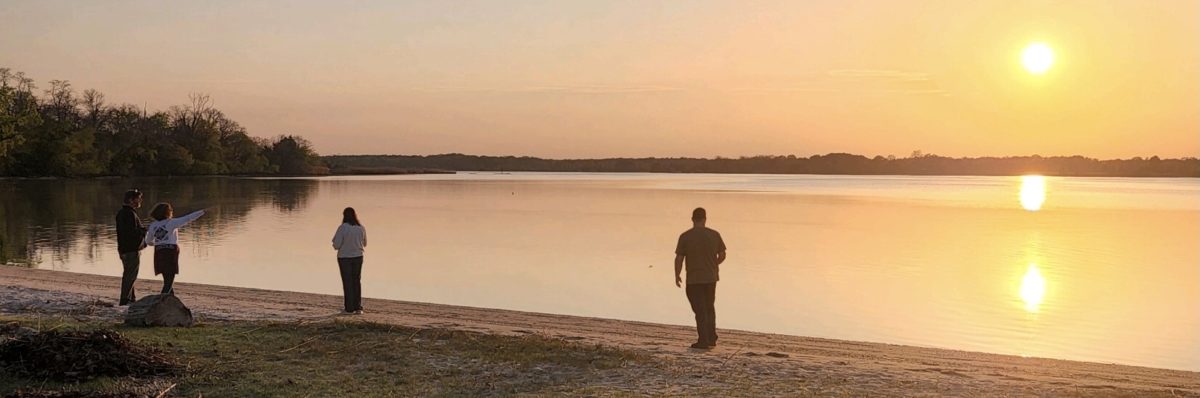
It’s been a heavy season of late. Funerals, hospice, medical, pastoral, for friends and family. When things are heavy, I often seek solitude and frequently that leads me to find some space in Oxford, the town where I grew up and continue to grow.

A couple Sundays ago, after our church services were done, I drove down to Oxford. It ended up being Plein Air day and the town, and the park where I often sit, were full of people. That and the park benches being in full sun, I walked to the end of Market Street, where there is a shaded bench next to Town Creek.

I sat quietly for a while, breathing and feeling a welcome breeze on my face. And then I pulled out three books I’ve been working on:

“Theo of Golden” by Allen Levi
“Four Quartets” by T.S. Eliot
“What Grows in Weary Lands” by Tish Harrison Warren

“Theo of Golden” is a novel that has been making its way around our congregation, talked up, talked about, and sometimes copies are passed around. A friend sent me a copy a few months ago, which I started, loved, and then reading for sermon prep, small groups, etc., took over, and I have been happy to pick it back up.

Getting to the end of the chapter I was reading, Levi wrote:

“There was, and would be, much to ponder.
Much to cherish.
Much to lament.”

I put the book down. That’s life. Every single day. We have much to ponder, much to cherish, much to lament. It is always a gift, each of those things, because to lament is wrapped up in loving. Loving opens us to lament. When we can love and cherish this life, we are fully living. Lamenting is a part of all of that, knowing that our time here is limited.

I read more in each of the books, enjoyed the company of other Market Street walkers who stopped and sat on the bench and enjoyed the shade and the breeze, and then moved along.

Among my practices for solitude is walking or running and that day was a walking day. I walked down Banks Street, cut onto Tilghman Street, and up Stewart Avenue, walking by a house where a friend and Little League baseball teammate lived, and it was his house where I first watched the slasher film classic, “Friday the 13th.” As all 11-year-old kids should (kidding).

Oxford is a town made up of memories for me, where the present and the past blend together. I wrote something about that in the August issue of Tidewater Times. Though the town has changed, it still feels like home, which is part of why I am drawn there.


I walked up onto The Strand and found a tree to sit under near the Oxford-Bellevue Ferry Dock. There I dug further into Eliot’s “Four Quartets.” I have lost count of how many times I have read this poem/book, it is one of a handful of books (mostly poetry) that I can and do carry in a backpack for quick and frequent access. Break glass/open book in case of existential emergency, or for inspiration, or to ponder, cherish, lament.

“Four Quartets” is divided into four sections, and I try to read a full section at a time. That day it was “East Coker.” Here is a stretch that jumped out at me:

“… Do not let me hear
Of the wisdom of old men, but rather of their folly,
Their fear of fear and frenzy, their fear of possession,
Of belonging to another, or to others, or to God.
The only wisdom we can hope to acquire
Is the wisdom of humility: humility is endless.”

I try to keep the wisdom of humility close to my heart day to day, moment by moment. If you are a follower, or even a fan of Jesus, humility was part of the marrow of his Incarnation. If you look back over the history of humanity, when we lose humility, we lose ourselves, and one way or another, individually and/or collectively, a crash/fall is in the works.

Eliot’s “Four Quartets” teaches or reminds me of something every time I pick it up. If I string things together, actively pondering, cherishing, and lamenting should keep us humble.

Though I also read “What Grows in Weary Lands” on my Oxford walkabout, the chapter that connects here is one I read a few days later on our back porch.

Tish Harrison Warren shares a wisdom story from the sayings of the Christian Desert Fathers and Mothers. It’s the story of three friends who were monks, who were all earnest and faithful:

“One of them, motivated by the call in Matthew’s Gospel to be a peacemaker, chose to spend his time seeking to ‘make peace between people who were at odds.’ The second monk, motivated by Christ’s concern for the vulnerable, decided to ‘visit the sick.’ The third chose to ‘go away to be quiet in solitude.’

“The first monk did some good helping others to reconcile, but he grew sad over conflicts he could not solve. He felt ‘overcome with weariness.’ So he went to visit his friend who was tending the sick, only to discover that his friend, too, was ‘flailing in spirit.’

“The two men visited the third monk and told him about their exhaustion and sense of futility–what today we might call burnout.

“The third monk sat silently for a long while, then he poured water into a cup. ‘Look at the water,’ he said. The water was murky with silt. But after they sat together for a while, the water settled. ‘See now, how clear the water has become. So it is with anyone who lives in a crowd; because of the turbulence, he does not see his sins: but when he has been quiet, above all in solitude, then he recognizes his own faults.”

Loving, helping, and caring for others is part of why we are here. And if we are constantly focusing on others, we can lose ourselves, the things we need to work on, our own shortcomings, and also our own connection to and relationship with God.

Of course the monastic Desert Fathers and Mothers are going to drive home the need for solitude. And it is a teaching and message that resonates with my soul.

Warren brings the point home:

“This story implies that solitude and silence are our orienting goals, the re-humanizing rhythms that teach us that we are not, in fact, machines, but creatures–creatures with faults, limits, beauty, and worth, creatures made to dwell deeply with God.

“If we see solitude and stillness primarily as a means to more productivity, we will try to get by with just enough to keep us going and no more. But if these practices are essential to our very being, to our purpose and humanity, then we will orient our work and our days, our weeks and our years, around them.”

That’s what I was looking for in my Oxford walking, sitting, and reading. That’s what I look for in centering prayer, in mornings on the back porch–“to dwell deeply with God,” to rehumanize.

We have four-week small group studies of Warren’s book coming up in August at Christ Church Easton and I am looking forward to our discussions and how we might help ourselves reconnect and dwell deeply with God, especially during seasons where that can feel difficult.

Goals for any/every given day: ponder, cherish, lament, mind the wisdom of humility, dwell deeply with God.

To do these things, solitude, silence, and stillness are required.

Better Together

Holly and I have been together for eight and a half years. Today, June 7, 2026, we have been married for one year. The Rev. Jessica Stehle, a mutual and long-time friend of us both, and with whom I graduated from both Washington College and seminary, was the officiant at our wedding, which was held on a dock in Chincoteague, Virginia.

During the ceremony, Rev. Jess gave a short homily. As an anniversary gift, she handwrote her sermon out in a bound notebook that says, “Love Heals” on the cover and gave it to us, to continue writing love letters to each other.

Sitting on the porch of a cabin in the same camp ground where we were married, a place we have been staying on the same weekend in June for three years now, Holly and I read Jess’s words aloud and were wonderfully overwhelmed.

I am sharing her homily here, with her permission.

June 7, 2025

Welcome friends, to this blessed day! It is an honor to share God with you here, surrounded by God’s beautiful creation—living water and open sky.

Thank you, Michael and Holly, for inviting me to stand here for you today.

Almost eight years ago in the sanctuary and in the Parish Hall of Christ Church Easton, many people with a spiritual hunger and a longing for a community in which to belong, assembled regularly for a series titled “Alpha,” a word that means beginning.

They gathered in small groups, in faith formation, relationship building, trust, and expressions of Divine Love. They went away on retreat with time for stillness, prayer, and the invitation of the Holy Spirit. And among all of that holy belonging, among the presence of the Holy Spirit, two people were noticing each other.

A short time later, the two lingered in the narthex of Christ Church, talking about writing, life, and sharing stories.

In church architecture, the narthex is situated inside the entrance of the church and serves as a transitional space between the outside world and the sacred place of worship—the sanctuary. It is a place for reflection and preparation for communion with God in the church. It is also a place of hospitality where newcomers are greeted by welcoming ushers into the shared experience of the love of Christ.

In essence, this architectural space in which Michael and Holly lingered symbolizes the move from ordinary to sacred. This was the beginning of their love story, two ordinary people, whose union is today and forever, sacred.

Their relationship began and has remained grounded in God. And when relationships begin with God at the center, they continue to grow exponentially. God is the source of love, and that love is limitless.

In our Gospel reading, Jesus instructs us to abide in his love and to love one another as he loves us, so that our joy may be complete.

Michael and Holly are living expressions of this commandment.

They told me of their desire to honor one another for who they are, to allow one another to BE.

That is grace-filled love. It is why they are able to, in their words, “feel more free together than they do by themselves.”

Michael and Holly, may you always abide in the completeness of your love for one another, through the freedom that exists in the love of our Savior Jesus Christ.

And now witnesses, in the style of Rev. Michael Valliant, who so often captures and shares images of his bride standing in contemplation of a beautiful landscape, and in which we can imagine him, watching her watch the world, I invite you all into stillness.


To fully enter into stillness is not to empty your thoughts, but rather to allow yourself to be filled. Stillness invites complete awareness of the reality that is happening in this present moment.

So please breathe in this moment. We are surrounded by the constant movement of the Chincoteague Bay, whose ripples run like the boundless breadth of God’s goodness. As they reach the shore, the earth offers them back out into the water.

Feel the wind that moves the Bay. Hear the birds that respond. Focus on the couple and the lives on either side of them that now exist together as a wider family. Call upon memories and images that you have already witnessed in your walk alongside this love story. Allow them to wash over you and receive their gift of sharing their wedding day with you.


Michael and Holly, turn and receive the blessing of your loved ones’ presence. Soak it in.

Abide in this sacramental moment and carry it with you always.

And all God’s people said: Amen!

He Speaks in Silence

Much of this spring has been scheduled, busy, on the move. All to the good, but jam packed with it. And so it has been the unscripted moments that stand out.

Tucked into our readings for an Old Testament class at Christ Church Easton, was this wisdom from 1 Kings 19:11-13:

Now there was a great wind, so strong that it was splitting mountains and breaking rocks in pieces before the Lord, but the Lord was not in the wind; and after the wind an earthquake, but the Lord was not in the earthquake; and after the earthquake a fire, but the Lord was not in the fire; and after the fire a sound of sheer silence. When Elijah heard it, he wrapped his face in his mantle and went out and stood at the entrance of the cave.

When Elijah hears the sheer silence, he knows God is about to speak to him. It strikes me as absolutely and beautifully profound that he lets the pyrotechnics of the wind, earthquake, and fire go by, but knows God in the silence. He speaks in silence.

It was this time last year that Jim Harrison died. He has been a literary and life hero/model of mine for 20 years or so, and I have been thoughtfully and randomly reading in his books, “The Shape of the Journey” and “Songs of Unreason” since. I came across this last week in the latter:

Don’t bother taking your watch to the river,
the moving water is a glorious second hand.
Properly understood the memory loses nothing
and we humans are never allowed to let our minds
sit on the still bank and have a simple picnic.

Sitting on the still river bank for a simple picnic. Again it’s the stillness and the silence that houses the profound moments. Where we let ourselves catch up.

Running has always been a listening time for me. Even with music playing into headphones, there is a stillness and silence in the motion and the head space that I crave. I have been on the shelf from running this winter, but managed to sneak in a couple five mile runs of late, unscripted, unscheduled, when time and weather have cooperated.

Tuesday was one of those days. After picking Anna up from lacrosse practice, I ran around Oxford, watching as the sun wound down, then grabbed the girls and Harper and hit the Oxford Park to catch the sunset. The clouds got the better of the horizon, but it didn’t matter. It was getting off script, taking advantage of an evening, making a few moments.

Life has its landmarks–those big, defining moments that we measure and remember. God is in the majestic, the heroic, the can’t miss pyrotechnics that leave us in awe.

But I’m trying to cultivate and make the most of the in-between times, unscripted, still. Those times when He speaks to us in silence.

“Increase Our Faith:” Thoughts After a Sermon

I try to listen. Every chance I get. I am a visual learner, so being quiet, taking in sounds, words, wind, birds, a conversation, is something I work at. It’s a funny thing, but I find it’s amazing how much I hear when I listen.

“Increase our faith,” Luke has the apostles saying in his part of the Gospel (Luke 17:5). It’s during the trying times that we ask for something like that. When we know we’re working through something. It’s never when things are going well and life is good. Those aren’t the times made for faith.

When I sit in church, I try to make my posture silent and open, so I can take everything in. It’s those moments where hymns, songs, scripture, sermons, feel directed to my ears.

Am I being the person I am supposed to be? Am I doing the things I am supposed to be doing?

Those are the crossroads questions. Livelihood, being a good father, relationships, life, spiritual path, faith… those questions come up, sometimes we have an answer we are happy with, sometimes not, sometimes we don’t know. Those are times for faith. Leaning away from worry and leaning into faith.

Even when we can’t do it, God moving through us can make great things happen.

When we face doubt, struggle, our limitations, if we get out of the way, if we make room, God can work through us.

Being mindful not of who we are, but “Whose” we are…

What a difference a letter or two can make. When I am thinking through questions about living my life, remembering that life is a gift and should be treated accordingly, with gratitude.

I rode my bike down Boone Creek Rd., and looked up the creek. There was a deep silence, a stillness, the same as I felt in church earlier.

…silence to open a path… experiencing the stillness of God’s comforting grace.

2016-oct-cabin-p

There are times when I dig the hermit on the mountain idea. Cultivate that silence and rest in it. But I know at the bottom of that savored solitude, something is missing for me.

This great capacity we have as human beings to love, makes us better.

Ah yes, there it is. Maybe we’ve got this grain of mustard seed in us (sticking with Luke) that can grow into something beyond what we even thought it could.

In stillness, it can come to us. God can come to us. When we are still. And listening. But don’t expect a road map. Don’t expect answers. If it were easy, if it were clear, it wouldn’t require faith, this walk.

Not all things in life are unscarred, pure, and perfect.

Amen. It’s our scars, our particular brokenness and how we are put back together, that defines us.

Increase our faith.

[italics are words taken/quoted from a sermon on Oct. 2, 2016, Christ Church, Easton, Md.]