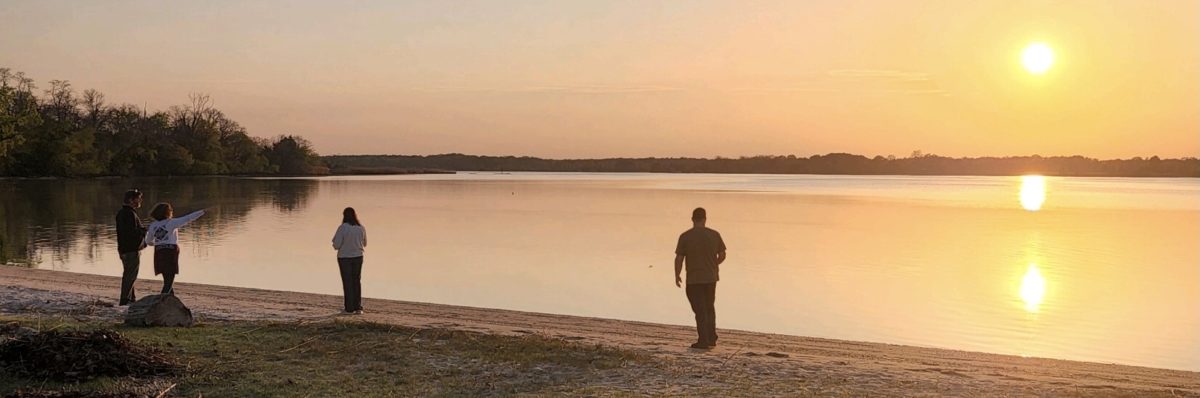
We need our sense of awe, of wonder, kickstarted. When I look at any given week ahead, at the to-do list, at the bills, at the schedule, it’s easy to get lost in the details.
Everyone has a soapbox they frequently stand on. Wonder is one of my few soapboxes. Carl Sagan gets it. Let Carl get you going. When he says dot, he means the Earth:
“Look again at that dot. That’s here. That’s home. That’s us. On it everyone you love, everyone you know, everyone you ever heard of, every human being who ever was, lived out their lives. The aggregate of our joy and suffering, thousands of confident religions, ideologies, and economic doctrines, every hunter and forager, every hero and coward, every creator and destroyer of civilization, every king and peasant, every young couple in love, every mother and father, hopeful child, inventor and explorer, every teacher of morals, every corrupt politician, every “superstar,” every “supreme leader,” every saint and sinner in the history of our species lived there-on a mote of dust suspended in a sunbeam.”
That’s the kind of perspective I need from time to time. The history of humankind–our dreams, accomplishments, stories, are all a speck in the cosmos. Get your head into the stars.
What are your go-to activities, places, or ways to amp up your sense of wonder and awe? For me, getting outside is as big as it gets. Watching the sun come up or set on a river, bay, ocean; hiking, trail running, skateboarding; gardening where I take the time to look at the details of what is growing or blooming. And obviously, books.
Some wonder-sparking books that were nearby while I was typing.
Here’s a thought from Pablo Neruda:
“We the mortals touch the metals, the wind, the ocean shores, the stones, knowing they will go on, inert or burning, and I was discovering, naming all the these things: it was my destiny to love and say goodbye.”
Again with our brief time here, the span of time before and after us, and yet, there are times when we can feel connected to, a part of everything around us.
Let’s play that out. We are here. We were created. You and I have consciousness and questions and feelings. So the same Creator that made all of the wonder-filled, awe-stoking Universe, made you and made me.
“The story of our faith beings with the Creation narratives, in which the act of Creation itself becomes the unfolding of God’s love for the whole world.
God’s love is written all over creation. It begins when God takes the deep and the darkness and, instead of destroying these things, makes them a part of creation. God calls it very good, and we are all created together by a loving God who destroys nothing in creating–deep and darkness, earth and light, knit together in a creation that is both unified and diverse…
Nature is sacred; it was made by the same creator who made us. If we want to love, worship, and be with God, then it makes sense for us to stand in the midst of creation. The closer we are to nature, the nearer we most be to the heart and desire of the Creator.”
Let that wash over you for a minute. That sense of awe and wonder in us, that connection to the larger Universe, to creation, can be a means for us to get to know God and draw closer to Him. Even if we are a blip on the screen, we are still a part of it and we can do something with our time.
We were made to wonder. We were made to dream. We were made to enjoy and take part of the beauty of the Creation of which we are a part. And by doing so, we find ourselves a gateway to God.
Driving Trappe backroads I had to stop the car on a small bridge, mid-conversation, just to take in the scene. To recognize and capture the moment: the mist on the river, the slick calm surface of the water, the way the sun froze everything in time, just for a second.
“… After the kingfisher’s wing Has answered light to light, and is silent, the light is still At the still point of the turning world.”
T.S. Eliot, Burnt Norton, “Four Quartets”
That’s how Eliot puts those iridescent moments–they can become the still point of a turning world. If there are a handful of books that we get sent back to over and over again in the course of our lives, T.S. Eliot’s “Four Quartets” is one of those books for me.
This weekend it was Rowan Williams’ book “Being Disciples,” that sent me either down the chute or up the ladder to the kingfisher’s wing. Williams compared prayer to birdwatching (two things I dig and want to spend more time doing). He said:
“I’ve always loved that image of prayer as birdwatching. You sit very still because something is liable to burst into view, and sometimes of course it means a long day of sitting in the rain with nothing very much happening. I suspect that, for most of us, a lot of our experience is precisely that. But the odd occasions when you do see what T.S. Eliot (in section IV of ‘Burnt Norton’) called ‘the kingfisher’s wing’ flashing ‘light to light’ make it all worthwhile. And I think that living in this sort of expectancy–living in awareness, your eyes sufficiently open and your mind both relaxed and attentive enough to see when it happens–is basic to discipleship.”
And that’s it–having our minds and hearts open and expectant, so that we can catch those moments when they happen. Eliot pointed it out for me years ago, Williams reminded me and sent me back to Eliot, but God presents us with those moments every day.
Running through John Ford Park on a Friday morning after a Thursday night rain, and a magnolia blossom all but audibly called out to be noticed and appreciated. It’s so easy to put my head down and pass those moments by, but thankfully I am easily led when it comes to opportunities to marvel and wonder.
Another one of those books to return to countless times over a lifetime is Walt Whitman’s “Leaves of Grass,” particularly “Song of Myself.”
“Swiftly arose and spread around me the peace and joy and knowledge that pass all the art and argument of the earth”
Walt Whitman, “Song of Myself”
Have you had those feelings, possibly brought on by those kingfishers’ wing moments that we happen to catch? When you are sitting there, drinking in the day, firehose style, where you know you are missing a lot of what you are trying to take in, and you breathe, and look over and the moment transforms into a feeling and you are in it and it is in you.
Eastern Bluebirds are flying in front of and behind me as I skate onto the Oxford Conservation Park loop. I’ve had their shade of blue and orange in my head since I first saw a bluebird years ago and they still quicken my heart.
It is a Saturday with nothing on the morning calendar and temperatures looking to move into the mid-90s. This early though, there is a breeze and it’s perfect sitting outside weather.
Books frequently open my mind and expand my worldview. The path I am walking (or skating) I owe in part to a Trappist monk named Thomas Merton. Recently I’ve encountered another Trappist monk Thomas, Thomas Keating.
“Grace is a participation in the Divine nature, it’s not just something added on like an overcoat. It’s a radical transformation of the whole of human nature so that it can be a divine human being, meaning it can exercise freedom, compassion, love…”
Fr. Thomas Keating
From reading his books to watching the documentary, “A Rising Tide of Silence,” Keating and a former student of his, an Episcopal priest named Cynthia Bourgeault, have pointed me to the practice of centering prayer. I’ve made this type of silent prayer part of my mornings for the past month or so, and I hope to keep it in my daily routine.
This morning, I want to go outside, to make this time under my sitting tree. After my bluebird greeting, I have a deer run across the cemetery loop about 10 feet in front of me.
I’m traveling light, just a notebook, pen, and binoculars, and I sit on my skateboard on the shoreline looking out onto the cove.
For centering prayer, they recommend picking a word that can bring you back to the moment, Bourgeault describes the word as being like windshield wipers to wipe away the thoughts that always jump in the way for attention. The word I have been using is “rest.” In Matthew’s Gospel, Jesus says, “Come to me, all you who are weary and burdened, and I will give you rest.” (Matthew 11:28). Psalm 37:7 says “Rest in the Lord,” which can also be translated as “Be still in the Lord,” meaning be at peace. I find that to be the right approach and mindset for me.
Sitting by the water, I breathe and close my eyes. A breeze is across my skin and in my ears like a conversation and listening, there is a constant concert of songbird voices. I can hear a fish jump in front of me to the left, and I open my eyes to see the rings it left–a cardinal flies low over the water, like it’s his cue to go on. The ascending sun reflects off the water to the right.
I am new to centering prayer, but even with my limited experience, I find that when I let my passing thoughts go, it gives me an opportunity to be closer to God. Keating’s quote that grace is for us a chance to participate in the work God is doing in the world and the love He has for us and for creation. And I can feel that this morning. And sitting alongside a cemetery, where my grandparents, family, and friends are buried, remembering and feeling them, I feel re-connected over and through time, like we are all sharing these remarkable moments.
Keating writes:
“When the presence of God emerges from our inmost being into our faculties, whether we walk down the street or drink a cup of soup, divine life is pouring into the world.”
For most of my life, this kind of quiet prayer time, these morning moments and experiences have been solo endeavors, an introvert’s delight. And I still need plenty of those. But I also find that I can be around people and still be at peace; I can even delight in what other people are doing. Like Keating says, walking down the street, or having a cup of coffee (too early for soup), I want to take those moments with me into the world, to be a part of that divine life pouring into the world . And I am not ready for the next phase of the day to start, so I head to the Oxford Park.
I stop through Oxford Social, the cafe right next to the park, for the first time. A birding friend from my Oxford Community Center days gets in line and we talk birds a bit, and about Third Haven Quaker Meeting House, and about seminary. I walk down to a bench by the river and sit with coffee, the view, conversations off to my right, kids playing on the swings to my left, and a young boy running with his dog.
I pick up John O’Donohue‘s book “Anam Cara,” a favorite book, which Rev. Susie Leight and I will be leading a book study of starting in July, and I come across this:
“Love is absolutely vital for a human life. For love alone can awaken what is divine with in you. In love, you grow and come to your self. When you learn to love and to let yourself be loved, you come home to the hearth of your own spirit… Love begins with paying attention to others, with an act of gracious self-forgetting. This is the condition in which we grow.”
John O’Donohue, “Anam Cara”
And it’s this openness, this paying attention to others, this self-forgetting, letting go of ourselves, letting go of myself, where I seem to be spending a lot of my time of late. O’Donohue continues:
“Once the soul awakens, the search begins and you can never go back. From then on, you inflamed with a special longing that will never again let you linger in the lowlands of complacency and partial fulfillment. The eternal makes you urgent.”
Maybe this has been a slow build over the last 50 years. Maybe all those different moments I can look back on and feel sitting here now, have all been hints and flickers, breadcrumbs or candles of encouragement. And each epiphany adds to a longing, pushes further into the search. Maybe with the state of the world, the worry, the suffering, the confusion, the time is coming that we need to look at differently and help others do the same; we need to live differently and help others do the same.
Maybe when we have moments of sitting quietly and emptying ourselves out, what’s there that we connect to, is Love (God is Love). And what could be more important to share with each other?
Shake a snow globe full of sediment and you’ll have to wait a while for the sediment to settle. Only then can you see through it. Clarity comes from letting the sediment settle. Now think of the sediment as all the demands and distractions in our daily lives–and there is always something or someone shaking our snow globes.
The weekend retreat during The Alpha Course is designed to help us settle, unwind, and unplug so we can plug into something that will recharge us. It’s a time to connect with the Holy Spirit and with each other.
Five years to the weekend after Christ Church Easton‘s first Alpha retreat, we took a group of more than 20 people to Pecometh’s Riverside Retreat Center outside Centreville, MD, for a weekend to reconnect. The weather was in the 70s during the days, the night skies were starry and clear, and the waterfront campus is full of trails, woods, and structures to get you dialed-in to creation.
Saturday morning, we had a group gathered on benches outside by the river for morning prayer. We read from Padraig O’Tuama‘s “Daily Prayers,” in which we pray, in part:
We resolve to live life in its fullness: We will welcome the people who’ll be a part of this day. We will greet God in the ordinary and hidden moments. We will live the life we are living.
We set our intention to be present, open, and to appreciate one another and our lives.
Weekends like this are about moments; they are about relationships; they are about laughter and tears from being overfilled; they are made up of sharing meals, of taking hikes and walks or going skateboarding; they are built around small group discussions and big questions and shared experiences and being vulnerable.
The Alpha Weekend five years ago is the first time I reflected on advice that St. Paul gave in his letter to the Romans where he said:
“Do not be conformed to the pattern of this world, but be transformed by the renewing of your mind.”
Romans 12:2 (NIV)
In a world that wants us to conform, we are encouraged to live differently. In a series of videos over the weekend, we meet Jackie Pullinger, a missionary who went from England to Hong Kong more than 50 years ago, who has worked to help prostitutes, gang members, and the poor. She has done amazing work and points out that what we need to spread God’s love in the world are “soft hearts and hard feet.” And she says that maybe the only way our hearts soften is by being broken.
An Alpha Weekend is about relationships and downtime and making memories, including the debut of a non-existent band called “Skater Dads.” It’s skipping stones at sunset and exploring the campus for the camp’s famed outdoor chapel.
The Alpha Weekend is about sitting around a campfire singing songs, roasting marshmallows and hot dogs and being awestruck when someone reaches their hand into the fire to successfully rescue a fallen hot dog and comes out unburned (don’t try this at home or around a youth director) ; it’s about feeling seen simply by someone noticing that you are almost done cooking your hot dog and being asking if you want a bun.
It’s what happens when a group of people gather in a beautiful place for the sacred purpose of being together, worshipping God, and being open to the Holy Spirit.
Sunday morning, the ending of such a powerful and peaceful weekend, the big feelings were about not wanting the weekend to end. A conversation made me think about the transfiguration of Jesus on the mountaintop, this absolutely incredible experience of Jesus, Elijah, and Moses, and Peter’s immediate response is to build tents–“Master, it is good for us to be here; let us make three dwellings” (Luke 9:33)–he wants to stay in that moment, he wants to keep it going, just like each of us wanted the weekend to keep going. But Jesus knew differently. He knew that as incredible as those experiences are, it is not about building tents and trying to hold the moment–it is about carrying the moment back into the real world, because we have work to do. We have to spread that Holy Spirit experience. I mentioned all this to our collected groups. Which gave Rev. Susie Leight an idea.
Susie expounded on the theme of leaving, going back to the world, by opening our Sunday morning worship service with a blessing/prayer from Jan Richardson:
Dazzling
A Blessing for Transfiguration Sunday
“Believe me, I know how tempting it is to remain inside this blessing, to linger where everything is dazzling and clear. We could build walls around this blessing, put a roof over it. We could bring in a table, chairs, have the most amazing meals. We could make a home. We could stay. But this blessing is built for leaving. This blessing is made for coming down the mountain. This blessing wants to be in motion, to travel with you as you return to level ground. It will seem strange how quiet this blessing becomes when it returns to earth. It is not shy. It is not afraid. It simply knows how to bide its time, to watch and wait, to discern and pray until the moment comes when it will reveal everything it knows, when it will shine forth with all it has seen, when it will dazzle with the unforgettable light you have carried all this way.”
This weekend was a blessing made for coming down the mountain, back into the world; it was an experience, it was moments, it was deepened relationships. It is a blessing for us to share with those we meet, with those who are a part of our days.
“There’s nothing as whole as a broken heart.” I read that sentence and just stopped. And sat. And let it wash over me. We have two different small groups reading Rachel Held Evans’ book “Wholehearted Faith,” during Lent at Christ Church Easton.
In a chapter titled “Where Stone Becomes Flesh,” she quotes Ezekiel:
“A new heart I will give you, and a new spirit I will put within you; and I will remove from your body the heart of stone and give you a heart of flesh.” (Ezekiel 36:26)
If there is anything we need in the world today, it’s to be able to cast off our hard hearts and start working and living with hearts of flesh.
Evans explains it further. She quotes Rabbi Ariel Burger from an interview.
“There’s a Hasidic teaching, from Rebbe Nachman of Breslow: ‘There’s nothing as whole as a broken heart… In these traditions you cultivate a broken heart, which is very different from depression or sadness. It’s the kind of vulnerability, openness, and acute sensitivity to your own suffering and the suffering of others that becomes an opportunity for connection.”
On Thursday night discussing the chapter, someone read this passage, and then added, “I’ve got a broken heart. And if through that, I could help someone else…”
And that’s it. Right there. When we take what we’ve been through, the hurt, the pain, the suffering, and see it and use it and offer it as a way to help others, then love wins.
That’s part of what we are here for. That’s the work that God has given us to do. To love one another.
Loneliness hits us all. So do suffering, loss, and pain. Hopefully so do joy, wonder, and love. But it’s easy to feel like we’re on an island. And then something happens, when maybe just for a moment, we find a connection. Someone says something or we read something and it washes over us–someone else feels that way, or ‘yes, that’s it–that’s the feeling!’ or ‘I can’t believe someone else thinks that!’
So often it’s language that connects us. It gives words to our feelings, our thoughts, our pain, our joy, our curiosity. If you are like me, that’s a feeling I get from reading, and from some writers and poets more than others.
I knew what my first tattoo was going to be the first day we studied William Blake in Dr. Gillin’s British Romanticism class at Washington College. I was 24 years old and we were discussing Blake’s poem, “The Marriage of Heaven and Hell.” It’s a big, unwieldy, hard to get your head around, free form puzzle on first glance and I remember thinking that I didn’t know you could do that in poetry. This morning, looking over different sections of “Proverbs of Hell,” I got that awestruck feeling all over again. Here are some dropped in at random:
The road of excess leads to the palace of wisdom.
Eternity is in love with the productions of time.
If the fool would persist in his folly he would become wise.
Excess of sorrow laughs. Excess of joy weeps.
The bird a nest, the spider a web, man friendship.
What is now proved was once only imagined.
They are like hand grenades that go off in your mind. He changed what I thought you could do with writing. He spoke things that I hadn’t yet found words for. And now I carry around his engraving “The Ancient of Days” (at the top of the page) on my left shoulder. I remember Dr. Gillin talking about the art saying it was God creating order in the universe.
In that same class we encountered William Wordsworth. And he is a poet who wrote about connected to nature and wonder the way I felt and thought about them. I can’t tell you how many times I have read, quoted, and contemplated his poem “Lines Composed a Few Miles Above Tintern Abbey.”
This past fall I had coffee with friend and mentor John Miller. John has been a long-time instructor at Chesapeake Forum, dating back to when it began as “The Academy for Lifelong Learning” at the Chesapeake Bay Maritime Museum, where we worked together.
John and I have gotten together for coffee and to talk literature and life over the past couple years, including talking about the passing and great memories of our friend, former co-worker, and John’s co-leader in countless literature classes, John Ford.
As we sat outside along the street in September, John Miller had something on his mind. He started reading aloud from John Milton’s elegy “Lycidas,” in which Milton mourns the drowning of a friend, class mate, and fellow poet and wonders about his own mortality and if our struggle is all worth it.
And the thing we kept coming back to was the way language, the way poetry, can give voice to all the things we feel and think and encounter in this business of being human. The power of language to help us get our heads and hearts around being human.
And Blake and Wordsworth were two other poets who came up in the discussion. And we went back and forth over e-mail and phone calls and what we have coming up over three Zoom sessions on Thursdays, January 27, February 3 and 10, from 10:00 to 11:30am is Milton, Blake and Wordsworth: On Being Human.
This is not an academic study of poetry. This is a look at how poetry can give us the words to help us connect to each other; to help us make some kind of sense of what it is to live a life, to grieve, to see into the heart of things; to connect to God through nature.
I go back to a line that Robin Williams delivers as John Keating, the English teacher in Dead Poets Society:
“We don’t read and write poetry because it’s cute. We read and write poetry because we are members of the human race. And the human race is filled with passion. And medicine, law, business, engineering, these are noble pursuits and necessary to sustain life. But poetry, beauty, romance, love, these are what we stay alive for.”
I have held that notion to be exactly so and tried to live my life, at least in part, along those lines.
And that’s the spirit we will approach Milton, Blake and Wordsworth with, as we discuss what it is to be human, and how language and poetry can connect us.
The evening before Christmas Eve, two of us were asked by our Rector if we’d be willing to pinch-hit and lead prayer services and give short sermons on December 25 and 26. The 26th was my day. The Gospel reading for the day, which I needed to discuss was John 1:1-18, “In the beginning was the Word.” Not the one I would have picked for a first-ever sermon, but it was the right one. Part of a continually unfolding story.
An 11th hour, first sermon seems like something worth documenting and sharing, so here it is, with a few edits. And a quick note explaining the top photo: A few years back in a class led by Fr. Bill Ortt, he drew two circles–one with arrows all pointing inward, one with arrows all pointing out. And he asked, which circle looks like love?” The one with the arrows pointing out, away from ourselves to others. And (now) Rev. Barbara Coleman put her hands on her head, fingers out, looking like the circle showing apostolic, outgoing love. And her “apostolic antlers” have been a symbol/sign with a number of us since. Her husband John, pictured on the right, led prayers of the people at the end of the service, and Barbara told him he needed to get a picture of the two of us giving the sign. So there it is 🙂
“Connected to God’s Family” December 26, 2021
Being called to do something is to be invited. It’s always an invitation. Studying Scripture, we learn that there is actually a right answer to being called—“Here I am, Lord.” When you try to make a point to answer, “Here I am,” you find yourself in some situations you aren’t prepared for. Like being asked the night before Christmas Eve services if you would lead morning prayer the day after Christmas. And have something to say about the prologue to John’s Gospel.
And here we are.
So what can we say about the opening of John’s Gospel?
If someone was to make a nativity play out of John’s introduction to the good news, it would not be a hit with families and kids. There are no shepherds, no wise men, no manger. It’s just words. But John is up to something at the beginning of his story that might just give us the most hope in the end.
Each of the four Gospel writers does something different with how they begin their stories.
Matthew gives us Jesus’s family tree, wise men traveling from afar, and does his best to make sure his readers know that this is the guy who is fulfilling prophecy; he is the King of Kings.
Mark skips any kind of birth narrative and gets straight to the story. I like to think of Mark’s storytelling approach as pulling up to the curb, opening the car door and saying, “Get in… Immediately!”
Luke is where we get shepherds and some of Mary’s joyful experience as an expectant mother, and Jesus’s connection to John the Baptist.
John goes back. Way back. To the Beginning. And he does it with incredible poetry. When I first sat down to really study the Gospels, John’s prologue gave me goosebumps. I am a sucker for language, but there is more.
The beginning John takes us back to is Genesis.
When you read Matthew, his genealogy for Jesus goes back to Abraham. Luke traces Jesus’s family tree back to Adam. One of the things John is telling us is that Jesus goes back even further—to the very beginning.
There is a Franciscan friar or monk named Richard Rohr who has written about the “Cosmic Christ.” He points out that Christ is eternal, that he has always been here. And that the incarnational Jesus, when he became human and lived with us in bodily form, happened at a particular time and place. But Christ as part of the Trinity is so much bigger than we can comprehend. And that’s where John takes us.
In our Bible studies, we have found NT Wright to be a wonderful guide for making sense of Scripture. He says this about John:
“that’s the theme of this gospel: if you want to know who the true God is, look long and hard at Jesus… The rest of the passage clusters around this central statement. The one we know as Jesus is identical, it seems, with the Word who was there from the very start, the Word through whom all things were made, the one who contained and contains life and light.”
That’s the goosebumps part of John for me. When I read him, I get that sense of awe, that sense of Jesus as the Word, Jesus as God. And that he has given us that same gift, of knowing God through him.
Do you ever get that sense of being connected to something so much bigger than yourself? There are times when I am watching a sunrise or a sunset; or it could be reading poetry—it actually happens a good bit here at Christ Church, listening to music during a worship service, or finding myself trying to scribble down notes about something Fr. Bill or Fr. Charlie mentions in a sermon. I have a sense, something I know but can’t explain, that I am, that we all are connected to the Divine.
I woke up today and learned that Archbishop Desmond Tutu died yesterday at the age of 90. I have a good friend and mentor that spent part of a semester at sea with Archbishop Tutu and he has such wonderful stories to share from that experience. Desmond Tutu is one of those people who I point to as being a huge inspiration and who has made me look and listen to what a calling in ministry might be. This summer and fall we had an outdoor evening prayer service on Thursdays, one of which fell on Archbishop Tutu’s 90th birthday and we included several of his prayers to honor him.
Tutu spoke to this exact thing, that transcendent feeling of connecting to God in different moments of our lives, if we pay attention. He said:
“We were made to enjoy music, to enjoy beautiful sunsets, to enjoy looking at the billows of the sea and to be thrilled with a rose that is bedecked with dew… Human beings are actually created for the transcendent, for the sublime, for the beautiful, for the truthful… and all of us are given the task of trying to make this world a little more hospitable to these beautiful things.”
These things, these experiences are reminders that we are wired to feel something more than just going through the motions of daily life.
I’ve talked recently about crying at Christ Church—and about how I have cried more in the past five years than maybe any other time. That it’s the kind of crying that comes from your heart being too full, so that something has to come welling up and out. And that welling up comes from being connected—both to God and to each other. That’s part of the package deal about loving God and loving your neighbor.
And that connection is what caring about each other looks like. That caring is love. And that love, that’s what was there in the beginning, that creative force that built and sustains the universe and that built and sustains us.
And that’s what John’s about. And that’s what God’s about. And that’s what we are supposed to be about.
I’ve seen that connecting and caring on full display at this church. We have all seen it in Bruce Richards and the last 18 years—it’s what the (pastoral care) Stephen Ministry is all about. That kind of caring, that kind of loving is what we are here on this earth to do. That’s the gift we are given of this life, the one that goes back to the beginning, goes back to the Word, goes back to Christ.
But it’s not meant to stop inside these walls. It’s meant to go out, apostolically. It’s the work that God has given us to do. And it feels right to end this morning’s message with words from Desmond Tutu to that effect:
“We are made for goodness. We are made for love. We are made for friendliness. We are made for togetherness. We are made for all of the beautiful things that you and I know. We are made to tell the world that there are no outsiders. All are welcome: black, white, red, yellow, rich, poor, educated, not educated, male, female, gay, straight, all, all, all. We all belong to this family, this human family, God’s family.”
I love Shel Silverstein. I have never wanted to punch a character in a story more than the boy in his book, “The Giving Tree.” (as he gets older, not when he was a kid). I had a hard time reading it to the girls because the boy just takes and takes and blows off the tree, and never gets it. My blood is boiling a bit now just thinking about it. But Silverstein couldn’t describe humankind in our time any better.
I aspire to a more complementary relationship to the trees in my life (I get the irony of having a wooden skateboard in the photo). Over the past several years, a particular tree stands out. It’s an Osage Orange tree on the shoreline of the Oxford Cemetery. I have made a point of sitting under it for some time now.
Of late, rest has been hard to come by. At lease the right kind of rest. Rest, for me, is about tuning out the constant demands of what is coming up, and being completely in the moment. It’s when time doesn’t matter and actually passes differently. It’s not the kind of rest that comes from sitting on a couch or sleeping at night. Frequently, it comes from being outside–hiking, walking, skateboarding, reading, bird watching, exploring, kayaking, paddleboarding, reading or writing. I haven’t had enough of that time, those moments lately, and I can tell.
When I rest is when I am open to wonder. When I rest, gratitude overflows–in part because I am not rushing to the next thing. I am not in a hurry.
Thursday morning, I fought the pull of the couch and hit Oxford Conservation Park with longboard, binoculars, and notebook. “Skatebirding” has become a new favorite thing to do. I skated to the cemetery and pulled up under my “Sitting Tree.”
Double-drop longboards make for great birding seats. As I sat to clear my head, think, pray, and take in the morning, a raft of ducks was just off the shore. Watching them move about as a group, they were doing what ducks do. And what is it that people do in that way? What is it that is natural to us, that puts us in a place of doing what we should be doing?
Beyond Mallards, Canvasbacks, and Wood Ducks, I don’t know all the duck types around by first sight. Watching them and checking Cornell’s Merlin App, I pegged them as Ruddy Ducks, but pinged a birding expert friend to make sure. As I watched them, time moved differently. A solo Bufflehead swam up to the Ruddies a couple times, thinking they were his peeps, and then both times flew away skimming the water in a hurry when he realized they weren’t.
These are not my photos, they are from bird ID sites, but the top left is a Bufflehead and the others are male and female non-breeding Ruddy Ducks.
It was the tree, the ducks, the cove, the breeze, the sunrise, the shoreline, and I got to be a part of it. Sitting there, gratitude and joy welled up and started coming out of my eyes. I know I can’t communicate it, but maybe you’ve had moments like that.
Skating back to the conservation park, I wanted to write all this down–something I haven’t been doing enough of except chicken scratch in notebooks.
We’re looking headlong into the holidays. It’s a busy time of year, it’s nighttime dark at 5:30pm and it’s getting colder. Mornings like yesterday remind me that I need to rest. And to rest, I need to get outside. The Sitting Tree is still there. Where am I?
If we’re lucky, we don’t do life alone. We have help. On his livestream sermon this week, Fr. Charlie Barton talked about having “companions on the way.” That feels like the right way to think about this past week.
Last Sunday, while in church, I got calls from my cousin and my sister, back to back. Something didn’t seem right, so I stepped outside. Our parents’ house was on fire. My mom made it out and so did her dogs. That was the report I heard before running to my car and driving to Oxford. I learned on the drive that my father was at work.
When I got there, firefighters from Oxford, Trappe, and Easton were actively fighting the fire, neighbors and friends were up and down the street, everyone seeing how they could help. The kitchen and living room were gone, smoke had been pouring out of the house; firefighters had to cut a hole in the roof to fight the fire which had spread into the attic. The cats did not survive the fire.
It was and is surreal. My parents bought that house in the late 1960s, it’s where my sister and I grew up, and all of our family memories have been, and everything my parents own. Displaced doesn’t begin to describe what they are going through.
And all this is the first part of companions on the way. From the firefighters, to the auxiliary, to concerned neighbors and friends, to people at Christ Church reaching out, showing up, bringing food, asking how to help; insurance companies helping with the process of next steps; real estate agents helping them to find a place to live for the the next year–it’s been companions on the way.
The view from the 12th floor at Johns Hopkins Hospital. Hope shining through clouds.
On Monday it was neurosurgery at Johns Hopkins Hospital. For the past few months, Holly has been struggling with Chiari Malformation, where the back of the brain blocks the spinal column. There were maybe three good days in 60+, taking someone who has been in great health and hitting her with vertigo, dizziness, skull-splitting headaches, nausea, no energy, not being able to drive at times. Surgery was the clear answer.
Companions on the way, part two. From family, to work, to friends, to prayer teams, to surgeons, doctors, nurses and medical staff, people showed up, and are showing up, to help, to pray, to bring food, to do what they can. We brought Holly home on Wednesday after a successful surgery, and recovery is underway.
A group of more than 100 bikers rolled up to A.I. DuPont on Saturday morning to drop off toys for kids in the hospital.
Part three. On Thursday, Ava and I made our way to A.I. DuPont Children’s Hospital in Wilmington. Her medicine has not been controlling her seizures this spring/summer and they wanted to keep her for an overnight EEG to monitor what is going on. As we checked in, we met a nurse practitioner who has worked in Easton and who has mutual friends. Talking to her and the neurologist on call this weekend, who is a specialist in pediatric epilepsy, someone who we had hoped to see but who has been scheduled too far out, they quickly asked if we could stay longer so they could cut back her medicine and work with some of her triggers so that they are more likely to be able capture some of her seizures to figure out the best course of action for her–whether surgery or different medications, or what.
So we find ourselves with a longer-than-anticipated stay at A.I. DuPont. We’ve watched the first Harry Potter movie and James Gunn’s new Suicide Squad (thank you HBO Max); Ava has beaten me multiple times at Connect 4 and I partially redeemed myself at Scrabble. She has a mummy headwrap on and the doctor said her EEGs are showing “sparks” (the conditions for/beginning of seizures) all over the place, much more than when we got here. So we wait, and oddly hope for seizures, knowing she is in good hands and that they can give the doctors here information that could hugely help her moving forward.
So that’s Sunday to Sunday this week. At every turn and at every corner, companions on the way have stepped up and made their presence known. Family, friends, and co-workers check in.
And I am carried by gratitude: for my parents both being okay after a devastating fire and for their finding a way forward to what is next; for Holly being able to have surgery to come back to herself and be healthy; for Ava being in great care and now on the radar screens of incredible doctors who have met her, are beginning to know her, and be personally involved in her case.
And for far too many companions on the way for me to name here. I feel frustrated for not being able to be in multiple places, this week especially, but can’t thank enough everyone who is there and helping.
When I worked in restaurants, being “in the weeds” meant you were up to your eyeballs in orders, trying to make sense of everything and get the food out, and kindly don’t talk to me right now unless you are here to help. When I was writing for the Coast Guard, it meant something different.
If you were in a meeting and someone said you were “in the weeds,” it meant you were too far down into the finer details to see the big picture. You needed to zoom out.
Last night, watching the sun and blue sky battling against a weekend’s worth of gray clouds, or this morning, skateboarding around the Oxford Conservation Park and cemetery, “in the weeds” means looking from a different perspective. It is looking at the sky from the terrestrial perspective of being in the weeds. And it shifts things.
It is a way of being grounded, balancing lofty with land. There are times when it is helpful to look closer.
There is a non-profit organization called “The Moth,” which is dedicated to storytelling; to helping people tell their stories, “live, onstage, and without notes.” If we know each other’s stories, we become human to one another. I’m just beginning a book they put together called “Occasional Magic: True Stories About Defying the Impossible.” It’s a collection of stories told on stage, collected around a theme, some by famous people, some by people you’ll meet along the way. As for the title, it:
comes from a story told by Vietnam veteran Larry Kerr. It’s about his intense love for a young woman named Omie, whom he describes as “smart, meltingly lovely, and strong, with a fierce belief in the possibility of occasional magic.” Occasional magic refers to those moments of beauty, wonder, and clarity, often stumbled upon, where we suddenly see a piece of truth about our life. (from the introduction by Catherine Burns)
What if we took the time to get to know people’s stories? Like each of us, stories can be everyday, they can be epic, they can be heartbreaking, they can be uplifting, they can be tragic, they can be miraculous, they can be filled with hope, they can be funny, or some combination of each of those and more. There are more stories than people. And in taking the time to get to know them, we recognize ourselves in each other.
Maybe, on Memorial Day, we can wrap our minds and hearts around the stories of the men and women who have died while serving our country. We can remember them not as numbers or statistics, or even names, but as individuals, with stories and connections; with families, dreams, hometowns, friends; and think about the thread that they are, woven into the tapestry that is our collective story. Each thread is a story, each story a person.
These are stories to remember. And if you remember their stories, tell them.
“Sharing tales of those we’ve lost is how we keep from really losing them.”
Mitch Albom
Today, as I think about being in the weeds, I think about shifting my perspective, being grounded, being connected, seeing into the heart of something too easily overlooked. I think about people and their stories, and remembering them.