Dreams and Song

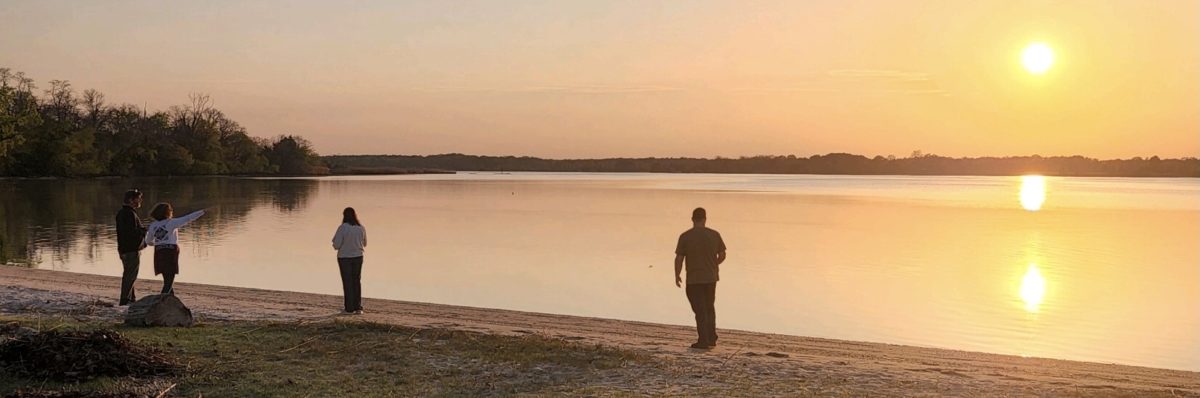
2019 is a blank page with a big box of Crayola crayons spread out around it. I dig the above photo that Caroline Phillips took on one of the last days of December, on assignment for Shore Monthly Magazine. It’s sunrise, with friends doing something we love, up and outside early that let us catch a crisp, clear morning to laugh, skate, and reconnect.

2019 is a year I don’t have a clue about in many ways. And part of that not knowing is that the past four-plus years have been foundation building.

Life has a way of pulling the rug out from under us when we get comfortable. I like to think that happens because we are getting comfortable in a way that is keeping us from where we need to be; where we could be going; what we could be doing. But that perspective likely only comes with some distance when we’re looking back.

When we get displaced, we try to get our footing–spiritually, mentally, and physically. We try to put our pieces back together in a meaningful way. We look for that place where we can breathe deeply and be ourselves. We look for somewhere we can build, and re-build our lives.

Over the past four years, I’ve lived in three different places and I’m in the first house where it feels like home, where the girls and I can be for a while, put some roots down and figure out where life goes as Anna gets closer to graduating high school and Ava finishes middle school.

The thing about building a foundation or putting down roots (choose your metaphor) is that that’s the beginning work, the base. For that to amount to anything, you’ve got to build something awesome, grow or bloom into something that no one else can–that’s what each of us has in us. And that’s what 2019 feels like it’s calling for–personally, professionally, physically, creatively–it’s time to stretch, to grow, to build, to do something more; something cool, fun, inspiring. The stuff the God puts each of us here to do.

Field guides, existing colors in the box of Crayolas that we get to color our lives with, to help show us what is possible, what’s been drawn, and what we can do.

Writing about Jorge Luis Borges, introducing Borges’ book, “Dreamtigers,” Miguel Enguidanos talks about dreams and song. That it is our capacity to dream and sing that “makes the world bearable, habitable; they make the dark places bright… Dreams and song. About the whole and the parts. About the universe and about each of its separate creatures.” And that “in spite of incompetence, stumblings, and disillusionment,” that our dreams, played out in the song we choose to sing with our lives can connect and resonate with others.

I guess that’s my hope for 2019. To feel our dreams and find and sing our song in new, surprising, inspiring, and wonder-filled ways. And in doing so, to help others do the same with theirs.

Via Contemplative Monk and Mystic Prayers

“I knew every raindrop by its name”

The unexpected voices stay in our heads. They speak lines, phrases, words, pictures that we didn’t see coming, but that we can’t forget. Denis Johnson planted a stop sign in my soul with, “I knew every raindrop by its name,” as I tried to get to know his heroin-addicted narrator in “Jesus’ Son,” a book of short stories, which has been called one of the best written in the last 50 years. 

Johnson’s voice, his writing, was born from his experience with addiction. He was worried at first that sobriety would affect his creativity. But the distance, clear-headedness, and productivity of being clean let him more fully access his past and own his voice in a way only he could. My copy of “Jesus’ Son” (named from Lou Reed’s “Velvet Underground” lyric in the song “Heroin,”) is full of underlinings where Johnson knocked me off-guard, off-balance.

 He died of liver cancer in 2017. The New York Times obituary gave Johnson his own take on his faith:

Mr. Johnson thought of himself as a Christian writer who wonders about the existence of God in a troubled world.

“I have a feeling God finds us pretty funny,” he told New York magazine. “But that’s all the speaking I should do for God–he doesn’t go around talking about me.”

Richard Sandomir, New York Times
Photo by R.N. Johnson

I’ve been thinking about and trying to read distinctive, original voices lately, gravitating toward short stories. Johnson is one of the first people I thought of. Another is Barry Hannah. Hannah begins his landmark book “Airships” like this:

“When I am run down and flocked around by the world, I go down to Farte Cove off the Yazoo River and take my beer to the end of the pier where the old liars are still snapping and wheezing at one another.”

Barry Hannah, “Water Liars”

In an appreciation of his writing, author Richard Ford says that Hannah, “recasts the world in the way obviously great writing does… Barry’s voice was the one many of us hear when we speak candidly to ourselves–subversive, inventive, unpredictable, funnier than we can be in public.”

Photo by Erika Larse.

Recasting the world. That’s what great writing should do for us. Help us see differently or think differently about something, or maybe see something we haven’t seen. Fantastic stories, well told.

I’ve had Tom Robbins lines and phrases typed into my subconscious for 20-plus years now. He can take something as mundane as mockingbirds and cast a slanted light on them:

“Mockingbirds are the true artists of the bird kingdom. Which is to say, although they are born with a song of their own, an innate riff that happens to be one of the most versatile of all the ornithological expressions, mockingbirds aren’t content to merely play the hand that is dealt them. Like all artists, they are out to rearrange reality. Innovative, willful, daring, not bound by the rules to which others may blindly adhere, the mockingbird collects snatches of birdsong from this tree and that field, appropriates them, places them in new and unexpected contexts, recreates the world from the world.”

Tom Robbins, “Skinny Legs and All”

But for all our disparate voices, it is not enough to recreate the world from the world, but to try to add some meaning, some connection, something universal within the personal.

Stories connect us in ways that nothing else does. Jesus told stories so he could be sure we would remember them, re-tell them, and talk about them. Hemingway and Twain are household names because we connect with Huck Finn and the Old Man and the Sea. And when Johnson’s narrator says he knew every raindrop by its name, I am transported back to being a kid, looking up into summer rain with my arms stretched out to the sides, trying to count raindrops and see if one looks different from another.

Wonder and Welcome

“We need to view the world as to combine an idea of wonder and an idea of welcome. We need to be happy in this wonderland without once being merely comfortable.” – G.K. Chesterton, “Orthodoxy.”

Watching the sun break the horizon, change the whole color of the sky and the landscape; watching fog dancing on still sleeping water on the cove–that conveys the sense of wonder we can find any given morning.

Smiling at the sunrise, laughing like it’s an inside joke, or on a morning with others running, skateboarding, or paddleboarding, realizing what a gift those moments are to share–that feeling, that recognition, that is welcome.

Maybe it is our job, with the time we have, to find both wonder and welcome. Maybe it’s our job, with the time we have, to be grateful for both wonder and welcome. Maybe it’s our job, with the time we have, to convey both wonder and welcome to others.

Part of that is finding what moves us. Part of it is staying after it, stoking our fire, our passion–what makes us who we are–and doing something with it, not settling, and not just being comfortable.

For me, that starts with waking up, wrestling the dog, smiling. Putting coffee on, grabbing a notebook and pen, a book. Praying. Reading. Reflecting. Maybe it’s a running or skateboarding morning. Maybe it’s watching hummingbirds light on the feeders next to the window.

Wonder and welcome are up to me to find. They are up to me to recognize. They are up to me to be grateful for. And they are up to me to pass along.

After the Mountaintop: So What and Now What?

Two of the questions everyone seems to want answers for are: “So what?” and “Now what?” Those are the questions that beget action. They need a response.

We were just talking about “mountaintop experiences,” or those experiences where something has opened up for you, you have seen (been shown) and felt something that changes you, or that changes everything. Now what? If you have this incredible experience and then just go back to things just the way they were, then what good is it? What was it for?

You’ve got to act. You’ve got to do something. What that something is is different for everyone and inherent to who we are–it involves our unique talents and passion. It is what defines us.

Over the past couple years, I’ve had St. Paul on my mind, especially gearing up for a study on Romans this fall. Most of us will never know Paul’s clarity or conviction. His mountaintop experience was an encounter with the Risen Christ that left him blind for a few days, and completely transformed his life. He went from being an all around not-so-nice guy to being a prolific letter-writing, missionary master, New Testament first ballot hall of famer. Even changed his name.

What we take from our game-changing experiences doesn’t have to involve evangelism, like Paul. It could be anything–working with kids, creating art, pushing yourself and those around you to be better, kinder; inspiring others through… what? That’s for you to decide. But it involves change. It involves action. It channels your passion. It engages your talent. It calls us to pass it on, to pay it forward.

I know I sound like a broken record at times. We’ve all got our soapboxes to stand on. I come back to a lot of the same things: being outside and experiencing God’s creation. I find peace, have some of my most profound thoughts, and talk to God when I am running, hiking, or walking. I am inspired, uplifted, and overflowing at times when reading and/or writing. And I am lit up beyond words in small groups of great people.

Over the past 10 years, some of my most meaningful experiences and relationships have been come from a group of early morning runners, which has created oddball adventures, lifelong friendships, and ultimately even helped me find a home at Christ Church Easton.

I love this notion that N.T. Wright has in “Simply Christian:”

“We honor and celebrate our complexity and our simplicity by continually doing five things. We tell stories. We act out rituals. We create beauty. We work in communities. We think out our beliefs… In and through all these things run the threads of love and pain, fear and faith, worship and doubt, the quest for justice, the thirst for spirituality, and the promise and problem of human relationship. And if there is any such thing as “truth,” in some absolute sense, it must relate to, and make sense of, all this and more.”

Drink from that fire hose for a bit. When I think through those five things and how they relate to my life, I think back on some of my best memories and look forward to meaningful experiences to come.

“So what?” and “Now what?” I feel like as individuals and as a society, these are questions we constantly ask and come back to. Sometimes they can leave us stuck in the starting gate wondering what to do. And sometimes they can call us to action.

Faith, Wonder and Surfing

Faith and wonder are siblings. They begin in a curiosity, a fascination with something beyond us that we can’t fully comprehend, but we want more. Maybe they are intertwined, spinning around each other like a spiral shell.

Some people may feel like they outgrow either or both faith and wonder–they fill their minds only with facts that fit inside what can be understood and categorized. And there is little time for things that don’t fit.

In his book, “Simply Christian,” N.T. Wright works with the metaphor of hidden, living springs. He says to imagine those springs paved over with concrete so thick the springs couldn’t penetrate it, and that a complex system of pipes was built to use the water, chemicals added, and the water was controlled and brought to people, so that they didn’t have to do anything to get it. Useful, regulated, controlled, right to your door with no work. No thought. Wright posits that an explosion, something between a volcano and an earthquake taking place, that none of the water regulators could explain. The water, he says, is “‘spirituality,’ the hidden spring that bubbles up within human hearts and human societies.”

I started reading Wright to get to know the man behind Bible study guides that we will be using for classes on the Gospel according to Matthew and Paul’s Letter to the Romans this fall at Christ Church Easton. It has felt pretty quickly like I may have found another member of my tribe of writers–Thomas Merton, Frederick Buechner, Henri Nouwen, John Eldredge, Anne Lamott–who look at the world through a lens of faith.

The other book in my beach reading stack this week is Victoria Erickson‘s “Edge of Wonder: Notes from the Wildness of Being.” I’ve written about it a lot, think about it even more, and try to live and spark it when I can, but I often feel like wildness, passion, wonder, is the thing we (I) have the hardest time keeping in sight when daily work and life can keep us (me) so focused on what needs to be done–all good stuff, but all demanding time and attention.

Erickson gets us back to the wonder within us. “Are there equal parts magic, contentment and quiet beauty when you’re just being simple?  If not, then wait for it.” She writes about walking, something I see also in running:

When I walk,
I can no longer feel
fear or weight
or worry or pressure,
as they vanish
beneath the rise
of movement,
breath and creative fire.
To me, walking is
recharging my life.

This morning I ran barefoot along the beach in Ocean City. This dance of spirituality (Wright’s water), faith, and wonder spiraling in my head; my head which wasn’t clearing itself as it was directed.

I passed a stretch of beach where people were learning to surf, kids and adults. I stopped and watched for a bit, and smiled. In a world where there are a million options for things to do and demands on our time, people are learning to surf.

If I want to play Wright’s metaphor into the physical world, where water is spirituality, that’s a response that makes me happy. Be in it, be a part of it, learn to ride it. We know the ocean is bigger than we can see, we know it is beyond us, and so, we learn to surf.

Faith and wonder both start from within us. They are a part of us, our response to something bigger than our minds, which we want to know more about.

Show Me How to Live

Our senses are gateways to the world. What we see, hear, smell, touch, taste give us our world, in part. And our senses have memories.

Walking the dog the other morning, I was overwhelmed by the smell of honeysuckle. It transported me back to being a kid, building forts in the marsh, sections of which were absolutely and wonderfully overgrown with it. The smell of steamed crabs has the same effect.

The feel of cut grass under bare feet, or hot sand, or gravel under toughened summer feet. The first time my daughters’ newborn hands wrapped around my finger.

Our senses cue up a lifetime of memories in our mind’s eye and in our souls.

And there is music. Our lives have a soundtrack. Mine is different from anyone else’s, though certainly we share songs and groups with others. Anyone who rode in my car during high school heard their share of the Beastie Boys “Paul’s Boutique,” The Specials, Public Enemy, The Clash, and Metallica.

Getting to North Carolina for college, it was meeting Chris Cornell, Eddie Vedder, Soundgarden, Pearl Jam and Temple of the Dog.

I don’t generally sing, but to this day when Temple of the Dog’s “Hunger Strike” comes on the radio, much to my daughters’ cringing, I am belting it out.

Cornell and Vedder are still on about every running playlist I have. But Cornell is integral.

We all get to those rough places in our emotional lives. When I was driving four to five hours a day back and forth to DC, in what came to feel like a soul-less grind, and my marriage was crumbling around me, it was Cornell, Tom Morello and Audioslave. Played so loud the windows and dashboard shook. It was the angst, the wail Morello’s guitar, the reach and pitch and emotion and questions in Cornell’s voice.

You gave me life
Now show me how to live.

Audioslave was and is catharsis, solace, energy. When I moved down Bailey’s Neck and got my feet back under me, and would run the wood-lined back roads, it was Audioslave time and time again.

Show me how to live.

In finding a job in Oxford at the community center and re-embracing a community that helped raise me, in moving back to town here, and running through town and up Oxford Rd.

Show me how to live.

The night Ava had her big seizure in Pennsylvania and was flown by helicopter to Children’s Hospital in Pittsburgh; as I buried the gas pedal driving through the night it was Cornell and company playing in the car to keep me awake and focused.

Show me how to live.

As we all returned home, and I was filled with gratitude for the outpouring of support and prayers from friends and family and strangers, and I found church and faith, and would shuffle a playlist on my runs, I could hear:

You gave me life
Now show me how to live.

In hearing and finding a calling and Christ Church and being in small groups and building a family and community of faith through our Alpha program, I hear the same words.

I’ve never met Chris Cornell. His death isn’t like losing a family member or close friend. There isn’t a hole in my life in that way. When David Bowie, Prince, or Lemmy died it was sad to lose great artists. But they weren’t a part of first team soundtrack of my life.

We come to know artists through their art. When we find those artists whose work resonates and enlarges our souls, we know it. We connect with them in ways that makes our own struggles and questions seem relevant for someone else; we feel less alone. Like together we tap into something bigger–in the best art we can feel connected; at times maybe we can hear God’s message for us.

In the end, I’m best leaving the words to Morello, who knew Cornell well. The poem Morello wrote to Cornell after his death is beautiful, moving, and open-hearted and minded. Go read the whole thing. But we’ll leave his last words here:

You’re the clear bell ringing, the mountains echo your song

Maybe no one has ever known you

You are twilight and star burn and shade 


He Speaks in Silence

Much of this spring has been scheduled, busy, on the move. All to the good, but jam packed with it. And so it has been the unscripted moments that stand out.

Tucked into our readings for an Old Testament class at Christ Church Easton, was this wisdom from 1 Kings 19:11-13:

Now there was a great wind, so strong that it was splitting mountains and breaking rocks in pieces before the Lord, but the Lord was not in the wind; and after the wind an earthquake, but the Lord was not in the earthquake; and after the earthquake a fire, but the Lord was not in the fire; and after the fire a sound of sheer silence. When Elijah heard it, he wrapped his face in his mantle and went out and stood at the entrance of the cave.

When Elijah hears the sheer silence, he knows God is about to speak to him. It strikes me as absolutely and beautifully profound that he lets the pyrotechnics of the wind, earthquake, and fire go by, but knows God in the silence. He speaks in silence.

It was this time last year that Jim Harrison died. He has been a literary and life hero/model of mine for 20 years or so, and I have been thoughtfully and randomly reading in his books, “The Shape of the Journey” and “Songs of Unreason” since. I came across this last week in the latter:

Don’t bother taking your watch to the river,
the moving water is a glorious second hand.
Properly understood the memory loses nothing
and we humans are never allowed to let our minds
sit on the still bank and have a simple picnic.

Sitting on the still river bank for a simple picnic. Again it’s the stillness and the silence that houses the profound moments. Where we let ourselves catch up.

Running has always been a listening time for me. Even with music playing into headphones, there is a stillness and silence in the motion and the head space that I crave. I have been on the shelf from running this winter, but managed to sneak in a couple five mile runs of late, unscripted, unscheduled, when time and weather have cooperated.

Tuesday was one of those days. After picking Anna up from lacrosse practice, I ran around Oxford, watching as the sun wound down, then grabbed the girls and Harper and hit the Oxford Park to catch the sunset. The clouds got the better of the horizon, but it didn’t matter. It was getting off script, taking advantage of an evening, making a few moments.

Life has its landmarks–those big, defining moments that we measure and remember. God is in the majestic, the heroic, the can’t miss pyrotechnics that leave us in awe.

But I’m trying to cultivate and make the most of the in-between times, unscripted, still. Those times when He speaks to us in silence.

Notes for Spring

The Eastern Shore is not known for cherry trees or Pablo Neruda, but with his line, “I want to do with you what spring does with the cherry trees,” watching, smelling, being outside in spring on the Shore, I think he was describing here as well. Blossoming, coming to life, opening into the fullness of what we can become.

Spring belongs to those who go out into it, who look for it.

Spring belongs to those who go on sea glass and treasure hunts on beaches at sunset.

Spring belongs to those who are mulching gardens and planting flowers.

Spring belongs to those who are paddleboarding in cold water, before it is sensible to be on the water.

When we were younger, spring belonged to the kid who got the nerve up to be the first to jump off the ferry dock on a warm day in April and re-open the river for the season.

Spring belongs to kids and coaches playing lacrosse and baseball on newly cut ball fields until the sun goes down.

Spring belongs to those who wake up camping on cool mornings.

Spring belongs to Jack Kerouac when he writes:

On soft Spring nights I’ll stand in the yard under
the stars
Something good will come out of all things yet
And it will be golden and eternal just like that
There’s no need to stay another word.

Spring belongs to those who walk outside on a clear, starry night in short sleeves and look up and wonder.

Spring belongs to William Wordsworth and his walks through the Lake District.

Spring belongs to those who plan epic trips for April birthdays.

Spring belongs to dogs running into rivers.

Spring belongs to those who look forward; those who get out and breathe in. Spring belongs to those who show up.

On Vocation: Five Golden Things

“It’s not just a job, it’s an adventure,” was an ad slogan the U.S. Navy used in the late 1970s and early 80s. It must be pretty good since it still sticks in my head. What if we could go through life like that? What if we felt that way about our jobs? Our lives?

Not all jobs feel that way. But for the life adventure attitude, we’ve got to dig deeper than just a job and look at vocation.

A man knows he has found his vocation when he stops thinking about how to live, and begins to live. – Thomas Merton

I don’t claim to be in that space Merton describes, but I am getting closer, and I am getting a pretty good lay of the land for what that looks like. For our purposes here, let’s think of vocation as a hand; as the work we do in the world with our lives. Our hand, like most hands, has five fingers. The fingers are all part of the hand, and the hand is made up of the interconnecting fingers. You can’t separate them from each other, they are all part of the same thing/work/life/vocation.

Disclaimer: I am a work in progress and things change and evolve over time. In describing these things, I am putting words towards things I have found in life to this point to be the things that seem to make up aspects of vocation/calling. Check back frequently.

1. Fatherhood. This is the one role in life I am least prepared for, it takes improvisation, winging it, frustration, questions, blood, sweat, and tears. And it’s the role that means the most, rewards the most, defines the most. Nothing else I do, or could ever do, compares to it.

2. Writing/Reading/Learning. This has been a part of me, a defining part for 30 years or more and counting. From the notebook in my back pocket, to grabbing a book with coffee in the morning, it is a part of me that never turns off. For the past six months, Tidewater Times has been a great outlet for me to write about everything from nature to history to incredible people and cool goings-on in our community. I hope to make this more and more a part of my life over time.

3. Being outside. I feel most alive outside, in nature. I can be running (preferably trails), walking the dog, hiking, paddleboarding, kayaking, bird watching, skateboarding, but being outside is where my soul feels both most alive and most at peace. Recognizing that and making sure to recharge that way and make the time for it is a daily practice.

4. Building/connecting community. It’s not a coincidence that when I was at a major crossroads in life and career, it was the Oxford Community Center that needed a director. When I think about my family being in the area since the 1600s; the evolution and changes in the town and the community; the players and personalities that have helped shape this place in the past and during my lifetime, it seems like a place I am supposed to be, involved in work that I am supposed to be a part of. I can look around and see and feel a connection to the town and the Eastern Shore in ways I have never seen or felt anywhere else. I’ll just leave it at that for now.

5. Spirituality. I saved this for last for a reason. This is where the change has been taking place and the reason for my reflection on vocation and for this post. I have been a lifelong spiritual seeker. My path has taken me in wonderful, rich, and unexpected directions at just about every step of the way. Over the past year and a half especially, that direction has revealed itself more through a deepening relationship with God, through Jesus Christ, the Holy Spirit, and the love that flows through the Trinity, through our hearts (my heart), and into the world. I’ve never felt anything like it, and how could I have?

It’s when I have let go and allowed God to work that I have felt most free, most driven, and the most connected. On an October Friday, I put a gameplan out into the Universe, which I have no other way to describe then that I just knew those things were what I was supposed to be doing. The three parts of the plan are: 1) writing/sharing, 2) learning and studying, and 3) helping to create a community of Christian small group study. That Sunday, Father Bill Ortt stood in front of the Christ Church Easton congregation and said that they were looking for someone to lead small groups. He said you don’t need any experience, he had more than 30 years worth and that he would look to help train/mentor the right person.

That began a conversation that has helped reveal a calling (of sorts) and that has turned into a part-time job as Assistant for Small Groups and Christian Education with Christ Church Easton.

Vocation is the big picture. It is doing the work that you feel called, charged, fulfilled to do. It isn’t necessarily connected to a job, but it can be, and when it is, then you know you are doing the work you should be doing.

As God has revealed life and vocation to me, and helped me see what those things are that charge me and that I can give back, I have Frederick Buechner’s words in my head a good bit, “The place God calls you to is where your deep gladness and the world’s deep hunger meet.” I don’t know about the world, so I’ll start with myself, my family, our community. And we’ll see where it goes.

Saturday Prayer

I have not sat still well today. Solitude’s double-edged sword had me pacing, caged.

I walked Harper across town to the Oxford-Bellevue Ferry and back in the morning. I cut grass, which brings on thinking for me. I read and wrote for a book review article coming due. Changed lightbulbs. Sitting in the yard, I had to move.

I hop on my bike and cruise through town, riding down to the shoreline at the park. I pull Gary Snyder’s “Turtle Island” from my pocket, in all its underlined, written in, and dog-eared grace.

I close my eyes with my face in the sun. An evening breeze brushes my ears and hair.

The waves are sharing an embrace and a conversation with the shoreline; sitting in silence, it is all I can hear–a soundtrack no less extraordinary for being commonplace.

I bend my head in prayer to listen. Language doesn’t need words to speak. No, that’s not it. God doesn’t need words to speak to those who listen.

I leaf through Snyder, who offers a “Prayer for the Great Family:”

Gratitude to Water: clouds, lakes, rivers, glaciers;
      holding or releasing; streaming through all
      our bodies salty seas
                          in our minds so be it

Gratitude to the Sun: blinding pulsing light through
      trunks of trees, through mists, warming caves where
      bears and snakes sleep–he who wakes us–
                           in our minds so be it

I don’t properly write in my pocket notebook very often, opting for a bigger one where my mind stretches more. But the pocket notebook made the bike ride, and as I scrawl these thoughts together, I see words bleeding through from the next page.

2016 Ava rehab words

They are Ava’s from the rehab hospital last year. She was working on getting her words back with a therapist–she couldn’t find the right words to say, to answer, but she could write them down. Today being a year since the seizure that landed her there, it doesn’t seem a coincidence to have her words find me here.

I close now wet eyes again to listen to the river. And God.

Riding my bike through town, life goes on. People are happy eating, walking, biking. There are kids playing in the sand and ankle deep in the water at the Strand.

Almost home, I turn up Jack’s Point Rd., and an Eastern Bluebird flies across the road in front of me, into a vacant lot. I have only seen a handful of bluebirds in town and I smile. If you read birds, happiness must be nearby.

eastern_bluebird_11 (1)