With This Thirst

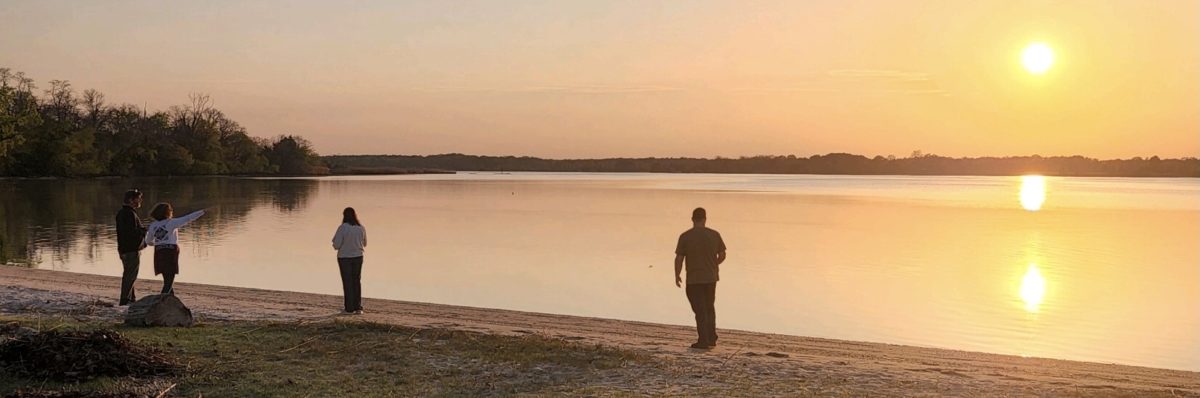
Sitting on the bank of the cove, watching a Weeping Willow move in the wind and feeling the same breeze on my skin is worth waking up for. I’ve been looking for this solitude and this quiet. Ordination to the priesthood is this Saturday and I want to rest in the afternoon.

The current is coming to a head from opposite directions and swirling right in front of me. I’m sitting under my praying/thinking tree at the Oxford Cemetery, where family and friends are buried and over the past year I have officiated funerals. This is a place where past, present, and future dwell together.

The cove itself is home if a body of water can be home: I’ve gotten boots stuck in the mud here at low tide as a kid, canoed, come and gone by Boston Whaler, kayaks, and paddleboards. That’s part of what draws me here to pray and listen, to read and write, and skateboard to get to the spot.

“Oh, feed me this day, Holy Spirit, with
the fragrance of the fields and the
freshness of the oceans which you have
made, and help me to hear and to hold
in all dearness those exacting and wonderful
words of our Lord Jesus Christ, saying:
Follow me.”

–Mary Oliver, from “Six Recognitions of the Lord”

Mary Oliver should be read outside. I have her book “Thirst” and Frederick Buechner’s “The Alphabet of Grace” with me. “Follow me.” That’s it in a hazel nut.

I get up and skate back to and around the conservation park. It’s lightly raining, the kind of rain that wakes your skin up. I stop when I see purple, per Alice Walker’s advice, which I follow meticulously. Then I head over to the Oxford Park.

Twelve years ago this month, I sat in the park reading this same copy of Buechner’s book. I look back over what I underlined then. This was at the end of a summer (2013) where I knew in my bones that I was supposed to go to seminary. It made no sense. I reached out to Fr. John Merchant, the chaplain at St. James School when I was there, and he told me it didn’t have to make sense. I read Buechner and Barbara Brown Taylor and Thomas Merton and I was stirred and moved and then laid all that aside, taking a job to head back to Washington, DC, to work as a technical writer.

I don’t have words to describe what the 12 years in between have been, except to say heels-over-head, upside down, life-changing; from profound heartbreak to indescribable joy, confusion and clarity, discernment, wonder, awe, gratitude, and everything in between, ultimately shedding some parts of myself and growing in others to where I feel alive in ways I wasn’t. Living now with my whole and open heart.

Here’s a bit of Buechner:

“You are alive. It needn’t have been so. It wasn’t so once, and it will not be so forever. But it is so now. And what is it like: to be alive in this maybe one place of all places where life is? Live a day of it and see. Take any day and be alive in it. Nobody claims that it will be painless, but no matter. It is your birthday, and there are many presents to open. The world is to open.”

Part of that I underlined 12 years ago, but it didn’t register. Each day is new, each day is a gift that we get to live and be alive in. Be grateful.

In the park, I often sit on a bench set off to the side at the edge. It’s in the shade. As I sit there, a child belly-laughs on the swing with her father; a workboat motors down to pull into the marina nearby; a man pulls his crabpots up on his dock; people and dogs come and go; the sun breaks through the clouds infrequently but unmistakably.

Today isn’t a day for revelations. It’s a day to rest and be glad in. It’s a day to breathe, a day to smile, a day to pray. I finish Mary Oliver’s book with the title poem, “Thirst,” which I have been reading a lot lately:

“Another morning and I wake with thirst
for the goodness I do not have. I walk
out to the pond and all the way God has
given us such beautiful lessons. Oh Lord,
I was never a quick scholar but sulked
and hunched over my books past the
hour and the bell; grant me, in your
mercy, a little more time. Love for the
earth and love for you are having such a
long conversation in my heart. Who
knows what will finally happen or
where I will be sent, yet already I have
given a great many things away, expect-
ing to be told to pack nothing, except the
prayers which, with this thirst, I am
slowly learning.”

With this thirst, I am slowly learning.

States of Heart: Equilibrium

“The heart is where the beauty of the human spirit comes alive… To be able to feel is a great gift. When you feel for someone, you become united with that person in an intimate way; your concern and compassion come alive, drawing some of the other person’s world and spirit into yours. Feeling is the secret bridge that penetrates solitude and isolation… All feeling is born in the heart. This makes the human heart the true jewel of the world.”
–John O’Donohue, “To Bless the Space Between Us”

It all comes back to the heart. This week in our ongoing Lenten discussion of John O’Donohue’s book, “To Bless the Space Between Us,” we’ve reached the “States of the Heart” section. How we find our heart is how we find the world.

O’Donohue continues the thoughts from above with:

“The state of one’s heart inevitably shapes one’s life; it is ultimately the place where everything is decided.

– A courageous heart will go forth and engage with life despite confusion and fear.
– A fearful heart will be hesitant and will tend to hold back.
– A heavy heart will make for a gloomy, unlived life.
– A compassionate heart need never carry the burden of judgment.
– A forgiving heart knows the art of liberation.
– A loving heart awakens the spirit of possibility and engagement with others.

Let’s shoot for courageous, compassionate, forgiving, and loving. States of heart are something we can feel, learn, cultivate, practice.

The blessing/poem of O’Donohue’s we focused on today was “For Equilibrium.” I struggle with balance. It feels like I have 50 things going on and then I collapse for a spell, catch my breath, gather up what’s around me, and then pick up speed again. It’s something I am working on. So moments like sitting in the Oxford Park at sunset on Monday to feel the breeze on my face; or walking uptown to grab lunch and stretching my legs on the walk back; or finding a few minutes to skateboard, sit on the shore and listen to birds–those moments are big and balance out some of the busier times.

After late evenings leading class and our Wednesday evening Lenten service, equilibrium this morning was parking at the Oxford Conservation Park and skateboarding over to the cemetery to sit under my thinking/praying tree. I started reading Maggie Smith’s “Dear Writer,” jotted down a few thoughts, then sat quietly and turned on the Merlin Bird App’s Sound ID.

There were some of the standards: Red-Winged Blackbird, Northern Cardinal, House Finch, Carolina Wren. There was the familiar Osprey cry that has just come home. And then there was the gift: Pine Warbler.


I have mentioned before that I am Warbler-obsessed. I dig any Warbler encounter and they generally tend to be spring or fall around here.

I can’t recall if I have come across a Pine Warbler. Either way, I love their presence; it sang/called multiple times so that I got to know and recognize it when I heard it. The Pine Warbler made a cool and special moment above and beyond the other times I have come to sit by the water and find my balance.

Here is O’Donohue’s “For Equilibrium”–

Like the joy of the sea coming home to shore,
May the relief of laughter rinse through your soul.

As the wind loves to call things to dance,
May your gravity be lightened by grace.

Like the dignity of moonlight restoring the earth,
May your thoughts incline with reverence and respect.

As water takes whatever shape it is in,
So free may you be about who you become.

As silence smiles on the other side of what’s said,
May your sense of irony bring perspective.

As time remains free of all that it frames,
May your mind stay clear of all it names.

May your prayer of listening deepen enough
To hear in the depths the laughter of God.

I love that it is laughter and grace and reverence and freedom that he uses to give us back our sense of equilibrium. And to pull these things to our attention O’Donohue uses the joy of the sea, the wind, moonlight, silence, time, and listening. Things that we can encounter frequently, if not every day.

Equilibrium and balance can also be about perspective. Part of what can call us back into equilibrium when life feels out of balance is remembering the big stuff, what is important, zooming out to a more cosmic or Creation-based perspective. Listen to The Avett Brothers “No Hard Feelings” and see if your sense of balance isn’t shifted to a more thoughtful, introspective place in terms of where we want to put our time and energy.

Since I was a teenager, I have felt that when I am surfing back and forth on a skateboard, life’s worries drop off behind me, just for a minute.

Today, may you hold in your heart the people, places, memories, and dreams you hold dear and let them balance you.

Thank you

Thank you.

Thank you for breakfast with Anna this morning at Rise Up.

Thank you for laughter and conversation taking Ava to work.

Thank you for the slow driver on Oxford Road who reminded me to slow down.

Thank you for the Oxford Conservation Park.

Thank you for the body and energy to skateboard and for the joy I get from it.

Thank you for the Eastern Bluebirds who cut across my path.

Thank you for the tree I sit under to think and pray and listen.


Thank you for the Great Blue Heron who squawked and landed on the dock across the cove.

Thank you for the hammock on the point across the way, which has been there for years and always reminds me to rest.

Thank you for the Bishop’s words on Wednesday that “Every day is a conversion experience.”

Thank you for giving me new eyes to see familiar places afresh.

Thank you for giving me words when I frequently don’t know where they come from.

Thank you for making my path clearer and clearer for me each day, even though I don’t fully know where it leads.


Thank you for companions on the way.

Thank you for the everyone I have crossed paths with, people walking their own paths, walking together for a time; thank you for those who have encouraged me and for those who I have struggled with.

Thank you for forgiveness for the countless times I have screwed up and the countless times I will screw up in the future.

Thank you for your Creation and for making me feel at home and at peace in it.

Thank you for the wisdom and inspiration that comes from your Word and from the words you’ve given to poets, mystics, artists, musicians, and prophets, known and unknown.

Thank you for the conversation this morning, under the tree, through Mary Oliver:


(Note: I was compelled to pick up Mary Oliver’s book “Devotions” when I left home this morning. I always start reading at the bookmark, where I stopped reading last time. I opened to “When I Am Among the Trees” and it picked up steam from there.)

“Oh, feed me this day, Holy Spirit, with
the fragrance of the fields and the
freshness of the oceans which you have
made, and help me to hear and to hold
in all dearness those exacting and wonderful
words of our Lord Jesus Christ saying:
Follow me.”

Thank you for your Son and for his invitation to “Follow me.”

Thank you for your love, which always comes from you, and your love that comes through others.

Lord, help me use my life and myself to serve you, to glorify you, to be your love and to shine your light in the world.

Here I am, Lord.

Thank you.

Open to Rainbows

When I am open and receptive, I am not alone. Sitting outside sipping coffee, I am connected to all the hands and all the lives that were involved in picking the beans, making the coffee, and getting it here.

Listening to and watching birds opens me to a symphony of sounds, colors, and graceful movements.

I see the greens of summer above and around me and I feel the slight breeze of the morning.

In the background, I can hear vehicles heading more east than west on Route 50, starting a long holiday weekend. Though I can’t know the people driving by individually, it’s not hard to picture or remember the feeling of heading to the beach for the weekend.

When I allow myself to be open and receptive, perceptive, I don’t feel isolated. I feel connected. It’s a feeling that sets the tone for the day.

In “The Book of Awakening,” Mark Nepo writes, “The dearest things in life cannot be owned, but only shared.” Last Sunday afternoon and evening, Holly and I shared a show of God’s handiwork that was awe inspiring.

Outside to watch the sunset, we listened for birds using the Cornell Ornithology Lab Merlin app’s Sound ID. We heard Indigo Buntings, Purple Martins, Cardinals, American Goldfinches, Chipping Sparrows, Carolina Wrens, Red-Eyed Vireos, and Blue Grosbeaks.

Blue Grosbeaks were new to me and they were the noisiest and most active of the birds we were hearing. As we walked down the garden, Holly pointed out a nest in a bush and as we got near, the mother flew out and into a nearby tree. As she chirped her annoyance at us being there, Sound ID showed her to be a Blue Grosbeak. Looking up more about them, their nest is exactly as described. Hope to see some little Grosbeaks soon.

Next for our evening in the yard, despite very little rain, a rainbow appeared, developed, and thickened right over the house. It was an amazing light show.

There was a stretch in my life where I loathed rainbows—they carried some baggage I didn’t feel like unpacking, and I wrote them off as illusions of light, nothing substantial, nothing of substance. And that’s all true.

But how much of the beauty we find in life and in Creation is transient and fleeting? We know that and we can still appreciate it and marvel at it when it’s there. I live for sunrises and sunsets and they are also impermanent plays of light, which need to be enjoyed in the moment.

If I want to be available to the full spectrum and experience of God’s works in Creation, I need to be open to rainbows. It’s to my benefit and God’s glory.

The next part of the show for the evening was the sunset itself, which incorporated the clouds and the whole sky.

The Sunday evening show was on the last day of June. The month of July does not include vacation or travel for us, it’s about being open to rainbows and experiencing what is around us each day and every weekend. The idea is to “carpe” the month in every way we can. I am a list maker, here are some of the things on the radar screen:

  • Kayaking/paddleboarding
  • Parks (both new and known)
  • Birding
  • Sunrises and sunsets
  • Be out under the stars
  • Live music
  • Fire pit nights
  • Beach days
  • Cooking/grilling
  • Summer reading
  • Skateboarding
  • Gardening
  • Walks/hikes

If we do things on that list each day and every week, we should have a shot at carpe’ing July.

A skateboarding friend Landy Cook already put some of that into play when on July 2 he organized a social skate along Rails to Trails and at the pump track and skate park in Easton. It was a good first turn out and stellar evening, to be repeated weekly.

A number of author Annie Dillard’s words dance through my head regularly. One of the main quotes is this one:

“How we spend our days is, of course, how we spend our lives.”

There is no getting around that. If I daydream but never do anything, my days won’t reflect the life of my mind, and neither will my life.

Each day is an opportunity to do something. Beyond making a list of things I hope to do, what would a meaningful day, any day, look like?

What if every day included doing:

  • Something creative
  • Something prayerful/meditative
  • Something physical
  • Something practical
  • Something productive
  • Something peaceful/soothing
  • Something loving
  • Something selfless
  • Something outgoing
  • Something spontaneous
  • Something sensory/sensuous

If I can think about those kinds of things to do each day and look back at the end of the day to see how I did, how I spend my days might add up to a life I want to live.

Oneing Weekend: Let’s

I want to spend more time “oneing.” “Oneing” is a term the mystic Julian of Norwich used to describe the encounter between God and the soul. It’s a word and idea so meaningful to Franciscan Richard Rohr that he named the publication of his Center for Action and Contemplation “Oneing.”

It’s a feeling I get frequently when I sit quietly outside.

April 19

Skateboard, notebook, pen, binoculars, an issue of “Oneing,” reading an essay from Scott Avett of Avett Brothers fame about “Creating Faithfully.” On the shore of the river, purple flowers pull my attention until watching them and taking pictures and listening to the water, I just feel like an extension of the scene, part of it. A feeling of oneness.

Skating, gliding along pavement, has been a oneing experience for almost 30 years.

Around the Oxford Conservation Park, there are Eastern Bluebirds and I sit on a bench and watch a bluebird house where one flew out of and I read.


In addition to being a world famous singer, songwriter and musician, Scott Avett is a talented painter and a moving writer. His essay is on his faith and the creative process. He talks about contemplating Jesus’s identity and how Jesus knew exactly who he was, something most of us struggle with. Avett writes, “I think this truth alone, separates him from us. I can see how this knowing of who one is can be the most loving truth one can offer.”

He talks about going into the studio in solitude to create.

“This time alone is fertile ground where I cultivate my purpose. My contribution is my engagement in it. The studio is my cloister. To pray is to be drawn nearer to my existence. The only control I have is to show up and respond. I build from that simple idea… I long to create faithfully rather than successfully, productively, intelligently, or even truthfully. Creating faithfully is not knowing how to do it. It is believing that it is worth doing… With this, I replace the anxiety-ridden aspirations of arrival with peace in a true being. This is who I am in Christ and who Christ is in me… What a precious revelation. Simply put, to create faithfully is to be me.”

Avett arrives at this oneing through creating art. I read and sit with his words waiting on bluebirds, greeting walkers, dog walkers, and folks riding bikes as they loop the park.

April 20

It’s the last day of classes for our three-year Iona Eastern Shore seminary program, a day retreat at Old Trinity Church in Church Creek, which is about a mile down the road if you don’t turn left to go to Blackwater Wildlife Refuge. Seminary day retreats are the only reason I have been to Old Trinity, which is a beautiful church and campus. I smile that their parish hall is named “Valliant Hall.” I’ve now preached from the pulpit there twice in front of classmates and instructors, working on our homiletics.


On days when the weather is nice, I get there early so I can sit out on the dock or on a bench by the shoreline to pray, breathe, drink coffee. It’s another experience of oneing, of an encounter between my soul and God.

It’s the last time our class will be gathered together for the purpose of learning, when we are one in that way. We will graduate together on June 15.

April 21

Oneing is an encounter between God and the soul. But it can and does also include other people. According to Richard Rohr:

Julian of Norwich says, “The love of God creates in us such a oneing that when it is truly seen, no person can separate themselves from another person,” and “In the sight of God all humans are oned, and one person is all people and all people are in one person.”

We are connected to each other and we are connected to God and we can experience God in each other. In my experience, some people make us more aware of that connection, or more quickly and intuitively aware than other people do, and there are people who show and remind us of our own connection to God. Those are people to treasure and spend time with.

The first time I met Holly was on a retreat in late October 2017. Despite both living on the Eastern Shore for our whole lives, and having a number of mutual friends, we had never met. The first real conversation we had was a few weeks later at the Waterfowl Festival. We met for coffee a few times at Rise Up Coffee to continue our conversations.

In December we went for a five-mile hike together at Tuckahoe State Park, which we consider our anniversary. We walked in as two people and by the end of the hike, we were different, together. That was almost six-and-a-half years ago. Tuckahoe has been a holy, sacred, thin space for me since 2005, when I went trail running there. It is a place I called “church” long before I was going to church. Oxford and Tuckahoe are two places where oneing and walking are almost the same for me. Holly and I have hiked there a number of times since.

On April 21, we decided to hike our anniversary route.


Time passes differently with Holly. We can get lost in the backyard together, listening to and watching birds, lying under the stars; we lose track of time making dinner together, or sharing something we are excited about.

If you’ve taken time and put in work to get to know yourself, in the way that Scott Avett talks about, knowing who we are and being ourselves as the most loving truth we can offer, my experience with Holly is that you can be even more free and encouraged to be yourself by the presence of someone else. In oneing, in being together, you can be more than you were. And you can do and be that for someone else. That’s love and freedom together.

Tom Robbins, a favorite writer of mine in his book “Still Life with a Woodpecker” said, “There are only two mantras, yum and yuck, mine is yum.”

There are people who increase your yum exponentially, and you theirs. That has been our experience together. From our earliest conversations, talking about life, and dreaming about adventures, “Let’s” has always been our response to each other.

On this day, we walked into the woods together. We talked, we dreamed out loud, we watched and listened, we encountered friends along our Sunday walk who we hadn’t seen in a while.

And we said, “Let’s” to our next adventure together. Further experiences in oneing.

You are witnesses of these things

Background: At the healing service on Wednesday, April 10 and for the Zoom prayer service and discussion on Sunday, this is the text/basis for a homily and discussion we had on Luke 24:36b-48, where Jesus appears to the disciples for the first time after his Resurrection, per Luke’s account. (artwork: “Jesus’ Appearance While the Apostles are at Table,” by Duccio di Buoninsegna (1255-1319))

“You are witnesses of these things.”

Today’s reading gives us Luke’s version of a story similar to what we heard from John’s Gospel last week. The disciples are gathered in a room and Jesus appears to them. In the course of their encounter, they go from being terrified and afraid, thinking they are seeing a ghost, to being witnesses, inspired and charged up to share their testimony.

How does this change happen?

Does Jesus make some rousing speech? Does he scientifically explain what happened to him?

He gives them his body. He says “look at my hands and feet. Touch me and see. That’s a line I want to let sink in for a bit.

Over the different Gospels we have heard Jesus say, “Follow me” and “Come and see,” now this is the most personal, most intimate invitation he could give, “Touch me and see.”

They are starting to come around, still not sure about all this—they know he died, there is no way this can be… Jesus looks around and says, “Got anything to eat?” And then eats fish to show them he’s legit.

I love the encounters with the risen Jesus in Luke—this story and the Road to Emmaus—there is a light-heartedness about Jesus, there is humor even in the serious work that he is there to do.

In light of the Resurrection, everything takes on new meaning. In the Road to Emmaus story, it’s just two disciples walking and Jesus comes upon them, and they walk and talk and he teaches them and then breaks bread with them, and their lives and hearts are changed. In a way that didn’t happen before. Things are different.

In today’s reading, for the disciples it is conversation, it is Jesus’s bodily presence, it is teaching, all things they have experienced before, but this is different. This changes everything.

I want to ask a question here and see what you think. Why does Jesus come back to his disciples? What’s his purpose in appearing to them and spending time with them?

To fulfill his mission; to do what he said he was going to do. To show them he is who he said he was; to show them that love conquers death.

It’s also this: to give them living and credible proof. To help them take the next step in their learning.

He is going to ascend and it is going to be up to them. His life, his love, his teaching, he is placing it in their hands to pass on to others.

“These are my words that I spoke to you while I was still with you,” … he goes back over what he told them before he was killed, but it all has a new significance; it means something different now.

Then he opens their mind to understand the Scriptures. Wow, that would be a lovely gift, wouldn’t it? Hey, Jesus, what does this mean? How do I make sense out of this? Like a phone-a-friend lifeline to Jesus.

In coming back, in appearing to the disciples, in teaching them, and being with them, in them touching him, Jesus says:

“You are witnesses of these things.”

If the disciples aren’t credible witnesses, it will never work. If they don’t believe, if they aren’t convinced and convicted, how will anyone else come to believe?

But not just credible witnesses, they have to be fired up, they have to be motivated, they have to want nothing more than to share their testimony, to share the good news. It has to be part of their core purpose.

Imagine if after Jesus leaves, the disciples are sitting on this amazing, life-giving story that can change the world, and they decide, “Okay, well, we’ve got this church here, a house church, and if anyone new comes in, we’ll tell them. That’s what it means to be a disciple, right—that we proclaim the word within the walls of our specific church, we celebrate Communion, we pray for others, and Jesus is happy, right?”

Jesus knows his work, his purpose, his life, his love for us hangs on the disciples becoming apostles—being sent out to spread the good news. So he supercharges them, gives them everything they need to succeed, including the Holy Spirit (that comes in Luke, Part II, Acts).

Let’s look at how Jesus gives them what they need in this story. He doesn’t come in and say, “Great to see you guys, would you please pick up your Bibles and turn to page 42 for today’s lesson.”

He shows them his scars, he says, “touch me and see,” he eats with them. He is vulnerable, intimate, and authentic. Explaining Scripture doesn’t come until later.


I love this quote from Debie Thomas in the book we studied last year, “Into the Mess & Other Jesus Stories.” She says:

“Maybe when the world looks at us to see if OUR faith is authentic and trustworthy, it needs to see our scars and hungers, too. Our vulnerability, not our immunity. Our honesty, not our pretenses to perfection. What would it look like for us to offer our stories of scars and graces, hungers, and feasts, in testimony to this world? How might our embodied lives become a way of love? Naming our hungers, widening our tables, sharing our scars and our feasts—what if THIS is practicing resurrection? Maybe more is at stake in a piece of fish, or a glass of water, or a loaf of bread, than we have imagined.”

Another question I want to ask you, and if it is something you feel like you have an answer for or want to talk about, wonderful, if not, ponder it over the week:

What is YOUR witness?

What is it from your life, your scars, your hunger, your passions, your relationships that might speak to others?

We are all different witnesses. The good news is the good news, but we connect to it in different ways, and we connect to other people in different ways. My witness, my testimony, is different than yours.

Part of this whole line of thinking came to me yesterday while I was skateboarding. I had been sitting at my desk for the afternoon, I needed to go to the grocery store, and there is a paved trail down next to Easton Point that goes across Papermill Pond, right on the way to Harris Teeter or Target. I wanted to stretch my legs.

And I got to thinking that the joy that I get from cruising on a skateboard, a joy I found when I was 13 and almost 40 years later is still there, is part of my witness. Writing is part of my witness. Discussing the Bible, laughing, asking questions, building friendships while wondering about Scripture, is part of my witness. Sitting outside in nature and feeling like a part of Creation is a part of my witness.

What things are a part of yours?

I want to mention one more aspect to this Resurrection story. Jesus is changed. The disciples are changed. Something has happened, they have received something from Jesus that has made them witnesses.

What is it and how can it help our witness? This is how Debie Thomas puts it:

“The resurrection is not a platitude or a line in a creed. The resurrection is fire in our bones, steel in our blood, impetus for our feet, a song of lamentation, protest, and ferocious hope for our souls. The resurrection is God’s insistence that we speak, stand, and work for life in a world desperate for fewer crosses, fewer graves, fewer landscapes littered with the desolate and the dead.”

This is the season of the Resurrection. This is the Easter season of new life. That power and love and energy is for us, it is supposed to be a part of our witness. Is it a part of yours?

The wonder of being here

Sometimes I’m drawn forward and sometimes I am turned to circle back, usually so I can pick something up I need to go forward. That’s an eyebrow-raising, quizzical-look statement, I know. Let’s try this:

This past weekend, I went for a run–my first run since early April. It was slow, but it didn’t matter–the smile on my face running through John Ford Park, saying good morning to folks I encountered, feeling air in my lungs and my feet in motion, even if stumbling slowly, was something I have been missing.

Running, skateboarding, and writing are three life-giving activities I discovered in my early teens that sustain and stoke me in my early 50s. There is a thread that connects them.


I’ve been reading Mark Nepo’s book, “Drinking from the River of Light: the Life of Expression,” which I take in small bites, so I can savor it and let is wash over me. Nepo circled me back to one of my favorite writers, poet William Stafford, by sharing and talking about Stafford’s poem, “The Way It Is”–

There’s a thread you follow. It goes among
things that change. But it doesn’t change.
People wonder about what you are pursuing.
You have to explain about the thread.
But it is hard for others to see.
While you hold it you can’t get lost.
Tragedies happen; people get hurt
or die; and you suffer and get old.
Nothing you do can stop time’s unfolding.
You don’t ever let go of the thread.

Nepo writes, “To discover the thread that goes through everything is the main reason to listen, express, and write… I began to realize that listening, expressing, and writing are the means by which we stay clear, the inner practices by which we realize our connection to other souls and a living Universe.” Then he invites us to think about, write about, and try to discern what that thread is for us, individually. What is the constant that is with you, through joy, pain, sadness, lows, highs, that makes you, you?

As I sat there, coffee, sunlight, and summer-breeze-fueled, scratching out a few notes, the thing that hit me was: a sense of wonder. That’s the thread. From marveling at honeysuckle and marsh grasses in the neighborhood as a kid, to Morning Glories and Great Blue Herons as an adult, a childlike sense of wonder has underpinned it all.

Nepo is a writer I’ve just found. He circled me back to Stafford and a poem I’ve been reading for years–something I needed to pick back up to move forward with new eyes.

Running, skateboarding, and writing have been wonder-stokers for me all along. Somehow they have distilled over time to where the wonder is there now as soon as I step on a board, pick up a pen, or put running shoe to pavement.


Yesterday morning, Landy Cook and I met at the Oxford Conservation Park to start the week off with a sunrise longboarding adventure. The sun was smiling with us and lent its rays to every moment and every photo. It was a morning to catch up, to laugh, to skate, to enjoy the moments, to breathe in the day. It’s a place we skate frequently, it’s not new scenery, but every morning is its own, there is always something new or different to catch, to appreciate, to be grateful for.

For me, part of those experiences, those moments, of being given a gift, is wanting to communicate it, to share it, maybe if I am lucky to wake something up for someone else, to connect in some way.

Nepo says it: “listening, expressing, and writing are the means by which we stay clear, the inner practices by which we realize our connection to other souls and a living Universe.” That’s what writing brings to my aesthetic and Spirit-filled table. Even rolling on a skateboard, I make sure to have a pocket notebook and pen to try to catch something of the wonder of the experience.


A couple weeks ago I was sent back to another favorite writer, John O’Donohue. Last summer we led a small group discussing his book, “Anam Cara.” A friend from church continues to read and reflect on it regularly and he wanted to pass along a copy to someone who is going through profound loss, hoping it might give them something to latch onto–perspective, compassion, care, connection, hope.

The class last summer was right around this time of year and a memory, a quote from “Anam Cara” circled its way back in front of me. It’s a thought that struck me as something Holly has been working through after coming back from a 12-day mission trip to Amazon river villages in Peru, where the life of the villagers was deliberate, present, and connected to the days and nights, the land, and each other. O’Donohue wrote:

“It is a strange and magical fact to be here, walking around in a body, to have a whole world within you and a world at your fingertips outside you. It is an immense privilege, and it is incredible that humans manage to forget the miracle of being here.”

The miracle, the wonder, of being here. That’s our connection to each other, other living souls, to God, to the living Universe; whether we are in Peru, the backyard, or skateboarding with the sunrise.

Morning Snapshots

Eastern Bluebirds are flying in front of and behind me as I skate onto the Oxford Conservation Park loop. I’ve had their shade of blue and orange in my head since I first saw a bluebird years ago and they still quicken my heart.

It is a Saturday with nothing on the morning calendar and temperatures looking to move into the mid-90s. This early though, there is a breeze and it’s perfect sitting outside weather.

Books frequently open my mind and expand my worldview. The path I am walking (or skating) I owe in part to a Trappist monk named Thomas Merton. Recently I’ve encountered another Trappist monk Thomas, Thomas Keating.

“Grace is a participation in the Divine nature, it’s not just something added on like an overcoat. It’s a radical transformation of the whole of human nature so that it can be a divine human being, meaning it can exercise freedom, compassion, love…”

Fr. Thomas Keating

From reading his books to watching the documentary, “A Rising Tide of Silence,” Keating and a former student of his, an Episcopal priest named Cynthia Bourgeault, have pointed me to the practice of centering prayer. I’ve made this type of silent prayer part of my mornings for the past month or so, and I hope to keep it in my daily routine.

This morning, I want to go outside, to make this time under my sitting tree. After my bluebird greeting, I have a deer run across the cemetery loop about 10 feet in front of me.

I’m traveling light, just a notebook, pen, and binoculars, and I sit on my skateboard on the shoreline looking out onto the cove.

For centering prayer, they recommend picking a word that can bring you back to the moment, Bourgeault describes the word as being like windshield wipers to wipe away the thoughts that always jump in the way for attention. The word I have been using is “rest.” In Matthew’s Gospel, Jesus says, “Come to me, all you who are weary and burdened, and I will give you rest.” (Matthew 11:28). Psalm 37:7 says “Rest in the Lord,” which can also be translated as “Be still in the Lord,” meaning be at peace. I find that to be the right approach and mindset for me.

Sitting by the water, I breathe and close my eyes. A breeze is across my skin and in my ears like a conversation and listening, there is a constant concert of songbird voices. I can hear a fish jump in front of me to the left, and I open my eyes to see the rings it left–a cardinal flies low over the water, like it’s his cue to go on. The ascending sun reflects off the water to the right.

I am new to centering prayer, but even with my limited experience, I find that when I let my passing thoughts go, it gives me an opportunity to be closer to God. Keating’s quote that grace is for us a chance to participate in the work God is doing in the world and the love He has for us and for creation. And I can feel that this morning. And sitting alongside a cemetery, where my grandparents, family, and friends are buried, remembering and feeling them, I feel re-connected over and through time, like we are all sharing these remarkable moments.

Keating writes:

“When the presence of God emerges from our inmost being into our faculties, whether we walk down the street or drink a cup of soup, divine life is pouring into the world.”

For most of my life, this kind of quiet prayer time, these morning moments and experiences have been solo endeavors, an introvert’s delight. And I still need plenty of those. But I also find that I can be around people and still be at peace; I can even delight in what other people are doing. Like Keating says, walking down the street, or having a cup of coffee (too early for soup), I want to take those moments with me into the world, to be a part of that divine life pouring into the world . And I am not ready for the next phase of the day to start, so I head to the Oxford Park.

I stop through Oxford Social, the cafe right next to the park, for the first time. A birding friend from my Oxford Community Center days gets in line and we talk birds a bit, and about Third Haven Quaker Meeting House, and about seminary. I walk down to a bench by the river and sit with coffee, the view, conversations off to my right, kids playing on the swings to my left, and a young boy running with his dog.

I pick up John O’Donohue‘s book “Anam Cara,” a favorite book, which Rev. Susie Leight and I will be leading a book study of starting in July, and I come across this:

“Love is absolutely vital for a human life. For love alone can awaken what is divine with in you. In love, you grow and come to your self. When you learn to love and to let yourself be loved, you come home to the hearth of your own spirit… Love begins with paying attention to others, with an act of gracious self-forgetting. This is the condition in which we grow.”

John O’Donohue, “Anam Cara”

And it’s this openness, this paying attention to others, this self-forgetting, letting go of ourselves, letting go of myself, where I seem to be spending a lot of my time of late. O’Donohue continues:

“Once the soul awakens, the search begins and you can never go back. From then on, you inflamed with a special longing that will never again let you linger in the lowlands of complacency and partial fulfillment. The eternal makes you urgent.”

Maybe this has been a slow build over the last 50 years. Maybe all those different moments I can look back on and feel sitting here now, have all been hints and flickers, breadcrumbs or candles of encouragement. And each epiphany adds to a longing, pushes further into the search. Maybe with the state of the world, the worry, the suffering, the confusion, the time is coming that we need to look at differently and help others do the same; we need to live differently and help others do the same.

Maybe when we have moments of sitting quietly and emptying ourselves out, what’s there that we connect to, is Love (God is Love). And what could be more important to share with each other?

The Sitting Tree

I love Shel Silverstein. I have never wanted to punch a character in a story more than the boy in his book, “The Giving Tree.” (as he gets older, not when he was a kid). I had a hard time reading it to the girls because the boy just takes and takes and blows off the tree, and never gets it. My blood is boiling a bit now just thinking about it. But Silverstein couldn’t describe humankind in our time any better.

I aspire to a more complementary relationship to the trees in my life (I get the irony of having a wooden skateboard in the photo). Over the past several years, a particular tree stands out. It’s an Osage Orange tree on the shoreline of the Oxford Cemetery. I have made a point of sitting under it for some time now.

Of late, rest has been hard to come by. At lease the right kind of rest. Rest, for me, is about tuning out the constant demands of what is coming up, and being completely in the moment. It’s when time doesn’t matter and actually passes differently. It’s not the kind of rest that comes from sitting on a couch or sleeping at night. Frequently, it comes from being outside–hiking, walking, skateboarding, reading, bird watching, exploring, kayaking, paddleboarding, reading or writing. I haven’t had enough of that time, those moments lately, and I can tell.

When I rest is when I am open to wonder. When I rest, gratitude overflows–in part because I am not rushing to the next thing. I am not in a hurry.

Thursday morning, I fought the pull of the couch and hit Oxford Conservation Park with longboard, binoculars, and notebook. “Skatebirding” has become a new favorite thing to do. I skated to the cemetery and pulled up under my “Sitting Tree.”

Double-drop longboards make for great birding seats. As I sat to clear my head, think, pray, and take in the morning, a raft of ducks was just off the shore. Watching them move about as a group, they were doing what ducks do. And what is it that people do in that way? What is it that is natural to us, that puts us in a place of doing what we should be doing?

Beyond Mallards, Canvasbacks, and Wood Ducks, I don’t know all the duck types around by first sight. Watching them and checking Cornell’s Merlin App, I pegged them as Ruddy Ducks, but pinged a birding expert friend to make sure. As I watched them, time moved differently. A solo Bufflehead swam up to the Ruddies a couple times, thinking they were his peeps, and then both times flew away skimming the water in a hurry when he realized they weren’t.

These are not my photos, they are from bird ID sites, but the top left is a Bufflehead and the others are male and female non-breeding Ruddy Ducks.

It was the tree, the ducks, the cove, the breeze, the sunrise, the shoreline, and I got to be a part of it. Sitting there, gratitude and joy welled up and started coming out of my eyes. I know I can’t communicate it, but maybe you’ve had moments like that.

Skating back to the conservation park, I wanted to write all this down–something I haven’t been doing enough of except chicken scratch in notebooks.

We’re looking headlong into the holidays. It’s a busy time of year, it’s nighttime dark at 5:30pm and it’s getting colder. Mornings like yesterday remind me that I need to rest. And to rest, I need to get outside. The Sitting Tree is still there. Where am I?

I hope my daughters figure out time travel

Empty parking lot off Idlewild Avenue. Parking curbs. Concrete. Asphalt. No people, so I pull out my time machine, step on, and the sound of polyurethane on pavement spins back decades. The sound, the vibration under foot, the feeling of cruising carelessly, for no reason except that it’s fun.

What are the things you do regardless of what anyone else thinks? Things you can’t wait to do, that bring you happiness, just by doing them.

Rolling up to a curb, I sit down with a pen, notebook, Mary Oliver’s “Thirst.” I look up.

“Clouds are not only vapor, but shape, mobility, silky sacks of nourishing rain. The pear orchard is not only profit, but a paradise of light. The luna moth, who lives but a few days, sometimes only a few hours, has a pale green wing whose rim is like a musical notation. Have you noticed?”

When Mary O. asks you a question, you do well to consider it. Do I take the time to notice what goes on around me? Really notice? There are everyday miracles, right here on Idlewild Avenue in an empty parking lot on a Sunday afternoon.

Those things that you do for you–how did you figure out what they were? And how long have you been doing them?

When I think back, some of the things I most love doing today, I started in my early teenage years: comic books, skateboarding, writing, reading, running, being on the water, just being outside. And it’s some form of those things that still fill me up a few decades later. Those things maybe as close to time travel as I will get. They connect me to past and future versions of myself. They mark a moment in time, but revisiting them, they create moments outside of time.

I don’t know if my daughters will figure out time travel. I hope they do. I hope they walk the same beaches (and new ones) over decades, and remember when their feet were smaller, their minds saw more colors, and there were fewer distractions. I hope they remember, connect, and see outside of time.

I land in the parking lot again. It’s not supposed to feel this warm in February. The day is a gift. I can hear life in the back yards of Aurora Street. If I get quiet enough I can hear the universe.

“He or she, who loves God, will look most deeply into His works.”

Mary Oliver

Maybe that’s it. We don’t need to stay at the surface. If we look deeper, we can lose ourselves. We find ourselves connected; to our past through memory; to our future through hope; to each other through God, who is Love.