There are no good Hallmark cards for aging

When I picture my grandparents, they are later in years. The picture I have of them in my head is younger than how I guess they would picture themselves.

When I think of my parents, the images I have in my head are younger than they are now. Probably because I still see them in some ways like I did growing up. Though there is a continuity, they are still the same people.

I don’t know what age the girls will ultimately picture me as when they think about me. Since we see each other so often, likely at my current age for now.

I can still picture them at a variety of ages.

This week’s section in the “Anam Cara” study we have going at Christ Church Easton is “Aging: the Beauty of the Inner Harvest.” One of the things we decided in our discussions is that author John O’Donohue wouldn’t have been great at writing greeting cards for aging–his sentiments are either too sappy or too bleak. And there is a lot in this section that he glosses over–the pain both of aging and failing health and of watching those we love go through these things. But there is a lot to glean from O’Donohue as well.

As a society we don’t want to talk about aging. If anything, we want to deny it, put it off, sweep it under the rug. We buy products to prevent the effects of aging, we have procedures done, we aren’t comfortable with the journey of aging. But in some cultures, old age was/is revered and respected and elders were looked to for wisdom and insight.

O’Donohue points out that since we come from the earth and are made up of earth/clay, that like the earth, the rhythm of the seasons that are outside in nature, are also present within us. Our hearts and our lives move through seasons–winter, spring, summer, autumn–and each of these seasons have characteristics and benefits and drawbacks. It is helpful to be mindful of the seasons we go through in our lives.

This is what he says about autumn:

“When it is autumn in your life, the things that happened in the past, or the experiences that were sown in the clay of your heart, almost unknown to you, now yield their fruit. Autumntime in a person’s life can be a time of great gathering. It is a time for harvesting the fruits of your experience.”

We go through seasons throughout our life, not just one of each. I can think of several autumns in my life already, where I have been able to discern meaning after an experience that didn’t make sense at the time I was living it. But there is also a real way that as we get older, we are presented with opportunities for stillness, for reflection, for memory, and for meaning. These can be some of the upsides of aging.

O’Donohue tells us that old age is a time for integration–we have had the experiences, but may have missed the meaning. It is time to put it all together.

He talks about how our mistakes are precious and invaluable: “Frequently, in a journey of a soul, the most precious moments are the mistakes. They have brought you to a place that you would otherwise always have avoided.” And one part of the integration he talks about is being able to forgive ourselves for those mistakes.

And he suggests a wonderful quote from Blaise Pascal, who advised:

“In difficult times carry something beautiful in your heart.”

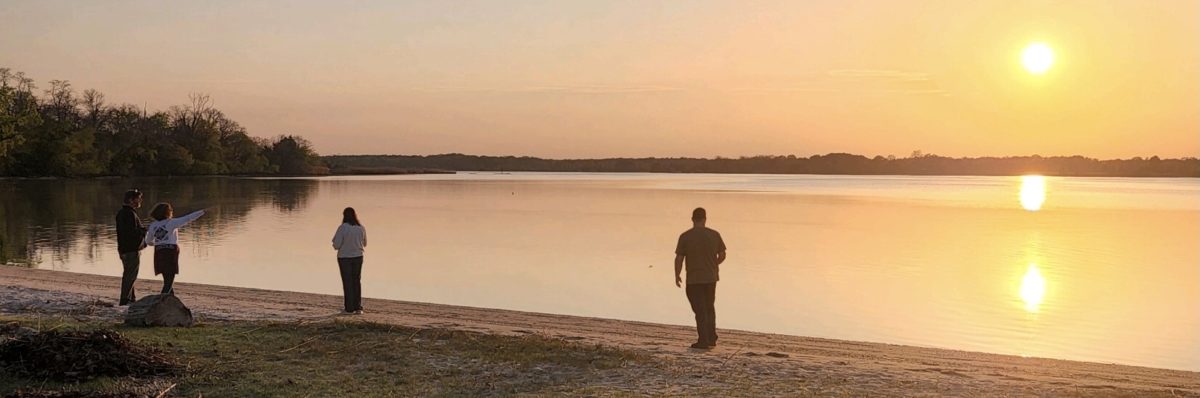
A few beautiful images I carry in my heart–always hoping to add more.

A concept that O’Donohue talks about, thankfully lived out by a number of people I am fortunate to know, that can come with old age is what he calls “second innocence:”

“Old age is a time of second innocence… The second innocence comes later in your life, when you have lived deeply. You know the bleakness of life, you know its incredible capacity to disappoint and sometimes destroy. Yet notwithstanding that realistic recognition of life’s negative potential, you still maintain an outlook that is wholesome and hopeful and bright.”

I am grateful daily for those I know who are living and sharing their second innocence.

O’Donohue points to old age and integration as a time for gathering wisdom. And he has a wonderful way of looking at wisdom:

“Wisdom is the art of balancing the known with the unknown, the suffering with the joy; it is a way of linking the whole of life together in a new and deeper unity.”

As we age, may we find ways of linking the whole of life together in a new and deeper unity.

I want to finish this reflection thinking about time. There are different ways of looking at and experiencing time. There is the time that passes–the chronology of things–minutes, days, years, workdays, appointments–and there are those experiences where time passes differently.

Fr. Bill Ortt uses the terms ‘chronos’ and ‘kairos’ to talk about different kinds of time. In looking for the best quick definitions of these two terms, Unsettled popped up with this:

“Chronos is the forward propelling time that we measure with clocks, on watches, and by the evolutionary phases of the moon. But time does not end there. The Greeks’ second word for time is “kairos” — lesser known but no less important. “Kairos” is what many philosophers and mystics would refer to as “deep time.” This is the time we’re talking about where the world seems to stop entirely. It can be measured in deep exhales, a shared laugh, or by a colorful sunset.”

That says it so well. I hope in our lives, each of us have experienced kairos, deep time, those times when regular time wasn’t the same, it wasn’t there. And I hope we continue to have those experiences.

O’Donohue talks about eternal time, and says that our soul lives in eternal time. I think you could make the case that kairos moments are when eternal time mixes with chronological time–our souls inform our lives and we have these profound, deep, and beautiful moments. I hope as we age, we become more aware of these moments.

Let’s talk more about eternal time. We hear a lot of a kind of stereotypical Christian thinking that says we live our lives in time, now, as they happen, and then when we die we become part of eternity. Right now we are in time, but then when we die we are not subject to time.

But if it’s eternity, it isn’t just then, it is also NOW. We are also living in eternity now. It’s all around us, it doesn’t just start later. It’s not simply a place for later, it’s how we relate to it.

Jesus was known to have used the terms “kingdom of Heaven” or “kingdom of God.” The Gospel reading for this past weekend was from Luke’s Gospel (Luke 13:10-18) and was about a woman who had a spirit that had crippled her for 18 years. Jesus healed her on the Sabbath and caught grief from those at the temple who said he wasn’t supposed to do things like that on the Sabbath. And after schooling the temple folks in why it was right to heal this woman on the sabbath, Jesus asks, “What is the kingdom of God like? And to what shall I compare it?”

On Saturday evening at Christ Church Easton, Rev. Susie Leight preached and led our worship service. It was her daughter’s last time singing in the contemporary choir before leaving for college for the fall, and the first service at the church since learning that Rev. Carol Callaghan, a dear friend and mentor of Susie’s had died the night before.

In Susie’s sermon, she pointed out how Jesus fused the world we are living in, the world the woman in the reading was living in and experiencing, with the kingdom of God, in the here and now.

These are some of Susie’s words, excerpts from her sermon:

Jesus sees this unnamed woman and he recognizes her…
There is no coming back tomorrow. 
There is no delay. 
His actions say:
Mercy now, Compassion now, Grace now. 
You are free, now.

What is the kingdom of God like? 
The kingdom of God…
is like this right here. 
It was 2000 years ago and it is right here, right now. 
Look around you. 
We don’t have to imagine it. 

The unnamed woman is each of us sitting in this room. 
Jesus calls us too and waits to give us a drink. 

Maybe you know this and you’ve heard him calling your name, or maybe like the woman experienced, 
it’s taking you a long time to find him 
and healing seems to be far off. 

Maybe your view is all dust and dirt right now, 
and you are twisting and straining to find a way forward. 

Or maybe, by the mercy, compassion and grace of God, 
you are standing up straight and in the light. 
Rejoicing at all the wonderful things 
that Jesus is doing, 
And you are fully hydrated. 

Or perhaps you are somewhere in the middle. 

God’s time is strange. 
And I know it can feel like sometimes God is saying, 
come back tomorrow (I’ve been there), 
or often healing comes in ways 
that we might never choose for ourselves (been there too). 

But this startling work of God is often out of place, 
out of time and often directed towards people 
we might otherwise cast aside or condemn, 
people we may not even see. 

This startling work of God is meant for all, 
even those synagogue leaders, 
and right now I am imagining their red faces 
as Jesus set them straight. 
And I can hear Jesus declaring, 
Mercy now, Compassion now, Grace now. 

What is the kingdom of God like? 
And to what should I compare it? 
The Kingdom of God is like each of us sharing our water 
with someone who is thirsty and dying for a drink. 

Can you see it? Do you believe it? Will you receive it? 
Will you share it? 
Look around you.

Can you feel the fire?

Right here. Right now.   Amen.

Eternal time. The kingdom of God. The same 2,000 years ago as now. Right now. Things like mercy, forgiveness, compassion. We experience them in our souls and in our lives. They change time. The healing of our souls, of our bodies; love for God and for one another moves us from chronos to kairos, to the eternal.

These acts of healing, kindness, compassion, right here, right now, bring us into the kingdom of God; help us glimpse eternity, from our souls into our lives.

John O’Donohue tells us that “wisdom is the art of balancing the known with the unknown, the suffering with the joy; it is a way of linking the whole of life together in a new and deeper unity.”

As we age, may we be wise. May we experience a new and deeper unity. May eternal time become more evident during our chronological lives. May the kingdom of God be ever more present and a part of our lives.

Right here. Right now.

What we do with our lives

Let’s begin with intention. This is a blessing/prayer shared by Rev. Susie Leight:

Been praying this on repeat for the last few weeks…trying to utter it before my feet hit the floor (if I’m awake enough) …thought it would be a good one to share again…

May I…may you…may we…❤️

May I live this day
Compassionate of heart,
Clear in word,
Gracious in awareness,
Courageous in thought,
Generous in love.

–from Matins, by John O’Donohue

What we do with our time, how we spend our days, months, years, lives is who we are to those we encounter. Our inward lives of thoughts, dreams, desires, may be infinite, but our worldly lives are the result of our time and actions.

Part Four of John O’Donohue’s book “Anam Cara,” looks at “Work as a Poetics of Growth.” The work that we do in the world helps shape us, helps us grow.

Thinking about this chapter, two quotes that come up a lot for me came to mind. The first is by writer Annie Dillard, who said:

“How we spend our days is, of course, how we spend our lives.”

And the second is by poet Mary Oliver, who wrote:

“Tell me, what is it you plan to do with your one precious life?”

How we use our time matters. It is so easy to let one day run into the next without thinking about it, but when these days string together, they can become large stretches of our lives if we don’t pay attention.

O’Donohue writes:

“Everything alive is in movement. This movement we call growth. The most exciting form of growth is not mere physical growth but the inner growth of one’s soul and life. It is here that the holy longing within the heart brings one’s life into motion. The deepest wish of the heart is that this motion does not remain broken or jagged but develops sufficient fluency to become the rhythm of one’s life.”

In the preceding chapters, he has taken us through our senses, our interior lives, our solitude, and now he is pointing out that these interior lives, our thoughts, dreams, and gifts, want to be brought into motion in our outward lives. It’s not enough to have them swirling around within us, we have to find a way to give them expression.

This is our work.

But in our society, there is a bit of a rub. Let’s think about what happens when we meet someone. We say ‘Hello, how are you?’, we make some small talk, and often the next question is ‘What do you do?’ Generally speaking we mean, what do you do for a living, what is your job?

If you feel like your job is a good reflection of your life, or points in the direction of who you are, then that is great. But if you don’t, how much better do we know someone, or do they know us by knowing what job we do?

Maybe you work construction, but your passion is being on the water fishing. Maybe you work an office job, but the thing you most look forward to is tutoring or coaching kids. Maybe you are a server, but you get home and paint or write or garden or have some way to express your creativity.

Our work is bigger than our day or night jobs. O’Donohue writes about a gravestone in London:

“Here lies Jeremy Brown born a man and died a grocer.” Often people’s identities, that wild inner complexity of soul and color of spirit, become shrunken to their work identities.”

This takes nothing away from our work identities, which can be life affirming. If people think of your kindness, your smile, your creativity and talent and know you as a teacher, a landscaper, a bartender, a boat builder, a painter, then that is a wonderful thing. But we are more than our professions–we are also sons, daughters, brothers, sisters, mothers, fathers, friends, partners, etc.

Part of the problem, O’Donohue poses, is that we get stuck looking at life, jobs, the world around us in one particular way and that can become limiting. He suggests that we visualize the mind as a tower of windows that we are looking out.

“Sadly, many people remain trapped at the one window, looking out every day at the same scene in the same way. Real growth is experienced when you draw back from that one window, turn, and walk around the inner tower of the soul and see all the different windows that greet your gaze. Through these different windows, you see new vistas of possibility, presence, and creativity.”

In the last chapter we discussed that how we look at things determines what we see, what we find. In that same way, looking at things, including our work and our lives, in different ways can be so important.

Each day brings us new opportunities.

I recently got to be the grunt labor, branch-hauler for a tree expert friend who helped me cut up a downed branch that reached over the fence into the neighbor’s yard. Listening to him talk about his love for trees and hearing his knowledge, then watching him work chainsaws and pole-saws like an artist, I knew I was watching someone do the thing they were created to do. It was a joyful and awe-inspiring experience. I’ve felt the same thing when I was a line cook watching an incredible chef do what they do. I’ve seen it in gardeners, teachers, preachers, and watermen. I’ve experienced it being around parents and grandparents, around birdwatchers, and skateboarders. I’ve seen it in a friend listening intently to someone sharing something that was big for them.

When we witness or experience those moments of calling, meaning, and connection, time moves differently.

Do we make time to do the things we love? Do we find ways to express our inner-longings in our daily lives? If we don’t, what will our lives become?

“In order to feel real. we need to bring that inner invisible world to expression.”

We want to seen, known, valued for who we are. In order for people to know us in that way, we have to find a way to express who we are in our lives. If we aren’t doing that, people can’t know us and we can feel frustrated that we aren’t finding a way to express ourselves. It can’t stay inside us. O’Donohue points out that if we want to change our lives, until it enters the practices of our days, it is all talk.

Work is maybe a misleading word here. O’Donohue also talks about the danger of productivity becoming God, which reduces each individual to a function. He talks about needing to think less about competition and more about working together. And he talks about the danger of reducing time to an achievement, when time should also be for wonder and creativity.

On Monday (August 15), the same day our class met, Frederick Buechner died at 96 years old. Buechner has been one of the most influential writers, thinkers, and theologians in my own spiritual growth. And he has written a lot about vocation. Vocation might be a more complete word to use here instead of work. Buechner has called vocation, “the place where your deep gladness meets the world’s deep need.”

That says so much, but Buechner explained a bit more. He points out that vocation as a word comes from:

Vocare, to call, of course, and a person’s vocation is a person’s calling. It is the work that they are called to in this world, the thing they are summoned to spend their life doing. We can speak of a person choosing their vocation, but perhaps it is at least as accurate to speak of a vocation’s choosing a person, of a call’s being given and a person hearing it, or not hearing it. And maybe that is the place to start: the business of listening and hearing. A person’s life is full of all sorts of voices calling them in all sorts of directions. Some of them are voices from inside and some of them are voices from outside. The more alive and alert we are, the more clamorous our lives are. Which do we listen to? What kind of voice do we listen for?

Vocation. Listening and hearing. Where our deep gladness meets the world’s deep need.

Our friend and brother Bruce Richards recently died. He spent his professional career as a pilot–in the Air Force during Vietnam, then as a commercial pilot. He was retired when he moved to Easton; he came to Christ Church Easton to buy a crab cake during the Waterfowl Festival and for the next 18 years helped create a new caregiving ministry, took Communion to nursing homes, and was an inspiration and loving friend to everyone he encountered. He was living out a vocation.

Bruce worked closely with Carol Callaghan, who was a mentor to him and to so many people. Carol was a school teacher who found and felt a calling to ordination later in her life and became the first woman ordained as a Deacon at Christ Church Easton. Carol paved the way for Rev. Barbara Coleman, Rev. Susie Leight, and those of us who are now discerning and following a path that may lead to that same place.

Like Bruce and Carol, may we all find a calling, a vocation that speaks to our inner longing; that connects us to God; and that inspires and encourages others to live lives of love, creativity, and service.

Let’s close with O’Donohue’s blessing at the end of the chapter:

May the light of your soul guide you.
May the light of your soul bless the work you do with the secret love and warmth of your heart.
May you see in what you do the beauty of your own soul.
May the sacredness of your work bring healing, light, and renewal to those who work with you and to those who see and receive your work.
May your work never weary you.
May it release within you wellsprings of refreshment, inspiration, and excitement.
May you be present in what you do.
May you never become lost in the bland absences.
May the day never burden.
May dawn find you awake and alert, approaching your new day with dreams, possibilities, and promises.
May evening find you gracious and fulfilled.
May you go into the night blessed, sheltered, and protected.
May your soul calm, console, and renew you.

Amen.

Grace leans out of the alley

As a people, we get in our own way a lot. We make ourselves so busy, so manic, so overscheduled, and so quick to be heard that we rarely listen. And what and to whom we listen are often suspect.

“[A]lmost nothing important that ever happens to you happens because you engineer it. Destiny has no beeper; destiny always leans trenchcoated out of an alley with some sort of ‘psst’ that you usually can’t even hear because you’re in such a rush to or from something important you’ve tried to engineer.”

David Foster Wallce, Infinite Jest

I dig David Foster Wallace’s image of destiny leaning out of the alley, but we’re too busy to hear it. And the reason destiny, the big, epic, cool, yummy ideas and things that could fill and direct our lives, is left hanging out in the alley is that we’ve unknowingly designed the cities that are our lives and that is the space we’ve often left the stuff that might really matter.

Yesterday (Ash Wednesday) was the beginning of Lent. In N.T. Wright’s devotional book, “Lent for Everyone: Matthew, Year A,” he gives us a reading and some thoughts each day of the season. He begins with reminding us that when God does something new, he often involves unlikely, frequently surprised or alarmed people:

“He asks them to trust him in a new way, to put aside their natural reactions, to listen humbly for a fresh word and to act on it without knowing exactly how it’s going to work out… we may have to put our initial reactions on hold and be prepared to hear new words, to think new thoughts, and to live them out.”

I wonder if destiny isn’t the only thing we’ve shoved in the alley; I wonder if we’ve put grace there too. As we head into Lent and look for fresh words, new thoughts, and seasonal and spiritual renewal–maybe grace leans out of the alley to remind us it is there for the taking, our taking, our lives, and our hearts.

Preaching at an Ash Wednesday service at Christ Church Easton, Fr. Bill Ortt put it like this:

You are loved
You are forgiven
God wants his grace to be a part of your life.

And he quoted Psalm 90, which says, “Teach us to number our days, so that we might apply our hearts to wisdom.” (verse 12, KJV)

Mortality has loomed large in our community lately. We don’t need reminders. But that is one thing that Ash Wednesday does for us anyway. We come from dust and to dust we shall return. So we need to use the time we have the best we can. In numbering our days, we feel and learn the urgency and necessity of wisdom.

Allowing grace to speak to us, allowing grace into our lives, living into forgiveness so that we can let go of our past and be present now, and step towards what will be.

Seen/scene during Ava’s stay at Children’s Hospital in DC for testing and observation.

After Ash Wednesday services, I headed to Children’s Hospital in DC, where younger daughter Ava is staying for a few days for tests and observation to see if they can learn more about her seizures and spells. As we’re sitting in her room after breakfast, she puts on “Into the Spider-Verse,” a movie we both love.

Miles Morales is a young teenager in a new school and he doesn’t have a clue how he fits in or who he is supposed to be. After he tries to fail his way out of the school, his physics teacher calls him out and assigns him an essay.

“I’m assigning you an essay, not about physics, but about you and what kind of person you want to be.”

That’s a question we need to continually ask ourselves; an ongoing conversation. During the course of the movie, Miles finds his own way, not the way that the other Spider-Men and Women have, but a way that is his. He takes the book “Great Expectations,” turns it into street art of “No Expectations,” and lives into his personal destiny.

Maybe grace is how we get to our destiny. Maybe by reconciling and letting go of our past and the world’s designs for who we are supposed to be, and stepping into God’s grace, forgiveness, and vision for us, we can become who we are meant to be.

“My name is Miles Morales. I was bitten by a radioactive spider, and for like two days, I’ve been the one and only Spider-Man. I think you know the rest. I finished my essay. Saved a bunch of people…. And when I feel alone, like no one understands what I’m going through, I remember my friends who get it. I never thought I’d be able to do any of this stuff, but I can. “

Through God’s grace, we can. So when destiny, clothed in grace, leans out of the alley, stop, lean in, and listen.

Walk this Way

Jesus walked. A lot. Walking, praying, eating with friends, hanging with the unruly–these are some of the things he spent the most time doing. The pace and intentionality of Jesus’ life are among his key examples for us.

Barbara Brown Taylor, in her book “An Altar in the World,” talks about Jesus’ walking practice:

“Sometimes he had a destination and sometimes he didn’t. For many who followed him around, he was the destination. Whether he was going somewhere or nowhere at all, going with him was the point. Food tasted better at the pace he set. Stories lasted longer. Talk went deeper. While many of his present-day admirers pay close attention to what he said and did, they pay less attention to the pace at which he did it. Jesus was a walker, not a rider. He took his sweet time.”

[Aside: it makes it really hard to stomach when some bonehead says if Jesus lived today, he’d have a private jet to go around the world. You might want to go back and review the Sermon on the Mount, or say, anything he said in the Gospels…]

When I think about my best days, there is some part of each of them that have been spent walking, exploring, hiking, doing something at a slower, intentional pace, even if it’s around the yard. We’re in a hurry often enough, taking time to walk, to slow down, seems essential.

I like any chance I can get to drop some wisdom from Gary Snyder. In “Practice of the Wild,” he links walking with adventure and humility:

“Walking is the great adventure, the first meditation, a practice of heartiness and soul primary to humankind. Walking is the exact balance between spirit and humility.”

I think that’s part of it, the slow pace of walking and the vastness of the planet, it is humbling and beautiful at the same time.  It puts us in our bodies and lets our souls breathe.

If you’ve been around Oxford for any period of time, you’ve likely come across Bruce Mills. When I was growing up, Bruce lived down the street from us, and spent a lot of time in the park, playing electric guitar, spreading out black and white photographs he had taken and developed, laughing and philosophizing, later on doing Tai Chi. For the better part of a few decades, Bruce rides his bike from Trappe to Oxford to paint houses. The times that he’s had a car, he felt like he missed out.

“When I get into a car, I turn the key and I’m there,” he once said. “When I ride my bike, I can breathe, I can smell the earth, I can get my thoughts together, I take my time.”

I like so much about that. I think Jesus might have a bike if he lived bodily in today’s world. But it wouldn’t be a fancy, upscale bike, and I can’t see him decked out in spandex with a GPS and figuring out his pace and heart rate. Personally, I think Jesus would have a beach cruiser, letting go of the hurry, and smiling in the breeze.

Buechner on Eternity

I spent late Sunday on a bike and under a tree. The morning and afternoon had been music, prayer and fellowship of worship services, then blessing of pets (several dogs, a hedgehog, two guinea pigs, and a horse) at Christ Church Easton.

On a beautiful fall evening, I hopped on my bike and eased around Boone Creek and then found a tree on the shoreline of the Oxford Cemetery. I stretched my legs out and listened to geese in the cove, the breeze through the trees, conversations of boaters in Town Creek, and watched the sun dance on the water. I read David Bailey, Richard Rohr, and N.T. Wright. Mostly I sat, watched, listened, imbibed.

I was completely full. I didn’t try to give it words, just breath and feeling.

Yesterday I came across this passage from Frederick Buechner’s “Wishful Thinking,” and I realized Buechner had the words I was looking for:

ETERNITY IS NOT endless time or the opposite of time. It is the essence of time. 

If you spin a pinwheel fast enough, then all its colors blend into a single color—white—which is the essence of all the colors of the spectrum combined. 

If you spin time fast enough, then time-past, time-present, and time-to-come all blend into a single timelessness or eternity, which is the essence of all times combined. 

As human beings we know time as a passing of unrepeatable events in the course of which everything passes away including ourselves. As human beings, we also know occasions when we stand outside the passing of events and glimpse their meaning. Sometimes an event occurs in our lives (a birth, a death, a marriage—some event of unusual beauty, pain, joy) through which we catch a glimpse of what our lives are all about and maybe even what life itself is all about, and this glimpse of what “it’s all about” involves not just the present but the past and future too. 

Inhabitants of time that we are, we stand on such occasions with one foot in eternity. God, as Isaiah says (57:15) “inhabiteth eternity” but stands with one foot in time. The part of time where he stands most particularly is Christ, and thus in Christ we catch a glimpse of what eternity is all about, what God is all about, and what we ourselves are all about too.