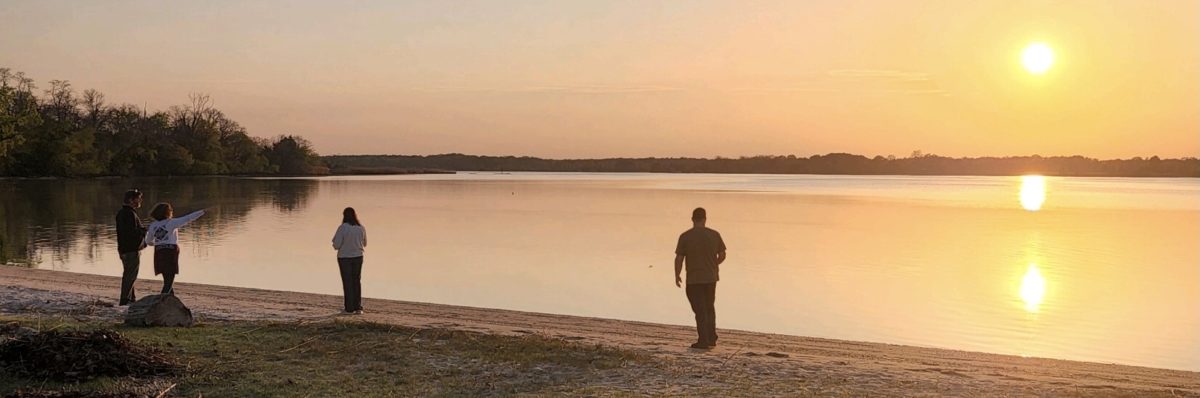
Forgiveness

Context: At our Wednesday healing service at Christ Church Easton this week, the Gospel reading was Matthew 18:21-35, the Parable of the Unforgiving Servant. At the end of the parable, the unforgiven servant (who had been forgiven by his master, but wouldn’t forgive his fellow slave, was being tortured for his unforgiveness. The following is a brief homily and discussion question we had on forgiveness.

Forgiveness

Remember, parables are stories that are meant to make a point. They aren’t to be taken 100 percent literally. To say that you are going to be tortured until you learn forgiveness sounds a little ridiculous.

But I am going to say to you that in this case, that’s actually true. Every one of us is tortured until we learn how to forgive.

When we hold resentment and unforgiveness in our hearts against someone, that feeling takes control over us. Kessler Bickford, who sometimes joins us at the healing service has given programs on forgiveness and she used the analogy of not forgiving someone being like having a huge fish on a fishing line, that we can’t pull in, and it’s digging into your hands and pulling the boat, and the fish is determining the direction you go and becomes the only thing you can focus on. And the only way forward is to cut the line, to forgive, so you can get back to living your own life.

Another famous analogy is that not forgiving someone and holding onto hate and resentment is like drinking poison and waiting for the other person to die.

Not only does it not work, it kills you in the process.

Archbishop Desmond Tutu, in “The Book of Forgiving” put it as eloquently and effectively as you can:

“Until we can forgive, we remain locked in our pain and locked out of experiencing healing and freedom, locked out of the possibility of being at peace.

“Without forgiveness, we remain tethered to the person who harmed us. We are bound with chains of bitterness, tied together, trapped. Until we can forgive the person who harmed us, that person holds the keys to our happiness; that person is our jailor. When we forgive, we take back control of our own fate and our feelings. We become our own liberators.”


It’s in that sense that the parable hits home: we are tortured when and while we don’t forgive. And that torture is self-inflicted.

Forgiveness is the way forward for Jesus and our way forward with Jesus.

The Lord’s Prayer is the prayer Jesus taught his disciples. Every time we pray it, we say:

And forgive us our trespasses,
as we forgive those who trespass against us.

And though we prefer the language that we know, the more accurate translation of those lines is:

Forgive us our sins
as we forgive those who sin against us.

If we ourselves ask for and know we need forgiveness when we slip up, what sense does it make to deny forgiveness to someone else? That’s what this parable tries to make clear—the hypocrisy of that kind of stance.

We’ve got not forgiving as being tortured. We have forgiveness as the way forward that Jesus asks us to take.

I also maintain that forgiveness is the only, or at least the main thing that will change the world. It’s hard to disprove the saying, “An eye for an eye makes the whole world blind.”

On a national and global scale, unforgiveness, resentment, anger lead to wars, crimes against humanity, you name it. And the only direction it goes when unchecked is to get worse. Give someone more resources or more weapons, conflict continues and elevates.

In Luke’s Gospel, as Jesus is being tortured and killed on the cross, he says, “Father forgive them for they don’t know what they’re doing.”


Often when people react or act in violence and hatred, they don’t know what they are doing. They are seeing only through those limited lenses.

If you want to know if we have a forgiving God: in the Resurrection, when Jesus overcomes the death that humans gave him, we don’t see God looking for vengeance or retribution, instead we see Jesus doubling down on everything he had been saying, showing, modeling—love God and love your neighbor; if you are my disciples, they will know you by your love.

If we are going to get ourselves from the kingdom of the world to the kingdom of heaven, it’s going to be on the road of love and forgiveness.

How do we get there from here? What does it take in our lives, in your life, to more fully embrace forgiveness?

In some cases, it can be seeing the person or people who we need to forgive as human beings who make mistakes. It is realizing that it is often hurt people who hurt people.

Archbishop Tutu, in his book, explains a fourfold path of:

Telling the story
Naming the hurt
Granting forgiveness
Renewing or releasing the relationship

It’s an important thing to remember that forgiving someone doesn’t mean becoming best friends with them or even having them in your life.

Of course for some of us, the person we most need to forgive is ourselves, and that is a process as well.

Since Desmond Tutu has literally written the book on forgiveness, let’s give him the last word:

“When I cultivate forgiveness in my small everyday encounters, I am preparing for the time when a much larger act of forgiveness will be asked of me, as it almost certainly will. It seems none of us journeys through life unscathed by tragedy, disappointment, betrayal, or heartbreak, but each of us has at his or her disposal a most powerful skill that lessens and can even transmute the pain. This skill can, when given the chance, win over an enemy, heal a marriage, stop a fight, and—on a global scale—even end a war. When you set out to change the world, the job seems insurmountable. But each of us can do his or her small part to effect change. We can change the world when we choose to create a world of forgiveness in our own hearts and minds.”

Live Now What Matters Forever

Background: My August preaching weekend at Christ Church Easton gave me Luke 12:13-21, where Jesus tells the Parable of the Rich Fool, who wants to build bigger barns to store all his stuff. Following is the text of my sermon.

“Live Now What Matters Forever”

There is a lot going on in today’s Gospel reading that gets my mind and my heart churning.

Someone in the crowd says to Jesus, “Teacher, tell my brother to divide the family inheritance with me.”

 And Jesus’s answer may seem for our day and time like one of the most un-Jesus responses we can imagine:

“Friend, who set me to be a judge or arbitrator over you?”

Some followers of Jesus today like to lift absolutely everything up for Jesus to help us to make our decisions, to settle our disputes.

But Jesus may say to us sometimes, “That sounds like ‘your problem.’ That sounds like something you guys are going to have to figure out for yourselves.”

Certainly, this nameless person from the crowd has his own self-interest in mind and wants to get the teacher he looks up to, to weigh in on his side, to tell his brother to give him some money and some land.

It may astonish us that in dealing with family matters, Jesus’s answer to us might be, “Friend, who set me to be a judge or arbitrator over you?”

Not the answer we were hoping for.

One of the reasons Jesus doesn’t have an interest in answering this question or settling this dispute is that he sees it is leading the person, his brother, and the crowd in a bad direction. If this is the kind of question you really want to spend your time with Jesus going through, you’ve got a bigger problem.

Greed and hoarding possessions are not going to help you. And then Jesus does one of the most Jesus things he does when asked questions.

He says, “Let me tell you a story…”

I love that Jesus’s answer to some of the most vexing questions and profound problems when the crowds press him for answers is… “Let me tell you a story.”

Franciscan and author Richard Rohr says:

“The way Jesus usually answers questions is by telling a story. There is creative and healing power in a story. It doesn’t avoid the question, it goes to the root of the question… That’s the way the great masters of religion always taught—by simply telling stories and giving the soul room to grow and understand.”

If Jesus gives them an answer, they are done thinking about the matter. It doesn’t help them grow; it doesn’t help them understand the deeper currents that are underneath the question.

Jesus’s parables work on us. They stick with us. And their meanings move around for us.

Teacher of preachers Tom Long wrote a book on Jesus’s parables and the word he uses for parable is “riddle.” Long says:

“One of the best definitions of parable is: riddle. A parable is a riddle, there is some puzzle to be solved, some enigma to be plumbed. And the thing about Jesus’s parables, just when you think you’ve got it… a trap door opens and you fall down into a deeper level of mystery. By the way, I think insufficient attention is given to the fact that we serve a Jesus whose favorite method of teaching was not rule, law, spiritual truth, principle, but riddle…  All this is to say, that parables, and particularly Jesus’s parables aren’t clear, cut and dry, and don’t lend themselves to a quick and easy interpretation, or they wouldn’t be doing their job.”

Jesus told them this story, this riddle:

The land of a rich man produced abundantly. And he thought to himself, `What should I do, for I have nowhere to store my crops?’ Then he said, `I’ve got an idea: I will pull down my barns and build bigger ones, and there I will store all my grain and my goods. And I will say to my soul, `Soul, you have plenty of goods laid up for many years; relax, eat, drink, be merry.’ 

But God said to him, `You fool! This very night your life is being demanded of you. And the things you have prepared, whose will they be?’

If our most pressing question of Jesus is to solve our inheritance problems, to solve our financial problems, Jesus says, I’ve got a warning for you—you might be focusing on the wrong things. It’s not that money isn’t important, but it can cause us to lose focus on the biggest things in life… which includes the fact that we don’t know how much time we have in this life.

I absolutely love how Richard Rohr brings this parable and this reading to a point. He says:

“‘Live now what matters in eternity’ is Jesus’s message. Live on earth what’s happening in heaven… That’s the kingdom: live now what matters forever.”

LIVE NOW WHAT MATTERS FOREVER. There’s your bumper sticker or your t-shirt from today’s Gospel. There is something to tape to your mirror or above your coffeemaker, or somewhere you’ll see it every morning when you wake up.

There is a poet named Maggie Smith whose work I am a big fan of. She always seems to bring big issues and questions into the here-and-now in ways that stick with me. When she posts on social media, she’ll often use the heading “Life lately” and include a bunch of pictures and captions of what’s been going on with her.

“Life lately” for me has been Clinical and Pastoral Education—Rev. Kelsey and I have three weeks left out of our 16-week programthat is our last requirement to be ordained as priests. In my experience, seminary helps train your brain, CPE helps mold your heart.

Sitting with and opening myself up to strangers, and sometimes friends, who are in the hospital, softens my heart in ways that I couldn’t have predicted.

Last week at the Easton Hospital, I checked in on an older gentleman who was eating his lunch. I introduced myself as the chaplain for the day, and he said, “What denomination are you?” I said, “Episcopal.” He said, “Good, that’s the only good one!”

Over the next hour he told me his entire life story: father died when he was nine, military school, jobs he had, marriages, divorces, kids dying, mistakes he made, luck he has had, good times, bad times, and when he was wrapping things up he said, “Now you’ve heard my confession.”

Sometimes visits go that way. I get a sense of someone who is in the hospital, in some cases they are lonely, they are stuck in bed in a place they would rather not be and their main interaction is with medical staff who are responsible for a whole lot of people and don’t have time to address things like loneliness, anxiety, fear; they don’t have time to hear someone’s story; to come alongside them and be present with them for a few minutes, for an hour.

The time we spend together matters. A personsitting in the hospital can feel seen and heard and human, even if just for a little while.

LIVE NOW WHAT MATTERS FOREVER.

During the announcements, my friend Jack Anthony is going to tell you a story about Stephen Ministry. Stephen Ministry is a program that became a part of Christ Church in 2005 and that trains people to walk beside someone going through a difficult time in their lives. There are more than 100 people in our congregation over these last 20 years who have responded to a call in their hearts to learn to be more loving, more empathetic, more compassionate; to be better listeners, and to make themselves available for people who are hurting. Last year, my wife Holly went through the training and became a Stephen Minister. And the whole experience has blessed her in amazing ways. They are offering the next training this fall. Maybe it is something that speaks to you.

What I am learning in CPE and what you learn through becoming a Stephen Minister is very similar. How to listen. How to be present. What love looks like when the conditions aren’t perfect.

These are not skills or experience that apply only to visiting a hospital or spending time with a care receiver.

“Life lately.” I helped with a celebration of life on Friday for a man and family I have known since I was in elementary school. The man’s name was Ed Bishop, one of the kindest human beings I have ever met. People got up and told stories. A neighbor pointed out that even after almost 60 years married, Ed and his wife Wendy wouldn’t feed the birds without each other because they loved doing it together. The number of people there Friday who were in their late 50’s and showed up with their families who said that they learned what unconditional love and kindness were from being friends with the Bishops’ two sons and seeing these qualitieson full display from their parents. Ed Bishop lived now what matters forever and showed people what that looks like.

At the service, I got to catch up with a number of long-time friends who I hadn’t seen in quite a while. My daughters are 23 and 20 years old. Some of my friends have younger kids and I’ve heard a few times lately, “it must be nice to have your kids out from under, working, not needing you all the time.”

I look back at the years when the girls were under foot, and it takes a lot of time and energy to get through all of that. But I found that most of the problems that they had then, I could fix. I could do something about. Tie a shoe. Clean a cut and put a Band-Aid on it. Drive them to school. Decide who got to pick the movie they would watch.

The problems the girls have now, I can’t fix. I can’t solve for them. Heartbreak, relationships,loneliness, anxiety. Epilepsy. Seizures. These things above my pay grade.

You know what I have found that I can offer? Time. Presence. Love. I can be there. I can listen. I can come alongside them. We can do life together.

We can live now what matters forever.

Each of us has that chance every day. If Jesus had continued his parable, his story, and given us an alternative to building bigger barns, I’d bet it would be a story of showing love and care to people who need it. That’s the kingdom Jesus wants to help us build.

Healing, letting go and sunrise

Background: We have just finished a series of three Blue December services at Christ Church Easton for anyone who is having a difficult time during this season. We’ve had a heartening turnout, more people each week, and wonderful feedback from those who attended. The services have been put together and led by a Lutheran Deacon (Mike Hiner) and an Episcopal Deacon (Michael Valliant). This is the text of the reflection/homily in third service on Dec. 18.

“Healing, Letting Go and Sunrise”

St. John of the Cross was a Christian mystic and monk who lived in Spain the 1500s. He is most known for talking about “the dark night of the soul.” John thought it was necessary for us to experience or go through dark nights of our souls in order to fully know, appreciate, and experience the love of God.

It’s a memorable phrase, but it’s not a great marketing campaign. No one is going to line up at the door to go through dark nights of the soul. The reason the phrase and the idea is memorable is not because it sounds desirable; it’s because we can relate to it. I would guess when I say “dark night of the soul” there are a number of us here who understand what that feels like in our own lives.

The fact that we are sitting in a church might mean that we are willing to look to God, look to Jesus for some help with those times.

When you are going through a difficult time, parables don’t seem like the most helpful thing you can come across. But Jesus frequently uses them. That must have been annoying to his disciples and friends.

Jesus, could you please just tell me what I need to do? I don’t have time for another story, another riddle.

Jesus’s parables frequently work on our expectations and our sense of time. The one I come back to over and over again is the Parable of the Sower. And the notion of planting seeds—all over the place, on every kind of soil. The thing about seeds is that they take time to grow. And that, though we can help, we can’t make them grow.

Healing what troubles us is sometimes like planting a seed and/or waiting for it to grow. It doesn’t happen quickly, certainly not fast enough for us when we are hurting. Often we find ourselves waiting.

In my most uncomfortable waiting, I am left with the idea that all I can do is show up, let go of my expectations and desired outcomes, and let God work on them.

I want to talk for a minute about healing. Henri Nouwen was a gifted priest, teacher, and author, who taught at Notre Dame, Yale, and Harvard. But where he came alive was when he left those prestigious institutions and became the pastor at L’Arche Daybreak, a community for people with intellectual disabilities in Ontario. It was working with this community where Nouwen got a sense for what work was most important.

He wrote that:

“When we honestly ask ourselves which person in our lives means the most to us, we often find that it is those who, instead of giving advice, solutions, or cures, have chosen rather to share our pain and touch our wounds with a warm and tender hand.”

Someone who shares our pain and touches our wounds. Have you ever had that kind of friend? Have you ever been that kind of friend?

The season of Advent finds us in a time of waiting. There is something about the patience of waiting and the patience of healing that goes together.

Rachel Held Evans was a best-selling author and speaker who died in 2019 at 37 years old from an allergic reaction to a medication she was given for an infection. She wrote a lot about bringing people and groups into the church who felt outcast and unwanted. And she wrote about healing: how the church is called to the “slow and difficult work of healing… being with people in their pain and sticking around no matter the outcome.”

Healing is something that takes time and it is relational. Held Evans wrote:

“Rarely does healing follow a straight or well-lit path. Rarely does it conform to our expectations or resolve in a timely manner. Walking with someone through grief, or through the process of reconciliation, requires patience, presence, and a willingness to wander, to take the scenic route.”


During my lowest times, the immediate thing I want to do is fix whatever is wrong, make it go away and move on. How do I get rid of it?

The only way I have been able to get out of that space is by realizing I can’t fix myself and that ultimately I have to let go of whatever I am holding too tightly—in order to be able to breathe, in order to be able to heal.

In this letting go, I have actually felt weight lift off my shoulders and a sense of being free from whatever it was that had me start to take shape.

This is what Jesus invites us to when he says:

“Come to me, all you who are weary and are carrying heavy burdens, and I will give you rest. Take my yoke upon you, and learn from me, for I am gentle and humble in heart, and you will find rest for your souls. For my yoke is easy, and my burden is light.” (Matthew 11:25-30, NRSV)

We might come to the church, come to Jesus asking to make this hurt go away, and Jesus asks us to set it down, to give it to him… breathe… take a minute… readjust. Taking Jesus’s yoke upon us—being gentle, humble in heart, is how we find rest for our souls.

It takes letting go and it takes time. But we can get there.

I don’t know if you’ve had this experience, but there are times when I can get so worked up, so upset about something that I can physically feel it—it’s a tension, like a clenched fist. Jesus invites us to open that fist. Let it go, give it to him. “Learn from me, for I am gentle and humble in heart.”

Jesus is offering us rest, both by taking our burdens and by giving us his approach—gentleness and being humble in heart, letting go of the tension and anxiety that we’re holding onto.

Jesus is inviting us into a new way of life, a new way of dealing with suffering—letting it go into God’s love, by which our suffering, our pain, is what helps us experience this love.

St. John of the Cross had his dark nights of the soul. But he didn’t stop there, he didn’t stay there, he used them to come to know God’s love. He waited out the darkness until the light came.

Jesus experienced his own darkness and death on the cross. But he didn’t stay there. He became the sunrise.


Becca Stevens is an Episcopal priest who founded Thistle Farms, a community in Tennessee where women come out of prison and are loved, supported, and taught life skills. They come out of their own dark nights of the soul and into light.

Stevens relates this new light, this sunrise, to the Easter story, and to our lives. She says:

“Sunrise in the story of Easter is not just a time of day; it is a state of the heart. Sunrise is the space where nighttime fears move aside for hope, where we feel peace about our mortality in the scope of the universal truth that love abides and where we feel light crest the dark horizons of hearts we have kept barricaded.”

Sunrise is a state of the heart, where nighttime fears move aside for hope. It takes time. It takes love. It takes letting go. Jesus invites us to give our pain, our fears, our anxiety to him. To try his way of being. And to sit with each other, and him, to help us get there.

Featured image (Top of the Page) – Photo by Greg Rakozy on Unsplash

Beware of Mustard Seeds

Background: this is the text of the sermon I gave on July 29 and 30 in response to the reading in Matthew’s Gospel of the parable of the mustard seed and other parables that are grouped together and more so in response to Fr. Bill Ortt, the rector/priest at Christ Church Easton for the last 24 years announcing that he will be retiring later this year. He then left for an already-scheduled vacation.

“Beware of Mustard Seeds”

Looking at a mustard seed, there is nothing that tells you or hints at the growth it is capable of. The tiniest of seeds, it can grow to a height of eight to ten feet. But you wouldn’t know it at first sight.

I came to Christ Church in August 2016, looking for a church home. I walked in to the 9:15am contemporary service, sat about halfway up the pews (on the left side when entering the church) on the window side. The greeters that day were Matt and Kelsey Spiker, who I’d never met. I came here because I was going through a kind of spiritual awakening, I had been attending Real Life Chapel across town for a year, had started studying and writing about the Bible—I was getting stirred up and I wasn’t sure what to do with it all. I knew A.K. and Susie Leight were members here, and I had always thought highly of them, so I gave it a try.

I could tell from that first service that I had found my home. Then I went over to Rise Up Coffee afterwards and got in line right behind Kelsey and Matt and got talking to them.

I think I can speak for the Spikers when I say that none of us came to Christ Church thinking this was going to be somewhere we were going to work or that both Kelsey and I would discern calls to the priesthood.

Those things came from a combination of Fr. Bill Ortt and the Holy Spirit, both waking up something we had that was latent inside us. Something probably about the size of a mustard seed.

Beware of mustard seeds.

Neither of us felt a call to work at “a” church or for “the” church, we felt called to work for THIS church, and at the chance to work for Fr. Bill. We weren’t the first or the last to feel that. Carol Callaghan became a deacon while working here; Barbara Coleman was ordained a deacon here in 2020 after being a part of our congregation; Susie Leight discerned her call to the priesthood during her 20 years here; along with Kelsey and I—Joanne Fisher and Jessica Stehle are fellow postulants and seminarians working toward the priesthood who have come through Christ Church and Fr. Bill; and Kimberly Cox leaves for Virginia Theological Seminary four days after she gets back from the Peru Mission Trip.


That’s more than a notion. That’s the Holy Spirit coming through this place in waves, and Fr. Bill has been casually handing out surfboards, with a smile.

And that doesn’t even begin to touch on the music ministries or the lay ministries that have sprung up and the people along the way who have blossomed in their callings and become instrumental to the life and community of this church and the broader community. We could be here for a couple hours if we started listing names.

Beware of mustard seeds.

This is not a church for the casual observer. If you open yourself to it, you are likely to get caught up in a call. And for 24 years, Fr. Bill has helped create those opportunities and encouraged people on their paths.

There is a common thread to the parables in today’s reading:

  • The mustard seed that someone took and sowed in a field
  • The yeast that a woman took and mixed in
  • A treasure hidden in a field that someone found and hid and sold everything he owned and went and bought the field
  • A merchant finds a pearl of great value, sold everything he had and bought it
  • A net that was thrown into the sea, drawn ashore full of fish and sorted.

Every one of these things involves taking action. It asks the person in the story to do something. God doesn’t just do it for us, He wants us to be active participants in His work. In another well-known Gospel story, when it comes to feeding the 5,000, Jesus doesn’t do it all by himself, he uses the disciples to help.

If you’ve been around Fr. Bill, you know he likes things to be done to a certain high standard. He jokes around that that standard is mediocrity. We all know better. The thing about it though, if you look at the different ministries that have grown during his time here—Stephen Ministry, Food Ministry, Outreach ministries, Youth Ministry, Adult Education, Contemporary Music, the list goes on—none of them have his fingerprints heavily on them. In those ministries you will find the hands, and the sweat, and the tears, and the joy of those who have done the work, with his encouragement.

You’ll hear him say that life, and faith, are about the questions we ask—and that we should try to ask the right questions. I can’t count the number of times I’ve been in a meeting with Fr. Bill, thinking I have a good idea, and he’ll ask a few questions, that will send me back to the drawing board, to either scrap something, or to help it go from being a good idea, to a great idea.

His questions can serve as both sunshine and rain to seeds looking to grow.

Beware of mustard seeds.

I think about the phrase, “going to church.” Do you go to church?—someone may ask us or we might ask someone else. That sounds very nice. Something you do for an hour a week and it sounds like a fine thing to tell other people. “Yes, I go to church.”

One of the reasons I was drawn further and further into Christ Church is that there are so many opportunities to do so much more than “going to church.” Anyone who wants to can jump in with two feet—Bible studies, small groups, bands, choirs, youth ministry, hospitality. All it takes is the willingness to try. But like in our parables today, it may change everything.

Dietrich Bonhoeffer distinguishes between cheap grace and costly grace. He says:

“Costly grace is the treasure hidden in the field; for the sake of it a man will go and sell all that he has. It is the pearl of great price for which the merchant will sell all his goods… it is the call of Jesus Christ at which the disciple leaves his nets and follows him.”

“Costly grace is the gospel which must be sought again and again and again, the gift which must be asked for, the door at which a person must knock. Such grace is costly because it calls us to follow, and it is grace because it calls us to follow Jesus Christ. It is costly because it costs a [person] their life, and it is grace because it gives a [person] the only true life.

For 24 years, Fr. Bill has talked about and tried to model costly grace for Christ Church. The kind of grace that changes lives. That can change our lives. What a gift that is.

Last week when he told the staff he was retiring, after the stun-gun effect wore off, we all asked how we could walk beside him through these next few months, how we could support him. I think as a congregation, we have an opportunity to make these next few months an incredibly special time in the life of the congregation, and in the life of the Ortt family.


This is part of the gift that Fr. Bill has given us, and it is in character and in keeping with how he has always done things. We are entering into a process that this church hasn’t gone through in a quarter century. The majority of the congregation who are here now have only known Fr. Bill as the rector.

The process of sending him off with our gratitude, of finding an interim clergyperson or people to come in for the next year, of putting together a search committee, and finding the next rector of St. Peter’s Parish is something that can bring us together and connect us in ways we can’t even imagine yet.

We’ve had a number of small groups read Fr. Gregory Boyle’s book, “Tattoos on the Heart.” It’s an incredible story about a Jesuit priest’s calling to help love and rehabilitate Los Angeles gang members and it has changed the world there. And it has grown into a community that will continue after Fr. Greg is gone.

That’s a bit of the gift Fr. Bill is giving us. Now it’s our turn. Now it’s our time.

We are a community who puts our trust in God. I am going to drop a couple of Frederick Buechner quotes on you here. Buechner wrote:

“Wherever people love each other and are true to each other and take risks for each other, God is with them and they are doing God’s will.”

I believe that describes who we are as a community and how God has been and continues to be with us.

We are entering into a time of prayer and of gratitude, which really is an amazing way to spend all our time. In this case, it is gratitude for the gifts, the time, the friendship, and the leadership that we’ve been given. And for what is to come. And the hope is that prayer and gratitude will lead us into discernment for the way forward.

Today, and every day is unique. This time we find ourselves in, “for the time that we have,”—as Fr. Bill likes to quote Tolkien’s Gandalf—is a time we can bring special attention to relationships; to who and what we are grateful for; and who and how we want to be both individually and collectively.

As we walk forward together, I’ll let Buechner touch on how special this is:

“In the entire history of the universe, let alone in your own history, there has never been another day just like today, and there will never be another just like it again. Today is the point to which all your yesterdays have been leading since the hour of your birth. It is the point from which all your tomorrows will proceed until the hour of your death. If you were aware of how precious today is, you could hardly live through it. Unless you are aware of how precious it is, you can hardly be said to be living at all.”

Today is precious. This time–these next few months are precious. And we get to live it and be grateful for it, together.

One bloom might hold it all

The magnolia in the front yard is a ten-day tree. For maybe ten days at most, there is nothing like it; it’s in full blaze glory. Then it drops its bloom and doesn’t say much the rest of the year. But those ten days.

As our unplanned retreat/social distancing kicks in, we are in the middle of ten-day Magnolia time. It’s an excuse to sit on the bench under the tree, to walk around it, to put my head between blooms and breathe in. If I’m honest, I don’t need a virus to do this, it’s life everyday as long as I’m paying attention.

The sky is still dark, but the birds are noisy. It’s transition time, just before the sun changes the horizon’s color. Morning routine: coffee, prayer, reading, writing. Cat purring on the armrest against my left arm, dog curled up against my right thigh–demanding bookends with fur. As it warms, morning time will be on the deck or in the writing shed.

This early dark time matters. It frames the day with attention. It sets the tone before the day’s demands start. Lately, I’ve been thinking about writing, storytelling, the force of words that point to something words can’t really get to.

One of the books currently traveling with me–in the car, in waiting rooms, to work, the spare minutes picking the girls up from school.

In the preface to “The Field Guide to Writing Flash Nonfiction,” the Rose Metal Press folks point to Bernard Cooper’s notion that short nonfiction needs “an alertness to detail, a quickening of the senses, a focusing of the literary lens… until one has magnified some small aspect of what it means to be human.”

Mull that last phrase as you sit to pray, read, or write, “some small aspect of what it means to be human.”

Overshadowed by the Coronavirus these days, is Lent, a season where we look to pare away those things that distract us so that we can draw closer to God. When I spend time in the Bible, it’s the Gospels that sing. It’s not Paul’s letters, it’s Jesus’ stories. Christ tries to show us and tell us what it means to be human in a way we too often overlook.

“The kingdom of heaven is like a mustard seed that someone took and sowed in his field. It is the smallest of seeds, but when it has grown it is the greatest of shrubs and becomes a tree, so that the birds of the air come and make nests in its branches.”

Matthew 13:31-32

Ummm… thanks, Jesus. What the heck are we supposed to do with that? Even his followers want to know why he always talks in parables. And this is a parable told after the Parable of the Sower and after Jesus broke it down for them. It was part of our reading in N.T. Wright’s “Lent for Everyone,” on Saturday. Wright points out that, Jesus, “told parables because what he was doing was so different, so explosive, and so dangerous, that the only way he could talk about it was to use stories. They are earthly, and sometimes heavenly, stories with an emphatically earthly meaning. They explain the full meaning not of distant, timeless truths, but of what Jesus was up to then and there. This is what is going on, they say, if only you had eyes to see. Or, indeed, as Jesus frequently says, ears to hear… Jesus’ parables invite the hearer, to look at the world, and particularly at Jesus himself, in a whole new way.”

I am guilty of not catching anything the first time, or first several times, I hear it. It takes time for me to learn things, to let them sink in. I need seeds. I need seeds that take time to take root, take time to grow, but once they are there, they stick, and maybe they bloom in each of us uniquely, in ways that can only be made manifest in the exact way, with our particular eyes and ears.

Often my eyes and ears work against me. Words I’ve heard or used too many times or sights that have become ordinary and overlooked. We don’t see God if we don’t look, or take the time to make the connection. Maybe the more we connect, the more we awaken ourselves to His presence.

American Goldfinch, by Michael Brown. Macaulay Library at Cornell Lab of Ornithology.

Reading further in the Flash Field Guide, there is an essay by Lia Purpura called, “Augury.” She walks up on a dead Goldfinch hanging in a tree, caught up in fishing line. It’s jarring, disturbing, unexpected, confusing. It’s wrong for what is supposed to be there, how things are supposed to be.

Her description of this moment, this encounter is eerie and uncanny and beautiful all at once. In maybe a why moment for the experience, she latches onto, “It’s good to stand beneath a thing that takes words away. It’s good to be in a place where thought can’t form the usual way.”

Experiencing things that take words away, where thoughts can’t form the usual way.

I prefer my encounters to be with live Goldfinches, as I am sure Purpura does as well. But I appreciate her flash essay in the way it helps me to look at Goldfinches with new eyes. It helps me to look at writing with new eyes. Hopefully it helps me look at life with new eyes.

Life and death loom large. While I sit here, for the time I have, life looms larger. It’s part of the ten-day tree time. New birds, Goldfinches included, are appearing at the feeders, and at the edge of woods where I hike or trail run. Crisp, spring sunrises and sunsets are punctuated with cool, clear night skies full of stars. in the midst of it all, the magnolia makes a statement.

If I have eyes to see, one bloom might hold it all.