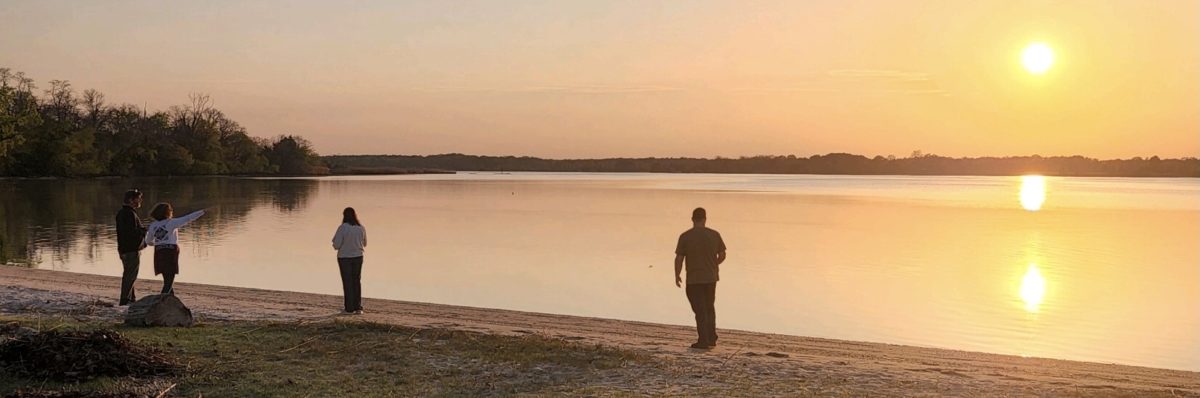
Do you ever get to wondering? I seem to spend a lot of time that way, wondering. There is a conversation towards the end of Alice Walker’s novel “The Color Purple,” where Albert gets to wondering:
“You ast yourself one question, it lead to fifteen. I start to wonder why us need love. Why us suffer. Why us black. Why us men and women… It didn’t take long to realize I didn’t hardly know nothing. And that if you ast yourself why you black or a man or a woman or a bush it don’t mean nothing if you don’t ast why you here, period.”
Now we’re getting somewhere. Our lives are often defined by the questions we ask. So let’s ask the big ones, the juicy ones. And the right ones. So why does Albert think we’re here?
“I think us here to wonder, myself. To wonder. To ast. And that in wondering about the big things and asting about the big things, you learn about the little ones, almost by accident. But you never know nothing more about the big things than you start out with. The more I wonder, the more I love.”
Albert, via Alice Walker, “The Color Purple”
The more I wonder, the more I love. Yes to that, and so much more of it.
I wanted to read “The Color Purple” because of a quote; a quote I read and loved immediately; a quote that spoke directly to my soul and I have thought and used and felt so many times since, that I knew I needed to read the book where it came from.
And when I read it in context of the story, it was even better and deeper. Two of the main characters, Celie and Shug Avery are talking about God. And about how God is not an old white man in robes sitting on a throne. And how “God is inside you and inside everybody else. You come into the world with God. But only them that search for it inside find it. And sometimes it just manifest itself even if you not looking, or don’t know what you looking for.” Shug talking. And what a wonderful way to describe the Holy Spirit.
And Celie asks what God looks like, if not an old white man. And Shug says:
“Don’t look like nothing, she say. It’ ain’t a picture show. It ain’t something you can look at apart from anything else, including yourself. I believe that God is everything, say Shug. Everything that is or ever was or ever will be. And when you feel that, and be happy to feel that, you’ve found It.”
Shug says people “come to church to share God, not find God.” And I love that thought and thinking that sharing God is what church is for.
But none of those are the quote that made me want to read the book. Here’s the conversation:
Shug: God love everything you love–and a mess of stuff you don’t. But more than anything else, God love admiration. Celie: You saying God vain? Shug: Naw. Not vain, just wanting to share a good thing. I think it pisses God off if you walk by the color purple in a field somewhere and don’t notice it.
And there it is. “I think it pisses God off if you walk by the color purple in a field somewhere and don’t notice it.” That quote has been a part of me since I first read it years ago. It describes how I go through life. God made a flower, a field, a planet, a universe for us to wonder at. To ask about. And the more we wonder, the more we ask, the more we love.
And God made us for each other. He made each of us, to love each other and to love Him. And I don’t and won’t ever claim to speak for God, but it seems in the same way, it pisses Him off when we don’t love each other; when we spew hate and not kindness; when we divide, point fingers, and blame, instead of helping each other up, lifting each other’s spirits, using our gifts and His gifts to connect us to each other and to God.
Celie and Shug keep talking (Celie writing) –
What it do when it pissed off? I ast. Oh, it make something else. People think that pleasing God is all God care about. But any fool living in the world can see it always trying to please us back. Yeah? I say. Yeah, she say. It always making little surprises and springing them on us when we least expect. You mean it want to be loved, just like the bible say. Yes, Celie, she say. Everything want to be loved. Us sing and dance, make faces and give flower bouquets, trying to be loved.
Everything wants to be loved. Everyone wants to be loved. God is giving us opportunities–what are we doing with them?
What if we try to notice the color purple? What if we try to see, to really see, and get to know each other? What if we wonder? What if we ask? What if the more we wonder, the more we love.
It’s hard to know what to say, so I can only speak from my life and experiences. And my life is one of privilege. I haven’t earned the life I live based on my own sweat and effort–I was given a gift of an upbringing and a social and economic status that I had nothing to do with. I try to live up to and into that gift, and I am grateful for it daily. I try to dream and picture what my daughters’ lives might look like, and I know they are only limited by themselves.
When I run through town, I am the maybe overly friendly guy who says good morning or hello to everyone I pass. And I have never gotten weird looks–usually a wave or smile back. People aren’t generally intimidated by or suspect of me at first encounter. Again, none of this has much of anything to do with anything I have done. If my skin were a different color, I’m not sure reactions would be the same.
In my teens and early 20’s, we were troublemakers often enough and had run-ins with police, but I never feared for my life. We live in a small community and over the years, I have come to know more and more police officers as friends, and I know them all to be amazing human beings who help people at an instant. Theirs are friendships I am blessed to have–getting to know the people and not just their jobs. And they have seen me for who I am.
Over the years my heart has hurt and my mind has been jarred by so many events on the news, or listening to others’ experiences of the world. And these stories rise up, make their rounds, and then life goes on. For those not directly affected. But each time, it is only a glimpse; only a flicker. Too many people can change the channel and not have to face something directly.
When people speak up and speak out, they are quickly silenced. Yes, you can protest, but not like that. And no, not like that. Yes, we believe in your right to be heard, but we are watching football right now. How about some other time, some other place, where I can still watch what I want and think how I want and not have to pay attention?
Right now, there is attention. We are not promised tomorrow, so right now is what we have. I can’t know or understand what it is to be black, but I can listen and I can stand.
I am a part of a faith community where I know that people of any race, culture, or religion are welcome, and I consider that a blessing. I have watched our rector befriend a Hindu man who was working in Easton and loved coming to our 5:00pm service. He was happy in his faith, he just loved the music and energy of the service, and it was a beautiful thing.
After the murder of George Floyd and the ensuing protests and riots, the Presiding Bishop of the Episcopal Church, Michael Curry, an African-American man, on Sunday published an op-ed in The Washington Post about choosing love over hate. He also talked about what the path of love might look like in these times:
“Love looks like all of us — people of every race and religion and national origin and political affiliation — standing up and saying “Enough! We can do better than this. We can be better than this.”
“What does love look like? I believe that is what Jesus of Nazareth taught us. It looks like the biblical Good Samaritan, an outsider who spends his time and money healing somebody he doesn’t know or even like.”
There is a way forward through this that looks like love. That looks like the self-sacrificial love that Jesus showed us, taught us, and modeled with his life. And it looks like coming together, in love.
In Bible studies over the past months, we have been studying Paul’s letter to the Ephesians, in which Paul is emphatic about the unity of the church. In his commentary on Chapter 2, scholar and former bishop N.T. Wright says:
“If our churches are still divided in any way along racial or cultural lines, (Paul) would say that our gospel, our very grasp of the meaning of Jesus’ death is called into question. How long will it be before those who claim to follow Jesus, not least those who claim also to love Paul’s thinking, come to terms with the demands he actually makes?”
The way forward in love right now is not about doctrine. If we look at Jesus, when he dealt with the hurting, the sick, the lonely, the disenfranchised–he saw them, he healed them, he loved them, he brought them into the fold. Where Jesus is love, Paul also calls that love into unity.
I don’t know exactly what that looks like yet. But I know I can’t really think or write about anything else with it so large on my heart and mind right now.
In talking about love and faith, Krista Tippett, author and the host of “On Being,” writes:
“Every time I let myself go deeper into the mess and mystery of human loving, I am hit over the head again by theology–an insistence that the love of God is so much fuller than we can usually imagine or take in… I keep pursuing faith, if for no other reason than because it is the place in our common life that keeps reminding me of the necessity of love–not the romantic love of poets, but the practical love of sacred texts–however fraught and imperfect our practice of it may ever and always be… love is not the starting point, but the goal. It is not something we are born knowing how to do, not something we fall into. It is something we spend our whole lives learning.”
That is a love I want to learn to do better. I want to spend my life learning and practicing it. Right now it feels like it starts with listening and with standing.
Empty parking lot off Idlewild Avenue. Parking curbs. Concrete. Asphalt. No people, so I pull out my time machine, step on, and the sound of polyurethane on pavement spins back decades. The sound, the vibration under foot, the feeling of cruising carelessly, for no reason except that it’s fun.
What are the things you do regardless of what anyone else thinks? Things you can’t wait to do, that bring you happiness, just by doing them.
Rolling up to a curb, I sit down with a pen, notebook, Mary Oliver’s “Thirst.” I look up.
“Clouds are not only vapor, but shape, mobility, silky sacks of nourishing rain. The pear orchard is not only profit, but a paradise of light. The luna moth, who lives but a few days, sometimes only a few hours, has a pale green wing whose rim is like a musical notation. Have you noticed?”
When Mary O. asks you a question, you do well to consider it. Do I take the time to notice what goes on around me? Really notice? There are everyday miracles, right here on Idlewild Avenue in an empty parking lot on a Sunday afternoon.
Those things that you do for you–how did you figure out what they were? And how long have you been doing them?
When I think back, some of the things I most love doing today, I started in my early teenage years: comic books, skateboarding, writing, reading, running, being on the water, just being outside. And it’s some form of those things that still fill me up a few decades later. Those things maybe as close to time travel as I will get. They connect me to past and future versions of myself. They mark a moment in time, but revisiting them, they create moments outside of time.
I don’t know if my daughters will figure out time travel. I hope they do. I hope they walk the same beaches (and new ones) over decades, and remember when their feet were smaller, their minds saw more colors, and there were fewer distractions. I hope they remember, connect, and see outside of time.
I land in the parking lot again. It’s not supposed to feel this warm in February. The day is a gift. I can hear life in the back yards of Aurora Street. If I get quiet enough I can hear the universe.
“He or she, who loves God, will look most deeply into His works.”
Mary Oliver
Maybe that’s it. We don’t need to stay at the surface. If we look deeper, we can lose ourselves. We find ourselves connected; to our past through memory; to our future through hope; to each other through God, who is Love.
Eighteen is a gut punch and a privilege. Anna is 18 today and it feels like time travel back to her birth as well as a look at my own white-bearded face in the mirror of mortality.
I don’t know what I thought life would look like when your oldest child turns 18, but I’m pretty sure whatever it was got derailed somewhere. There are sure a lot more tears, yelling, and questions than I thought there would be. Then again, I can attest to parenting karma being real, with fatherhood feeling both incredible and helpless at the same time.
We get pictures in our minds of what life will look like in the future and maybe how it’s supposed to look and feel now. When we want things for our children, they are often what we want versus what they might want at a given time.
Anna’s on her own timeline, with her own thoughts and feelings; I was (and am) the same way, so it shouldn’t surprise me. But letting that sink in goes against some of what we think we should be doing as parents.
If we’re lucky, we get to walk the road with our kids, we can’t walk it for them.
Over the past couple months, I’ve started to learn something experientially that has been a game-changer. Anna and I have had some deep conversations that made me stop and take stock. I was at a workshop recently where our group discussed, “moments of conversion:” those experiences that stop us, make us see differently, and change us. And that’s what listening to Anna gave me: I had to stop, realize I was completely missing things she was saying, and start from square one.
That being the case, we are still on the road of life and father-daughter relationship together. And reading James K.A. Smith’s “On the Road with St. Augustine,” I came across this line:
“Conversion doesn’t pluck you off the road, it just changes how you travel.”
James K.A. Smith
And I hope I can keep that up and make the most of it. Conversion is a day-to-day process and there is a lot of road still to travel. I have a lot to learn about 18 and beyond.
When Anna turned 16, I wrote her a letter of sorts. I wouldn’t change anything in it now, it all stands. But a couple years along, and maybe I see a few things. I am smitten by her gifts and her passions.
Anna is all about pets. She is the girl who disappears and turns up in anyone’s house with a cat or dog in her arms. And animals take to her (until she dresses them up). She’s looking to start volunteering at Talbot Humane this winter and I honestly wonder whether that might be the beginning of a calling of sorts. Dr. Doolitttle-in-training.
Kids are drawn to her. If it’s not animals, it wouldn’t surprise me to see her wrangling kids at a daycare or preschool. She is magnetic in a pied-piper kind of way and kids follow her. And it happens whenever she is around them.
When it comes to art and puzzles, Anna has a zen focus. I’ve never seen a teenager put together a 1,000 piece puzzle. Anna does them in an evening and can tune out whatever else is going on. She is the same way with coloring, doodling intricate patterns, or painting. They are things that brighten her days, and thereby brighten mine.
Anna is extroverted. This hit me like a rolled-up newspaper when she talked about it after a personality test in school. As an introvert raising a child similar to me in many ways, I just never thought about it, then hearing her say it, I looked back over her life with a giant “no duh” and it made sense. She recharges around people and looks for ways to be social.
She is fiercely protective of her sister. I know the older sibling protective thing, but this is something different. Anna has been with Ava step-by-step through month-long hospitalization, seizures, and her provoked epilepsy adventure. Anna frequently calls her mom or I out about making sure Ava is hydrated, not in the sun too long, and is getting enough sleep. This isn’t to say that teenage sisters don’t fight like wolverines (they do), but when push comes to punch, Anna hasn’t missed a neurology appoint, watches out for and over her sister, and worries about her constantly.
Anna feels deeply in a world where that can count against you. It’s a hard thing as a father to watch your child fall down, process, and struggle. It’s a wonderful thing when they get back up, learn, and try again or try something different. Anna has an empathetic heart (at times 🙂 where that isn’t frequently en vogue with teenagers. Sometimes it takes us a while to find our tribe and I know she’s working on hers.
If we’re lucky, we get to walk the road with our kids, we can’t walk it for them. We can’t speed them up and even if we point out rocky ground and potholes, strong-willed kids still find them on their own.
Anna has been my learning curve, my guinea pig as I try to figure out how to be a father. She has picked me up at times when I’ve failed and it’s been the biggest honor and adventure I’ve known to walk her road with her.
On her turning 18, I see next steps, new experiences, more tears and laughter, more dressed up pets, Starbucks runs, puzzles and artwork, and things even a Romper-Room magic looking glass can’t see coming. One of these days I might figure out how to be a parent. Until then, I’ll be happy when she smiles.
If you take Jesus at his word, loving our neighbors is a big deal. In the gospels of Matthew, Mark, and Luke, they record the same to-do list from Jesus, “‘Love the Lord your God with all your heart and with all your soul and with all your mind.’ This is the first and greatest commandment. And the second is like it: love your neighbor as yourself.’ All the law and the prophets hang on these two commandments.” (Matthew 22:36-40 NIV)
These are important. And if we take to reading, studying, reflecting and meditating on, and praying on Scripture, we’ll find new depths and heights for how to connect to and love and obey God.
I’ve got to say, the Bible is my favorite book. That is not a statement I could have made 10 years ago. And part of the reason I say that is that I’ve spent the last three years reading Matthew, Mark, and Luke’s versions of the Gospel, slowly, chapter by chapter, studying with different groups, using the help of N.T. Wright’s “New Testament for Everyone” commentaries. And we’ve prayed, laughed (a lot), cried, wrestled with things, been confused, found grace, found ourselves in the stories, found God and Christ in the Scriptures, found poetry, and soared to new heights of feeling and depths of understanding. I can’t recommend it enough and it has become one of my favorite things to do. We’re currently studying John’s Gospel and, wow.
But about this loving our neighbor thing: what if our neighbor has no interest in the Bible? And there are plenty of big reasons they might not (disdain for organized religion being one). One of the best things we can do is look to Jesus for an example. Jesus is constantly reaching out to the lonely, the outcast, the disenfranchised, the unclean, the sick, the marginalized–the people who the “church people” of the day wouldn’t have anything to do with. And when he reached out, he didn’t tell them to go to church, read their Old Testament, etc. He heard them. He met them where they were. He healed them. He loved them. He knew them and spoke to them. In the story of the Samaritan woman at the well, who society would have told Jesus he had no business talking to, Jesus talks to her, tells her things about who he is and who she is; the woman is amazed and tells others he “told me everything I have ever done!” He told her HER story.
At a time where we don’t know our neighbors, or their stories, and in many cases, maybe we don’t know ourselves the way we should, it’s our sacred duty to recognize the divine in each of us. In a 2018 sermon at the National Cathedral in Washington, DC, Brene Brown reminds us that,
“If you are a person of faith, you are called to find the face of God in every single person you meet.”
Brene Brown
Sometimes that is not the easiest thing to do. Especially when we disagree with someone, maybe don’t like them; or if they look, think, love, or act differently than we do. A key way to know someone is to hear their stories; to understand who they are. Brown shows one way of doing that in a short, narrated cartoon video about empathy. Sometimes it is no more simple, and no more profound, than just being there.
Brown says that empathy fuels connection and cites Theresa Wiseman’s four qualities of empathy: perspective taking, staying out of judgment, recognizing emotions in others, and communicating that. If we want to love our neighbor as Christ both told us and demonstrated, this is a pretty solid beginning.
Part of the problem is that this isn’t an easy thing to learn. It doesn’t come naturally to everyone. And it isn’t always easy. We need all the help that we can get.
This fall, we’ve had two evening classes reading and discussing Brown’s book, “Daring Greatly: How the Courage to Be Vulnerable Transforms the Way We Live, Love, Parent, and Lead.” It’s been interesting, hearing some folks who are not church-goers, who say, “A church discussing a Brene Brown book? Wow, that’s really cool, I’d love to be a part of that.” And some folks at the church, who wonder about discussing a book that isn’t the Bible and doesn’t talk directly about the Bible or God in the way that we are used to. And both of those things are great and right and fair discussions to have.
I love the idea of thin places–places where heaven and earth are closer, or places where we are closer to God. There are absolutely physical places in the world where that space exists. But I think it that space can also be a state of mind or emotion. And when we feel vulnerable, that is one of the places–being exposed, and truly seen and heard, where we feel our need for God and for each other. Brown defines vulnerability as “uncertainty, risk, and emotional exposure.”And she points out that love for us feels uncertain, incredibly risky, and leaves us emotionally exposed.
She points out that, “vulnerability is the birthplace of love, belonging, joy, courage, empathy, and creativity. It is the source of hope, empathy, accountability, and authenticity. If we want greater clarity in our purpose or deeper and more meaningful spiritual lives, vulnerability is the path.”
This is not easy stuff and it’s not necessarily a feel good book, in that it asks us to look past all the barriers we build to protect ourselves and be open with ourselves, each other, and with God. Being open to God is to be vulnerable, to put our hearts out there, which is the business God is in: the battle for our hearts.
Brown gets the title for her book from Teddy Roosevelt’s famous speech, about the “Man in the Arena:”
“The credit belongs to the man who is actually in the arena, whose face is marred by dust and sweat and blood; who strives valiantly; who errs, who comes short again and again, because there is no effort without shortcoming; but who does actually strive to do the deeds; who knows great enthusiasms, the great devotions; who spends himself in a worthy cause; who at the best knows in the end the triumph of high achievement, and who at worst, if he fails, at least fails while daring greatly…”
God calls us not to be on the sidelines, but in the arena. He tells us that Jesus has come so that we may “have life and have it abundantly” (John 10:10). He wants us to get to know Him and get to know each other. And He knows it is a struggle, a journey to get there, one where we lay down our old lives to have a new life in and through Him. And that it’s worth it.
What keeps us from having that life in all its fullness? The life that we might dream of, or that God dreams for us? What, in our culture, are the things that most stand in our way? If most of us had to name it, it would probably involve fear, shame, vulnerability. We are often afraid of failing, afraid of falling, afraid of being ridiculed, afraid of being exposed. This is true in our personal lives, in our education system, and at work. And in Daring Greatly, Brown helps us to look at this, to name and understand it, and talks about how we can connect with one another and develop a resilience that could allow us to try; to dare.
In the Gospels, Jesus compares himself to a physician, who is not here to help the healthy, but here to help the sick. He asks Peter and his disciples to continue his work. He asks us to continue his work today. And when we can diagnose something that keeps people down, keeps us from knowing each other and knowing ourselves; keeps us armored up, numb, and therefore not open to God or His love for us and what plans He might have for us, maybe He asks us to reach out to people where they are. Maybe he asks us to open ourselves up and help others connect to us and to Him.
And maybe we need to use every tool, every language, every means that He has given us to help do that. It’s a sacred call, to love our neighbors. And to love them, we have to know them, and know ourselves.
There are different paths to come to faith. I know my own did not involve the Bible until it did. And that has begun one of the coolest lifetime adventures there is. And our paths also involve finding God in all of creation, in other people, and in books, some of which are obvious, some of which are subtle, but all of which are part of God.
At our best, maybe we are called to synthesize secular and sacred texts, or to view everything as sacred, seeing with the eyes of a Creator who loves his Creation. Maybe we can create a language and a vision with room for both. I appreciate folks like Rev. Arianne Rice, who in her practice is both an Episcopal priest and a certified Daring Way instructor, bringing together Scripture, faith, social work, research, vulnerability, and empathy. And who may be able to help us, and others, do the same. It’s cool to see Christ Church Charlotte offering classes, lectures, and an evening with Brene Brown; Stonebriar Church in Texas talking about healing from shame; and the Episcopal Church and United Thank Offering talking about return, practice, and gratitude, citing Brown’s work. The point here is not about Brown, but about cases where churches are looking to engage their congregations and communities by being open to new ways of thinking about connection, empathy, vulnerability, and how to be neighbors. It doesn’t change our sacred calling, it engages it on the ground.
I have so much to learn from so many different people. And so much to learn about God’s love, and grace, and Word. And I am grateful for all those in the arena, trying to do God’s work , through their unique gifts, perspective, and place in the world.
When you lose a pet, what you have left is memories, stories, and love. For the girls, their two Humane Society adopted cats, Carlos and Sesame, have been with them since Anna (now 17) was in kindergarten (Sesame) and then a year later for Carlos (we kept the names they were given at the shelter). The cats have been to different houses, have been dressed up, played with, harrassed, and loved on for a good while. Carlos passed yesterday. I always dug his name because it reminded me of a favorite writer, William Carlos Williams. When he was an indoor/outdoor cat, he was a collector of critters, which he loved to bring in the house and show off.
He had a chilled-out personality. One of the ways I connected to him was being able to find him when he either got stuck somewhere or decided to go on a walkabout. I once came home from a vacation in Ocean City after he had gotten out from friends watching him, and managed to find him in the woods. But a memory that sticks out was one that I wrote about 10 years ago. So I am moving that memory here, told in the same language. Memories, stories, and love remain.
Banging the Plate
December 15, 2009
When our cat wanders off we go outside and bang the plate. Like ringing a dinner triangle, he generally pops out from a neighbor’s yard and cruises home.
So banging the plate calls back lost things. Boomerangs a cat with wanderlust. For me, it has become a bell of mindfulness inviting me back home as well.
Up until Sunday/Saturday, banging the plate has generally worked. It can take a little time and it might be towards midnight, but he would appear out of the chilled dark ready to come in.
Saturday night/Sunday morning, nothing. The cold is kicking, rain is imminent, it is 12:30am. I’m beat and need to sleep, no cat. So he’s out for the night.
Cats being stubborn, free-spirited, strong-minded, “in-de-pen-dent” (it is Christmas/Rudolph time, after all), a cat could quite easily play the role of Muse. The artist/writer has to invite the muse back, bang the plate to get it to come home to the house he or she has built for creating their particular art. And we’ve all got those plate-banging activities that we use to call them. Writing in a particular kind of notebook, particular time of day, specific kind of pen, or place in the house. We bang the plate to get the Muse to come sit with us. We hope that it works. And when we find something that works with success, we stick to it. In some cases, we may hang on like crazy even at the risk of choking it. Note: don’t choke the Muse!
Sunday morning, I’m banging the plate in the rain. I’m wandering the cul-de-sacs of our neighborhood. I’m up and down the streets and sidewalks of the cat’s normal haunts. Nothing. Occasionally I think I hear a faint meow, but birds and rain and sounds are having their way with my imagination. False cats.
We’re on towards 11am. It is obvious I need a new approach. Other than a raincoat, I’m not dressed for mucking, but I walk up through one of the cul-de-sacs near Rails-to-Trails that leads up a flooded, grassy path. This isn’t where he goes, but nothing has worked so far. I bang the plate.
There is a faint trailhead, off more toward the field and back toward our side of the neighborhood. More flooded, but it gets me back closer to home anyway. I bang the plate. I come out in the field nearer to our house. Boots and jeans soaked through, but not cold. Nothing to lose. A hunch coming from the gut.
I cruise through ankle-deep water and mud of a flooded field and walk up a wooded path behind the houses across the street from us, between our neighborhood and Route 50. This is his stomping grounds. Where he likes to hang. But there is a lot of ground to cover and he’s one cat.
At this point, I’m not really driving with my head. It’s more intuition, and I’ve been putting myself in his eyes, where he’d likely go, what he’d do. It’s new territory. Off the paved streets and sidewalks, into the muck of fields and woods during a soaking rain. I bang the plate.
After playing hunches and letting the gut drive, I wander next to the woods for maybe a minute, banging the plate, when I hear a high pitched meow (he was neutered early) and see his familiar gray and white prance pop up over brush and out of the trees. Ankle-deep flooded fields, are not a cat’s idea of a way home. I scoop him up and cruise back to the house.
My old notion of banging the plate didn’t cut it. I couldn’t just go through the motions to bring him home. But Sunday’s experience opened up a whole new level of following the gut, intuition. I was sort of following blindly and trusting, but at the same time, intensely aware and alert. The process led me right to him. And thinking on it, he was likely lost and not willing to walk through the deep water necessary to get himself to familiar turf. Going to him was likely the only thing that would have found him.
So I think about the new version of banging the plate. And I think about it in terms of the Muse. And how to invite it back, but also to trust and follow the gut as to where and how to seek it out, when it takes more than just showing up. When the process deepens.
We choose what we give our time and energy to. We choose how we see situations. We choose what we will do with the time we have.
This is oversimplifying things, but if it rains on a day off when I hoped to be outside, I can throw up my hands and give my day away to disappointment, or I can change plans, change course, and even notice flowers and plants getting what they need from the rain. We can look for, or try to create, small moments of joy, even when things don’t go how we wanted them.
Life hurts. It is full of war, sickness, death, anger, jealousy, hatred, injustice, suffering, and so many crappy things that it is an entirely justifiable and sane reaction to say, it’s too much, what can I do, I am insignificant, what I say or do won’t matter anyway. But it matters in your life. And it can matter for others.
Joy is a choice. In his book “Return of the Prodigal Son,” Henri Nouwen writes:
“once you choose to claim the joy hidden in the midst of all suffering, life becomes celebration. Joy never denies the sadness, but transforms it to a fertile soil for more joy.”
Henri Nouwen, “Return of the Prodigal Son”
Nouwen talks about the parables of the prodigal son, the lost sheep, and others, where God goes out of his way to reach the one lost or wayward soul who chooses to return, and to celebrate their return, not because He doesn’t love those already in the fold, but because He loves each of us uniquely, and it is a reason for joy.
“If that is God’s way, then I am challenged to let go of all the voices of doom and damnation that drag me into depression and allow the “small” joys to reveal the truth about the world I live in.”
Henri Nouwen
Allowing the small joys. That’s a thought worth sitting with and trying to live into. It could be a spring breeze coming through the window in the morning. The first sip of coffee. A Red-Bellied Woodpecker at the feeder. The smell of cutting the grass. A thought or phrase spurred from reading that hadn’t occurred to me in just that way before. Watching the dog bound through the back yard. And that’s all without leaving home.
“There are only two mantras: yum and yuck. Mine is yum.”
Tom Robbins, “Still Life with Woodpecker”
It was more than 20 years ago when I read Thich Nhat Hanh’s book, “Peace is Every Step. Nhat Hanh is known as a Zen master, peace activist, teacher, community leader. There is a ton that has stuck with me from that book, much of it on interconnectedness, cultivating inner peace, and daily wonder and miracles. He has a great section on doing the dishes and household chores and how, done mindfully, they can be sources of joy and happiness:
“The secret to happiness is happiness itself. Wherever we are, any time, we have the capacity to enjoy the sunshine, the presence of each other, the wonder of our breathing. We don’t have to travel anywhere else to do so. We can be in touch with these things right now.”
It’s Monday evening. As I am at the desk, the dog lies on the stone path through the back yard, smelling the air, watching for birds or squirrels, or neighbor dogs to come to the fence. I’ve got box garden beds to weed, dinner to make, the work week to get into full swing and the girls back to school. There is some small joy in each of those things, but right now it is even more simple and immediate: the look on the dog’s face as she takes in the evening; pinwheels spinning in the breeze; birds carrying on conversations and being able to pick out one or two I recognize; and a grateful heart for just saying thank you for a moment.
In the scheme of things, all that’s wrong with the world, that is not much. But it matters for this moment. And it might help to make more moments like it. And it all starts with a choice.
“Nature’s first green is gold, / Her hardest hue to hold.”
Robert Frost might have had a magnolia tree in his front yard. I’ve never seen anything like it. Over the past week, it’s been in different phases of bloom and I just go out and stand underneath it in complete awe. It will only last a week or two, but man, what a week.
“Her early leaf’s a flower; / But only for an hour.”
Spring is a time for rebirth, for taking root and for growth. But within that, there is also the notion that it doesn’t last, like the magnolia tree in bloom, so appreciate it while it’s here. Be present. Feel the growth. Take the moment.
W.S. Merwin in Hawaii at the Merwin Conservancy. Image from Stefan Schaefer.
W.S. Merwin, one of the brightest shining, most brilliant, and most venerable American poets died recently. I met him briefly in Washington, DC, after hearing him read. I’d made it a point to catch him after work when I worked in the city. He was one of the voices; one of the lives worth emulating, or using as a model to find your own.
In a great New Yorker article, Casey Cep writes about Merwin’s writing and his effort to preserve Hawaiian landscape, “The palm forest, like Merwin’s poetry, has become a kind of prophetic stance against contemporary life: bearing witness to individual, almost foolish acts of creativity while devastation abounds.” We do what we can in the time that we have.
Sometimes I can connect the dots, sometimes I lose the picture. My reading list of late has included large parts of Luke’s Gospel, Henri Nouwen’s “Return of the Prodigal Son,” and legendary and/or mind-bending graphic novels, including Brian Michael Bendis and Alex Maleev’s “Daredevil” run, Donny Cates’ “God Country,” and Jonathan Hickman’s “Fantastic Four.” I’ve never read Hickman, who is known for his epic story arcs for Marvel Comics. Marvel announced this past week that he is set to take over the X-Men this summer.
I’ve been thinking about the Faust/Faustus storyline a lot lately, where to gain unlimited knowledge, the seeker sells their soul to the devil. It has to deal with hubris, excessive pride, and pushing beyond the limits of where we should go. And Hickman plays that exact storyline out with Reed Richards in his Fantastic Four story. But when faced with the decision either come up with the answer to everything, to save the universe and feed his ego flashing his brilliance, or to be human, be with his family, Richards thinks back to the words of his father.
“All of my hopes and desires rest in you becoming what I am not. When you grow up, I expect more. Son, I expect better. I want you to be a better friend than I was. Be a better husband. Be a better father. Be a better man.”
Father-son, father-daughter messages hit me straight in the heart. And it makes me reflect on the prodigal son story, and how the father wants his sons to know his love, no matter what they’ve done. And that’s big.
For Lent this year, Fr. Bill Ortt at Christ Church Easton, has given out prayer stones during worship services. There are 11 different words and you choose without looking: love, peace, believe, remember, listen, forgive, hope, pray, heal, follow, grace. The idea is to use your word as a mantra during Lent. And to look up Scripture for your word that you connect with, and pray, reflect, and meditate on it for the season.
My stone is love. It’s not the one I expected or the one I would have picked. But it’s the one I needed. It’s what I need to remember and to focus on. I picked two verses.
John 13.34-35
I give you a new commandment, that you love one another. Just as I have loved you, you also should love one another. By this everyone will know that you are my disciples, if you have love for one another.’
And
Corinthians 13:4-8
Love is patient; love is kind; love is not envious or boastful or arrogant or rude. It does not insist on its own way; it is not irritable or resentful; it does not rejoice in wrongdoing, but rejoices in the truth. It bears all things, believes all things, hopes all things, endures all things.
Love never ends.
Those are big for me. Because it is easy for me to look past, to get too busy, to be in my head or deep in thought too often.
Finishing up Robert Frost’s poem:
Then leaf subsides to leaf. / So Eden sank to grief, / So dawn goes down to day. / Nothing gold can stay.
Nothing gold can stay. And that’s true for spring. It’s true for knowledge and accomplishments. It’s true for the world. It’s true for almost everything we see around us.
But not for God. And not for love. “Love never ends.”
I hear Linus Van Pelt’s voice in my head. We are two chapters into our study of Luke’s Gospel at Christ Church Easton and there is Linus.
“And there were in the same country, shepherds abiding in the field, keeping watch over their flock by night. And, lo, the angel of the Lord came upon them, and the glory of the Lord shone round about them: and they were sore afraid. And the angel said unto them, “Fear not: for, behold, I bring you good tidings of great joy, which shall be to all people. For unto you is born this day in the city of David a Saviour, which is Christ the Lord. And this [shall be] a sign unto you; Ye shall find the babe wrapped in swaddling clothes, lying in a manger. And suddenly there was with the angel a multitude of the heavenly host praising God, and saying, “Glory to God in the highest, and on earth peace, good will toward men.” – Luke 2:8-14
That’s what Christmas is all about, Charlie Brown. – LVP
That last line might not be in the Bible. But it applies. I still well up a bit anytime I watch the Charlie Brown Christmas special and the feckless search for the meaning of Christmas leads to Luke and Linus. And I will say, just two chapters into Luke, it is beyond cool to get a deeper sense of Luke’s good news and what he is doing as essentially a journalist, making sure we don’t miss the story of Jesus.
“Some moment happens in your life that you say yes to right up to the roots of your hair, that makes it worth having been born just to have happen. Laughing with somebody till the tears run down your cheeks. Waking up to the first snow. Being in bed with someone you love.
“Whether you thank God for such a moment or thank your lucky stars, it is a moment that is trying to open up your whole life. If you turn your back on such a moment and hurry along to business as usual, it may lose you the ball game. If you throw your arms around such a moment and bless it, it may save your soul.”
Buechner’s context with salvation, love, and gratitude is key, but that is the part that spoke to me.
This morning I returned to Gary Snyder’s “Mountains and Rivers Without End,” a book/meditation it took him 40 years to write, and which I never keep far from reach. I’m trying to read Snyder and Jim Harrison in the mornings with coffee, to stoke my sense of wonder and to remember to look at the world around me with eyes and a heart to take everything in. Snyder’s meditation goes throughout the world, history, into our minds and souls, and was begun looking at a scroll of a landscape.
I had a picture in my head this morning of Weekly Readers, a weekly newspaper/magazine we got in elementary school that told us what was going on the world that we might want to pay attention to.
The week is just starting, but I like the notion that this week, the things I am reading, that I want to pay attention to–Luke, Linus, Fred, and Gary–help keep my mind connected to God, nature, blessing everyday moments in our lives, creativity, incarnation, and love.
My path seems spiral-shaped sometimes. I come back to a familiar place or thought, but things are different. It’s like further unearthing something, brushing dirt away to reveal more of the picture or map.
When I graduated Washington College in 1998, I was set to go to graduate school with the goal of teaching philosophy and religion. Ultimately graduate school debt didn’t make sense and there was something to staying in this community that stuck. That fall I started working at the Academy Art Museum, overseeing public relations, marketing, and development. Almost 20 years later, my career and spiritual paths combine, right across the street from the Academy: on October 16, I will start working full-time at Christ Church Easton as Assistant for Adult Christian Education & Newcomers Ministry.
I’ve been working at Christ Church part-time since last November, listening to a calling to work with small groups and adult education. I go back to Frederick Buechner’s thought that, “the place God calls you to is where your deep gladness and the world’s deep hunger meet.” I knew right away that working with the church was the first time that my vocation lined up with the big questions that I’ve always asked, the things I wonder about, and how I want to spend my time.
I am humbled by and grateful for this opportunity. This summer I told friends that if I won the lottery, I’d focus more on working for the church, continuing my own education, and writing. This fall it seems I’ve won the lottery.
Since February 2015, I’ve had the privilege of being the Executive Director of the Oxford Community Center, in the town where I grew up. I don’t have the words to say how much that experience has meant to me and what an incredible time it has been developing programs and events and welcoming and building the community at OCC. It has given me back a town I had lost touch with and one I am excited to call home again.
There have been a few moments in my life where/when things have lined up and I have known in my heart and in my bones what I was supposed to do. To this point in my working life, I’ve had jobs that I’ve enjoyed, but not that called me from the deepest level. I’ve felt this calling time and time again–from studying and wanting to teach philosophy and religion; to wanting to go back to school for Christian theology in 2014; to last year, putting my hopes and intentions out into the world, which led me to the small groups position at Christ Church.
I’ve reached a place and time in life that feels like a new beginning. It’s a beginning that is the culmination of everything that’s happened up to this point: work, fatherhood, friendships, connections, questions, faith, joy, struggle, community, opportunity, study, passion, prayer.
In his book, “Desire,” John Eldredge spells out:
“To live life fully–that is to say, to live life as God meant for us to live–demands a full recovery of our heart. You need that wellspring flowing swift and clear and true… The adventure calls. The future awaits. How you handle your heart’s desire will in great measure determine what becomes of your life.”
To be a part of a community of faith. To help each other in our own walks, with our own questions. To study, to learn, to share, to write. To have the opportunity to follow a calling in vocation. To live life closer to the heart. To listen, to discern God’s will and find deep happiness in His Way and Word.
Those are things that get me out of bed in the morning, things that stir my heart watching the sunrise. They are thoughts and images that dance through my mind when I am running, skateboarding, hiking, reading, or paddleboarding.
It’s a coming together of life and experience to this point, my part and passion in God’s larger work and will. It’s coming to know God’s grace and love as lived out and given to and for us through Jesus Christ.
Here I am. I am grateful, humbled, excited, and so many other things.