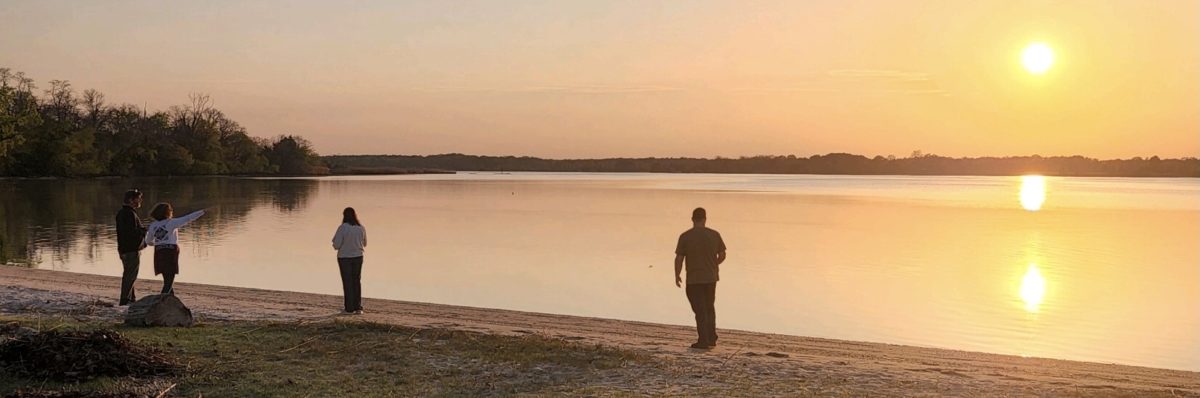
Grace leans out of the alley

As a people, we get in our own way a lot. We make ourselves so busy, so manic, so overscheduled, and so quick to be heard that we rarely listen. And what and to whom we listen are often suspect.

“[A]lmost nothing important that ever happens to you happens because you engineer it. Destiny has no beeper; destiny always leans trenchcoated out of an alley with some sort of ‘psst’ that you usually can’t even hear because you’re in such a rush to or from something important you’ve tried to engineer.”

David Foster Wallce, Infinite Jest

I dig David Foster Wallace’s image of destiny leaning out of the alley, but we’re too busy to hear it. And the reason destiny, the big, epic, cool, yummy ideas and things that could fill and direct our lives, is left hanging out in the alley is that we’ve unknowingly designed the cities that are our lives and that is the space we’ve often left the stuff that might really matter.

Yesterday (Ash Wednesday) was the beginning of Lent. In N.T. Wright’s devotional book, “Lent for Everyone: Matthew, Year A,” he gives us a reading and some thoughts each day of the season. He begins with reminding us that when God does something new, he often involves unlikely, frequently surprised or alarmed people:

“He asks them to trust him in a new way, to put aside their natural reactions, to listen humbly for a fresh word and to act on it without knowing exactly how it’s going to work out… we may have to put our initial reactions on hold and be prepared to hear new words, to think new thoughts, and to live them out.”

I wonder if destiny isn’t the only thing we’ve shoved in the alley; I wonder if we’ve put grace there too. As we head into Lent and look for fresh words, new thoughts, and seasonal and spiritual renewal–maybe grace leans out of the alley to remind us it is there for the taking, our taking, our lives, and our hearts.

Preaching at an Ash Wednesday service at Christ Church Easton, Fr. Bill Ortt put it like this:

You are loved
You are forgiven
God wants his grace to be a part of your life.

And he quoted Psalm 90, which says, “Teach us to number our days, so that we might apply our hearts to wisdom.” (verse 12, KJV)

Mortality has loomed large in our community lately. We don’t need reminders. But that is one thing that Ash Wednesday does for us anyway. We come from dust and to dust we shall return. So we need to use the time we have the best we can. In numbering our days, we feel and learn the urgency and necessity of wisdom.

Allowing grace to speak to us, allowing grace into our lives, living into forgiveness so that we can let go of our past and be present now, and step towards what will be.

Seen/scene during Ava’s stay at Children’s Hospital in DC for testing and observation.

After Ash Wednesday services, I headed to Children’s Hospital in DC, where younger daughter Ava is staying for a few days for tests and observation to see if they can learn more about her seizures and spells. As we’re sitting in her room after breakfast, she puts on “Into the Spider-Verse,” a movie we both love.

Miles Morales is a young teenager in a new school and he doesn’t have a clue how he fits in or who he is supposed to be. After he tries to fail his way out of the school, his physics teacher calls him out and assigns him an essay.

“I’m assigning you an essay, not about physics, but about you and what kind of person you want to be.”

That’s a question we need to continually ask ourselves; an ongoing conversation. During the course of the movie, Miles finds his own way, not the way that the other Spider-Men and Women have, but a way that is his. He takes the book “Great Expectations,” turns it into street art of “No Expectations,” and lives into his personal destiny.

Maybe grace is how we get to our destiny. Maybe by reconciling and letting go of our past and the world’s designs for who we are supposed to be, and stepping into God’s grace, forgiveness, and vision for us, we can become who we are meant to be.

“My name is Miles Morales. I was bitten by a radioactive spider, and for like two days, I’ve been the one and only Spider-Man. I think you know the rest. I finished my essay. Saved a bunch of people…. And when I feel alone, like no one understands what I’m going through, I remember my friends who get it. I never thought I’d be able to do any of this stuff, but I can. “

Through God’s grace, we can. So when destiny, clothed in grace, leans out of the alley, stop, lean in, and listen.

By the same spirit

There is freedom in getting away. There is friendship in breaking bread and eating together. There is awe in exploring Creation in the rolling hills in early fall. There is joy in worshiping together. There is peace in praying with and for each other. And when you bring close to 70 adults and youth together for a weekend away at The Claggett Center in Adamstown, Md., there is ever-present laughter waiting to bust loose.

This is the fourth consecutive season that Christ Church Easton has run The Alpha Course on Saturday evenings. Alpha is billed as an adventure to explore life, faith, and meaning. It’s also an opportunity to come together with like-minded people and build friendships. In the middle of the course is a weekend away, a chance to take a break from everyday life and create space and intention to shift your focus; a time to connect with each other and with God in Christ. God works in our lives and in our hearts through the Holy Spirit, and that’s what Alpha presents us with, a chance to better understand and personally connect with the Holy Spirit. That starts with making space:

“The greatest need in our time is to clear out the enormous mass of mental and emotional rubbish that clutters our mind.” – Thomas Merton

Stepping back from daily life to step more fully into it, centered and recharged. That’s the goal. It sounds high-minded, but it’s also frequently hilarious. Some of my deepest soul/belly laughs in recent years have come on these weekends. There is a lightness of being that emanates from everyone there.

“At the height of laughter, the universe is flung into a kaleidoscope of new possibilities.” – Jean Houston

That kind of laughter, the kind that floats from the soul out to others and out into the universe. The kind of laughter that when shared, connects people, binds them together.

There is something to the setting at Claggett, the chance to hike through the woods, or walk a labyrinth, or skateboard paved trails, that puts the adventure card on the table.

“Every day God invites us on the same kind of adventure. It’s not a trip where He sends us a rigid itinerary, He simply invites us. God asks what it is He’s made us to love, what it is that captures our attention, what feeds that indescribable need of our souls to experience the richness of the world He made. And then, leaning over us, He whispers, ‘Let’s go do that together.'” -Bob Goff


That is part of what the weekend is about. Finding our own way, our own passion, making the most out of our lives by connecting, or re-connecting to our particular passions and gifts, despite what the world may say. “Do not conform to the pattern of this world, but be transformed by the renewing of your mind,” Paul writes in his letter to the Romans. Renewing our minds and hearts.

But a funny thing happens, as we try to do that individually, as we follow our own hearts and passions: we realize we are connected to those around us.

“There are different kinds of gifts, but the same spirit distributes them. There are different kinds of service, but the same Lord. There are different kinds of working, but in all of them and in everyone it is the same God at work.” – 1 Corinthians, 4-6.

We are all of the same spirit. We are united by the love of God and through the Holy Spirit, a gift Christ left to all of us. The gift of time away together is the chance to realize that, to feel and see it in a community of people, who through worship, prayer, breaking bread, laughter, tears, shared experience, grace and the Holy Spirit, become the body of Christ, for a time.

Everyday People, Everyday Grace

give me
the daily
struggle,
because these things are my song,
and so we will go together
shoulder to shoulder
– Pablo Neruda, “Invisible Man”

Neruda saw the universe in an artichoke, birds, tomatoes, socks, seaweed, and stamps. And in the people he encountered everyday: a bricklayer, a woman gardening, or a couple on the street.

My first double-take at Neruda was in the late 1990s, out of college, trying to figure out what should occupy my thoughts, where life was going to go, how to put things together. Funny, I’m still wondering those same things. A friend brought “Elemental Odes” around and Neruda takes the time to look at the everyday world around us, to really look at it, and see deeply into it. He elevates the humble. Everything is full of stories and we are connected to all of them. In the same poem, “Invisible Man,” he feels everything around him:

but I smile,
because when I walk through the streets
… life flows around me
like rivers

When my head gets stuck in the clouds, I often turn to Neruda’s odes as a way to reconnect. Sipping coffee in the morning, listening to birds in the yard, watching the dog bum-rush the bird feeder, or being in a church full of 700 people–pouring out into the parish hall and under a tent, rain coming down–brought together by the love of one person who connected us all. Each of these things, from the simple, to the profound can be an act of everyday grace, connecting everyday people, if we choose to look at them that way.

I know “Everyday People” is a Sly and the Family Stone song, but the version I hear in my head with that phrase is the Arrested Development hip hop version, “People Everyday.”

We are all people everyday and that’s what we’ve got to work with. Through struggle, uncertainty, celebration, and joy, we get up and we go. Anything we are going to come to know, we are only going to find through our everyday lives. When we find and feel grace in those moments, we find something more. I dig what Anne Lamott has to say about grace in “Traveling Mercies:”

“It’s unearned love–the love that goes before, that greets us on the way. It’s the help you receive when you have no bright ideas left, when you are empty and desperate and have discovered that your best thinking and most charming charm have failed you. Grace is the light or electricity or juice or breeze that takes you from that isolated place and puts you with others who are as startled and embarrassed and eventually as grateful as you are to be there.”

I wake up, let the dog out, put coffee on. I walk through the yard, hearing traffic from the highway, I look at the tomatoes growing, and I sit down to read, to pray, to remember, to be grateful. And I hope to find, to connect with, to be everyday people living into everyday grace.

Signs, Spirit, Connections

Love, joy, peace, patience, kindness, generosity, faithfulness, gentleness and self-control. Who wouldn’t want more of each of those in their lives? Those are the fruits of the Spirit as Paul describes them in his letter to the Galatians.

April 13-15, Christ Church Easton went to Camp Arrowhead in Lewes, Delaware, for an Alpha Weekend retreat. More than 40 people headed for the woods, the beach, cabins, bonfires, camaraderie, laughter, and discussions in small groups about our own journeys, struggles, questions, and where we are.

This is our third Alpha Retreat in the past year, running the Alpha Course in the spring and the fall, and I have been blown away each time with amazing and honest people and generous spirits. And the deep laughter that comes with spending a weekend with people in cool places, talking about stuff that matters.

When you ask questions like “How does God guide us?” and “How can I make the most out of the rest of my life?” and people get real with their stories and experiences, profound and unexpected things can happen.

It’s often the unscripted time that makes the weekend. Try showing up at a camp with cabins on the water on Friday the 13th and get ready for the Jason stories. Give people a beach, bonfire, marshmallows, hot dogs, and guitars, and you have an instant party. Break bread together on the beach and in the dining hall, gathered to talk and learn about faith, and in my experience, the Holy Spirit is present in those moments, with these people.

Some people think of worship as what happens at a church service. And it is. But worship is also much more than that. The entire weekend was a celebration, worship. Worship can connect us to God, to people, and to nature, creation. And Camp Arrowhead is a setting to allow all those things to happen. On Sunday morning, before breakfast, I wandered the camp, finding Egrets, Great Blue Herons, Cardinals, Blue Jays. I sat down to read and think about Galatians again after Saturday and read in Gary Snyder’s “Turtle Island,” which is a book I almost always carry.

the path is whatever passes–no
end in itself.

the end is,
grace–ease–

healing,
not saving.

singing
the proof

the proof of the power within.

Joining Snyder’s words, the path, the weekend was grace, ease, healing, singing–the proof of the power within.

After breakfast, and our last small group gathering for the weekend, we gather for a worship service proper, a celebration and culmination of the our time together. Jerrett Hansen, our interim pastor who joined us for the weekend points out, “When the church is in its proper place, we don’t have to go through this thing called life alone.”

He talks about the power of simple signs that we can see throughout our lives if we aren’t too busy looking for the big signs.

“We have been given the great gift in our community to be signs to each other.”

This morning (Monday), I woke up thinking about the Saturday night bonfire on the beach; of everyone coming up with the best way to roast marshmallows or hot dogs; the laughter and conversations. And I got this in a daily e-mail of Frederick Buechner’s  writing:

“In the pages of Scripture, fire is holiness, and perhaps never more hauntingly than in the little charcoal fire that Jesus of Nazareth, newly risen from the dead, kindles for cooking his friends’ breakfast on the beach at daybreak.”

And that’s maybe what a weekend like this is about, what a faith community, a church, is all about. During the Easter season, post-Resurrection: being signs to each other; helping one another along the way; staying connected to God, to the Holy Spirit, to each other, through Jesus Christ.

Matthew and the Rock Face

If you’d told me 15 years ago that I would find laughter, joy, friendships, tears, questions, answers, life, sorrow, challenges, confusion, exhaustion, and exhilaration, all in a Bible study, I am sure I would have dismissed it.

At the beginning of October 2017, two groups at Christ Church Easton started a journey through Matthew’s gospel, using N.T. Wright’s “Matthew for Everyone” as a touchstone. We weren’t sure whether to end at Christmas, part-way down the path, but both groups wanted to see it through. With three weeks left to go, Jesus has been arrested, and we know what’s coming.

Wright looks at where we are in the story and compares it to standing at the bottom of a huge rock face.

“That is how we should feel as we stand at the foot of the final ascent of St. Matthew’s gospel. We have walked at a steady pace through the hills and the valleys of the story. We have sat down to hear Jesus deliver another parable or discourse. We have marched with him along the road, enjoying the sunshine of the early days in Galilee, and the remarkable views as the disciples gradually realized more of what the kingdom was about. We have arrived in Jerusalem at watched dramatic events unfold. But we are now standing in front of a sheer wall of rock, and if we don’t find it both compelling and terrifying, we haven’t got the right spectacles on.”

I feel that. I feel it in my life and I feel it as we read and work through Matthew. I feel it as we approach both spring and Easter. With all the beauty and questions, there is death ahead. There is rebirth and renewal after, but it only comes after and because of a death. I think that is also true of our lives. It is of mine–some of the most beautiful and meaningful times come after loss, come after the low, come after the crap. And sometimes they only happen because of the painful experience that preceded it.

Wright goes on:

“The theories about why Jesus died–theories of the ‘atonement,’ as they are called–are like maps or old photographs, taken from a distance. They may be accurate in their way, and the’re helpful particularly when it’s cloudy and you can’t see too much for the moment. But they’re not the same thing as climbing to the top yourself, and perhaps, if you’re lucky, getting there on a clear day when you can see the view. When that happens, you will find you quickly run out of words to describe what you are looking at.”

It’s not the same thing as climbing to the top yourself. What we find in Scripture is a lot like what we find in life–we get out of it what we invest in it, what we live into it. And if we are going to understand Scripture, or life, it is going to help to have guides, and friends to share the journey with, and the views. We are going to stumble and we are going to need help.

We’ve got three classes left, finishing this ascent during Holy Week as we head into Easter. Our two groups of pilgrims are at the rock face. A journey that started together five months ago. When I look back, when I look around, and when I look forward, I “quickly run out of words to describe” it.

Nostalgia and Home

It’s the green house that I think about the most. It was off the back of my grandparents’ house in Towson. It was full of flowers and plants and my grandmother would go around watering and studying things out there.

Nostalgia grabs us in strange ways. It can be a smell, a song, or a feeling. When I walk into the sun room in my house and see plants inside for the winter, my mind goes immediately to my grandmother’s green house. It makes me smile. To get to the green house, you would have to walk by my grandfather sitting at the dining room table, drinking coffee, and reading The Baltimore Sun sports section.

Lately I’ve been thinking that nostalgia isn’t longing for the past, it’s touching something missing. In his book, “Flesh: Bringing the Incarnation Down to Earth,” Hugh Halter goes with nostalgia meaning “to return or go back home:”

We all have nostalgia and memories of going back home. Some of us remember our fathers through old cars; some of us keep Christmas ornaments our mothers passed down. Maybe it’s old guns; maybe just a photo. But whatever the point of reference, we all know emotions of looking back to times that brought us great joy. Nostalgia is the answer to the why.

A question I love to ask people is, “Where/what do you picture when you hear or say the word ‘home?'” I think it’s something that gets to the core of us. For one person it could be a childhood home, or the house where they raised their kids, or where they’ve spent the most years. I don’t picture a house. For me, when I think of home, I think of the Eastern Shore, Oxford, the Tred Avon River, anywhere outside in nature. Christ Church Easton and the people there feel like home. Log cabins in the woods feel like home, though I’ve never lived in one.

Christmas is a heavy nostalgic time. In part because many of us have deep memories tied to Christmas growing up. As a holiday, it can stoke both joy and emptiness, missing time past. But there may be more to it than that. Personally, it can sometimes take hearing Linus explain to Charlie Brown what Christmas is all about before I get it right in my head. Funny how maybe it takes Charles Schulz to get kids to connect to Luke’s Gospel.

Let’s appreciate the forum here for a second: this is a blog, where I work out half-baked thoughts that should probably stay in the oven a while longer, or at least until after another cup of coffee. I don’t generally edit and things tumble out free form. That’s my disclaimer.

My memories don’t go back to the beginning of creation. There is a time before I was born. I think nostalgia reaches back further than our lifetimes. Maybe it’s a longing for a return to something in us that came before us. A Garden of Eden time that we can feel in our bones and hearts. We know there is something there, something to this longing, but we can’t put our minds around it quite right.

Halter points out that with the Incarnation, God wasn’t/isn’t trying to give us a ticket to get back to that perfect time–He’s bringing it to us. Christ brings the kingdom here and now. But it’s a process we have to open ourselves to. Christ gives us clue after clue; He shows us how to live, how to love, how to be in the world to help bring the kingdom/home both to ourselves and others. Halter goes into ways we can do a better job with this in our lives.

David Bailey’s book “Journeywork” found me via Outside Magazine. And it’s been a slow, wondrous walk since. Bailey describes home and coming home in a different way:

There’s a part of us already home
from the journey, resting by
the eternal fireside, and with us now
through the dark age and renaissance, through
every resurrection and
the great breaking-opens that feel like
endings. Storm lantern holding course
through every misadventure. Evergreen growing
through all seasons. It shines a halo of worth around
even our most irredeemable trials.

Feel that place now.

Returning home. But not as a journey to somewhere out there, but bringing home to us. Followers of Christ call it the Kingdom of Heaven. It’s a gift we can’t buy, it’s given to us by grace. It’s been brought forward to us, but we have to open the door. And we help bring it about through love.

Maybe that’s the connection: nostalgia is a longing for home, to be reconnected to it and to each other by love.

On Vocation Part II: Closer to the Heart

My path seems spiral-shaped sometimes. I come back to a familiar place or thought, but things are different. It’s like further unearthing something, brushing dirt away to reveal more of the picture or map.

When I graduated Washington College in 1998, I was set to go to graduate school with the goal of teaching philosophy and religion. Ultimately graduate school debt didn’t make sense and there was something to staying in this community that stuck. That fall I started working at the Academy Art Museum, overseeing public relations, marketing, and development. Almost 20 years later, my career and spiritual paths combine, right across the street from the Academy: on October 16, I will start working full-time at Christ Church Easton as Assistant for Adult Christian Education & Newcomers Ministry.

I’ve been working at Christ Church part-time since last November, listening to a calling to work with small groups and adult education. I go back to Frederick Buechner’s thought that, “the place God calls you to is where your deep gladness and the world’s deep hunger meet.” I knew right away that working with the church was the first time that my vocation lined up with the big questions that I’ve always asked, the things I wonder about, and how I want to spend my time.

I am humbled by and grateful for this opportunity. This summer I told friends that if I won the lottery, I’d focus more on working for the church, continuing my own education, and writing. This fall it seems I’ve won the lottery.

Since February 2015, I’ve had the privilege of being the Executive Director of the Oxford Community Center, in the town where I grew up. I don’t have the words to say how much that experience has meant to me and what an incredible time it has been developing programs and events and welcoming and building the community at OCC. It has given me back a town I had lost touch with and one I am excited to call home again.

There have been a few moments in my life where/when things have lined up and I have known in my heart and in my bones what I was supposed to do. To this point in my working life, I’ve had jobs that I’ve enjoyed, but not that called me from the deepest level. I’ve felt this calling time and time again–from studying and wanting to teach philosophy and religion; to wanting to go back to school for Christian theology in 2014; to last year, putting my hopes and intentions out into the world, which led me to the small groups position at Christ Church.

I’ve reached a place and time in life that feels like a new beginning. It’s a beginning that is the culmination of everything that’s happened up to this point: work, fatherhood, friendships, connections, questions, faith, joy, struggle, community, opportunity, study, passion, prayer.

In his book, “Desire,” John Eldredge spells out:

“To live life fully–that is to say, to live life as God meant for us to live–demands a full recovery of our heart. You need that wellspring flowing swift and clear and true… The adventure calls. The future awaits. How you handle your heart’s desire will in great measure determine what becomes of your life.”

To be a part of a community of faith. To help each other in our own walks, with our own questions. To study, to learn, to share, to write. To have the opportunity to follow a calling in vocation. To live life closer to the heart. To listen, to discern God’s will and find deep happiness in His Way and Word.

Those are things that get me out of bed in the morning, things that stir my heart watching the sunrise. They are thoughts and images that dance through my mind when I am running, skateboarding, hiking, reading, or paddleboarding.

It’s a coming together of life and experience to this point, my part and passion in God’s larger work and will. It’s coming to know God’s grace and love as lived out and given to and for us through Jesus Christ.

Here I am. I am grateful, humbled, excited, and so many other things.

Amen.

A Tale of Two Buildings

Let’s be up front: this isn’t really a tale of two buildings. It’s more what they represent. They are buildings, but also emblems. The cabin and the church.

The Cabin

It is so easy for me to be a hermit. An active, outdoor hermit, mind you–wrangling sunrises with coffee, running, paddleboarding, looking for birds. I like to hermit in the John Muir, Edward Abbey, Thoreau style.

It’s the easiest thing in the world to daydream about finding a cabin like this one from Cabin Folk and holing up for a good stretch with books, notebook, trail running shoes, binoculars, backpack, you get the idea. And I would enjoy that and likely recharge a bit.

Solitude is a necessary condition for me. But I’ve come to realize it’s not enough. It’s just a beginning point, albeit one to return to. If you are one to ask life’s biggest questions and take the walk to find answers, there is a good chance that you are going to struggle at times. You are going to suffer, you are going to come up short, and sooner or later, you are going to need help. That can be a humbling experience. For me, being humbled is also a necessary condition.

It’s being humbled and needing help that sets us up for needing other people. Needing a community of sorts. Needing people who we can relate to; who understand our struggles; and who we can in turn help with theirs. In my experience, helping someone–whether it is moving furniture, listening, laughing, accomplishing a goal, or just being there–creates a feeling in me that I can’t replicate on my own, cabin in the woods or not.

The Church

The world is so empty if one thinks only of mountains, rivers and cities; but to know someone who thinks and feels with us, and who, though distant, is close to us in spirit, this makes the earth for us an inhabited garden. – Johann Wolfgang von Goethe

“Someone who thinks and feels with us,” Goethe is perhaps describing the beginning or foundation of community. In his sermon at Christ Church Easton on Sunday, Fr. Scott Albergate posited that “The reason to go to church is to be in the company of others,” and that while in a worship service, “Hopefully it will sink into your soul–through the sacraments, songs, Scripture–that life is beyond our control.”

If you spend time in nature, or if you are at all mindful of the passing of time, disease, death, the notion that life is beyond our control is almost self evident. And it can be a heavy truth to bear. As we try to carry that with us, it can weigh us down.

Fr. Scott also pointed out that the majority of what we know of Jesus through the Gospel, he is concerned with healing and transformation. Healing and transformation, through Christ, happen through love and grace. Love happens in the world, through people. We can’t experience it alone. And when we come together, a funny thing happens:

God brings his presence ‘into the house,’ and we are called to release it back out into the world. – Pete Greig, “Red Moon Rising”

Grace is only grace because God gives it to us, He shares it. We know it as a gift and show it by sharing it with each other and others. We know love and grace in the company of others.

Two Buildings

The cabin is the place to find ourselves in solitude. The church building is the place to come together with those “close to us in spirit.” We come together to know, to experience God’s grace through each other and to take it out into the world.

I need both buildings and what they represent. I think Thomas Merton gets it right when he says:

We do not exist for ourselves alone, and it only when we are fully convinced of this fact that we begin to love ourselves properly and thus also love others.

Space for Grace

Tohu wa-bohu. It’s fun to say. Like an incantation you would chant while waving a magic wand over a hat. Tohu wa-bohu. It’s a Hebrew phrase from the Book of Genesis, describing the state of the Universe before God created order. “Formless void,” and “primordial chaos” are two of the translations I enjoy the most.

It’s a phrase Fr. Bill Ortt has unpacked in a couple different small groups at Christ Church Easton of late. He used it to point out that the first things that God created, in addition to light, were time and space. These were the ordering principles of the Universe. To get rid of the chaos, it was light, time, and space.

The image above is William Blake’s “Ancient of Days,” in which God creates order out of chaos. Blake is depicting God putting his orderly stamp on the Tohu wa-bohu. It’s an image I am familiar with: it’s on my left shoulder, the first tattoo I ever got, when I was 25, after my first encounter with Blake in Dr. Gillin’s British Romanticism class at Washington College. Funny to come back to it in a new way, almost 20 years later.

There is something to that need for order. When we want to calm the chaos in our own lives, we need to shine a light on things and create time and space. When things get hectic, there is a blueprint that goes back to the beginning.

I’ve been reading Anne Lamott’s “Traveling Mercies: Some Thoughts on Faith.” I like Lamott for her honesty, humor, compassion; for her irreverent reverence; for her willingness and ability to shine the light on herself and laugh and make us laugh at what she finds; for her willingness to wrestle God and surrender; and for her unique and personal path and walk of faith.

Both in reading her and for some time before, I have had the notion of “grace” on my mind. Here is how Lamott looks at it:

It is unearned love–the love that goes before, that greets us on the way. It’s the help you receive when you have no bright ideas left, when you are empty and desperate and have discovered that your best thinking and most charming charm have failed you. Grace is the light or electricity or juice or breeze that takes you from that isolated place and puts you with others who are as startled and embarrassed and eventually grateful as you are to be there.

There is so much there that I like. Grace is what is left when we have nothing else. It’s what is there when we are on empty. It’s foundational. It’s also not something we have alone, or by ourselves. Grace connects us to God and to each other. Sometimes that is a tough lesson to learn for those of us who are hermits by nature.

Here is another way she puts it, “Man is broken. He lives by mending. The grace of God is glue.” Let’s play that out to bricks and mortar. A single brick only gets you so far. With a bunch of bricks, you can have a sidewalk, patio, house, etc. But the key to putting bricks together is mortar. And you have to make space for the mortar to join them together and make them stronger.

You have to make space for grace. If we get so busy with our lives, or so self-absorbed that we can’t see or feel grace, we are the bricks without mortar. We are the ones deluding ourselves that we can do it on our own.

We are broken. We live by mending. The grace of God is glue. We need to make space for grace.

Making Us New

Each day is full of the expected and the unexpected. There are things I see coming and plenty I don’t. There are things I recognize and those I know are new. And that goes for myself as well; there are parts of me I recognize and parts I have to do a double take to catch (some I like, some I need to work on).

We can say the same thing for each of our paths through life: there is familiar ground and new ground every day. The thing about it is to keep going.

By your endurance you will gain your souls. – Luke 21:19. That was the Gospel from this morning’s worship service at Christ Church Easton. Over the last couple months, I have been reading the Books of Luke and John, and I underlined that passage a week or so ago. As a distance runner it speaks to me of lessons learned through perseverance. As someone whose life doesn’t generally seem to move in straight or discernible lines, it’s also about endurance in the face of the unknown. We might call that faith. Faith helps us endure.

Jesus talks about the destruction of the temple, the impermanence of the earthly life, the trials and tribulations and hardships that lie ahead, and the need to stay on the path, have faith, “by endurance you will gain your souls.” There are a very few things we can control, life happens all around us, what are we to do, what are we called to do as followers of Christ in the face of it all?

What we are called upon to be in this world is a force for good, for hope, for reconciliation, and righteousness… we can be better vessels of grace in this (community). – Fr. Bill

Life happens in ways we can’t understand. What we are called upon is to be a force for good, for hope, for faith. To focus on those things we can do something about, how we treat others, how we serve, what we can do for ourselves, our families, our communities.

Our walk may require different shoes than we expected (I had to grab the photo above, which shows what happens when a priest has to go from two morning worship services to volunteering at the Waterfowl Festival). It may take us down different roads, put us in different places, and run us into different people than we expected or than we would have chosen on our own. Though we’d like to, we can’t control what or who we encounter, but we can control who we are, how we act, and how we see things and people.

2016-nov-pickering-close-up-2

Sometimes I think we adapt to the path we are on. We are made new by how we respond. Sometimes, I think we adapt to the path we see coming. We are made new to prepare for what’s ahead. In both cases, it is our response to God, what He’s put in front of us, and how we respond to His calling that makes us new.

Endurance, enduring doesn’t just have to be work and suffering. Those things are there, but so are happiness, joy, celebration, inspiration, and love. All things by which God makes us new, renew us. Along our path, we are able to become new again, invent, and improve ourselves. We can look to God for inspiration and we can surround ourselves with people who inspire us.

I’ve had the great fortune over the past couple weeks, to be inspired by two friends, in their mid-40s, doing amazing things that they have taken upon themselves to do.

2016-nov-jj-opening-dudes

Jeremy Joseph is an elementary school art teacher, father of two girls, his wife is also a teacher. He is an artist with a cool style. Recently he decided to take his painting in a new direction and opened a solo exhibit of 30 new works. More on that another time, but Jeremy has long been an inspiration for me and writing, the way he makes time for creativity, for his passion, when it would be easier just to work, to be a dad, live life. Instead he chooses to have creativity, art, and newness be a part of his life.

A.K. Leight is a marine biologist. He decided a number of years ago that he was going to get his PhD in environmental science (Biological Oceanography) knowing he and his wife work full-time, have two girls, and that it was going to be a long, slow process. This past week he successfully defended his thesis, bringing the culmination of so much time, effort, and study. It’s not something most people do 20-some years into a career. As I am entering a new life adventure where continuing education and/or graduate study are a part of a calling, I am inspired by what A.K. has done and how he has gone about it. I am blessed to have friends who inspire me by their example.

Every day there is something new for us. Every day we can bring new eyes and renewed heart to what we are doing and how we live our lives. Every day God makes us new.