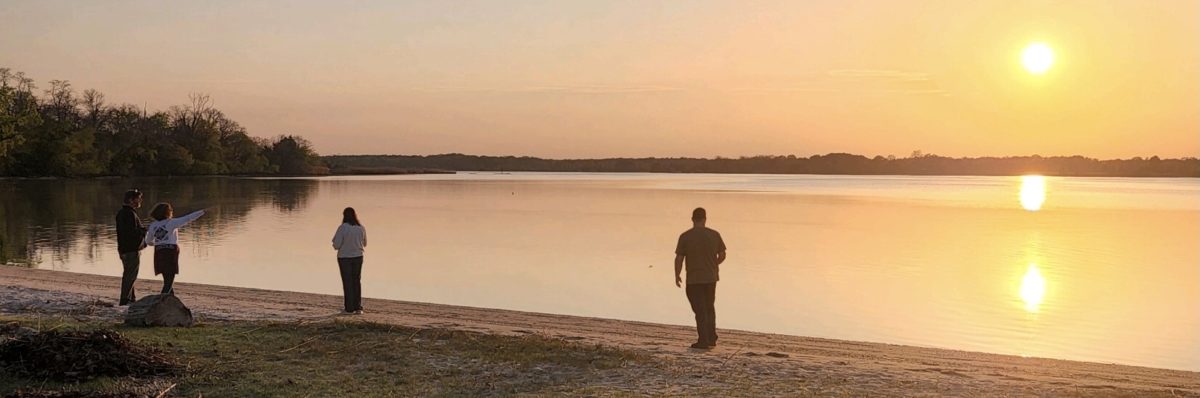
Life is a pendulum swinging between remembering and forgetting. Often I find myself on the forgetting end of the swing.
The poet Rita Dove described something that goes on in my mind in her poem “Lucille, Post-Operative Years”–
Most often she couldn’t think–which is to say she thought of everything, and at once– …
Then, sudden as a wince, she couldn’t remember a thing. …
What bothered her: the gaps between.
(Those are connected excerpts from three different stanzas)
I can have what feels like so much spinning around in my head that I can’t think of the name of the person standing in front of me, who I’ve known for years and I can tell you everything about them, but their name is missing. Or I can be talking along towards a point and have it fly out of my head and leave me looking for a direction to catch up to it.
Meanwhile I have memories from the first 20 years of my life that are crystal clear and in context like they just happened. Oh, but the gaps in between. The mind is a marvelous thing, particularly when it cooperates or shows us things we had forgotten we knew.
Sometimes I wonder if our collective memory works like that as well. There are things we forget that are critical to who we are or who we are called to be.
That’s where my mind has wandered with this weekend’s lectionary Gospel reading, Matthew 5:13-20 (quoting 13-16, “Salt and Light”)
“You are the salt of the earth; but if salt has lost its taste, how can its saltiness be restored? It is no longer good for anything, but is thrown out and trampled under foot.
You are the light of the world. A city built on a hill cannot be hid.
No one after lighting a lamp puts it under the bushel basket, but on the lampstand, and it gives light to all in the house.
In the same way, let your light shine before others, so that they may see your good works and give glory to your Father in heaven.”
What if we forgot what it is to be salt and light? What if we lost what that means? Maybe being light in the darkness makes sense, but what is it to be salt?
I am going to stick with Debie Thomas, who I have quoted a good bit lately from her book “Into the Mess & Other Jesus Stories.” She says when Jesus calls his listeners ‘salt of the earth’ he is saying something profound that is easy for our to miss in our time:
“First of all, he is telling us who we are. We are salt. We are not ‘supposed to be’ salt, or ‘encouraged to become’ salt, or promised that ‘if we become’ salt, God will love us more. The language Jesus uses is 100 percent descriptive. It’s a statement of our identity. We are the salt of the earth. We are that which enhances or embitters, soothes or irritates, melts or stings, preserves or ruins. For better or worse, we are the salt of the earth, and what we do with our saltiness matters.“
Salt by itself doesn’t do much. And too much of it can ruin things. But the right amount of salt (which was in Jesus’s time a precious commodity) can enhance and make things better. Salt’s value is in its being spread around, added to other things–but not in a way that dominates or takes over.
If we forget that we are salt of the earth and keep ourselves separate and distant or try to take things over, we are not being true to who we are called to be.
Thomas’s essay, “Salty” looks deeply at what is to be salt–something that was precious, something that “does its best work when it’s poured around”, something that doesn’t exist to preserve itself; a calling that is not meant “to make us proud; it’s meant to to humble and awe us.”
What an honor to be asked to help, to be of service. Thomas continues:
“Our vocation in these times and places is not to lose our saltiness. That’s the temptation–to retreat. To choose blandness over boldness and keep our love for Jesus an embarrassed secret… But that kind of salt, Jesus tells his listeners, is useless. It is untrue to its essence… Salt at its best sustains and enriches life. It pours itself out with discretion so that God’s kingdom might be known on the earth–a kingdom of spice and zest, a kingdom of health and wholeness, a kingdom of varied depth, flavor, and complexity.“
I’m really looking forward to discussing Thomas’s reflections on the life of Christ. We’ll see how salty and balanced we can become during our Lent small groups .
These are some of the books that are pouring ideas and prayers and sentences and questions and wonder and inspiration into my heart and mind at the moment.
Next weekend (February 11-12), I preach at Christ Church Easton. What that looks like walking around and how to process it is a different kind of thing. Barbara Brown Taylor in her book, “The Preaching Life,” points towards it:
“I do not want to pass on knowledge from the pulpit; I want to take part in an experience of God’s living word, and that calls for a different kind of research. It is time to tuck the text into the pocket of my heart and walk around with it inside me. It is time to turn its words and images loose on the events of my everyday life and see how they mix. It is time to daydream, whittle, whistle, pray.”
The more often I tuck God’s Word into the pocket of my heart and walk around with it inside me, the more it helps shape who I am and how I see the world. If I hope to take part in an experience of God’s living word, I need to remind myself that I am salt and light–my role is to enhance, sooth, melt, preserve, to add some flavor that might bring it into our world in a fresh way.
Back to Thomas:
“We are the salt of the earth. That is what we are, for better or for worse. May it be for the better. May your pouring out–and mine–be for the life of the world.”
Faith, like life, is messy. This has been on my mind a lot, after thinking about Matthew’s Gospel (1:18-25) where he talks about Joseph and the birth of Jesus. Fr. Bill Ortt’s sermon stirred me up and Debie Thomas‘s essay on the same passage in her book, “Into the Mess & Other Jesus Stories” sent me into overdrive.
In the Gospel, Joseph finds out his fiancé Mary is pregnant, not with his child, and plans to send her away quietly. What the law required is that he should publicly shame her and that she might be stoned to death. But Joseph’s heart demanded something different of him. Send her away quietly.
And then, in a dream, an angel tells Joseph not to worry, to stay with Mary, whose child was conceived by the Holy Spirit, and to help raise her son, who they are to name Jesus. He learned this in a dream.
Fr. Bill, describing what Joseph decided to do said, “Instead of following the letter of the law, displayed the heart of God.”
And there is the thing–look at the “law” over centuries–the law changes with the times. The loving heart of God is unchanging, constant, eternal. But that doesn’t make it easy to follow or live into.
Debie Thomas in her essay, “Into the Mess,” says:
“It is the humble carpenter’s willingness to abandon his notions of holiness and embrace the scandalous that allows the miracle of Christ’s arrival to unfold.”
This is not to dismiss Mary’s role and the need for her willingness to be the mother of Jesus. Luke’s Gospel looks at the birth story from Mary’s perspective, and has an angel speaking to Mary. Matthew looks at Joseph.
Saying yes was the first step, the same as it is with us today. But this is going to lead for an entirely different life for Joseph than he could have possibly pictured for himself. He has to let go of everything. Thomas writes:
“In choosing Joseph to be Jesus’s earthly father, God leads a righteous man with an impeccable reputation straight into doubt, shame, scandal, and controversy. God’s call requires Joseph to reorder everything he thinks he knows about fairness, justice, goodness, and purity.”
Think about that. Based on a dream, would you say yes to God’s calling in that situation? Joseph had to let go of his notion of all these things, to live a completely different life than he dreamed for himself–saying yes to God had a cost for him. It also had a reward, but in order to see it, he had to let go of what he thought he knew.
Fr. Bill, in thinking about the character of Joseph, said he must have been a young man. Why?
“The young dream, the old remember.”
As we get older, we are less likely to listen to our dreams. We are more inclined to look back and discern things by comparison, by whatever logic we can discern from our lives; we are less open to the new and the strange.
What if we could stay open? What if we could continue to dream as we get older? What if we could find a way to keep or develop soft hearts?
“The young dream, the old remember.”
Fr. Bill picked up another thread in his sermon that I want to weave in here. In talking about Christ’s birth, he said, “God himself became vulnerably present in the world.”
God as vulnerable. Both in the person of Jesus, but also in the way he deals with us. He asks, we can say yes or no. And this comes back to the idea of God as Love.
I recently picked up C.S. Lewis’s “The Four Loves” from my bookshelf and started reading it, based on coming across this quote online:
“To love at all is to be vulnerable. Love anything and your heart will be wrung and possibly broken. If you want to make sure of keeping it intact you must give it to no one, not even an animal. Wrap it carefully round with hobbies and little luxuries; avoid all entanglements. Lock it up safe in the casket or coffin of your selfishness. But in that casket, safe, dark, motionless, airless, it will change. It will not be broken; it will become unbreakable, impenetrable, irredeemable. To love is to be vulnerable.”
To love is to be vulnerable. What normally happens to us as we get older, in response to the pain, suffering, and heartbreak that happens by living, we seal ourselves off. We harden. We build walls in self-defense. And this is what the world has largely come to look and feel like.
But we can choose a different way to be. It takes courage, it takes heart, it takes being vulnerable.
In his book “Consolations,” David Whyte writes about “Touch.” He says:
“Touch is what we desire in one form or another, even if we find it through being alone, through the agency of silence or through the felt need to walk at a distance: the meeting with something or someone other than ourselves, the light brush of grass on the skin, the ruffling breeze, the actual touch of another’s hand; even the gentle first touch of an understanding, which, until now, we were formerly afraid to hold.”
Even the most introverted want to feel deeply. We want to experience connection. We want to touch and be touched. To touch, to feel, we have to be open. And being open isn’t just to the good stuff, the stuff we want, but also to that which can wreck us. Whyte continues:
“Being alive in the world means being found by [the] world and sometimes touched to the core in ways we would rather not experience.”
Maybe that is along the lines of what Joseph experienced before his dream. This isn’t what he had signed up for. This isn’t the life he had mapped out. But he was open. And through and after his dream, he said yes to a life, a calling, that none of us can fathom.
Because he was open. Because he was willing to let go of what he thought he wanted. Because he said yes.
Whyte finishes his thoughts on touch looking at being untouchable:
“To forge an untouchable, invulnerable identity is actually a sign of retreat from this world; of weakness; a sign of fear rather than of strength, and betrays a strange misunderstanding of an abiding, foundational, and necessary reality: that untouched, we disappear.”
To wall up and go numb is a cop out. It deprives us of really living.
Life, like faith, is messy. In order to experience those things we all want–love, joy, happiness–we have to open and vulnerable to those things we want with everything to avoid, heartbreak, pain, suffering. That’s the mess of it.
Joseph and Mary became the earth parents of Jesus. Their saying yes changed everything for all of us. We don’t hear much more about Joseph in the story–it wasn’t about him, ultimately. And Mary watched Jesus being killed. Again with the mess.
Scripture tells us, Jesus tells us, God tells us, it’s worth it. Love is worth it. Life is worth it. The mess is part of it. And not just part of it, but an important part of it.
I love how Debie Thomas thinks about the mess. And invites us to do the same:
“Do not be afraid of the mess. Embrace it. The mess is where God enters the world.”
To live, to love, to be open. To have the heart of God and to become vulnerably present in the world.
Lead in: I am in my second year in seminary through the Iona Eastern Shore program, which allows our cohort to continue working while we are in seminary. December 10-11 was a preaching weekend for me at Christ Church Easton. This is the text of the sermon I gave.
Churches/denominations that use the Revised Common Lectionary have prescribed readings for each day and Gospel readings for each Sunday. So we don’t get to pick what Gospel we preach on.
The Gospel reading for December 11 was Matthew 11:2-11, where John the Baptist sends followers to ask Jesus if he is the one who is to come, or are they to wait for another? And Jesus’s answer.
“Are you the one who is to come, or are we to wait for another?”
That’s the question we’re going to kick around, the one John has his disciples ask Jesus.
John the Baptist didn’t care what other people thought. He wore strange clothes, ate strange food, blasted the religious people, and attended to business in the wilderness. And he was faithful—he did what he was called to do and he had crowds following him.
And as he was called to do, he pointed to Jesus as the one who was to come—the one he wasn’t fit to carry the sandals of.
John is in the New Testament Hall of Fame—each of the four Gospels has him playing a pivotal role in helping Jesus launch his ministry. And it was John the Baptist’s death that marked the beginning of Jesus’s time teaching and healing and moving toward his death and resurrection.
And this same John, while in prison, sends a question to Jesus: are you the guy or are we supposed to wait for someone else?
Brutal, right? Disheartening. Not exactly a vote of confidence from your friend and mentor.
Let’s think about it from John’s perspective: he’s in prison. He will end up beheaded. The Jewish people’s position hasn’t been improved.
The Jewish people had this idea that the Messiah—the anointed one—will arrive on the scene, hand out justice, military-style, free Israel, put them back on top in power, and they will all be vindicated with a great, big victory to show the world they were right.
That’s what they’re waiting for. Hey Jesus, are you this guy? Or are we waiting for someone else?
Notice how Jesus answers him: he doesn’t say, “Yes, I’m the guy.”
He tells John’s disciples to “Go and tell John what you hear and see:
The blind receive their sight
The lame walk
Those with a skin disease are cleansed
The deaf hear
The dead are raised
The poor have good news brought to them.”
Jesus points to his actions as his answer.
Is Jesus the one who was and is to come? Yes. He was showing it then and we’ve seen the movement that has swept around the world in the 2,000-plus years since. But he wasn’t doing what John, or what the Jewish people, or what the world expected.
I wonder if that is still the case. If we are still largely missing what Jesus was doing and what he came to do.
How many people have heard some form of the expression, “Wait til your father gets home…” Or, “when your father gets home…” That’s not really meant as a good thing, right? It’s more along the lines of—here come the consequences of your actions.
Think about that over the course of Biblical history, especially for those who have been singled out, chosen as examples, held up by God as those to look to. We see a lot of, “Wait til the Messiah gets here. Then you’re gonna get it. Then you’ll be sorry.”
Today it isn’t hard to look around and see people doing a lot of the same posturing: look at how you’re acting; look at what a terrible place the world is becoming. Wait til God gets here. Wait til Jesus comes back. Then you’re going to get it.
Don’t make God angry. You wouldn’t like him when he’s angry.
God is not the Incredible Hulk. He didn’t give us free will and the capacity to love—he didn’t fill us with wonder and awe and compassion, just to smash us when we mess up or get things wrong.
God wants us to change. He wants to help us. He has bigger and better ideas in mind.
If God is Love, what does a big military victory and putting those who were oppressed on top of their oppressors—what does that do to further love in the world? What does that do to further the work that we know Jesus came to do? How does that put things back right?
We have this idea of righteousness, on our terms, not on God’s terms.
Jesus was working out righteousness and salvation in accordance with the will of his Father. Before he gets to his death and resurrection, he is giving us a model for how we can do the same.
ARE YOU THE ONE OR ARE WE TO WAIT FOR SOMEONE ELSE?
“Go and tell John what you hear and see:
The blind receive their sight
The lame walk
Those with a skin disease are cleansed
The deaf hear
The dead are raised
The poor have good news brought to them”
Peru Mission Trip 2019
We are not Jesus. We can’t perform the miracles that we read about him doing throughout the Gospels. But those are things that God is calling righteous, that God is saying are in synch with His will.
If we want to know who God is and how he wants us to act, we need to look at Jesus.
And Jesus doesn’t want us to throw up our hands and say we’re not you, we can’t do it. He makes it clear that he gives us the Holy Spirit so we can continue the work that he began.
How much of our energy, how much of our attention, how much of our creativity, how much of our resources are being put towards this kind of work?
Who are we waiting for? Who will we follow?
I wonder how we would feel if we reframed John’s question for Jesus and pointed the finger at ourselves:
Are WE the ones Jesus has asked to continue his work or is He to wait for someone else?
That question should make us look in the mirror.
Here’s the thing about John: this isn’t a knock on him at all. He did his job well. He lived his life the right way and he spread the message he was given.
When Jesus starts to speak to the crowds he says John is a prophet and more than a prophet.
“To those born of women, no one has arisen greater than John the Baptist… He is the one about whom it is written:
‘See, I am sending my messenger ahead of you, Who will prepare the way before you.’
What was John’s message? REPENT. TURN AROUND.
Don’t get caught up in all the things the world is throwing at us and telling us are important. Playing it forward: don’t make violence the answer. Don’t make hate the way we live.
To a people who have lost their way, to a people who are in a spiritual wilderness, John is saying to stop. Don’t keep doing the same things. Turn around. Be different. The kingdom of heaven is near.
It’s not too late to change.
Earlier in Matthew’s Gospel, in chapter 4, after Jesus is baptized by John and then tested/formed in his own wilderness experience, Jesus hears that John was arrested. And as he begins his ministry, the message that Jesus proclaims is “Repent, for the kingdom of heaven is near.”
They were both telling the people, and us, the same thing. The difference is that Jesus was bringing the kingdom with him. He knew the work he needed to do to help bring it about. And he showed us the work we need to do to keep it going.
John was TELLING us to live differently, Jesus was SHOWING us how to live.
Think about the list of things that Jesus wanted John to know about. What do they all have in common?
Jesus cared for others. He healed, he fed, he taught, he brought good news. That was how he was working to bring the kingdom of heaven near.
When we care for others, we are continuing Jesus’s work.
Marsha Allen, whose been a part of our Tuesday Bible study for years always asks one of the best questions: What am I supposed to do with all this? How am I supposed to live?
So let’s ask ourselves that question: what would that look like to continue Jesus’s work here in our community?
In 2009, what we now know as the Talbot Interfaith Shelter began as a temporary shelter in our Parish Hall. It would be at Christ Church for a period of time and then it would move to another location and this continued until 2014 when they opened their first and current location at Easton’s Promise. Today they have two facilities, and their program for helping their residents’ get back on their feet is called the S4 Program—shelter, stability, support, success. They don’t just give people shelter, they help them get back their lives back—they give them hope.
A number of years ago, volunteering at the shelter one evening at just this time of year, I met a father and son there—the son was in elementary school. Their wife/mother died from cancer, but not before medical expenses they couldn’t keep up with left them homeless.
I can remember everyone had gone upstairs to bed and a few minutes later the boy came back down the stairs and was standing in the living room staring at the Christmas Tree. When we asked if we was okay, if he needed anything, he said, “No, I just like looking at the tree.”
His dad gave an incredible testimonial about how the shelter helped them, how much being there meant to them. Executive Director Julie Lowe and her team BRING GOOD NEWS TO THE POOR.
CarePacks of Talbot County began when Emily Moody, who was a social worker at Easton Elementary, noticed how many kids were going home on the weekends without healthy food to eat. She and Megan Cook began an effort that is now at place in every school in Talbot County, where packages of food are sent home every weekend to make sure the kids who depend on free breakfast and lunch at school can eat on the weekends. And once a month on the fourth Friday, people can go to CarePacks to pick up food for whole families. This kind of program is also in place in Caroline County and it being put in place throughout the Eastern Shore. THE HUNGRY ARE BEING FED.
Global Vision 2020 is an international non-profit organization, founded here in Easton by Kevin White. They go around the world, diagnose sight problems, and are able give glasses, on the spot, to people in the poorest countries. There are people who literally can’t see and that’s how they experience life. And with inexpensive glasses given to them then and there, their lives are changed.
When our Mission Trip goes to Peru next summer, helping give people sight through Global Vision will be among the work that Kelsey Spiker and the team will be doing. THE BLIND ARE RECEIVING SIGHT.
None of these things are miracles in the sense that we see in Scripture. But each of these organizations are very clearly continuing the work that Jesus started and gave us as a model of working toward the kingdom of heaven.
The reason I mention these particular groups is: not only are they all local, they were all begun by people who were parishioners here at Christ Church. And they have all received either outreach funding and/or volunteer support from the church over the years.
There are so many more examples in our community, all around us, which many of you support and volunteer for, and that need your help.
This is a time of year when people get stressed. Heating and electric bills go up, it’s colder outside for those without a place to stay; in many cases, parents just want to give their kids a good Christmas, but they are stretched too far. The Advent Angel gifts around the altar are another example of ways to help people in the community who are in need.
Here’s the thing though. In just the last 20 years at Christ Church, many new ministries have been started and borne fruit, and they have made a difference in people’s lives.
We don’t know what the next ministries are going to be looking out five, 10, 20 years. But recent history says that they will come from YOU—the vision, the work, the love, the hope will be raised up from people sitting right here who are open to the work of the Holy Spirit and who seek to follow and continue the work that Jesus began.
Advent is a season where we wait with hope. Where we listen for how we can help. Where we see and tell people about the work Jesus was doing, the work he gave as an answer to John.
The blind receive their sight
The lame walk
The sick are healed
The deaf hear
The dead are raised
The poor have good news brought to them
Think about those things. Think about caring for others. And at the end of the service when we say together “and now send us out to do the work you have given us to do,” let these words sink in and mean something.
This is the season where we say,
with our hearts and our minds and our actions
that Jesus was and is the one to come, and the one we give our lives to follow.
Fall is a time of change, a time of incredible colors, crisp air, clear skies, and fire-pit warmth. My bones know when fall hits. It’s also always been a time of renewal, energy, and new beginnings.
This year, fall is the beginning of year two of seminary through Iona Eastern Shore for seven of us aspirants and postulants. Our studies this year are focused on the history of the Christianity (what happened between the Acts of the Apostles and today) and heavily on homiletics–preaching. I’m especially appreciating lectures, essays, and books by Tom Long, who makes me think that preaching is something that can be taught, even to those of us to whom it doesn’t come naturally.
To borrow a few aspirational sentences from Long’s book “The Witness of Preaching”–
“To have our own lives, our own work, our own words, our own struggles and fears gathered up in some way into that event (preaching) is an occasion of rich and joyful grace… To be a preacher is to be a midwife of the word… we do not establish the time of its arriving; we cannot eliminate the labor pains that surround it; but we serve with gratitude at its coming and exclaim with joy at its birth.”
And:
“Faithful preaching requires such gifts as sensitivity to human need, a discerning eye for the connections between faith and life, an ear attuned to hearing the voice of Scripture, compassion, a growing personal faith, and the courage to tell the truth.”
I have such a long way to go, but I am inspired and encouraged and am becoming a student of the art and event of preaching.
I’ve also been helped along the way this fall by a discernment group who have gathered multiple times to help me discern, distill, and clarify my calling as part of the canonical process toward ordination. The way is each and every step and I am grateful beyond words for the questions, love, and encouragement from these friends.
Romans has given me a particular focus and opportunity for the fall/winter. In the same way that I wrote each week about our small group study of John O’Donohue’s book “Anam Cara,” I’ll be writing about Romans–thoughts from different scholars, snippets from our group discussions, and I am hoping to do some video segments and interviews with folks talking Romans.
I think for many church-goers, Paul’s Letter to the Romans is something experienced piecemeal, here and there, in lectionary readings. People know it’s a big deal, but they never take the time to read it and reckon with it. And that’s understandable–it’s daunting! But it’s also beautiful and potentially transformative. I love this thought by Rev. Jay Sidebotham, in “Conversations with Scripture: Romans,” when he says:
“The expression of trust in God’s grace, a theme of the Letter to the Romans, has the power to change individual lives. It also has the power to change communities, which is why it matters that we enter into this conversation. Such a conversation does not mean that we will like or understand everything in the letter… In the spirit of conversation, a word that suggests companionship on the journey, we hope that faithful attention to this ancient letter may open the door for new insights into the expansiveness of the grace of God.”
Romans has a history of changing lives and communities. Would that our studies might increase our trust in God’s grace.
To Live Prayerfully
Last weekend, Fr. Bill Ortt preached on Luke 18:1-8, the Parable of the Widow and the Unjust Judge. The text starts out by saying, “Jesus told his disciples a parable about their need to pray always and not to lose hope.” This is advice you give people who are going through tough times; people who might reach a point in their lives and their faith where they want to give up.
If we are going to be people for God, who is love, and so people for love, we need to lean in, not give up. We need to live prayerfully. Prayer is not simply asking for things–prayer is our connection to God. Prayer requires listening as much, if not more than talking.
That’s part of the reason why we use Rowan Williams’ book “Being Christian” in our newcomer class. It ends with prayer. And Williams describes three things that are essential for prayer:
First, and most importantly, prayer is God’s work in us… It is the opening of our minds and hearts to the Father…
Second, there is the deep connection… between praying and living justly in the world… Prayer is the life of Jesus coming alive in you, so it is hardly surprising if it is absolutely bound up with a certain way of being human which is about reconciliation, mercy, and freely extending the welcome and the love of God to others.
Third, prayer from our point of view is about fidelity, faithfulness, sticking to it… Just stay there and if in doubt say, ‘O God, make speed to save me.’ Prayer is your promise and pledge to be there for the God who is there for you.
To live a prayerful life is to open our hearts, minds, and lives to God. It’s about praying and living in a way that shows reconciliation, mercy, welcome, and love. And it’s about sticking with it.
It’s a lot to take in. It’s a lot to try. We won’t always get it right. We will stumble and fall. And none of us can do it alone. But with God’s help, and with each other, we can get back up, try again, and keep forward on the way.
I come back to the Thomas Merton Prayer regularly. We prayed it together at the first meeting of our discernment group. And it feels like a good time to offer it here:
Lead in: I am in my second year in seminary through the Iona Eastern Shore program, which allows our cohort to continue working while we are in seminary. October 8-9 was a preaching weekend for me at Christ Church Easton. This is the text of the sermon I gave.
Churches/denominations that use the Revised Common Lectionary have prescribed readings for each day and Gospel readings for each Sunday. So we don’t get to pick what Gospel we preach on.
The Gospel reading for October 9 was Luke 17:11-19, where Jesus heals 10 men with a skin disease and only one, a foreigner, comes back in praise and gratitude.
“Faith and Gratitude”
In today’s Gospel, Jesus is on the road to Jerusalem. Over the past few weeks, we have seen him talking to and teaching his disciples. But today there is a bit of shift.
He’s approached by 10 lepers. What do we know about lepers during this time?
They kept distant from non-lepers.
They formed their own colonies.
They positioned themselves near trafficways so that they could make appeals for charity.
To be let back into society they had to be checked out by a priest, in a kind of certification process.
Leprosy was estrangement from both God and other people. It had a stigma.
When writing his novel, “The Name of the Rose,” Umberto Eco put it like this: “In saying ‘lepers’ we would understand ‘outcast, poor, simple, excluded, uprooted from the countryside, humiliated in the city.’”
They were the fringe of the fringe.
The lepers are keeping their distance and following protocol and they call out to Jesus. And he SEES them. Seeing is important here.
He tells them to go and show themselves to the priests, which is how they would be able to get back into everyday life, to no longer be outcast or untouchable.
And “as they went,” they were made clean. Their healing was connected to their obedience—they did what Jesus told them to do.
One of the lepers, a foreigner, a Samaritan, SAW that he was healed, and his response was to turn back, praise God with a loud voice, and to lie on the ground in front of Jesus and thank him.
It’s notable that the leper doesn’t just thank Jesus as some great healer on the street, he knows the healing has come from God and he praises God before he thanks Jesus.
Jesus SAW the lepers and the one Samaritan leper saw that God had healed him through Jesus. And he was grateful.
We see a lot of healing stories in the Gospels, but in this case, the story Luke tells is less about the healing and more about the response of the one leper.
The three questions Jesus then asks are not really addressed to the grateful Samaritan but they underscore the point of the story:
Were not 10 made clean?
Where are they?
Were none of them found to return and give praise except this foreigner?
Why the Foreigner?
This is not a knock on the nine who did what they were instructed. They followed orders. They were healed. We don’t know what happened to them after—they may have gone on to spread their own stories and good news for the rest of their lives.
But the foreigner, the stranger was different. Why is that? What was it that made him turn around while the others went on their way?
I like a thought that Fred Craddock shared in his book, “Interpretations: A Bible Commentary for Teaching and Preaching—Luke.” In thinking through the stranger in our time, he said:
“It is often the stranger in the church who sings heartily the hymns we have long left to the choir, who expresses gratitude for blessings we had not noticed, who listens attentively to the sermon we think we have already heard, who gets excited about our old Bible, and who becomes actively involved in acts of service to which we send small donations. Must it always be so?”
Fred Craddock
I wonder, do I get complacent? Do we sometimes go about our business doing what was asked of us, but not stopping to give thanks and praise for both remarkable and everyday things that bring us joy? Or those things that connect us to God and to each other?
Reading Scripture: WWJD?
Studying Scripture has so many layers to it, any of which can give us pause, can make us think, can stop us and meet us where we are.
We need to understand the context in which something was written; we need to think about the audience the writer, in this case Luke, was writing for; and we have both God’s Word in the Bible and any number of great commentaries that have been written to help us understand it.
And then we also want to figure out the relevance of something for our lives. What do we do with what we read? Why does it matter? What is the “so what?” of ten lepers getting healed more than 2,000 years ago? Why should we care?
Fr. Bill Ortt often says to think about Scripture as a prism, where you can turn it around to see different facets of it. And if we do that in this story, we’ve got the grateful leper, we’ve got the other nine who were healed, and we’ve got Jesus. We may have a tendency not to put ourselves in Jesus’s place in the story, because, well, he’s Jesus and we’re not.
But these stories are shared for us to learn from. For us to ponder, to take in. And who is the main character in the New Testament who we want to learn about? Jesus.
And why? Maybe to be more like him. What’s the bumper sticker—what’s the saying that is used over and over again: WHAT WOULD JESUS DO?
And how do you know, how can you consider what Jesus would do if you don’t read Scripture to get to know him better?
So in this story, what does Jesus do?
Seeing and Doing
First, Jesus sees the lepers who call out to him. Really sees them and what their problem is. And what he sees is human beings, not lepers. Luke illustrates this point over and over again in his Gospel:
When we meet the demoniac at Gerasene, Luke calls him, “a man from the city who had demons.”
Here, Luke doesn’t say 10 lepers, he says, “10 men with a skin disease.”
In writing his Gospel, Luke doesn’t define people by their afflictions, by their diseases, by what’s wrong with them. Because Jesus doesn’t define people that way. Jesus sees our humanity. And he sees the humanity of these 10 men.
And what does he do once he sees? He acts, he steps in to help, to heal.
If we want to model our lives after Jesus, where does that leave us?
We need to see. Do we take the time to see what is going on around us? We can look nationally and globally—the devastating damage in Florida from Hurricane Ian; the ongoing war in Ukraine; insert your news of struggle and suffering going on in the world.
We can also look closer to home: our family, our friends, our neighbors, and people in our community. We’ve got a lot of people barely holding on around us. Do we see them?
Then, what do we do when we see them? Do we reach out? Do we pray for people? Do we come alongside them when we can and walk with someone who is having a hard time.
Do we do…what we see Jesus doing time and time again in Scripture, and especially in Luke’s Gospel, and in today’s story? See, help, heal.
What do we see?
Do we see the needs, the struggles of others?
And what do we do?
Let’s take some pressure off of ourselves for a minute. Living like Jesus is certainly the goal, but wow, is that tough. Sometimes getting out of bed in the morning and getting through the day without telling someone off seems more attainable.
Gratitude
Let’s look more closely at the Samaritan who was healed and who came back. Let’s walk in his footsteps.
Back to seeing: what does the Samaritan see? He sees that he has been healed. He recognizes that God was at work. And he praises, he humbles himself, and he gives thanks.
We can do that, right? There are times when being grateful is everything. That’s a big part of my story and what has me standing here in front of you.
I caught up with a childhood friend who I haven’t seen in decades. We grew up playing little league baseball together in Oxford and he went on to fly F-16s in the Air Force for 20 years. We had lunch last week and what we both wanted to talk about was faith and spiritual awakenings. And he asked what prompted this calling in me.
My one-word answer was, and is, gratitude.
A little more than seven years ago my younger daughter had a bad seizure caused by brain swelling. She was visiting family outside Pittsburgh and she had to be intubated and flown by helicopter to Children’s Hospital, where she was in pediatric intensive care for 10 days and in the hospital for the next month.
Faith wasn’t a big part of my life then, but as I sat with her in the hospital, as I listened to doctors, as we tried to figure out what was next, people continually reached out to say they were praying and ask how they could help.
And what I could feel, could palpably feel, was a community of prayers changing me. I wouldn’t say I started out where the Grinch was, but my heart grew in significant ways that I am still trying to wrap my head around. And I felt a peace and calm in the midst of so much worry.
When we came home, I was full of capital “G” Gratitude. I didn’t necessarily know where to put it or what to do with it, but a friend invited me to church. That sounded like a good start. And that was the first step on a path that led here, and with gratitude every day it is a walk that is still going.
I saw healing. I felt a change, a kind of healing in me. And giving praise and thanks is my response.
Salvation
Let’s turn our attention back to the grateful leper. Jesus says to him, “Your faith has made you well.” Fred Craddock who I quoted earlier points out that the verb that was used for “made well” is the same word that is often translated, “to be saved.”
Jesus healed 10 people, but only one, the one who came back and was grateful, received something much bigger than physical healing. His faith, as expressed by his gratitude, saved him.
Alan Culpepper in “The New Interpreter’s Bible,” looks at this and says that the story challenges us to regard gratitude as an expression of faith.
That resonates with me. Gratitude feels like a way to express our faith.
Culpepper says further: “If gratitude reveals humility of spirit and a sensitivity to the grace of God in one’s life, then is there any better measure of faith than wonder and thankfulness before what one perceives as unmerited expressions of love and kindness from God and from others?”
Living with a Grateful Heart
What does gratitude look like in our lives? What do we do when we have a grateful heart?
I have one more quick example. When I started working here at Christ Church they gave me the office at the top of the stairs in the Rectory. I end up talking to just about everyone who comes up and down the steps—which aren’t the easiest steps to navigate.
Well, a few times a week, Bruce Richards would come up the steps and go into the bathroom, and when he came out he would stop in and share this amazing smile, and energy, and joy and gratitude.
It turns out at the time that all the Stephen Ministry books, brochures and pins were kept in the bathroom closet, and he would go in to stock up on whatever he needed.
So I had a running joke with Bruce that he had a Clark Kent/Superman phone booth in the bathroom and he would come out as a superhero for pastoral care. Except it wasn’t a joke at all. That’s who Bruce was.
As the years went on, Bruce was slower getting up and down the steps, but his joy, his smile, and his gratitude didn’t change.
We commended Bruce to God on Saturday and I have so many pictures of him on my heart. Bruce carried printed out prayers in his wallet and in his calendar and he sometimes gave me one if he thought I looked like I needed it, or he would tell me to pass it on to someone who did.
Bruce came with us to give Communion to a parishioner in Oxford who had fallen and couldn’t make it to church for a while. For us, it was a special visit, but Bruce did this all the time, in nursing homes, people’s houses, you name it.
And I have a picture of Bruce coming to his door on his 80th birthday, during the height of the pandemic, when a group of us went to sing happy birthday to him with Brenda Wood playing the accordion.
Bruce was a grateful heart personified. He showed us what it looked like to live with gratitude and for him it looked like caring for others, so much so, that he helped begin a new ministry at the church, specifically to care for people going through tough times… by listening to them, praying with them, and walking beside them. And Bruce’s work of 18 years here continues today with all the Stephen Ministers, the care givers and care receivers, who are grateful and helping us create a church community of compassion.
Bruce saw people hurting. He acted, he did something about it, using gifts that he didn’t know he had, always giving thanks with gratitude.
I wish we didn’t have to lose people like Bruce, people in our lives who show us what it is to live with a grateful heart—people we are grateful for. But it makes me even more thankful for the time that we had together and the example he still is for all of us. What a gift to know people like that and to be able to continue their work in love.
Alan Culpepper has a thought here that I’d like to close with, which gets us to the heart of today’s Gospel:
“Faith, like gratitude, is our response to the grace of God as we have experienced it. For those who have become aware of God’s grace, all of life is infused with a sense of gratitude, and each encounter becomes an opportunity to see and respond in the spirit of the grateful leper.”
Lead in: I am about to begin my second year in seminary through the Iona Eastern Shore program, which allows our cohort to continue working while we are in seminary. August 13-14 was a preaching weekend for me at Christ Church Easton. This is the text of the sermon I gave.
Churches/denominations that use the Revised Common Lectionary have prescribed readings for each day and Gospel readings for each Sunday. So we don’t get to pick what Gospel we preach on.
The Gospel reading for August 14 was Luke 12:49-56, which begins with Jesus saying “I have come to cast fire upon the earth and how I wish it were already ablaze!” and then gets more confusing from there.
For my last two preaching weekends, I have had demoniacs and fire-casting Jesus, both of which ask us to get our thinking caps on. The upside to getting the more obscure or confusing Gospel passages is that I generally have a lot of room to work with. We’re all kind of left scratching our heads and wondering what Jesus, and Luke, are talking about.
I think it is safe to say that the disciples were doing the same thing. I can imagine them looking back and forth to each other going, “I have no idea what he is talking about…”
And that is a theme throughout the Gospels: Jesus delivering a message that people didn’t understand or weren’t ready for. Or in some cases, that people didn’t want to hear.
One of the things we find Jesus talking about repeatedly is the way the world is…and the way the Kingdom of Heaven or the Kingdom of God is. And he wants to help us bring about the Kingdom of Heaven. Which is not how things were, and not how they in the world now. But they could be.
Jesus was not one for the status quo. He didn’t want things to just keep going the way they were. He came to be different and to show us how to be different, and how to live differently.
Thinking about Jesus’s strange message in today’s Gospel, I thought it might be helpful to point out a few things that Jesus IS NOT KNOWN TO HAVE SAID.
Here we go:
Jesus never said, “It’s all good.”
Jesus never said, “You do you.”
Jesus never said, “As long as you don’t hurt anyone.”
And Jesus never said, “Just keep doing what you’re doing.”
Jesus followed more in the sandals (not shoes) of John the Baptist, who said, “Repent.” Turn around. Stop doing what you are doing and live differently.
It’s important to put today’s message in context of Luke’s Gospel and the passages that are going on around it.
Over the last couple weeks, we’ve heard Father Charlie Barton distill the preceding Gospel messages to a few key phrases:
“Be rich toward God—don’t make your life about material things or treasures.”
And “Where your treasure is, there your heart will be also.”
“The simplest rule of thumb for each of us to ask, ‘Where do we spend our time and where do we spend our money?’ That’s where our treasure is, we can be sure. The focus of your time and money will tell you what your God is and what is important in your life. As others have wisely said, your checkbook and your calendar reveal your true belief system.”
Where we focus, what we value most, that will determine who we become and how we act in the world. So focus on God. Don’t focus on the things of this world, but on what Jesus has been telling us is more important. Things like caring for the poor and the sick, lifting each other up, loving God and our neighbor.
So when Jesus says, “I have come to cast fire upon the earth, and how I wish it were already ablaze”—he is talking about the way the world was, those who are storing up earthly treasures, those who are focused on power and not on love.
Burn down the old ways, Jesus is offering something new.
“Do you think I have come to bring peace to the earth? No, I tell you, but rather division.” And what happened to the people of Israel who decided to follow Jesus: division.
Even in and among households. If you are living in the old house and can’t picture what the new one looks like yet, you might not be ready to burn what you’ve got. Or maybe you think this guy is full of nonsense, you have no desire to do what he says or follow where he leads. Some followed, some didn’t. And households became divided.
Well, it’s a good thing we don’t have divided households now [raised eyebrow, pulls at collar] Glad they got that out of the way… or maybe what seemed like a strange, bombastic reading has some relevance.
How many people have family members or close friends who you aren’t speaking to or can’t talk to about religion or politics? How many have divided houses when it comes to big, important issues?
Maybe Jesus was on to something.
We all know the peace-and-love Jesus, and that’s the Jesus we hold dear. That’s the Jesus we want to study and to emulate. And that’s what we should do.
But we also need to remember that Jesus was not afraid to call people out.
Blessed are the peacemakers, absolutely. But the status quo then, AND NOW, isn’t peace. We have a lot of work to do.
Here at Christ Church, in our Bible studies we’ve used commentary by a bishop and theologian named N.T. Wright, and we have found him to be helpful for making sense of Scripture. In talking about this passage, Wright says that there may come a time when Christian teachers and leaders find people have become too cozy and comfortable.
He says that maybe churches might start to omit the Bible readings that talk about judgment, or warnings, or the demands of God’s holiness, because they ask something of us. And that maybe there are times when, like Jesus himself on this occasion, we need to wake people up with a crash. There are, after all, he says, plenty of warnings in the Bible about the dangers of going to sleep on the job.
Cruise control does not serve us well when we are heading in the wrong direction, or off a cliff.
“It’s all good” doesn’t work when it’s not all good for a lot of people, or when power and security are held closer to the heart than love and compassion.
Jesus talks to the crowds about how when you see clouds, you know it’s going to rain and when you see the south wind blowing, you know it’s going to get scorching hot.
Granted, weather forecasters don’t get much credit in our world today, but there are so many things we can know, we can predict, we can figure out. Look at all the technology around us and what we can do. On the simplest scale, I was blown away recently with the thought that I can send my family pictures while I am in Alaska and they get them instantaneously back here.
If we can do so many things, how come we can’t step up for those who can’t stand for themselves? How come we still store up earthly treasures but aren’t rich toward God? Let’s look where our treasure is, where our priorities are, and try to see where our collective heart is?
Jesus came to change the direction humanity was heading.
He came to show us a different way to be—one that isn’t easy, one that not everyone will get… a way that will cause division, and will call for the burning of some of our current, misdirected ways.
And he gave his life for that cause, and in today’s reading, he knew that that’s where he was heading.
Maybe it was fair to call out the crowds. And guess what?
We’re the crowds. Maybe it’s still fair to call us out.
N.T. Wright says:
“If the kingdom of God is to come on earth as it is in heaven, part of the prophetic role of the church is to understand the events of the earth and to seek to address them with the message of heaven.”
Maybe we need to do a better job of addressing the world with the message of heaven.
Maybe we should help burn down some of what’s broken for a new way, for a more loving way, for a more caring way.
Sunday morning, I walked up to the church about an hour before the 8:00am service. The evening before, I preached a sermon–still a very new-to-me experience–on Luke’s gospel story of Jesus healing a man possessed by demons.
Christ Church Easton has multiple worship services each weekend and Saturday is the most casual. People in the service, priest included, wear regular clothes. I was myself–talking in jeans and a Hawaiian-ish shirt and Vans. On Sundays, those serving are vested/robed. I was on my way inside to get robed up for three Sunday services.
The sunlight was dancing in the garden next to the church and I almost walked by it, feeling like a needed to be on task. And then I thought about being in the moment, for as many moments as we can, and I stopped and walked over. And perched on a flower was a dragonfly, who stayed, and didn’t fly away.
The dragonfly, the sunlight, and the flowers set the tone. Be in the moment.
A little background.
This past year, I became a first-year seminary student discerning a call to the priesthood. I’ve been a full-time church educator for the past five years. Our rector/pastor is giving a co-worker/fellow seminarian and I opportunities to preach, each of us being scheduled one weekend every other month. We have an incredible congregation/community, who are encouraging us.
So there’s that.
In the Episcopal Church, what the readings are each week comes from a common lectionary, which rotates over a three-year cycle. Generally speaking, an Episcopal service on a given weekend anywhere you go, will likely have the same Gospel reading. And if you are preaching, that is the Gospel you want to make sense of for folks in some way.
But as I thought about the reading during the week, an angle presented itself–talking about why a seemingly dated, archaic reading, which to many people might not seem to be at all relevant, actually matters here and now.
So I set out to look at demon possession through a modern lens. And here is what I came up with.
Personally, I retain more by reading than I do from listening. So the text is below. A friend was able to record the sermon portion of our 10:00am traditional music service, which you can watch here. Bear in mind that this is among the earliest sermons of someone not inclined to speak in front of gatherings of people.
An alternative to being demon possessed
Leading up to today’s reading, in Luke’s Gospel story, Jesus has been walking through cities and towns “proclaiming and bringing the good news of the kingdom of God.”
The crowds are everywhere around him, so much so that when his mother and brothers come to see him, they can’t even get to him.
So Jesus does something that plenty of people on the Eastern Shore can relate to: he gets on a boat.
And he says, “Let’s go over to the other side of the lake.” Jesus falls asleep in the boat, and Luke gives us his account of the storm coming up, the disciples waking Jesus and Jesus calming the storm. The disciples are blown away that he can even command the wind and the waves.
So in our reading for today this boat ride takes them to the country of the Gerasenes. Jesus has gone over to the other side of the lake to get away from the crowds. And as soon as he steps on land, a man with demons meets him.
The funny thing, reading about the demon-possessed people in Scripture is that I think we dismiss these stories. Because we don’t talk like that anymore. Most of us aren’t worried about demons when we go into the grocery store or walk across town. So we say, okay, this story doesn’t apply to me. It’s not relevant.
Let’s think for a bit on this man and his demons. Here is a guy who is not in his right mind. His mind has been taken over by so many demons, they identify themselves as “Legion.” Here is a man on the opposite side of the lake from Galilee, meaning he is a gentile, not Jewish, which we further see by the fact that there are pigs around, which anyone Jewish wouldn’t have had. But what this area did have in common with Galilee, Jerusalem, the whole region, is that it had been taken over by Rome. And legions of Roman soldiers. So here is a man whose people had been conquered by foreign powers, and whose lives would have been affected accordingly. We might say that he was dealing with the spirit of the times.
Do we feel like the spirit of the times, of our times, might take over our minds sometimes? As Fr. Bill mentioned last week, do we feel like an unholy trinity of fear, leading to anger, leading to violence might carry us away with it sometimes?
Social media offers us more than a peek inside something like this. I have seen people who I know to be loving, caring, do anything for anyone people, say things on social media that certainly point to something taking over their minds and hearts—things full of blame and hate and anger and fear. Those are things, especially when they take over people who are otherwise loving and giving and caring, that lead us nowhere we want to go. And I get it, I feel those things too, I can be overcome with thoughts and feelings I don’t know where they came from and I wish they weren’t there.
We have dear friends and brothers and sisters at Christ Church who have shared their addiction stories and their journeys in recovery. Addiction is a disease that takes over someone, in a way that someone in Jesus’s time might well have described as demon possessed.
And when we look around the country at a new mass shooting each week, now including St. Stephens Episcopal Church in Alabama—it is not hard to make the case that we have people, here and now, who are not in their right minds; we are struggling and trying to understand and to help people through mental health crises, to help them know that they are loved and valued, at times when they are having trouble finding themselves.
We can see all around us that there are forces at work that have nothing to do with love, grace, forgiveness, or God.
All of this is to say, when we run into the demon possessed in Scripture, don’t be so quick to dismiss these stories—they still happen today, to us, just as much—with things taking over the way we think, feel, and act—which cause us to act in ways we normally wouldn’t.
And so in today’s reading, what do we see immediately with Jesus: these demons know him, and know that he has authority over them. They know he can get rid of them. Which he does and puts this man back into his right mind. And that is a great line, I think, when the people came out to see what happened, “they found the man from whom the demons had gone sitting at the feet of Jesus, clothed and in his right mind.”
And then there is one of the most curious, interesting lines. Seeing this guy back in his right mind, how did this make the people feel? “They were afraid.”
Let’s circle back to our times. If we know that love conquers all; if somewhere in our hearts, we know we could live differently, be more loving, but we would have to put down this armor, this way of seeing and being that we’ve become accustomed to… if we were asked to stop blaming people we disagree with, if we were asked to love our neighbor who lives differently or votes differently than we do: would we? If we are asked to love and forgive and do something about the state of the world around us—will we?
If we get so used to looking at the world through certain lenses, taking those lenses off, and trying on a different way of seeing, of living, can be scary. It requires us to change. It asks something of us.
So into this demon-possessed way of being, Jesus comes, and frees this man from the legion of things that cloud his heart and mind. Jesus, with power and authority, gives him, and gives us, an alternative way to be. A different way of seeing things and being in the world.
Jesus restores the man who was possessed by demons. And in the next chapter of Luke’s Gospel, we see Jesus calling the twelve together and giving them power and authority over all demons and to cure diseases and sending them out.
We are called to be disciples of Jesus, right? I am going to speak for probably most of us, when I say I don’t know how well equipped I am for casting out demons and healing the sick. But there is some good news for those of us who don’t feel up to those tasks. And this season of Pentecost gives us a clue: He hasn’t left us alone to do this kind of work. He has sent us the Holy Spirit as our advocate, as our comforter, as our helper. We are never alone, especially when we are doing the work that God has given us to do.
A number of us have begun a three-week study of former Archbishop of Canterbury, Rowan Williams’ book “Being Disciples.” And at the end of the first chapter, Williams has this profound thing to say about discipleship. He says:
“A disciple is, as we have seen, simply a learner; and this, ultimately, is what the disciple learns: how to be a place in the world where the act of God can come alive.”
We are learning how to be a place in the world where the act of God can come alive.
No pressure, right?
Let me tell you a quick story. Over the past month and a half, I have taken 20 minutes each morning for centering prayer. What that is, at base, is breathing, clearing my mind, and being in the presence of God. One of the ways I try to keep that focus is when I breath in, I think about breathing in God’s love. And that makes me smile. And when I breathe out, I think about filtering God’s love through me, and breathing out compassion, empathy, and love for others. And if I sit with that for a minute, and wrap my mind around spending more time breathing love into the world, than I do fear, or hate, or anger, that should certainly change how I act, how I see other people, and how I treat others.
This is maybe the exact opposite of demon possession. Instead of taking in all these things of the world that keep us from God, I try to take in, to dwell on, to feel God’s love and grace.
I’m not saying that centering prayer is the answer to evil in the world. But let’s ask ourselves, what are those things we can do to help us focus on God, on love, on healing and forgiveness, rather than the different forces at work that want to keep us from the power of God’s love.
Rowan Williams has a few suggestions as to things that can help. He says: 1) attending to Scripture, following the Gospels so we can better understand this life we are called to live. 2) He says coming together to worship, to baptize, to celebrate Communion together and to welcome others to do the same. 3) And he says looking to the lives of others around us that help us to have faith. We need each other for that, to help us focus on God.
And so what if all of us who think of ourselves as Christians spent even a little time each day trying to focus on God’s gifts for us; on God’s grace and his love, in whatever ways we find most nourishing.
And then what if, by our breath, by our thoughts, by our actions, we tried to put more love into the world—taking in God’s love for us—and putting that love, in our own special and unique ways, into our community, into our world. Would that make a difference? And if it would, are we willing to put the time in, to put the work in, to do it?
We are called to be those people. We are called to be that community. We are called to further this work.
Today’s story of a demon-possessed man should resonate with us in today’s world, if we use the language of our time. And Jesus having the power to heal, to drive out the demons that tormented this man, and many others, is still as true today as it was then.
The world we live in is a frightening and heart-breaking place too much of the time. Helping to set it right, helping to be places where the acts of God can happen in the world is the work we have been given to do.
But we don’t do it alone. We have each other, and we have the Holy Spirit. And that is enough.
Shake a snow globe full of sediment and you’ll have to wait a while for the sediment to settle. Only then can you see through it. Clarity comes from letting the sediment settle. Now think of the sediment as all the demands and distractions in our daily lives–and there is always something or someone shaking our snow globes.
The weekend retreat during The Alpha Course is designed to help us settle, unwind, and unplug so we can plug into something that will recharge us. It’s a time to connect with the Holy Spirit and with each other.
Five years to the weekend after Christ Church Easton‘s first Alpha retreat, we took a group of more than 20 people to Pecometh’s Riverside Retreat Center outside Centreville, MD, for a weekend to reconnect. The weather was in the 70s during the days, the night skies were starry and clear, and the waterfront campus is full of trails, woods, and structures to get you dialed-in to creation.
Saturday morning, we had a group gathered on benches outside by the river for morning prayer. We read from Padraig O’Tuama‘s “Daily Prayers,” in which we pray, in part:
We resolve to live life in its fullness: We will welcome the people who’ll be a part of this day. We will greet God in the ordinary and hidden moments. We will live the life we are living.
We set our intention to be present, open, and to appreciate one another and our lives.
Weekends like this are about moments; they are about relationships; they are about laughter and tears from being overfilled; they are made up of sharing meals, of taking hikes and walks or going skateboarding; they are built around small group discussions and big questions and shared experiences and being vulnerable.
The Alpha Weekend five years ago is the first time I reflected on advice that St. Paul gave in his letter to the Romans where he said:
“Do not be conformed to the pattern of this world, but be transformed by the renewing of your mind.”
Romans 12:2 (NIV)
In a world that wants us to conform, we are encouraged to live differently. In a series of videos over the weekend, we meet Jackie Pullinger, a missionary who went from England to Hong Kong more than 50 years ago, who has worked to help prostitutes, gang members, and the poor. She has done amazing work and points out that what we need to spread God’s love in the world are “soft hearts and hard feet.” And she says that maybe the only way our hearts soften is by being broken.
An Alpha Weekend is about relationships and downtime and making memories, including the debut of a non-existent band called “Skater Dads.” It’s skipping stones at sunset and exploring the campus for the camp’s famed outdoor chapel.
The Alpha Weekend is about sitting around a campfire singing songs, roasting marshmallows and hot dogs and being awestruck when someone reaches their hand into the fire to successfully rescue a fallen hot dog and comes out unburned (don’t try this at home or around a youth director) ; it’s about feeling seen simply by someone noticing that you are almost done cooking your hot dog and being asking if you want a bun.
It’s what happens when a group of people gather in a beautiful place for the sacred purpose of being together, worshipping God, and being open to the Holy Spirit.
Sunday morning, the ending of such a powerful and peaceful weekend, the big feelings were about not wanting the weekend to end. A conversation made me think about the transfiguration of Jesus on the mountaintop, this absolutely incredible experience of Jesus, Elijah, and Moses, and Peter’s immediate response is to build tents–“Master, it is good for us to be here; let us make three dwellings” (Luke 9:33)–he wants to stay in that moment, he wants to keep it going, just like each of us wanted the weekend to keep going. But Jesus knew differently. He knew that as incredible as those experiences are, it is not about building tents and trying to hold the moment–it is about carrying the moment back into the real world, because we have work to do. We have to spread that Holy Spirit experience. I mentioned all this to our collected groups. Which gave Rev. Susie Leight an idea.
Susie expounded on the theme of leaving, going back to the world, by opening our Sunday morning worship service with a blessing/prayer from Jan Richardson:
Dazzling
A Blessing for Transfiguration Sunday
“Believe me, I know how tempting it is to remain inside this blessing, to linger where everything is dazzling and clear. We could build walls around this blessing, put a roof over it. We could bring in a table, chairs, have the most amazing meals. We could make a home. We could stay. But this blessing is built for leaving. This blessing is made for coming down the mountain. This blessing wants to be in motion, to travel with you as you return to level ground. It will seem strange how quiet this blessing becomes when it returns to earth. It is not shy. It is not afraid. It simply knows how to bide its time, to watch and wait, to discern and pray until the moment comes when it will reveal everything it knows, when it will shine forth with all it has seen, when it will dazzle with the unforgettable light you have carried all this way.”
This weekend was a blessing made for coming down the mountain, back into the world; it was an experience, it was moments, it was deepened relationships. It is a blessing for us to share with those we meet, with those who are a part of our days.
The evening before Christmas Eve, two of us were asked by our Rector if we’d be willing to pinch-hit and lead prayer services and give short sermons on December 25 and 26. The 26th was my day. The Gospel reading for the day, which I needed to discuss was John 1:1-18, “In the beginning was the Word.” Not the one I would have picked for a first-ever sermon, but it was the right one. Part of a continually unfolding story.
An 11th hour, first sermon seems like something worth documenting and sharing, so here it is, with a few edits. And a quick note explaining the top photo: A few years back in a class led by Fr. Bill Ortt, he drew two circles–one with arrows all pointing inward, one with arrows all pointing out. And he asked, which circle looks like love?” The one with the arrows pointing out, away from ourselves to others. And (now) Rev. Barbara Coleman put her hands on her head, fingers out, looking like the circle showing apostolic, outgoing love. And her “apostolic antlers” have been a symbol/sign with a number of us since. Her husband John, pictured on the right, led prayers of the people at the end of the service, and Barbara told him he needed to get a picture of the two of us giving the sign. So there it is 🙂
“Connected to God’s Family” December 26, 2021
Being called to do something is to be invited. It’s always an invitation. Studying Scripture, we learn that there is actually a right answer to being called—“Here I am, Lord.” When you try to make a point to answer, “Here I am,” you find yourself in some situations you aren’t prepared for. Like being asked the night before Christmas Eve services if you would lead morning prayer the day after Christmas. And have something to say about the prologue to John’s Gospel.
And here we are.
So what can we say about the opening of John’s Gospel?
If someone was to make a nativity play out of John’s introduction to the good news, it would not be a hit with families and kids. There are no shepherds, no wise men, no manger. It’s just words. But John is up to something at the beginning of his story that might just give us the most hope in the end.
Each of the four Gospel writers does something different with how they begin their stories.
Matthew gives us Jesus’s family tree, wise men traveling from afar, and does his best to make sure his readers know that this is the guy who is fulfilling prophecy; he is the King of Kings.
Mark skips any kind of birth narrative and gets straight to the story. I like to think of Mark’s storytelling approach as pulling up to the curb, opening the car door and saying, “Get in… Immediately!”
Luke is where we get shepherds and some of Mary’s joyful experience as an expectant mother, and Jesus’s connection to John the Baptist.
John goes back. Way back. To the Beginning. And he does it with incredible poetry. When I first sat down to really study the Gospels, John’s prologue gave me goosebumps. I am a sucker for language, but there is more.
The beginning John takes us back to is Genesis.
When you read Matthew, his genealogy for Jesus goes back to Abraham. Luke traces Jesus’s family tree back to Adam. One of the things John is telling us is that Jesus goes back even further—to the very beginning.
There is a Franciscan friar or monk named Richard Rohr who has written about the “Cosmic Christ.” He points out that Christ is eternal, that he has always been here. And that the incarnational Jesus, when he became human and lived with us in bodily form, happened at a particular time and place. But Christ as part of the Trinity is so much bigger than we can comprehend. And that’s where John takes us.
In our Bible studies, we have found NT Wright to be a wonderful guide for making sense of Scripture. He says this about John:
“that’s the theme of this gospel: if you want to know who the true God is, look long and hard at Jesus… The rest of the passage clusters around this central statement. The one we know as Jesus is identical, it seems, with the Word who was there from the very start, the Word through whom all things were made, the one who contained and contains life and light.”
That’s the goosebumps part of John for me. When I read him, I get that sense of awe, that sense of Jesus as the Word, Jesus as God. And that he has given us that same gift, of knowing God through him.
Do you ever get that sense of being connected to something so much bigger than yourself? There are times when I am watching a sunrise or a sunset; or it could be reading poetry—it actually happens a good bit here at Christ Church, listening to music during a worship service, or finding myself trying to scribble down notes about something Fr. Bill or Fr. Charlie mentions in a sermon. I have a sense, something I know but can’t explain, that I am, that we all are connected to the Divine.
I woke up today and learned that Archbishop Desmond Tutu died yesterday at the age of 90. I have a good friend and mentor that spent part of a semester at sea with Archbishop Tutu and he has such wonderful stories to share from that experience. Desmond Tutu is one of those people who I point to as being a huge inspiration and who has made me look and listen to what a calling in ministry might be. This summer and fall we had an outdoor evening prayer service on Thursdays, one of which fell on Archbishop Tutu’s 90th birthday and we included several of his prayers to honor him.
Tutu spoke to this exact thing, that transcendent feeling of connecting to God in different moments of our lives, if we pay attention. He said:
“We were made to enjoy music, to enjoy beautiful sunsets, to enjoy looking at the billows of the sea and to be thrilled with a rose that is bedecked with dew… Human beings are actually created for the transcendent, for the sublime, for the beautiful, for the truthful… and all of us are given the task of trying to make this world a little more hospitable to these beautiful things.”
These things, these experiences are reminders that we are wired to feel something more than just going through the motions of daily life.
I’ve talked recently about crying at Christ Church—and about how I have cried more in the past five years than maybe any other time. That it’s the kind of crying that comes from your heart being too full, so that something has to come welling up and out. And that welling up comes from being connected—both to God and to each other. That’s part of the package deal about loving God and loving your neighbor.
And that connection is what caring about each other looks like. That caring is love. And that love, that’s what was there in the beginning, that creative force that built and sustains the universe and that built and sustains us.
And that’s what John’s about. And that’s what God’s about. And that’s what we are supposed to be about.
I’ve seen that connecting and caring on full display at this church. We have all seen it in Bruce Richards and the last 18 years—it’s what the (pastoral care) Stephen Ministry is all about. That kind of caring, that kind of loving is what we are here on this earth to do. That’s the gift we are given of this life, the one that goes back to the beginning, goes back to the Word, goes back to Christ.
But it’s not meant to stop inside these walls. It’s meant to go out, apostolically. It’s the work that God has given us to do. And it feels right to end this morning’s message with words from Desmond Tutu to that effect:
“We are made for goodness. We are made for love. We are made for friendliness. We are made for togetherness. We are made for all of the beautiful things that you and I know. We are made to tell the world that there are no outsiders. All are welcome: black, white, red, yellow, rich, poor, educated, not educated, male, female, gay, straight, all, all, all. We all belong to this family, this human family, God’s family.”
The magnolia in the front yard is a ten-day tree. For maybe ten days at most, there is nothing like it; it’s in full blaze glory. Then it drops its bloom and doesn’t say much the rest of the year. But those ten days.
As our unplanned retreat/social distancing kicks in, we are in the middle of ten-day Magnolia time. It’s an excuse to sit on the bench under the tree, to walk around it, to put my head between blooms and breathe in. If I’m honest, I don’t need a virus to do this, it’s life everyday as long as I’m paying attention.
The sky is still dark, but the birds are noisy. It’s transition time, just before the sun changes the horizon’s color. Morning routine: coffee, prayer, reading, writing. Cat purring on the armrest against my left arm, dog curled up against my right thigh–demanding bookends with fur. As it warms, morning time will be on the deck or in the writing shed.
This early dark time matters. It frames the day with attention. It sets the tone before the day’s demands start. Lately, I’ve been thinking about writing, storytelling, the force of words that point to something words can’t really get to.
One of the books currently traveling with me–in the car, in waiting rooms, to work, the spare minutes picking the girls up from school.
In the preface to “The Field Guide to Writing Flash Nonfiction,” the Rose Metal Press folks point to Bernard Cooper’s notion that short nonfiction needs “an alertness to detail, a quickening of the senses, a focusing of the literary lens… until one has magnified some small aspect of what it means to be human.”
Mull that last phrase as you sit to pray, read, or write, “some small aspect of what it means to be human.”
Overshadowed by the Coronavirus these days, is Lent, a season where we look to pare away those things that distract us so that we can draw closer to God. When I spend time in the Bible, it’s the Gospels that sing. It’s not Paul’s letters, it’s Jesus’ stories. Christ tries to show us and tell us what it means to be human in a way we too often overlook.
“The kingdom of heaven is like a mustard seed that someone took and sowed in his field. It is the smallest of seeds, but when it has grown it is the greatest of shrubs and becomes a tree, so that the birds of the air come and make nests in its branches.”
Matthew 13:31-32
Ummm… thanks, Jesus. What the heck are we supposed to do with that? Even his followers want to know why he always talks in parables. And this is a parable told after the Parable of the Sower and after Jesus broke it down for them. It was part of our reading in N.T. Wright’s “Lent for Everyone,” on Saturday. Wright points out that, Jesus, “told parables because what he was doing was so different, so explosive, and so dangerous, that the only way he could talk about it was to use stories. They are earthly, and sometimes heavenly, stories with an emphatically earthly meaning. They explain the full meaning not of distant, timeless truths, but of what Jesus was up to then and there. This is what is going on, they say, if only you had eyes to see. Or, indeed, as Jesus frequently says, ears to hear… Jesus’ parables invite the hearer, to look at the world, and particularly at Jesus himself, in a whole new way.”
I am guilty of not catching anything the first time, or first several times, I hear it. It takes time for me to learn things, to let them sink in. I need seeds. I need seeds that take time to take root, take time to grow, but once they are there, they stick, and maybe they bloom in each of us uniquely, in ways that can only be made manifest in the exact way, with our particular eyes and ears.
Often my eyes and ears work against me. Words I’ve heard or used too many times or sights that have become ordinary and overlooked. We don’t see God if we don’t look, or take the time to make the connection. Maybe the more we connect, the more we awaken ourselves to His presence.
Reading further in the Flash Field Guide, there is an essay by Lia Purpura called, “Augury.” She walks up on a dead Goldfinch hanging in a tree, caught up in fishing line. It’s jarring, disturbing, unexpected, confusing. It’s wrong for what is supposed to be there, how things are supposed to be.
Her description of this moment, this encounter is eerie and uncanny and beautiful all at once. In maybe a why moment for the experience, she latches onto, “It’s good to stand beneath a thing that takes words away. It’s good to be in a place where thought can’t form the usual way.”
Experiencing things that take words away, where thoughts can’t form the usual way.
I prefer my encounters to be with live Goldfinches, as I am sure Purpura does as well. But I appreciate her flash essay in the way it helps me to look at Goldfinches with new eyes. It helps me to look at writing with new eyes. Hopefully it helps me look at life with new eyes.
Life and death loom large. While I sit here, for the time I have, life looms larger. It’s part of the ten-day tree time. New birds, Goldfinches included, are appearing at the feeders, and at the edge of woods where I hike or trail run. Crisp, spring sunrises and sunsets are punctuated with cool, clear night skies full of stars. in the midst of it all, the magnolia makes a statement.
If I have eyes to see, one bloom might hold it all.