Saying Yes and What Happens Next

Background: August 15 is the Feast of St. Mary the Virgin on the lectionary calendar. The Gospel reading used for the liturgy is Luke 1:46-55, a song Mary sings while pregnant, now referred to as The Magnificat. The following is the text of a homily I gave at the Christ Church Easton weekly healing service, where we used the St. Mary readings.

“Saying Yes and What Happens Next”

Mary said yes. She said yes to God. Today’s reading gives us Mary’s song of joy in what is happening with her; but the “yes” happened first. If we stick to Luke’s Gospel, the angel Gabriel comes to Mary and says, “Greetings, favored one! The Lord is with you. Do not be afraid, you have found favor with God.”

Gabriel explains what will happen, that she will bear a son and who he will be and what he will do and mean for the world. When she has questions, he explains that “the Holy Spirit will come upon her and the power of the Most High will overshadow her; therefore the child will be born holy; he will be called Son of God.”

Mary’s response was, “Here am I, the servant of the Lord; let it be with me according to your word.”

As far as we know, that is the last conversation Gabriel and Mary had. All it took was Mary’s consent. She said yes, when God called on her.

Mary goes to visit her cousin Elizabeth, who was barren, and became miraculously pregnant with John the Baptist. The two women come together and are overjoyed and anxious and excited, the baby in Elizabeth’s womb leaps at the presence of the pregnant Mary.

Caught up in this excitement, Mary gives us today’s reading, which we call, “The Magnificat,” which is used in Catholic, Lutheran, and Anglican/Episcopal Vespers (evening) services and sung or prayed as a canticle.

Mary’s song echoes older songs, including the Song or Prayer of Hannah, in 1 Samuel 2:1-10, which Hannah—who couldn’t conceive and prayed to God and who then had a son Samuel—sang to rejoice.

So this is the kind of joyous song someone is filled with when an incredible, overwhelming, and unexpected thing happens.

It’s the saying yes to God’s call, big or small, that opens us up to being filled with the Holy Spirit. And what that looks like can be big or small as well—it could look or feel like laughter, tears, joy; it can come over us as we do something we love or we feel called to do, it can feel like affirmation, it can feel like connection, it can feel like closeness—it’s a feeling inside us that comes from outside us, or that stirs something up in us that we didn’t know was there.

But here’s the thing: they are moments. They are gifts, but they don’t necessarily last. Here was this moment shared by Mary and Elizabeth, but it isn’t the moment or the Magnificat that we remember Mary for.

We remember her because she said yes to God. She said, “let it be with me according to your word.”

And what did saying yes then entail?

Mary then had to lean into Joseph’s understanding and compassion and bear an unexpected pregnancy in a culture that stoned women for what it seemed she had done.

Image: Giotto, The Arena Chapel Frescoes: The Boy Jesus in the Temple (1305-1306).

We learn later in Luke the story of Jesus going missing from Mary and Joseph and their having to return over days to come back and find their 12-year-old son teaching in the Temple. Imagine that prayer to God—”Hi, God, it’s me, Mary. I kind of lost your son…”

We’ve heard and recently talked about the story where Mary and Jesus’s later siblings come looking for him when they fear he has lost it, or gone too far, and he says, “Who is my mother? Who are my brothers and sisters?”

And Mary lives to see Jesus crucified in front of her.

These are bullet points, not going into any kind of detail. But pointing out that Mary’s life got more difficult, more confusing, and more heartbreaking after she said yes to God. We see similar storylines with John the Baptist, the Twelve disciples, and the apostle Paul.

We rightly celebrate and revere St. Mary the Virgin, not because she was unattainable and so far beyond human, but because she was human, scared, unsure at times, and she said yes and stepped up anyway, not even knowing what the cost might be.

Mary’s willingness might help us look at our own lives and see and seize opportunities to say yes, when we are called.

Debie Thomas, in her book “Into the Mess & Other Jesus stories” frames it like this:

“At its heart, Mary’s story is about what happens when a human being encounters the divine and decides of her own volition to lean into that encounter…

“In pondering Mary’s yes, we are invited to consider what our own might look like. What can we anticipate if we give our consent to God. What will happen within and around us if we agree to bear God into the world? Who will we become, and who will God become, in the long aftermath of our consent?”

A question I have for us this morning, can you think of an example, it could be from your life, or a friend or family member’s, or it can be an example that you have read about or know about that inspires you in some way, of a person who has said yes when called upon, and what that looked like?

I want to put it out there that if Mary’s life had been cushy or easy and she rode around in chariots and was carried everywhere she went, we wouldn’t think of her as a saint.

The United States Conference of Catholic Bishops says that “saints are persons in heaven (officially canonized or not), who lived heroically virtuous lives, offered their life for others, or were martyred for the faith, and who are worthy of imitation.”

That sounds like a tall order. None of us might aspire to be a saint—just living a good and commendable life seems like a plenty high bar to shoot for. But we are all called to be saints. When Paul used the word saints in his letters and when the earliest church talked about saints, it meant everyone, the whole body of the church, the Body of Christ.

If you look at the ending of the Apostle’s Creed, we say:

I believe in the Holy Spirit,
    the holy catholic Church,
    the communion of saints,
    the forgiveness of sins
    the resurrection of the body,
    and the life everlasting. Amen.

The Communion of Saints is all the faithful followers of Christ, living, dead, past, present, and future.

Rev. Katie Shockley, a Methodist minister, frames it like this:

“When we gather in worship, we praise God with believers we cannot see. When we celebrate Holy Communion, we feast with past, present and future disciples of Christ. We experience the communion of saints, the community of believers –– living and dead. This faith community stretches beyond space and time. We commune with Christians around the world, believers who came before us, and believers who will come after us. We believe that the church is the communion of saints, and as a believer, you belong to the communion of saints.”

We are bound together, lifted and carried by grace, with those who have come before us and those who will come after us. And we look to someone like Mary for inspiration, to remind us that we too can say yes, in our own ways, in our own lives.

When Mary said yes, I don’t think her thought process made her say, “hey, if I agree, maybe people will remember me as a saint someday!” Based on how Luke frames it, it was more along the lines of: God is asking for my help: “Here am I, the servant of the Lord; let it be with me according to your word.”


And she was willing to bear whatever came with that saying yes, though she knew not what that was.

Here is Debie Thomas one more time:

“The particularities of our own stories might differ from Mary’s but the weight and cost of ‘bearing’ remain the same—and so does the grace. When we consent to the unbearable, we learn a new kind of hope. A hope set free from expectation and frenzy. A resurrected hope that doesn’t need or want easy answers. A hope that accepts the grayness of things and leaves room for mystery.”

We don’t know what saying yes might mean. We don’t know exactly what comes next when we open and offer ourselves up. But we know that it brings us closer to God; we know that it allows us to be a part of God’s plans for the world; and we know that in God’s love for us, He invites us into richer, fuller lives, being a part of the Communion of Saints, and His holy mystery.

We can look to Mary as an example and for inspiration.

Choose Wisely

Background: August 3-4 was a preaching weekend for me. The lectionary readings included 2 Samuel 11:26-12:13a–the fallout from King David’s underhanded actions with Bathsheba and Uriah, and John 6:24-35, where Jesus talks about the sign of feeding the 5,000 and proclaims, “I am the bread of life.” Following is the text of the sermon I gave at Christ Church Easton, connecting the two readings.

I want to take us back a couple months ago, to one of our readings at the beginning of summer, just after Pentecost. It’s from 1 Samuel.

The people of Israel tell Samuel they want a king. Samuel passes the message along to God, who says, “You shall solemnly warn them, and show them the ways of the king who shall reign over them.”

Samuel relays God’s warnings of all the nefarious things a king will do. And then we hear:

“But the people refused to listen to the voice of Samuel; they said, “No! but we are determined to have a king over us, so that we also may be like other nations, and that our king may govern us and go out before us and fight our battles.”

Now, God wasn’t warning them that they were going to get a bad egg as a king. He was warning them against placing trust in worldly power; he was warning them against what being king does to people, how they can get caught up in all that goes with the position.

In the case of this particular king, God loved David. He wasn’t against him. And when all this went down with Bathsheba and Uriah, God didn’t give up on him. But David sure messed things up.

Not every story in the Bible has a fairytale, happy ending. We get the good, the bad, and the ugly—and some of the stories leave us in a bad spot. They are supposed to. The story of David and Bathsheba leaves us in a lurch.

I have to say, I like Nathan and the approach God came up with for him. The story about the one little ewe lamb and watching David get fired up about it—revealing that he still has some sense of justice and compassion in him, outwardly looking anyway.

God blasts David for what he’s done; He speaks to David in David’s own language, based on his actions and the things that are important to him. God didn’t say to Israel—“See? Didn’t I tell you bad things would happen if you went with a king?” Instead God still loves David, tries to work through what has happened, avoid anything like that happening again, and come to a better understanding and a better relationship on the other side.

And though God doesn’t say I told you so, the king issue is still a problem. In this case, a problem that may have a proposed solution, right in our readings over the last two weeks.

In last week’s reading, after Jesus had fed the 5,000 people with just a few loaves and some fish, they had a notion that Jesus was the prophet to come into the world.

“When Jesus realized that they were about to come and take him by force to make him king, he withdrew again to the mountain by himself.”   


Jesus wants no part of the worldly power that the crowds want to give to him. God warned Israel that they didn’t want a king. Israel said, “oh yes we do, we want to be like everyone else in the world, the king can fight our battles, and we’ll be on the news just like the cool countries.”

The people witness the signs Jesus is doing and they think, well finally, here’s the guy, this is the king we’ve been waiting for. Jesus says thanks, but no thanks.

Jesus’s mission is much bigger, more profound, more earth-shattering, more kingdom-bringing than becoming the next king on a throne.

Remember, these aren’t bad people who want to make Jesus king. These are people who witnessed him healing and curing the sick. They followed him and Jesus loved them and had compassion enough that he performed another miracle and fed them.

In writing his Gospel account, John doesn’t call these things that Jesus is doing miracles: he calls them signs. Because they point to something bigger than the sign itself. And in this week’s reading, Jesus explains something about this sign. He says:

“Very truly, I tell you, you are looking for me, not because you saw signs, but because you ate your fill of the loaves. Do not work for the food that perishes, but for the food that endures for eternal life, which the Son of Man will give you.”

People eating their fill of loaves is what they do in the world of kings. Food that endures for eternal life is what they do in the kingdom of God. Jesus uses this feeding sign to point to the thing behind it: to point to God.

This is tough stuff for the people to get their head around. They’re not getting it. They ask:

“What must we do to perform the works of God?” Jesus answered them, “This is the work of God, that you believe in him whom he has sent.” So they said to him, “What sign are you going to give us then, so that we may see it and believe you? What work are you performing?”

Maybe now we can understand why Jesus walks away from the crowds sometimes. “What work are you performing?” Hey guys, Jesus is going to do another magic trick! Let’s set up a tent and some seats and take in the show!

The Old Testament, the Hebrew Bible, is full of stories of the relationship between God and His people, where the people get confused, lose sight of God’s love and their covenant; they get tempted and give into temptation, and God keeps giving them course corrections. Reminders. “Remember, I am the God of Abraham, Isaac, and Jacob… I’ve done all these things for you.”

What we see in Jesus and what we see in the Gospels is what it looks like to make the right decisions, to repent from the wanting of kings and the low-hanging fruit of worldly desires, power grabs, and putting ourselves first. Where Israel wanders lost in the dessert for 40 years, Jesus doesn’t give into temptation during his 40 days in the wilderness. Jesus is the course correction, he shows us how to live in this life, what to focus on, who to care about, who to take care of, how to love, so that we move beyond our small, selfish selves, by giving up our lives and our want for kings and focusing on heavenly things and eternal life.

Every day we make choices. In some cases, those choices can move us away from God and towards the world who wants to be ruled by kings. Some of our choices can move us closer to God, closer to Jesus, who is trying to show us how to make the right decisions.


In her book, “An Altar in the World,” Episcopal priest Barbara Brown Taylor is invited to go speak at a church in Alabama. She asks what they want her to talk about. The priest says, “Come tell us what is saving your life now.”

Brown Taylor says:

“All I had to do was figure out what my life depended on. All I had to do was figure out how I stayed as close to that reality as I could, and then find some way to talk about it that helped my listeners figure out the same things for themselves.”

“Jesus said to them, “I am the bread of life. Whoever comes to me will never be hungry, and whoever believes in me will never be thirsty.”

How do we come to Jesus? How do we believe? What are things we can do to draw closer to God, to make the right decisions?

Tell us about what is saving you now. Here are some of things that have helped me lately:

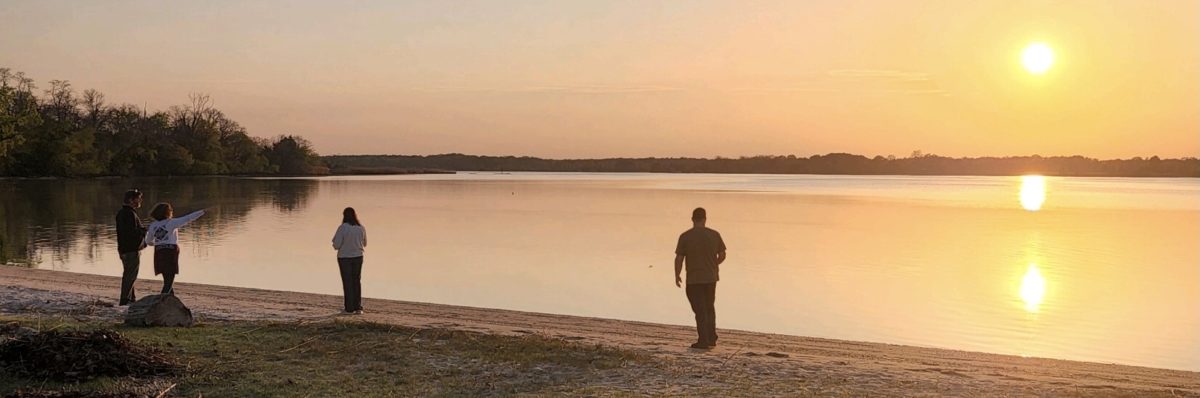
Rest – I am less likely to rush into a bad decision when I rest, when I pause. We’ve spent the last couple Sunday evenings on the screened in porch and in the yard to watch the sunset and the sky. Taking an afternoon walk down the tree-lined, gravel lane to Claiborne Beach. Hit the reset button. If people’s energy is intense and they are spun up about something, as we see so often right now, if I have caught my breath and come to a situation rested, my chances of making good decisions are better.


Prayer – when I am in conversation with God, when I am listening, I am more likely to be looking at life from a bigger perspective than just my own. We stay close to people we spend time with. Prayer is a great way to spend time with God. At our healing service this week, someone talked about, when she feels distant from God, she starts her prayers with, “Lord, have mercy on me.” That puts us in a place of humility. Being humble can be its own category.

Gratitude – if I find something to be grateful for each day, my heart and my mind are aligned. If David had looked around and said, “Wow, look at the kingdom I have, the life I am living, and been grateful to God for it all, maybe he doesn’t put himself in the situation that gets him in so much trouble.

Heartbreak – this is about perspective. Over the past few weeks, I gave a homily at a friend’s funeral and watched his 16-year-old daughter give a eulogy for her father; another friend lost his wife about this time last year and now his brother is in home hospice. Another friend last week was in the church praying on her late husband’s birthday and we got to catch up, and what a gift to see that their love continues even now. So many people around us, our friends, our family, members of our congregation, are going through so much. If we allow our hearts to break with theirs; to know we can’t fully understand what someone else is going through, but we can try to be there with them; that’s what Jesus asked us to do. Heartbreak reminds us what things are most important and what decisions to make.

Study – I have so much more to learn about the Bible. God’s inspired Word; a library of readings for our learning, sometimes as night and day different as someone sleeping with a neighbor’s wife and then plotting to have that same neighbor killed; to feeding 5,000 hungry people who are looking for something more than food. When I spend time reading and reflecting, learning from Scripture, I am being fed with more than food.

Jesus is talking about feeding people spiritually, going beyond just our human hungers and thirsts. Not discounting them but using them to point to something bigger. To point to the one who was sent to give us these signs; the one who was sent to show us how to love and how to live; and when the crowds asked what they had to do, Jesus said believe in me. “I am the bread of life. Whoever comes to me will never be hungry and whoever believes in me will never be thirsty.”

Believing, when it comes to Jesus, isn’t about just agreeing with him, it’s not some mental exercise. It’s about how we live our lives, how we love, and what we do with our time. I still make a lot of bad decisions. But prayer, gratitude, rest, heartbreak, and study are some of the things that help me make the decisions God hopes I’ll make. As you go about your week, think about what things are helping you. What is saving you, bring you closer to Jesus, helping you believe, right now?

Interdependence (It Takes Three)

Background: July 6-7 was a preaching weekend for me and the lectionary Gospel reading was Mark 6:1-16, where Jesus goes back to his hometown and is not accepted as a prophet and then sends out the 12 apostles with the bare minimum of possessions.

I’m going to throw a word out here at the beginning that is our word and theme of the day: interdependence. We need God and we need each other. That is always the case. Anytime we try to deny it or get around it, we are deluding ourselves. With that in the back of our minds, let’s dig into today’s Gospel.

There are two parts to the reading. First, Jesus comes back to his hometown, where he faced doubts and criticisms; where they weren’t willing to see him as anything special, certainly not a prophet.

I don’t and will never claim to be a prophet. But I have had a very different experience becoming a preacher and going into ministry in my hometown. People who have known me for all or most of my life have been accepting and enthusiastic of what likely on the outside looks like two different lives.

I grew up hard-headed and rebellious in a small town that has a good memory. At 42 years old, after working for the government in Washington, DC, for the previous four years, I became the director of the Oxford Community Center. This was a building where my father had gone to grade school and my sister had gone to summer camp. I had kind of shunned it, thinking I was too cool for it.

I remember on one of my first days at work there, seeing Jennifer Stanley, one of the people who had saved the building from being torn down and founded the community center. Jenny is an Oxford icon, riding her bike through town with curly red hair and a trail of kids behind her.

I said, “Hi Miss Jenny, I don’t know if you remember me…” To which she said, “Oh Michael, I remember you… everybody remembers you on your skateboard, with your hair—you were frightening!”

Those who remembered were excited that someone could grow up, change, and find some sort of a calling in the place where they are from. It’s been the same here at church where people who remember my “lost years” have each said something to the effect of, “Huh. Wow. Okay, go for it!”

If the outcome of casting a new light in your hometown is going to be positive, it takes a receptive and open-minded community. That’s something Jesus didn’t have.

They took offense that Jesus claimed to have something to teach them or show them that they didn’t know. And Jesus felt it.

He said to them, “Prophets are not without honor, except in their hometown, and among their own kin, and in their own house.” He wasn’t able to do much with them or for them. Mark tells us that Jesus was “amazed at their unbelief.”

In Jesus’s hometown, they knew his family. They knew his siblings, they knew his background, they watched him grow up. They remembered Jesus as a kid and a teenager, Joseph and Mary’s son, the carpenter.

Why in the world would God use this lower-class family, this unremarkable person, to be a prophet? Surely, if there was a prophet coming out of Nazareth, it would be someone from a better family, or with a better education—someone who they could look at and feel better about God using to tell them about His will for the world.

They thought that God’s prophets should look a certain way, be formed a certain way, and come from a particular background. Or more specifically, they thought that there were some people God wouldn’t use.

The people in Jesus’s hometown let their biases get in the way of seeing and hearing God.

It’s fair to say we still have this problem today. In “Feasting on the Word,” a series of books on our lectionary readings, the authors ask a couple of great questions from this reading that we should ask ourselves:

“Whom do we take for granted? What wisdom, what deeds of power are missing because we make judgments about who and through whom God’s work can be done?”

How many people do we encounter in a day who we might dismiss while we are on our way to see someone whose views or knowledge we are seeking out. People working in restaurants, gas stations, coffee shops, grocery stores, road crews.

I’ll tell you a quick story. In the summer of 2020, a few months into the COVID-19 pandemic, Tidewater Times Magazine asked me to write a story about the Palestinian family that runs Four Sisters Kabob, Curry and Halal Market. The mother’s name is Shahida Perveen, and her four daughters are: Andleeb, Shanza, Areej, and Bushra. Four years ago, they were taking meals to the staff at the emergency room at the hospital, giving food away to anyone who came to them hungry, and taking food home to make sure people in their neighborhood didn’t go without.

As I got talking to them, Andleeb, who is the oldest, mentioned that her sister Shanza received a full scholarship to University of Maryland, where she had graduated with honors with a degree in public health; Areej was on a full scholarship at Washington College, where she was studying political science; Bushra, the youngest was a student in Queen Anne’s County Schools; and Andleeb felt responsible for making sure that all her sisters were going to school and to help their mother run the restaurant. But in her spare time, Andleeb graduated with honors and her liberal arts degree from Chesapeake College and was enrolling in their nursing program.

If you had made any assumptions about who these women were based on their accents, skin color, or how they dressed, you were missing out on five brilliant people that certainly knew more than I did about so many things. And whose sense of charity, hospitality, and community, we could all learn from.

When we judge who God might use and who God wouldn’t use to deliver a message to the world, or to us, we make ourselves poorer.

Here is another thought from “Feasting on the Word”—

“Jesus’s powerlessness is not primarily about him but about us: about those who are unwilling to believe the great things God can do.”

God is frequently waiting on us. If I dismiss Jesus as not my thing, or I say maybe 2,000 years ago, but that kind of stuff doesn’t happen today, I’m cutting off the lifeline to love, peace, healing, and the grace I need to live every day. I love the quote often attributed to Einstein that says, “There are two ways to look at the world: that either nothing is a miracle or everything is a miracle.”

Imagine waking up in the morning open to the possibilities of the great things that God might do today and not limiting our thoughts as to how or through whom He might do them.

The second part of today’s Gospel is Jesus preparing his disciples and sending them out as “apostles.”

He sends them out two-by-two and gives them authority over unclean spirits. He tells them they can take a staff, but no bread, no bag, no money in their belts; they can wear sandals, but they can’t take two tunics. I picture apostle action figures, staff and sandals included, but nothing else. Collect all 12.

Jesus says: whenever you enter a house, stay there (be present with them) until you leave. If anyone won’t welcome you, if they refuse to hear you, shake off the dust and move on.

Why does Jesus send them out with so little? Why are they traveling so light?

Without money or food, the apostles have to rely on the hospitality of others. They may feel like they know something and have authority that other people don’t. With the nature of the work they do, they may feel special, like a big deal.

Jesus wants to make sure they are also humble. The apostles need those they are speaking to and visiting as much as people need to hear the good news. Without the hospitality of those they are calling on, the apostles will perish. Without the good news they bring the people, the people will perish.

Establishing a relationship based on mutual need and hospitality isn’t a bad foundation.

Back to our word of the day: “interdependence.”

In order for Jesus’s words and works to be effective, those who hear or witness them need to be receptive and open to them. They have to be willing to believe.

For the apostles being sent out, they are being equipped with exactly what they need to understand the relationship they need to have with those they are sent to. The apostles don’t hold all the cards, they need the people in the community. And those in the community have to be open and receptive, or the apostles are to shake off the dust and move on.

It’s not helpful, effective, or true, that those in the know, those in the Word, have all the answers and are God’s sole gift to the rest of the world. If we are fortunate enough to be on the inside when it comes to faith, we still need everyone else. And how we carry ourselves, and what we carry with us, matters.


The other part of that interdependence, besides being dependent on the community they are serving, the apostles have to rely on and depend on God. They are not self-sufficient, and the healing and casting out demons, that power doesn’t come from the apostles. It comes from God. And Jesus sends them out in a way that will help them come to learn that. Without God, nothing the apostles are sent out to do will work.

As we go out today, let’s ask ourselves a few questions:

Do we make judgments about who we think can do God’s work? What or who are we overlooking or missing out on?

Do we believe that God can do great and powerful things in the world? Will we let Him? Will we help Him?

And are we willing and able to be sent out into the mission field with the bare minimum so that we can learn to depend on God and not just on ourselves?

Open to Rainbows

When I am open and receptive, I am not alone. Sitting outside sipping coffee, I am connected to all the hands and all the lives that were involved in picking the beans, making the coffee, and getting it here.

Listening to and watching birds opens me to a symphony of sounds, colors, and graceful movements.

I see the greens of summer above and around me and I feel the slight breeze of the morning.

In the background, I can hear vehicles heading more east than west on Route 50, starting a long holiday weekend. Though I can’t know the people driving by individually, it’s not hard to picture or remember the feeling of heading to the beach for the weekend.

When I allow myself to be open and receptive, perceptive, I don’t feel isolated. I feel connected. It’s a feeling that sets the tone for the day.

In “The Book of Awakening,” Mark Nepo writes, “The dearest things in life cannot be owned, but only shared.” Last Sunday afternoon and evening, Holly and I shared a show of God’s handiwork that was awe inspiring.

Outside to watch the sunset, we listened for birds using the Cornell Ornithology Lab Merlin app’s Sound ID. We heard Indigo Buntings, Purple Martins, Cardinals, American Goldfinches, Chipping Sparrows, Carolina Wrens, Red-Eyed Vireos, and Blue Grosbeaks.

Blue Grosbeaks were new to me and they were the noisiest and most active of the birds we were hearing. As we walked down the garden, Holly pointed out a nest in a bush and as we got near, the mother flew out and into a nearby tree. As she chirped her annoyance at us being there, Sound ID showed her to be a Blue Grosbeak. Looking up more about them, their nest is exactly as described. Hope to see some little Grosbeaks soon.

Next for our evening in the yard, despite very little rain, a rainbow appeared, developed, and thickened right over the house. It was an amazing light show.

There was a stretch in my life where I loathed rainbows—they carried some baggage I didn’t feel like unpacking, and I wrote them off as illusions of light, nothing substantial, nothing of substance. And that’s all true.

But how much of the beauty we find in life and in Creation is transient and fleeting? We know that and we can still appreciate it and marvel at it when it’s there. I live for sunrises and sunsets and they are also impermanent plays of light, which need to be enjoyed in the moment.

If I want to be available to the full spectrum and experience of God’s works in Creation, I need to be open to rainbows. It’s to my benefit and God’s glory.

The next part of the show for the evening was the sunset itself, which incorporated the clouds and the whole sky.

The Sunday evening show was on the last day of June. The month of July does not include vacation or travel for us, it’s about being open to rainbows and experiencing what is around us each day and every weekend. The idea is to “carpe” the month in every way we can. I am a list maker, here are some of the things on the radar screen:

  • Kayaking/paddleboarding
  • Parks (both new and known)
  • Birding
  • Sunrises and sunsets
  • Be out under the stars
  • Live music
  • Fire pit nights
  • Beach days
  • Cooking/grilling
  • Summer reading
  • Skateboarding
  • Gardening
  • Walks/hikes

If we do things on that list each day and every week, we should have a shot at carpe’ing July.

A skateboarding friend Landy Cook already put some of that into play when on July 2 he organized a social skate along Rails to Trails and at the pump track and skate park in Easton. It was a good first turn out and stellar evening, to be repeated weekly.

A number of author Annie Dillard’s words dance through my head regularly. One of the main quotes is this one:

“How we spend our days is, of course, how we spend our lives.”

There is no getting around that. If I daydream but never do anything, my days won’t reflect the life of my mind, and neither will my life.

Each day is an opportunity to do something. Beyond making a list of things I hope to do, what would a meaningful day, any day, look like?

What if every day included doing:

  • Something creative
  • Something prayerful/meditative
  • Something physical
  • Something practical
  • Something productive
  • Something peaceful/soothing
  • Something loving
  • Something selfless
  • Something outgoing
  • Something spontaneous
  • Something sensory/sensuous

If I can think about those kinds of things to do each day and look back at the end of the day to see how I did, how I spend my days might add up to a life I want to live.

Oneing Weekend: Let’s

I want to spend more time “oneing.” “Oneing” is a term the mystic Julian of Norwich used to describe the encounter between God and the soul. It’s a word and idea so meaningful to Franciscan Richard Rohr that he named the publication of his Center for Action and Contemplation “Oneing.”

It’s a feeling I get frequently when I sit quietly outside.

April 19

Skateboard, notebook, pen, binoculars, an issue of “Oneing,” reading an essay from Scott Avett of Avett Brothers fame about “Creating Faithfully.” On the shore of the river, purple flowers pull my attention until watching them and taking pictures and listening to the water, I just feel like an extension of the scene, part of it. A feeling of oneness.

Skating, gliding along pavement, has been a oneing experience for almost 30 years.

Around the Oxford Conservation Park, there are Eastern Bluebirds and I sit on a bench and watch a bluebird house where one flew out of and I read.


In addition to being a world famous singer, songwriter and musician, Scott Avett is a talented painter and a moving writer. His essay is on his faith and the creative process. He talks about contemplating Jesus’s identity and how Jesus knew exactly who he was, something most of us struggle with. Avett writes, “I think this truth alone, separates him from us. I can see how this knowing of who one is can be the most loving truth one can offer.”

He talks about going into the studio in solitude to create.

“This time alone is fertile ground where I cultivate my purpose. My contribution is my engagement in it. The studio is my cloister. To pray is to be drawn nearer to my existence. The only control I have is to show up and respond. I build from that simple idea… I long to create faithfully rather than successfully, productively, intelligently, or even truthfully. Creating faithfully is not knowing how to do it. It is believing that it is worth doing… With this, I replace the anxiety-ridden aspirations of arrival with peace in a true being. This is who I am in Christ and who Christ is in me… What a precious revelation. Simply put, to create faithfully is to be me.”

Avett arrives at this oneing through creating art. I read and sit with his words waiting on bluebirds, greeting walkers, dog walkers, and folks riding bikes as they loop the park.

April 20

It’s the last day of classes for our three-year Iona Eastern Shore seminary program, a day retreat at Old Trinity Church in Church Creek, which is about a mile down the road if you don’t turn left to go to Blackwater Wildlife Refuge. Seminary day retreats are the only reason I have been to Old Trinity, which is a beautiful church and campus. I smile that their parish hall is named “Valliant Hall.” I’ve now preached from the pulpit there twice in front of classmates and instructors, working on our homiletics.


On days when the weather is nice, I get there early so I can sit out on the dock or on a bench by the shoreline to pray, breathe, drink coffee. It’s another experience of oneing, of an encounter between my soul and God.

It’s the last time our class will be gathered together for the purpose of learning, when we are one in that way. We will graduate together on June 15.

April 21

Oneing is an encounter between God and the soul. But it can and does also include other people. According to Richard Rohr:

Julian of Norwich says, “The love of God creates in us such a oneing that when it is truly seen, no person can separate themselves from another person,” and “In the sight of God all humans are oned, and one person is all people and all people are in one person.”

We are connected to each other and we are connected to God and we can experience God in each other. In my experience, some people make us more aware of that connection, or more quickly and intuitively aware than other people do, and there are people who show and remind us of our own connection to God. Those are people to treasure and spend time with.

The first time I met Holly was on a retreat in late October 2017. Despite both living on the Eastern Shore for our whole lives, and having a number of mutual friends, we had never met. The first real conversation we had was a few weeks later at the Waterfowl Festival. We met for coffee a few times at Rise Up Coffee to continue our conversations.

In December we went for a five-mile hike together at Tuckahoe State Park, which we consider our anniversary. We walked in as two people and by the end of the hike, we were different, together. That was almost six-and-a-half years ago. Tuckahoe has been a holy, sacred, thin space for me since 2005, when I went trail running there. It is a place I called “church” long before I was going to church. Oxford and Tuckahoe are two places where oneing and walking are almost the same for me. Holly and I have hiked there a number of times since.

On April 21, we decided to hike our anniversary route.


Time passes differently with Holly. We can get lost in the backyard together, listening to and watching birds, lying under the stars; we lose track of time making dinner together, or sharing something we are excited about.

If you’ve taken time and put in work to get to know yourself, in the way that Scott Avett talks about, knowing who we are and being ourselves as the most loving truth we can offer, my experience with Holly is that you can be even more free and encouraged to be yourself by the presence of someone else. In oneing, in being together, you can be more than you were. And you can do and be that for someone else. That’s love and freedom together.

Tom Robbins, a favorite writer of mine in his book “Still Life with a Woodpecker” said, “There are only two mantras, yum and yuck, mine is yum.”

There are people who increase your yum exponentially, and you theirs. That has been our experience together. From our earliest conversations, talking about life, and dreaming about adventures, “Let’s” has always been our response to each other.

On this day, we walked into the woods together. We talked, we dreamed out loud, we watched and listened, we encountered friends along our Sunday walk who we hadn’t seen in a while.

And we said, “Let’s” to our next adventure together. Further experiences in oneing.

Rethinking Fairness

Background: On Sunday mornings at Christ Church Easton we have morning prayer and a discussion of the week’s lectionary Gospel reading on Zoom (in addition to three in-person services with Communion). Each Zoom discussion is different, depending on the reading and who is participating–in that way each discussion is organic and in places unscripted. So when I put together notes for a homily, some of it gets used, other parts don’t, and the key is to find the questions that are engaging people. This past Sunday, the Gospel reading was Matthew 20:1-16, in which Jesus tells the Parable of the Laborers in the Vineyard, where the landowner sends workers into his vineyard in waves from early morning right up until one hour to go in the evening. He then pays all of them the same usual daily wage. And the workers who had been there all day say it isn’t fair.

This is the homily I put together, though the discussion itself moved in different ways and there were parts that weren’t used and great questions and comments that aren’t written down.

(The image above is “Red Vineyards at Arles” by Vincent Van Gogh, 1888)

“Rethinking Fairness”

How many people are bothered by this parable? And what is it that rubs you the wrong way about it?

Our sense of fairness is disturbed. Even though those who worked from the early morning got exactly what they were promised, what they agreed to, which was a good wage for their work. And it was the landowner who offered them work in the first place.

The context of this reading, what we haven’t heard just before it, was Jesus and the rich young man, who kept all the commandments and was doing everything right, and he asked Jesus what else he had to do. And Jesus tells him to “sell all your possessions, give the money to the poor and you will have treasure in heaven; then come, follow me.” And the  young man goes away grieving, because he had many possessions.

Jesus tells his disciples that it’s really hard for a rich man to enter the kingdom of heaven. This goes against all the thinking of the day, where the rich were looked at is being in God’s good graces. That makes the disciples ask who can be saved? And Jesus tells them, “For mortals it’s impossible, but for God, all things are possible.”

And here is the line we are waiting for. Peter gets worked up and says, “Look, we have left everything and followed you. What then will we have?”

Jesus reassures them that when the time comes, they will be taken care of. But he can tell they are missing the point of everything. So we get the parable of the laborers in the vineyard.

Let’s look at the story. What can we say about the landowner? What do we notice about him and how he does things?

He is the one out finding the workers. It would have been more likely to see a manager or one of his employees, but it’s the landowner himself out there.

Michael Green in his book “The Message of Matthew” puts it like this—

“…he goes out himself. Indeed, he goes out repeatedly to seek them. They are hungry, unemployed, and as the day wears on, increasingly hopeless. He cares about that. He wants to give them a job to work and a reward.”

Then we get the payment. Everyone who works gets the same thing, a day’s wages. The order in which people are paid is a zinger, paying the last first, so that the early arrivers see what they are given.

“The Parable of the Laborers in the Vineyard,” by Rembrandt, oil on panel, 1637.

I love this perspective from Debie Thomas in her book, “Into the Mess & Other Jesus Stories.” She looks through a contemporary lens:

“The landowner in Jesus’s story doesn’t judge his workers by their hours. He doesn’t obsess over why some workers are able to start at dawn and others are not. Perhaps the late starters aren’t as literate, educated, or skilled as their competitors. Perhaps they have learning challenges, or a tough home life, or children to care for at home. Perhaps they’re refugees, or don’t own cars, or don’t speak the language, or can’t get green cards. Perhaps they struggle with chronic depression or anxiety. Perhaps they’ve hit a glass ceiling after years of effort, and they’re stuck. Perhaps employers refuse to hire them because they’re gay or trans or disabled or black or female.”

That’s the thing with Jesus’s parables—he gives us a story with just enough information to get our brain turning, but he doesn’t fill in all the details—that is for us to do. And often his parables disturb us and our sense of how things are.

Back to the parts of our story: we’ve got the landowner sending everyone into the vineyard, we’ve got payment being made, and then we have the reaction.

The last into the field are the first to get paid, and they get a day’s wages. As the first, the earlier workers approach, they are expecting more. And then they get upset.

“These last worked only one hour, and you have made them equal to us who have borne the burden of the day and the scorching heat.”

And the landowner says, didn’t I give you what I promised you, what we agreed to? Am I not allowed to give what belongs to me how I choose? Are you envious because I am generous?

What a question. I wonder, is it his generosity that offends or disturbs us here?

Here’s the thing. Part of why our sense of fairness is put off here is that we instantly identify with the laborers who went out at dawn, who have been out in the vineyard the longest.

Let’s move the parable into what it’s really addressing here: salvation. I have to tell you, when it comes to my life, to my faith—I am not one of the early arrivers. Like most things in life, I got there late.

What do the Gospels and Paul’s letters tell us over and over again: we are not saved by works, we are saved by grace, which is a gift from God. We can’t earn grace and it’s not a competition.

Here is Michael Green again:

“Grace, amazing grace, is the burden of this story. All are equally undeserving of so large a sum. All are given it by the generosity of the employer. All are on the same level. The poor disciples, fisherman and tax collectors as they are, are welcomed by God along with Abraham, Isaac, and Jacob. There are no rankings in the kingdom of God.”

If we fast forward to after Jesus’s death, resurrection, and ascension, into the Book of Acts, what happens at and after Pentecost—Peter and the disciples bring more and more into the fold, baptizing and teaching thousands. They didn’t have the attitude of, “Hey—where were these guys while Jesus was here—these new disciples have it so much easier.” Instead, Peter and company are thrilled to have more workers in the vineyard.

I wonder if the problem here is us and our small sense of fairness. Maybe God’s sense of fairness is bigger and more expansive than ours is, and that is a good thing.

Grace, like forgiveness which we’ve been talking about for the past couple weeks, depends on our receiving it and paying it forward. God’s plan is to include everyone.

Back to Thomas to bring it home:

“Could it be any more obvious that we are wholly dependent on each other for our survival and well-being? That the future of creation itself depends on human beings recognizing our fundamental interconnectedness and acting in concert for the good of all? That ‘what’s fair’ for me isn’t good enough if it leaves you in the wilderness to die? That my sense of ‘justice’ is not just if it mocks the tender heart of God? That the vineyards of this world thrive only when everyone has a place of dignity and purpose within them? That the time for all selfish and stingy notions of fairness is over?”

A question/thought that came up in our Zoom discussion today was, “How can people learn to be generous if they don’t experience it?” That’s so true. Those that were invited into the vineyard last experienced that kind of generosity. Let’s step into that.

Put yourself in the life of those that arrived at 5:00pm, for whatever reason. Imagine the joy you feel, imagine the gratitude, imagine going home and what you would say to your family. Imagine how you might be inclined to treat other people you encounter?

Maybe this is how we should think of fairness, the same way we think of grace and mercy and love.

Bearing With Each Other

Background: Last Saturday evening there was a wedding on Saturday evening at Christ Church Easton, so we moved our Alive @ 5 contemporary music service into the Parish Hall and served dinner at the end of the service. The band was in the style of MTV Unplugged and the Parish Hall was full of good food and fellowship. The Gospel from the lectionary last weekend was Matthew 18:15-20, where Jesus outlines how to deal with conflict/sin between people in the community. With our Rector/Pastor officiating the wedding, I preached at our Saturday evening service.

“Bearing With Each Other”

“Christian conflict resolution” is not a class that would have a waiting list to get into. It comes off a bit like a root canal—necessary, but not something to look forward to.

But when you look around society and how we deal with feeling wronged, we do need some guidance. These days there are a lot of passive-aggressive outlets out there. What are some notable passive-aggressive ways to not actually deal with conflict?

If your neighbor has done something to you, you might go through the neighborhood association, or contact the town. When a friend makes us angry, we might defriend or block them on social media, or write huffy, angry comments under something we disagree with. Politically these days, when someone slights or disagrees with someone, the goal is to discredit, belittle, shame, and have others pile on. Nothing is resolved. And resentment becomes more deeply rooted.

When someone wrongs us, when someone sins against us, we want things to be made right, for us. Our self-righteousness demands satisfaction.

That’s not what’s going on in today’s reading. Jesus is looking at this earliest church community, not society at large. And he is giving instructions for the benefit of the sinner, whose actions are pulling him/her/them outside of the community. Jesus is giving the disciples steps to restore that person, to keep the community together.

What an unmodern concept—to care about the sinner, and about the community, more than our own sense of justice.

This is a teaching about reconciliation, and it’s reconciliation based on love and forgiveness.

It’s not easy. It’s counter-cultural. It doesn’t make sense with how our laws are written.

But community can’t be built on the law. Legalism won’t save us. If you look at most laws, including those in Scripture, they’re drawn up around doing no harm. And that’s not bad—those kinds of laws help keep us safe.

When it comes to a faith community, safety isn’t enough.

Jesus doesn’t summarize the commandments by saying, “don’t harm God and don’t harm your neighbors.”

We’re called to love.


God doesn’t want us to coexist (though the sentiment on those blue bumper stickers is better than the alternative of wiping each other completely out of existence).

God wants us to thrive. To help one another. To be there for each other. To love one another.

Both Paul, writing today’s New Testament reading, and Jesus, speaking in today’s Gospel, want to make sure we get the message loud and clear.

When we love, we more than fulfill the law. And Jesus looks at conflict within the church community through love.

When there is conflict, where someone is going astray: deal with it, fix it, work it out. This is where things get hard for us, especially in a church. Historically, churches have publicly fallen on their faces with conflict resolution on big issues. Look at how many scandals and atrocities have been dealt with by the church, by transferring an offending clergyperson somewhere else—out of sight, out of mind, not our problem. That’s conflict, that’s crime, and that’s reconciliation on a different scale, but it’s real and something the church has to deal with in order to be the example it needs to be in the world.

As parishioners, on a much lesser scale, when it comes to having an issue with someone in the congregation, we might find it easier to find another church rather than work through something difficult when someone has wronged us.

Avoidance is an easier path than reconciling. And there is a cost to that.

Best-selling author, theologian and Bishop N.T. Wright says:

“Reconciliation is a huge issue today. We can see the results of not doing it: suicide bombs, campaigns of terror, heavy-handed repression by occupying forces. That’s on the large scale. On the small scale, we see broken marriages, shattered families, feuds between neighbors, divided churches.”

Jesus knows how hard it is going to be for the early church to stick together in community, especially once he is gone. And he goes straight at things, right up front.

He says, first, try to work it out between the two of you. If that doesn’t work, take a couple people with you. Expand that circle slowly. Allow the person to save face as much as possible.

Jesus doesn’t say—talk about that person, gossip, try to get everyone on your side. Instead, deal with it quickly and between the two of you.

Let’s remember the goal: bringing the sinner back into the fold, keeping the community together. All while dealing with what happened.

Here is N.T. Wright again:

“Forgiveness doesn’t mean saying “it didn’t really happen” or “it didn’t really matter.” Forgiveness is when it did happen and it did matter, and you’re going to deal with it and end up loving and accepting one another again anyway.”

We are sinners, all of us. We all mess up. We all fall off the path we are trying to walk. Forgiveness, grace, love—how God deals with us, is how we are to deal with each other.

What does the church need? Reconciliation (that’s our word of the night). The mission of the church is to reconcile the world to God. To do that, we have to model it in our midst. Not in some abstract way, but right down into the details of our lives and how we treat each other.

There’s a part of this reading that is easy to miss. Jesus tells the disciples that when an offender refuses to listen even to the church, “let such a one be to you as a Gentile and a tax collector.”

Let them go, as outsiders.

What do we know about Matthew from the text a few weeks ago? He’s a tax collector. And Jesus still loved and restored him. Even in continued disagreement and going separate ways, the goal is still restoration.


Dietrich Bonhoeffer has a little book called “Life Together,” where he looks at Christian community. He says that when it comes to ministry in a community, listening, active helpfulness, and bearing with others are foundational. He says it is hard to bear the sin of another person because it breaks fellowship with God and with his brother.

“It is only in bearing with him that the great grace of God becomes wholly plain. To cherish no contempt for the sinner but rather to prize the privilege of bearing him means not to have to give him up as lost, to be able to accept him, to preserve fellowship with him through forgiveness… As Christ bore and received us as sinners so we in fellowship may bear and receive sinners into the fellowship of Jesus Christ through the forgiving of sins.”

And Bonhoeffer ties it together saying that “where ministry of listening, active helpfulness, and bearing with others is faithfully performed, the ultimate and highest service can also be rendered, namely, the ministry of the Word of God.”

If as a community, we aren’t oriented towards listening, actively helping, and bearing with others, we are going to have a hard time ministering the Word of God to others. Because where would it be found in our lives and our community?

And then we get to these incredible last lines of the reading: “For where two or three are gathered in my name, I am there among them.”

How many people have heard that line before? How many have used it in the context of gathering together? And how many realized that Matthew includes those words from Jesus, here, when he is talking about sin, disagreement, and reconciliation—not at the Last Supper, or the Sermon on the Mount, or some hopeful healing or miracle. It’s here, where or when we are struggling, maybe even divided, that we need to remember and call on his presence among us.

If we as the church are going to reconcile the world to God, we aren’t going to do it on our own. We need God’s help. Thankfully, God has already done the work, in and through Jesus, who is with us, always.

And if we are going to call on his name, and continue his work, we’ve got to work through the tough stuff, not brush it under the rug and pretend it didn’t happen.

We’ve got to listen, we’ve got to help, we’ve got to bear with each other. That’s what love and forgiveness look like.

Amen.

Bonus quote, which we used in our Zoom discussion about the Gospel reading on Sunday morning. The quote comes from Padraig O’Tuama’s book, “Daily Prayer With the Corrymeela Community”–

“Listening is a sacrament when the topic is important, and when strife divides people in small places, the sacrament of listening is vital. So many people and so many places in the world have difficult relationships with difference. We seek to practice the art of hospitality in the places of hostility, and in so doing practice kindness in places the most in need of kindness.”

Some prayers

Dear God,

Some prayers move, they wander, they surf like a skateboard, they stop to look at birds or sit under a tree. Some prayers stop to pick up a six pack. Some prayers start while reading and writing next to the river and keep going sitting in a salon where my daughter is getting box braids in her hair to get ready for surgery on Monday.

U2’s “Still Haven’t Found What I’m Looking For” plays from the speakers, which makes me smile because a couple days ago Ava mentioned having that song on her playlist.

My prayer reads Brenda Miller’s “The Shape of Emptiness “ where a creative writing student whose mother had just died passes out Playdough to the class and has them squeeze it in their hands and then puts all their “hands” on a table at the front of the classroom. Miller says, “He made visible the air we never see.” And then:

“When he finishes reading he gathers our hands and gives them back to us one by one. We take them from him carefully so we can carry our emptiness into the day. We compare them, showing off the shape of our grasping. Curved like prayers. Like anger. Like love.”


God, maybe our prayers are like those hands, our grasping to fill emptiness, trying to bridge the distance between us. Sometimes that distance is wide and tough to cross. Other days we are sitting next to each other by the river smiling the same smile, thinking the same thoughts.

Lord, my prayer is written on my heart and it is for Ava on Monday and the next couple weeks, that all goes well and the surgeons and neurologists and medical team find what they need to know and that their knowledge brings hope.

Some prayers last for a couple days and have more silence in them than words. I know you appreciate the silence, Lord, because sometimes the world is too noisy. And silence speaks louder.

My prayer, God, is about love and right now love is sitting in a salon and being so full that words either pour out or nothing will come. Right now, love looks like box braids and someone taking the time and care to help my daughter so she doesn’t have to have her head shaved.


Some prayers take weeks, months, years. Some prayers run out of ink as I write them, run out of words as I speak them, and take an entire life to say what I need to say and listen for what I need to hear.

Some prayers are to be continued. Just like our love. Just like your love. And all of them are written on our hearts and with our lives, which belong to you.

Amen.

Sitting by the river

Solitude is a gift.

Silence is a gift.

Sunlight is a gift.

Sitting by the river with a strong breeze moving the water and blowing against one side of my face while the sun warms the other.

I woke up in a warm house, while it was still dark and made coffee. Made a to-go breakfast for my older daughter for her drive to work. I laughed with my younger daughter taking her to school.

Now I am sitting in the sun and the wind by the water praying, reading, writing, listening, smiling.

Behind me is a cemetery where my grandparents, family members, and friends rest peacefully. Memories and love dance between us and connect us.

The books in front of me are titled “Pilgrim” and “Gold.”

Talking to God, Rumi writes:

“Today you arrived beaming with laughter–
that swinging key that unlocks prison doors.

You are hope’s beating heart.
You are a doorway to the sun.
You are the one I seek and the one who seeks me.
Beginning and end.

You greet need with generous hands.
You flood us with spirit,

ringing from the heart,
lifting thought.”

Reading this, he and I say it together. I like to think God smiles in the sunlight.

Across the cove the sun and the wind dress a weeping willow tree. Geese float tucked away from the tide.

When I am fully here, in this moment, with a full heart and an open mind, and time alone with God, what more can I ask for? I am not alone.

Thank you for this view.
Thank you for this day.
Thank you for this life.
Thank you for your love.

Amen.

* My practice/devotion for Lent this year is to write a “proem” (prayer-poem-prose) in the spirit of Brian Doyle each day of the season. I will share some of them. This is day #3.

Thank you for things that grow

Creator God, thank you for things that grow and change and bloom in their own time.

Thank you for patience so that we can wait with hope on your timing.

Thank you for giving us grateful hearts so that we can appreciate the impermanence, the fleeting moments–nothing remains in bloom and that makes each opening, each unfolding, each blossom special.

Thank you for making us able to grow, able to change, able to seek you, to seek beauty. Thank you for making us new creations in response to the shining of your light, your truth.

God, we thank you for helping us let go when it is time. Lord, I am not always good at this. Letting go hurts. I want to hold on to the blossoms, hold on to the people, hold on to the perfect moments–I want to stay in those wonderful experiences, found and lost in time, captured and forgotten in memory. Like Peter, I want to build dwellings to stay right there.

All around us, you show us that’s not how it works. You show us in your creation that everything has its time, its season. You show us the petals, the leaves dropping off, falling to the ground, coming apart, and going back into the dirt, back to dust.

“Remember that you are dust and to dust you shall return.”

From dust to dust.
From dust to seed.
From seed to sprout.
From sprout to bud.
From bud to flower.

Thank you for the dust we are and the blossoms we can become.

Thank you for your love that helps us grow and bloom.

Thank you for things that grow and change and bloom in their own time.

In your time.

Thank you.

* My practice/devotion for Lent this year is to write a “proem” (prayer-poem-prose) in the spirit of Brian Doyle each day of the season. I will share some of them. This quick prayer on Ash Wednesday is the first.