With This Thirst

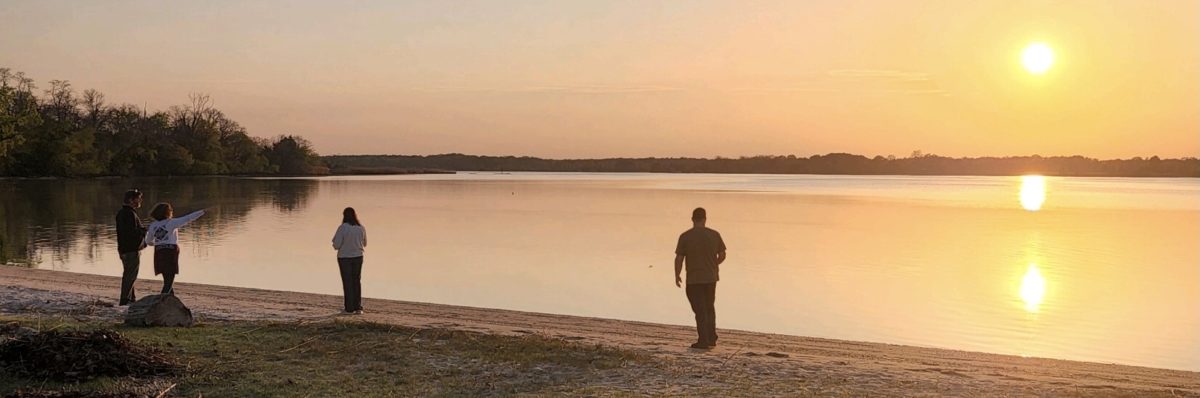
Sitting on the bank of the cove, watching a Weeping Willow move in the wind and feeling the same breeze on my skin is worth waking up for. I’ve been looking for this solitude and this quiet. Ordination to the priesthood is this Saturday and I want to rest in the afternoon.

The current is coming to a head from opposite directions and swirling right in front of me. I’m sitting under my praying/thinking tree at the Oxford Cemetery, where family and friends are buried and over the past year I have officiated funerals. This is a place where past, present, and future dwell together.

The cove itself is home if a body of water can be home: I’ve gotten boots stuck in the mud here at low tide as a kid, canoed, come and gone by Boston Whaler, kayaks, and paddleboards. That’s part of what draws me here to pray and listen, to read and write, and skateboard to get to the spot.

“Oh, feed me this day, Holy Spirit, with
the fragrance of the fields and the
freshness of the oceans which you have
made, and help me to hear and to hold
in all dearness those exacting and wonderful
words of our Lord Jesus Christ, saying:
Follow me.”

–Mary Oliver, from “Six Recognitions of the Lord”

Mary Oliver should be read outside. I have her book “Thirst” and Frederick Buechner’s “The Alphabet of Grace” with me. “Follow me.” That’s it in a hazel nut.

I get up and skate back to and around the conservation park. It’s lightly raining, the kind of rain that wakes your skin up. I stop when I see purple, per Alice Walker’s advice, which I follow meticulously. Then I head over to the Oxford Park.

Twelve years ago this month, I sat in the park reading this same copy of Buechner’s book. I look back over what I underlined then. This was at the end of a summer (2013) where I knew in my bones that I was supposed to go to seminary. It made no sense. I reached out to Fr. John Merchant, the chaplain at St. James School when I was there, and he told me it didn’t have to make sense. I read Buechner and Barbara Brown Taylor and Thomas Merton and I was stirred and moved and then laid all that aside, taking a job to head back to Washington, DC, to work as a technical writer.

I don’t have words to describe what the 12 years in between have been, except to say heels-over-head, upside down, life-changing; from profound heartbreak to indescribable joy, confusion and clarity, discernment, wonder, awe, gratitude, and everything in between, ultimately shedding some parts of myself and growing in others to where I feel alive in ways I wasn’t. Living now with my whole and open heart.

Here’s a bit of Buechner:

“You are alive. It needn’t have been so. It wasn’t so once, and it will not be so forever. But it is so now. And what is it like: to be alive in this maybe one place of all places where life is? Live a day of it and see. Take any day and be alive in it. Nobody claims that it will be painless, but no matter. It is your birthday, and there are many presents to open. The world is to open.”

Part of that I underlined 12 years ago, but it didn’t register. Each day is new, each day is a gift that we get to live and be alive in. Be grateful.

In the park, I often sit on a bench set off to the side at the edge. It’s in the shade. As I sit there, a child belly-laughs on the swing with her father; a workboat motors down to pull into the marina nearby; a man pulls his crabpots up on his dock; people and dogs come and go; the sun breaks through the clouds infrequently but unmistakably.

Today isn’t a day for revelations. It’s a day to rest and be glad in. It’s a day to breathe, a day to smile, a day to pray. I finish Mary Oliver’s book with the title poem, “Thirst,” which I have been reading a lot lately:

“Another morning and I wake with thirst
for the goodness I do not have. I walk
out to the pond and all the way God has
given us such beautiful lessons. Oh Lord,
I was never a quick scholar but sulked
and hunched over my books past the
hour and the bell; grant me, in your
mercy, a little more time. Love for the
earth and love for you are having such a
long conversation in my heart. Who
knows what will finally happen or
where I will be sent, yet already I have
given a great many things away, expect-
ing to be told to pack nothing, except the
prayers which, with this thirst, I am
slowly learning.”

With this thirst, I am slowly learning.

A Personal Prayer

When I walked to the shoreline, there was a Kingfisher just down the bank.

Across the creek, a Great Blue Heron plodded.

This morning I got a note from a friend who has cancer and is struggling through treatment. He was flown to Hopkins and is in the ICU. He asked for prayer.

I prayed. I wrote and sent him a prayer. I am praying. I will be praying. I haven’t stopped. It never feels like enough.

What I want for him is a miracle. A return to health and home and family and worship and all the things he loves and that love him back.

How about a miracle, God? Have you seen the world lately? Have you seen how we behave? How we treat one another? Most of us don’t deserve miracles. But you still give them. I can’t always figure out why or where, but it’s not on me to do that. Miracles are you, God.

I can hear Bob Weir singing, “I need a miracle every day”–and I get that.

I feel it in my soul–the miracles of morning coffee and a hug in the kitchen, and making breakfast for my daughters, of a world where the seasons change and there are Kingfishers and Herons on the shoreline.

I think of the ICU. Where miracles are breath. And modern medicine. Doctors and nurses. Love of family. Technology. Communication. Patience. Time. Prayer. Hope.

I sit on the shoreline praying for my friend. I feel your presence all around me.

A jet flies over with its landing gear down; it’s a majestic sound and sight. It’s a miracle you’ve given us through the minds, reason, and intellect you created in us.

I pray now with tears in my eyes for multiple friends with cancer who love you and who share your love with others.

We all need miracles every day. Send some extras to those with cancer and to their families. Keep them connected to your love, your peace, your healing.

I lift them up to you, God.

Thanks for listening.

Love you.

Amen.

Live Now What Matters Forever

Background: My August preaching weekend at Christ Church Easton gave me Luke 12:13-21, where Jesus tells the Parable of the Rich Fool, who wants to build bigger barns to store all his stuff. Following is the text of my sermon.

“Live Now What Matters Forever”

There is a lot going on in today’s Gospel reading that gets my mind and my heart churning.

Someone in the crowd says to Jesus, “Teacher, tell my brother to divide the family inheritance with me.”

 And Jesus’s answer may seem for our day and time like one of the most un-Jesus responses we can imagine:

“Friend, who set me to be a judge or arbitrator over you?”

Some followers of Jesus today like to lift absolutely everything up for Jesus to help us to make our decisions, to settle our disputes.

But Jesus may say to us sometimes, “That sounds like ‘your problem.’ That sounds like something you guys are going to have to figure out for yourselves.”

Certainly, this nameless person from the crowd has his own self-interest in mind and wants to get the teacher he looks up to, to weigh in on his side, to tell his brother to give him some money and some land.

It may astonish us that in dealing with family matters, Jesus’s answer to us might be, “Friend, who set me to be a judge or arbitrator over you?”

Not the answer we were hoping for.

One of the reasons Jesus doesn’t have an interest in answering this question or settling this dispute is that he sees it is leading the person, his brother, and the crowd in a bad direction. If this is the kind of question you really want to spend your time with Jesus going through, you’ve got a bigger problem.

Greed and hoarding possessions are not going to help you. And then Jesus does one of the most Jesus things he does when asked questions.

He says, “Let me tell you a story…”

I love that Jesus’s answer to some of the most vexing questions and profound problems when the crowds press him for answers is… “Let me tell you a story.”

Franciscan and author Richard Rohr says:

“The way Jesus usually answers questions is by telling a story. There is creative and healing power in a story. It doesn’t avoid the question, it goes to the root of the question… That’s the way the great masters of religion always taught—by simply telling stories and giving the soul room to grow and understand.”

If Jesus gives them an answer, they are done thinking about the matter. It doesn’t help them grow; it doesn’t help them understand the deeper currents that are underneath the question.

Jesus’s parables work on us. They stick with us. And their meanings move around for us.

Teacher of preachers Tom Long wrote a book on Jesus’s parables and the word he uses for parable is “riddle.” Long says:

“One of the best definitions of parable is: riddle. A parable is a riddle, there is some puzzle to be solved, some enigma to be plumbed. And the thing about Jesus’s parables, just when you think you’ve got it… a trap door opens and you fall down into a deeper level of mystery. By the way, I think insufficient attention is given to the fact that we serve a Jesus whose favorite method of teaching was not rule, law, spiritual truth, principle, but riddle…  All this is to say, that parables, and particularly Jesus’s parables aren’t clear, cut and dry, and don’t lend themselves to a quick and easy interpretation, or they wouldn’t be doing their job.”

Jesus told them this story, this riddle:

The land of a rich man produced abundantly. And he thought to himself, `What should I do, for I have nowhere to store my crops?’ Then he said, `I’ve got an idea: I will pull down my barns and build bigger ones, and there I will store all my grain and my goods. And I will say to my soul, `Soul, you have plenty of goods laid up for many years; relax, eat, drink, be merry.’ 

But God said to him, `You fool! This very night your life is being demanded of you. And the things you have prepared, whose will they be?’

If our most pressing question of Jesus is to solve our inheritance problems, to solve our financial problems, Jesus says, I’ve got a warning for you—you might be focusing on the wrong things. It’s not that money isn’t important, but it can cause us to lose focus on the biggest things in life… which includes the fact that we don’t know how much time we have in this life.

I absolutely love how Richard Rohr brings this parable and this reading to a point. He says:

“‘Live now what matters in eternity’ is Jesus’s message. Live on earth what’s happening in heaven… That’s the kingdom: live now what matters forever.”

LIVE NOW WHAT MATTERS FOREVER. There’s your bumper sticker or your t-shirt from today’s Gospel. There is something to tape to your mirror or above your coffeemaker, or somewhere you’ll see it every morning when you wake up.

There is a poet named Maggie Smith whose work I am a big fan of. She always seems to bring big issues and questions into the here-and-now in ways that stick with me. When she posts on social media, she’ll often use the heading “Life lately” and include a bunch of pictures and captions of what’s been going on with her.

“Life lately” for me has been Clinical and Pastoral Education—Rev. Kelsey and I have three weeks left out of our 16-week programthat is our last requirement to be ordained as priests. In my experience, seminary helps train your brain, CPE helps mold your heart.

Sitting with and opening myself up to strangers, and sometimes friends, who are in the hospital, softens my heart in ways that I couldn’t have predicted.

Last week at the Easton Hospital, I checked in on an older gentleman who was eating his lunch. I introduced myself as the chaplain for the day, and he said, “What denomination are you?” I said, “Episcopal.” He said, “Good, that’s the only good one!”

Over the next hour he told me his entire life story: father died when he was nine, military school, jobs he had, marriages, divorces, kids dying, mistakes he made, luck he has had, good times, bad times, and when he was wrapping things up he said, “Now you’ve heard my confession.”

Sometimes visits go that way. I get a sense of someone who is in the hospital, in some cases they are lonely, they are stuck in bed in a place they would rather not be and their main interaction is with medical staff who are responsible for a whole lot of people and don’t have time to address things like loneliness, anxiety, fear; they don’t have time to hear someone’s story; to come alongside them and be present with them for a few minutes, for an hour.

The time we spend together matters. A personsitting in the hospital can feel seen and heard and human, even if just for a little while.

LIVE NOW WHAT MATTERS FOREVER.

During the announcements, my friend Jack Anthony is going to tell you a story about Stephen Ministry. Stephen Ministry is a program that became a part of Christ Church in 2005 and that trains people to walk beside someone going through a difficult time in their lives. There are more than 100 people in our congregation over these last 20 years who have responded to a call in their hearts to learn to be more loving, more empathetic, more compassionate; to be better listeners, and to make themselves available for people who are hurting. Last year, my wife Holly went through the training and became a Stephen Minister. And the whole experience has blessed her in amazing ways. They are offering the next training this fall. Maybe it is something that speaks to you.

What I am learning in CPE and what you learn through becoming a Stephen Minister is very similar. How to listen. How to be present. What love looks like when the conditions aren’t perfect.

These are not skills or experience that apply only to visiting a hospital or spending time with a care receiver.

“Life lately.” I helped with a celebration of life on Friday for a man and family I have known since I was in elementary school. The man’s name was Ed Bishop, one of the kindest human beings I have ever met. People got up and told stories. A neighbor pointed out that even after almost 60 years married, Ed and his wife Wendy wouldn’t feed the birds without each other because they loved doing it together. The number of people there Friday who were in their late 50’s and showed up with their families who said that they learned what unconditional love and kindness were from being friends with the Bishops’ two sons and seeing these qualitieson full display from their parents. Ed Bishop lived now what matters forever and showed people what that looks like.

At the service, I got to catch up with a number of long-time friends who I hadn’t seen in quite a while. My daughters are 23 and 20 years old. Some of my friends have younger kids and I’ve heard a few times lately, “it must be nice to have your kids out from under, working, not needing you all the time.”

I look back at the years when the girls were under foot, and it takes a lot of time and energy to get through all of that. But I found that most of the problems that they had then, I could fix. I could do something about. Tie a shoe. Clean a cut and put a Band-Aid on it. Drive them to school. Decide who got to pick the movie they would watch.

The problems the girls have now, I can’t fix. I can’t solve for them. Heartbreak, relationships,loneliness, anxiety. Epilepsy. Seizures. These things above my pay grade.

You know what I have found that I can offer? Time. Presence. Love. I can be there. I can listen. I can come alongside them. We can do life together.

We can live now what matters forever.

Each of us has that chance every day. If Jesus had continued his parable, his story, and given us an alternative to building bigger barns, I’d bet it would be a story of showing love and care to people who need it. That’s the kingdom Jesus wants to help us build.

Living the Gospel: vulnerable, dependent, together

Background: Last weekend was a preaching weekend for me at Christ Church Easton. The Gospel reading for the lectionary was Luke 10:1-11, 16-20, where Jesus sends 70 followers out ahead of him to towns and place he will go, with specific instructions as to how they are to interact with people. Following is the transcript of my sermon.

“Living the Gospel: vulnerable, dependent, together”

In last week’s reading, we saw Jesus set his face toward Jerusalem and send people ahead to get things ready for him. The disciples were not well received when they got to a village of Samaritans. This made John and James furious and they wanted to send fire from heaven to consume the Samaritans. Not a very neighborly thing to do.

Jesus rebuked them; he told James and John, this is not how we do things and he gave a series of teachings about how the disciples needed to set their priorities if they were going to follow him.

Last week’s reading was a bit of precursor to this reading, as now Jesus gets 70 people together, he’s not just talking to the 12. And now he’s giving specific instructions to this larger group as he sends them out ahead of him to the towns and places he is going.

No more of this raining down fire from heaven, here’s what I want you all to do:

First of all, “the harvest is plentiful, but the laborers are few.” So we need laborers. What a great place to start. It’s out there, there is abundance—this work you are doing is needed. Given the reception in the last village, that might not be a foregone conclusion to some of Jesus’s disciples, but he sees abundance where others might see scarcity.

“Go on your way. See, I am sending you out like lambs into the midst of wolves. Carry no purse, no bag, no sandals; and greet no one on the road.”

Whenever I hear “sending you out like lambs into the midst of wolves,” I am waiting for that qualifying line, “so be as wise as serpents, but as innocent as doves.” But that’s from Matthew’s Gospel, we don’t get that spelled out in Luke. The disciples just go out like lambs.

Jesus is sending these 70 followers out into a hostile world that may not receive them well, and instead of arming them for battle, he points out their vulnerability. Not only will we not call down fire from heaven, you all are going out like lambs. No purse, or bag, or sandals.

Sending them out as lambs, he is sending them intentionally vulnerable, vulnerable by design. Why would he do that?

If you Google vulnerability today, it’s a guarantee that you will find a slew of quotes from social worker and storyteller Brene Brown. And here is a quote of hers from a book study we did that speaks to what Jesus may have had in mind:

“Vulnerability is the birthplace of love, belonging, joy, courage, empathy, and creativity. It is the source of hope, empathy, accountability, and authenticity. If we want greater clarity in our purpose or deeper and more meaningful spiritual lives, vulnerability is the path.” (Brene Brown, “Daring Greatly”)

Alright, Jesus. We’re getting vulnerable. Now what?

Go to their homes. Offer them peace. If they share in the peace you offer, it will rest on that person, if not it comes back to you. You are going to depend on the people in that house, eating and drinking whatever they give you.

Whenever you enter a town and they welcome you, eat what they give you, cure the sick and tell them the kingdom of God has come near to you.

If a town doesn’t welcome you, it’s the same message, the kingdom of God has come near.

One of the things that strikes me about this reading, Jesus isn’t teaching them theology, he isn’t giving them Scripture 101, he is instructing them in how to interact with people. How to go about their work, dependent on those in the towns and places the disciples are sent to.

In thinking about this, Franciscan Richard Rohr writes:

“All of Jesus’ rules of ministry here, his ‘tips for the road,’ are very interpersonal. They are based on putting people in touch with people. Person-to-person is the way the gospel was originally communicated. Person-in-love-with-person, person-respecting-person, person-forgiving-person, person-touching-person, person-crying-with-person, person-hugging-person: that’s where the Spirit is so beautifully present.” (Richard Rohr, “The Good News According to Luke”)

In fact, Rohr goes so far as to say, “The gospel happens between two or more people.”

Fr. Richard Rohr and Brene Brown

Now, this is something to kick around a bit. Say I am sitting at home in the morning, having my coffee and prayer time, reading my Bible or doing a devotional, and I have a Holy Spirit moment. I feel touched by God; my heart is on fire; I see the interconnectedness of all people; I see how God’s love flows back and forth between us all; I am sure in my heart that I am a child of God.

Then I cut the grass. And I go to the grocery store. And I go about my business. And that realization I had in the morning has no apparent impact on my life. It doesn’t translate into how I love, how I treat other people, how I live.

Have I been true to the realization? If all I do is go to church services and read my Bible, and listen to sermons and music: has love, has grace transformed my life?

Here is one of Rohr’s most impactful thoughts for me. He says:

“The most a preacher does is entice you, attract you, and call you out of yourself to live a new kind of life. But the gospel cannot happen in your head alone. You never think yourself into a new way of living. You invariably “live” yourself into a new way of thinking.”

You don’t THINK yourself into a new way of LIVING. You LIVE yourself into a new way of THINKING.

I wonder if that’s what Jesus has in mind sending his disciples out: that you are going to learn and experience things on the road that I can’t simply teach you here, no matter how brilliant and deep the parable is.

You’ve got to get out there and take this peace, this good news, to others. That’s where the gospel is, that’s where love is, in our interactions with people. That’s where Jesus, that’s where Scripture, and that’s where the Holy Spirit sends us. Out.

When we open ourselves to this interpersonal gospel, this gospel that happens between two or more people, that’s where lasting transformation can happen. I know we are in an era of self-love, and self-love is hugely important—we get ourselves into trouble if we try to love our neighbor as ourselves, but we loathe ourselves, rather than love ourselves. Love yourself for sure.

But love ultimately calls us outside ourselves. Love is bigger than us. And if love is the most powerful force in the world… if God is love and we belong to God… it’s living out this love and experiencing what happens when it is shared and multiplied, that then changes our lives, and the world, in meaningful ways.

Jesus gives his 70 disciples his “tips for the road” and sends them out. And they come back filled with joy saying, Jesus! You were right! In your name even the demons submit to us!”

And Jesus says, “Right??” I’ve seen all this happen and I’ve given you this authority and it will keep you safe.

“Nevertheless, do not rejoice at this, that the spirits submit to you, but rejoice that your names are written in heaven.”

How do we make sense of that? David Lose, writing in “Feasting on the Word” says:

“Jesus declares there is something even more significant than the triumph of the 70… what matters more than the earthly and spiritual successes of Jesus’ followers is the eternal relationship with God they enjoy through him. This relationship is theirs by grace, for they are simultaneously recipients of, and heralds to, the grace and mercy of God embodied in Jesus.”

Jesus knew they were going to have success in the towns and places he sent them. He wanted them to experience that and that was exactly what they needed. And it’s exactly what we need from time to time.

But not all days are going to be like that and not all our encounters with people are going to be infused with love and leave us feeling love. What’s more important than the success of our ministries or our evangelism, is our relationship with God, which we experience through Jesus.

This relationship is theirs, and ours, by grace. And I love this: we are simultaneously RECIPIENTS OF, and HERALDS TO the grace and mercy of God embodied in Jesus.

Let’s go back to our morning coffee revelation, the one we experience by ourselves. There we have the realization: we are the recipients of God’s grace and love. Let’s think of it as light in a frequently dark world.

If we keep that light to ourselves, it doesn’t do much to spread the light that the world needs to get out of the darkness. So we take that light and we become heralds TO it, this grace and love that we are shown in Jesus.

Jesus sends the 70 disciples, and us, out with this light. He sends us out to others, in humility and vulnerability, asking us to be dependent on him and on those who we encounter.

But don’t lose focus. There will be great days. There will be crappy days. There will be in-between days. And sometimes all three in one day.

We can’t control those things. What we can do is rejoice and be grateful for our relationship with God. That we get to do this work, that we get to experience and share this light, this grace; that God is with us, and that this good news, this gospel of love that we share, is exactly what the world needs right now.

The 2025 Christ Church Easton/Diocese of Easton Mission Team in Wilmington, NC.

Let’s pray: Lord, you give us stories in Scripture for our learning, so that we can find you and find ourselves in them. Help us hear what your story is saying to each of our hearts. Let us locate where you are calling us, and how to amend our lives by your love and grace, so we can get there. And help us receive, experience, and share your gospel, your good news, in the world, with each other.

Amen.

Why Ascend? And then what?

Context: The first Sunday in June was a preaching weekend for me at Christ Church Easton. We celebrated and talked about Jesus’s Ascension into heaven, marking the end of the Easter season, moving the church calendar to Pentecost and the coming of the Holy Spirit. This is the text of the sermon I gave.

Why Ascend? And then what?

A couple years ago, I saw a comic strip about Jesus’s Ascension that sticks with me.

It’s Jesus and three disciples standing around. Jesus says, “Gotta go guys. Don’t forget what I taught you.” And then it shows Jesus’s feet as he ascends out off the page and the disciples say, “Bye, boss.”

They are standing around together and one asks, “So what have we learned?”

“Pretty much it’s love God and love your neighbor.”

“Well, that seems pretty simple, I don’t see how we can mess this…”

It shows a group is coming over the hill in their vestments and robes, with their hats and staffs, books, and scrolls. And the disciple says, “Uh-oh… Here come the theologians.”

And it sticks with me both because it strikes me as funny and that it’s on to something.

Jesus didn’t come to confuse us or complicate us. He came to set things right, so that we could get off the hamster wheel of sin and that instead we might have life in all its abundance.

We don’t have these stories and teachings in Scripture to vex us, but to help us.

In today’s reading, as he is about to leave the disciples, Jesus says:

“These are my words that I spoke to you while I was still with you– that everything written about me in the law of Moses, the prophets, and the psalms must be fulfilled… Thus it is written, that the Messiah is to suffer and to rise from the dead on the third day, and that repentance and forgiveness of sins is to be proclaimed in his name to all nations, beginning from Jerusalem. You are witnesses of these things.”

Jesus has done what he came to do. The Word became flesh, lived among us, taught us, performed signs, died for us, conquered death, came back and showed us and told us all about it. As he is leaving, he is connecting all the dots and making sure the disciples get it.

He’s not giving them new information or teaching, he’s just recapping, reminding them. This is all part of the plan.

Jesus has to go so that he can send the Holy Spirit to do things that he couldn’t do in his bodily form. He could only be in one place at a time. There is more to do.

Jesus becoming incarnate: good news.
Jesus dying for us: tragic and horrible, but still part of the good news.
Jesus overcoming death: good news.
Jesus ascending and sending the Holy Spirit: all part of the same good news.

We talked a bit last week on Zoom and at the Healing Service about how things are going in the world with the Holy Spirit and the church and whether we might not prefer to have Jesus back in the flesh. Sometimes it might be nice to be able to ask Jesus something directly and have him settle the debate right then and there.

Two things come to mind with that: Jesus has already given us everything we need, to know what he would do, how he would answer questions, what we are supposed to do. Those answers aren’t going to change.

The fact that we, as people, aren’t loving God and loving our neighbor, the fact that we aren’t loving each other as Jesus loved us, isn’t because we don’t understand or we don’t know how.

It’s because we don’t want to.

It’s because it’s hard. It’s because it costs us—we have to sacrifice in order to do it. It’s because while we are living in the ways of the world, it’s not popular—people might think we’re weird or soft or whatever word you want to use.

There are stories that have been written that suppose that Jesus comes back just as he was before, preaching the same love, doing the same good works, and what ends up happening is that either the church or the government kills him because his message is a threat to their power.

Does that sound familiar? We just read that story a month or so ago.

Our world hasn’t changed so much since then. But it’s supposed to. And that’s up to us.

Jesus ascended into heaven because his work was done, and he was giving the ball back to his followers to move things forward.

I’ve shown you everything. Now it’s your turn.

The Ascension of Jesus Christ, gold mosaic; in Neamt Monastery, Rom.

If we look at the disciples during the two or three years Jesus was with them, Jesus did all the work. He was teaching them and showing them what to do, but they depended on him to do everything.

Here is what the SALT Project says about Jesus having to go away in their commentary:

“The fact that Jesus departs at all is worthy of reflection. Many founders of movements — or companies or political parties — stay around as long as they can (often staying too long!), and according to the Gospels, the risen Jesus is presumably impervious to death, and so could have remained indefinitely. From this angle, the fact that he leaves reveals what sort of movement he has in mind: a community not standing around admiring him (“Why do you stand looking up toward heaven?—as we heard in Acts), but rather active and present in the world, carrying on his work of kindness, justice, humility, and proclaiming the dawn of God’s joyous Jubilee. In the end, the Ascension itself is meant to invite and empower the church to be all the more down-to-earth. Into the world, for the love of the world!

For Jesus, it wasn’t about his ego, his pride, or any accolades. He leaves so that even more amazing things can happen with the Holy Spirit dwelling with and within us.

This is what spiritual maturity asks of us and looks like. Peter and the other apostles do not look and sound the same in the Book of Acts as they sound in the gospels. They carry on. They put in the work. They wait for the Holy Spirit, just as Jesus told them to. And after Pentecost, they are lit on fire with the Spirit and the early church is born.

The apostles accept that they are Jesus’s “witnesses in Jerusalem, in all Judea and Samaria, and to the ends of the earth.”

There are no “thoughts and prayers” in the apostles action plan, their response to Jesus, as ours is in our Baptismal Covenant, was:

“We will, with God’s help.”

As we remember and celebrate Jesus’s Ascension; as we look to Pentecost next week and the coming of the Holy Spirit; and as we move into Ordinary Time, the Season After Pentecost—it’s the same Holy Spirit with and within us now as came to Peter and the apostles. It’s the same Holy Spirit that has inspired and guided the community of saints over the ages. It’s the same Holy Spirit that has used ordinary people and their ordinary lives to do extraordinary things for God’s kingdom.

The church has moved in fits and starts and stalls and sputters over the last couple thousand years. There have been miracles and signs and there have been tragedies and disgrace. When the church falls away from the Holy Spirit and from Jesus, it loses its way.

It’s during those times that we need to regroup, refocus, remember who we are and WHOSE we are and allow the Spirit to move through us to be the body of Christ, the church, Jesus’s hands and feet and love in the world.

This is our time. We can’t look around and expect someone else to do it. WE are why Jesus came. WE are why Jesus died. WE are why Jesus overcame death. And WE are why Jesus ascended and gave the world the gift of the Holy Spirit.

What will we do with it? What does it look like to have the Spirit in us?

Here is the SALT Project:

(changed to present tense)

“It looks like Jesus, and at the same time, it looks like us — that is, it looks like us being true to ourselves, the people God made us to be. In a word, it looks like love: incarnate, tangible, down-to-earth love. And from another angle, it looks like peace: not just any peace, but what Jesus calls “my peace,” the shalom of God, a buzzing, blooming, fruitful community, coming and going, alive with the Spirit, healthy and whole.”

We look to the characters in the Bible for our answers, as if their lives were more spiritually significant than ours. Here’s the thing:

When they were living out all these experiences, their stories hadn’t been written down. They were figuring it out, reading the stories they had, just like we are.

We have Scripture for our learning, so that we can continue these stories, live spiritually significant lives, be a part of God’s love story in its unfolding.

We have a chance to write the next chapters—to inspire, connect, and allow God to use us just as he used the first apostles. That’s what “apostolic” is all about—being sent out.

Jesus wants our stories and our time to matter just as much as the apostles in Acts. We have same Holy Spirit and we are proclaiming the same good news.

WE can be that community. That’s who we are called to be. It’s who we were made to be.

Will we? Our best answer:

We will, with God’s help.

States of Heart: Equilibrium

“The heart is where the beauty of the human spirit comes alive… To be able to feel is a great gift. When you feel for someone, you become united with that person in an intimate way; your concern and compassion come alive, drawing some of the other person’s world and spirit into yours. Feeling is the secret bridge that penetrates solitude and isolation… All feeling is born in the heart. This makes the human heart the true jewel of the world.”
–John O’Donohue, “To Bless the Space Between Us”

It all comes back to the heart. This week in our ongoing Lenten discussion of John O’Donohue’s book, “To Bless the Space Between Us,” we’ve reached the “States of the Heart” section. How we find our heart is how we find the world.

O’Donohue continues the thoughts from above with:

“The state of one’s heart inevitably shapes one’s life; it is ultimately the place where everything is decided.

– A courageous heart will go forth and engage with life despite confusion and fear.
– A fearful heart will be hesitant and will tend to hold back.
– A heavy heart will make for a gloomy, unlived life.
– A compassionate heart need never carry the burden of judgment.
– A forgiving heart knows the art of liberation.
– A loving heart awakens the spirit of possibility and engagement with others.

Let’s shoot for courageous, compassionate, forgiving, and loving. States of heart are something we can feel, learn, cultivate, practice.

The blessing/poem of O’Donohue’s we focused on today was “For Equilibrium.” I struggle with balance. It feels like I have 50 things going on and then I collapse for a spell, catch my breath, gather up what’s around me, and then pick up speed again. It’s something I am working on. So moments like sitting in the Oxford Park at sunset on Monday to feel the breeze on my face; or walking uptown to grab lunch and stretching my legs on the walk back; or finding a few minutes to skateboard, sit on the shore and listen to birds–those moments are big and balance out some of the busier times.

After late evenings leading class and our Wednesday evening Lenten service, equilibrium this morning was parking at the Oxford Conservation Park and skateboarding over to the cemetery to sit under my thinking/praying tree. I started reading Maggie Smith’s “Dear Writer,” jotted down a few thoughts, then sat quietly and turned on the Merlin Bird App’s Sound ID.

There were some of the standards: Red-Winged Blackbird, Northern Cardinal, House Finch, Carolina Wren. There was the familiar Osprey cry that has just come home. And then there was the gift: Pine Warbler.


I have mentioned before that I am Warbler-obsessed. I dig any Warbler encounter and they generally tend to be spring or fall around here.

I can’t recall if I have come across a Pine Warbler. Either way, I love their presence; it sang/called multiple times so that I got to know and recognize it when I heard it. The Pine Warbler made a cool and special moment above and beyond the other times I have come to sit by the water and find my balance.

Here is O’Donohue’s “For Equilibrium”–

Like the joy of the sea coming home to shore,
May the relief of laughter rinse through your soul.

As the wind loves to call things to dance,
May your gravity be lightened by grace.

Like the dignity of moonlight restoring the earth,
May your thoughts incline with reverence and respect.

As water takes whatever shape it is in,
So free may you be about who you become.

As silence smiles on the other side of what’s said,
May your sense of irony bring perspective.

As time remains free of all that it frames,
May your mind stay clear of all it names.

May your prayer of listening deepen enough
To hear in the depths the laughter of God.

I love that it is laughter and grace and reverence and freedom that he uses to give us back our sense of equilibrium. And to pull these things to our attention O’Donohue uses the joy of the sea, the wind, moonlight, silence, time, and listening. Things that we can encounter frequently, if not every day.

Equilibrium and balance can also be about perspective. Part of what can call us back into equilibrium when life feels out of balance is remembering the big stuff, what is important, zooming out to a more cosmic or Creation-based perspective. Listen to The Avett Brothers “No Hard Feelings” and see if your sense of balance isn’t shifted to a more thoughtful, introspective place in terms of where we want to put our time and energy.

Since I was a teenager, I have felt that when I am surfing back and forth on a skateboard, life’s worries drop off behind me, just for a minute.

Today, may you hold in your heart the people, places, memories, and dreams you hold dear and let them balance you.

Homecomings

“A home is a subtle, implicit laboratory of spirit. It is here that human beings are made; here that their minds open to discover others and come to know who they might be themselves.” – John O’Donohue, “To Bless The Space Between Us”

That is a way of looking at “home” that I hadn’t thought to articulate. Home is a laboratory of spirit, in that it gives us the comfort and the foundation to experiment, grow, change, find ourselves.

In our morning e-mail discussion of John O’Donohue’s book, “To Bless the Space Between Us,” this week’s theme is homecomings. One of the points he makes is that “home” should be a place that prepares us to go out and create a new home and ultimately that we also “develop the capacity to be at home in themselves.” He goes on to say:

“When one is at home in oneself, one is integrated and enjoys a sense of balance and poise. In a sense that is exactly what spirituality is: the art of homecoming.”

Spirituality as homecoming. As a coming back to something that we knew, or know, or that at least feels familiar. We recognize it. And it is something we recognize inside of us. If God is home, the Holy Spirit is the home within us. Mystical, or direct experience of something like that can help us feel at home in the universe and in ourselves.

But what if you’ve never known the safety of home, been able to open your mind, explore?

This past week, we had a Zoom conversation with Fr. Gregory Boyle. At Christ Church Easton, we’ve done studies of three different books that Fr. Greg has written–“Tattoos on the Heart,” “Barking to the Choir,” and “Cherished Belonging.” I’ve quoted and written about him frequently and I think that organization that Fr. Greg has founded, run, and been a spokesman for, Homeboy Industries, is the best example I can point to of what a community built around Christ-like love looks like today. Their community shows people in the toughest Los Angeles gangs what being loved and cherished can do, and it has changed the city and the world.


Fr. Greg mentioned that he sees tons of kids who have become adults and who have never been soothed at home, or anywhere. Between parents who themselves have never been soothed, or who weren’t there–were in prison or just left–or who were the opposite of soothing, imagine a childhood with no reassurance, no soothing. It immediately casts out any hope of HOME or this sense of home that O’Donohue is communicating. Homeboy Industries is the first sense of home they may know, and then once someone has experienced it, they can help offer a sense of homecoming to others.

Fr. Greg talks about a guy named Sergio, who Boyle calls his spiritual director. They write/text back and forth every morning reflecting on Scripture. The other day, Sergio ended his reflection saying, “Today, I will surrender into the arms of God, then choose to be those arms.” Boyle later made a similar point, that when we receive the tender glance, either from God, or from someone we encounter, we can then become that tender glance for someone else. Knowing that we are loved and cherished, then loving others from that knowledge, that belonging.

Let’s circle back to homecomings: if we have a sense of home, a sense of being loved, a sense of safety, we can be or offer that to someone who hasn’t had that experience of home before.

We develop or nurture our own sense of home, within us. And then we reach out to someone who could benefit from that feeling. Maybe that seems like a good idea, something you’d be game to try. You go through your day, you get to the evening, or maybe a quiet time before you go to bed.

John O’Donohue suggests, in his blessing, “At the End of the Day: A Mirror of Questions,” that we ask ourselves:

What dreams did I create last night?
Where did my eyes linger today?
Where was I blind?
Where was I hurt without anyone noticing?
What did I learn today?
What did I read?
What new thoughts visited me?
What differences did I notice in those closest to me?
Whom did I neglect?
Where did I neglect myself?
What did I begin today that might endure?
How were my conversations?
What did I do today for the poor and the excluded?
Did I remember the dead today?
Where could I have exposed myself to the risk of something different?
Where did I allow myself to receive love?
With whom today did I feel most myself?
What reached me today? How deep did it imprint?
Who saw me today?
What visitations had I from the past and from the future?
What did I avoid today?
From the evidence–why was I given this day?

That’s a lot of questions–almost like a spiritually inquisitive kid who has been slamming Pixie Stix and then gives us an existential 20 Questions. Maybe focus on a few each evening–the ones that resonate or open something up. Watch what happens when you start asking yourself questions like this at the end of the day.

It’s akin to the Jesuit concept of the “Daily Examen,” where at the end of the day, you look back at the day you’ve just had and look where you saw, felt, heard, or experienced God’s presence or touch. And by doing that, you are also preparing yourself to look for it the next day.

O’Donohue’s questions are like that. If you get to the end of your day and reflect back with questions like this, you can be more mindful of looking for these things–keeping our eyes, minds, and hearts open to them–as they happen.

So what happens when looking back on our day with questions informs our coming days, that become our present days? Maybe we see, or hear, something we wouldn’t have.

It is so easy to stumble through our days without seeing, hearing, feeling. When we do that, there are so many things we miss out on. Let O’Donohue’s questions be a mirror. Let us be open to things that might be going on all around us, that we haven’t noticed before.

When we experience something new and profound, we can take it with us, and share it with others.

Coming Down the Mountain

Background: March 1-2 was a preaching weekend for me and the lectionary reading was Luke 9:28-43a, Jesus’s Transfiguration on the mountaintop. The following is the text of my sermon given at Christ Church Easton.

“Coming Down the Mountain (We’re Not Finished Yet)”

This is our last reading before Lent; our last reading for the Season After Epiphany, and it really bookends how we started the season, with the magi searching for and acknowledging Jesus. The transfiguration on the mountaintop is the vision, the revelation to Jesus’s closest friends as to his true identity as the Messiah.

Let’s get ourselves into the scene a bit. Since our last couple readings out of Luke’s Gospel, Jesus has healed people, cast out demons, taught and told parables, calmed a storm, and brought back a girl thought to be dead.

He has called the Twelve together, given them power and authority over all demons and to cure diseases and sent them out to proclaim the Kingdom of God and to heal the sick. And they have gone out and done just as Jesus commanded. They came back to together and were excitedly telling Jesus about all they had done. As they were telling these stories, crowds gathered around Jesus and he welcomed them, taught them, healed them, and then working with the disciples and just a little bit of food, Jesus feeds 5,000 people.

Jesus then goes off by himself to pray, with only the disciples nearby and he asked them, “Who do the crowds say that I am?” And then he asks the disciples straight up, “Who do you say that I am?” And Peter says, “The Messiah of God.”

Hearing Peter’s answer, Jesus says don’t tell anyone. “The Son of Man must undergo great suffering and be rejected and killed and on the third day be raised.” He gives them some more mind-blowing, scandalous sounding teaching, which they can’t possibly make sense of, and then eight days later, Luke tells us, Jesus takes his closest friends, Peter, James, and John, and they go up the mountain to pray.

While Jesus is praying, his three friends have the ultimate epiphany. This isn’t just Peter saying “You are the Messiah,”—this is Jesus with his face changing and his clothes becoming as bright as lightning; Moses and Elijah appearing and talking to Jesus. There is a big difference between saying something and seeing it in miraculous form in front of you.

Peter, James, and John are weighed down with sleep, not sure if this is a dream or really happening. And Peter gives the line that we can all relate to, “Master, it’s good for us to be here; let’s set up three tents.”

A cloud overcomes them and out of the cloud they hear God’s voice saying, “This is my Son, my Chosen, listen to him!”

I feel Peter here. Let’s stay in this moment. What else do we need. We’ve got the law, the prophets, and the Messiah, everything has been revealed, what else can there be? This is the ultimate!

Mountaintop moments. Have you ever had moments like that, where everything makes sense, everything is lined up, all the most amazing feelings—awe and wonder so much that you can barely contain it.

We’ve seen Holy Spirit moments at Alpha Retreats we’ve taken into the hills of the Claggett Center outside DC. Joy, laughter, the good kind of tears overflowing, a sense of community and connection to where no one wants to leave and go back home. We all wanted to stop time and stay in those mountaintop moments.


Wow, do we need those moments. We need those moments, those epiphanies, where we feel connected to God, where our doubts are erased, where darkness and pain are left behind and God’s love in the person of Jesus is as bright as lightning.

But we can’t stay there yet. Just as Jesus had been talking to Moses and Elijah, he had work to do—his exodus, which would be achieved in Jerusalem—was still ahead of him.

It’s back down the mountain. We’re not finished yet.

And no time is wasted, the very next day, a big crowd meets Jesus. A man shouts, “Teacher, I beg you to look at my son. Suddenly a spirit seizes him and all at once he shrieks. It convulses him until he foams at the mouth. It mauls him and will scarcely leave him.”

In all the synoptic accounts of the Transfiguration—in Matthew, Mark, and Luke—coming down the mountain is each time followed by the encounter with the father and his child who is seized by demons. In Matthew’s account, the father says instead, “Lord, have mercy on my son, for he has epilepsy and suffers terribly.”

As the father of a daughter with epilepsy, who has seizures, I can tell you exactly what that looks like and how helpless you feel. Something happens to her and it’s not her there in front of me for a while. I don’t mind calling it seized by a demon, though we have a better understanding of it now.

The father tells Jesus that he brought his son to the disciples and they couldn’t cure him. Jesus gets miffed and says, “Bring him here to me,” and he casts the demon out, cures the boy, and gives him back to his father.

It’s interesting to think about: the disciples, who had been sent out to proclaim the kingdom and heal the sick, but couldn’t help the boy—they didn’t go up the mountain with Jesus. They weren’t there for his transfiguration and to hear God confirm his identity. They weren’t there for the mountaintop experience.

Something happened up there that came back down the mountain with Jesus and his three friends. This is how former Episcopal Bishop of Alaska, Steven Charleston puts it:

“The Spirit’s vision always takes us down from the mountaintop and out into the world. Our personal relationship with the Spirit opens us up to engage with others. In doing that, we begin with the one thing we all share in common: HOPE. Hope is the catalyst, the tipping point where what we believe becomes what we do.


They came down the mountain with hope. And when we have our mountaintop experiences, our moments of certainty, our epiphanies—they give us hope that we can hold onto. Hope that lasts through the valleys, through the dark stretches we go through.

Jesus comes back down the mountain because he isn’t finished—there is work to be done. He gives us hope and the Holy Spirit because we are PART of that work. The hope we feel in our hearts is part of the way that His hope gets spread out into the world.

I wish with everything that life were all mountaintop moments. That we could dwell in them, build our tents with Peter and stretch them out. But the Kingdom isn’t the Kingdom until everyone is in it, until it fills the hearts of the poor, the sick, the confused, the outcast. All of us.

Jesus isn’t finished. And so neither are we. We come back down the mountain because the world needs that hope, that epiphany, that encouragement.

We can make the hope of the mountaintop our home on the ground.

Steven Charleston continues:

“When we claim hope for our home—when we make it the guiding energy of our faith—we transition from being scattered individuals who wish things would get better into being active partners with the Spirit, reshaping the balance of life toward mercy, justice, and peace. Hope becomes our goal. Once that hope has been released in the human heart, it cannot be forced back into the darkness. It is spiritually incandescent. The faith which we see penetrates the shadows around us like a searchlight seeking the future. Hope becomes a force that will not be denied.”

Incandescent. Like a searchlight. In the Old Testament reading, Moses came down the mountain with his skin shining because he had been talking to God. With Jesus it was more than that: Jesus’s face BECAME light. He was and is the light.

When we open ourselves to the Spirit, we allow that same light to shine in us. We can take that light into the world. What a privilege, what an opportunity, and what a challenge when life feels dark.

How do we keep in touch with the light? How can we find it when it seems distant?

We remember. Remember those mountaintop moments. Keep them in your heart.

We pray. We get vulnerable with God and open ourselves so that we can be filled with God’s love and light.

We share our stories, we share our hope, we come together in community.

My story as a father doesn’t have the healing in it that the father in today’s reading has. Yet. The demon of epilepsy is still in my daughter, and it breaks my heart at times.

But I’ve been on the mountaintop. I’ve seen and known that light, that incandescence, bright as lightning. I have hope and the Spirit.

And Jesus is coming down the mountain. He’s not finished yet. And neither are we.

08/06/15 was the date of Ava’s first seizure and the beginning of our lives with epilepsy. She hopes to get a second tattoo of the date where she knows it is behind her.

Living with Mercy and Grace

Background: The lectionary readings for Sunday, February 23 include Genesis 45:3-11, 15, where Joseph is merciful to his brothers who threw him into a pit and sold him into slavery, and Luke 6:27-38, where Jesus tells his disciples to love your enemies, as part of his Sermon on the Plain. This is a quick homily I gave at the Wednesday Healing Service at Christ Church Easton, as these are both readings I think we need to discuss more.

Living with Mercy and Grace

Jesus’s teaching today is a continuation of the “Blessings and Woes” or Beatitudes that Patrick talked about last week. Let’s remember that Luke’s version of the Beatitudes is different than the one we find in Matthew’s Gospel, both in nuanced ways and in that Matthew shows Jesus going up a mountain to teach, whereas Luke has Jesus going down to a level place. Matthew’s version is often referred to as the Sermon on the Mount; this speech in Luke is often called the Sermon on the Plain. That’s an intentional setting for Luke, who shows Jesus among the people, not above them, lifting up the poor, and being visited by shepherds, not wise men.

After Jesus has bowled the disciples over by calling the poor, the hungry, and those who weep “blessed,” now he’s gone totally off his rocker telling them to love their enemies, do good to those who hate you, bless those who curse you, and pray for those who abuse you.

If we think Jesus is just speaking theoretically, no, he gives examples: if someone hits you on the cheek, give them the other one too; if someone takes your coat, give them your shirt as well; give to everyone who begs from you; and if anyone takes your stuff, don’t ask for it back.

Then Jesus drops a version of what we call the Golden Rule: “Do to others as you would have them do to you.”

How do you want to be treated? With love? With kindness? Then treat people that way. That’s a teaching we can get behind. We get something out of that, we think about how we want to be treated, which of course is to be treated well.

What about mercy? Hhhmmm… there is something to that. If only we had a case study, an example, something from the Old Testament maybe, to refer to…

Oh wait, we’ve got Joseph and his brothers from our Genesis reading. Joseph’s story is well known, even turned into a musical. Joseph was a dreamer and favored by his father; his brothers were jealous, decided to kill him, thought better of it, threw him into a pit; then got the bright idea to sell him into slavery; they took his robe or coat and put blood all over it and took it to their father, who assumed Joseph had been killed by wild animals.

From being a slave, Joseph works his way up to becoming the Pharoah’s top advisor in Egypt. He is able to see the tough times coming, store up food in times of famine; and in our reading today, his brothers come before him, in need. Joseph has all the power and can do with them whatever he wants. How many Hollywood movies would have this scene being sweet revenge, just retribution. But it’s not.

Joseph is merciful. And then some. The brothers don’t ask for forgiveness, they don’t fall down at his feet. It’s Joseph who initiates it:

“I am your brother, Joseph, whom you sold into Egypt. And now do not be distressed, or angry with yourselves, because you sold me here; for God sent me before you to preserve life… God sent me before you to preserve for you a remnant on earth, and to keep alive for you many survivors”… And he kissed all his brothers and wept upon them.”

It’s okay. You didn’t know what you were doing. But God did. This is where I was supposed to end up, so I could save us. It had nothing to do with how his brothers acted; it had everything to do with who Joseph was and how he acted.

Joseph was merciful. Even when he had every right to get back at them. And he showed mercy in a way that let his brothers save face.

Fr. Richard Rohr from the Center for Action and Contemplation website.

Franciscan and best-selling author Richard Rohr in talking about today’s Gospel reading gives us a thought that connects both readings. He says that Jesus doesn’t forgive in a way that makes him look good and sinners look bad. Jesus doesn’t say look how great I am and how sinful you are.

Rohr writes:

“Forgiveness is loyalty to the truth of who you are. To forgive someone is to recognize who they are, to admit and affirm who they are, and to know that their best selves will be brought out only in the presence of an accepting and believing person. Forgiveness is basically the act of believing in another person and not allowing that person to be destroyed by self-hatred. Forgiveness involves helping people uncover their self-worth, which is usually crusted over by their own self-hatred.

“This is a way of forgiving people that does not make you look goodbut makes them look good. That’s the way God forgives us. In the act of forgiveness, God gives us back our dignity and self-worth. God is loyal to the truth of who we are. God affirms that we are good persons who have sinned. God asserts that we aren’t bad.”

Joseph doesn’t wait for his brothers to grovel and plead. He jumps right out and says, don’t be angry with yourselves. This isn’t your fault. God needed me here to help.

Let’s move back to the Gospel. Jesus says, loving people that already love you? You want credit for that? Doing good to those who do good to you? Giving to those who you expect to get something back from? That’s not love, it’s business. We’ve got plenty of that going around.

“But love your enemies, do good, and lend, expecting nothing in return. Your reward will be great, and you will be children of the Most High; for he is kind to the ungrateful and the wicked. Be merciful, just as your Father is merciful.”

Jesus is a teacher whose actions back up his words. If the disciples, or if we think, yeah Jesus, that sounds great and all, but mercy isn’t how the world works. Jesus’s response, with his life, is to show mercy and to love those he encounters, to walk himself straight to Jerusalem, into the hands of those who will persecute and execute him and as he is dying on the cross, being mocked by the thieves on either side of him, as Luke tells it, one thief wises up and says, “Jesus remember me when you come into your kingdom.”

And Jesus replies, “Truly I tell you, today you will be with me in paradise.”

Mercy. Forgiveness. Right up to his death. And in his Resurrection, does Jesus ask for retribution? Does God want justice? No. Again, and again, and again, God shows mercy. Jesus forgives.

And it’s love that wins.

This is from The SALT Project’s weekly commentary, which brings it together beautifully:

“And what do we call this kind of love, this completely free, above-and-beyond, gratuitous giving? We call it “grace.” We may think of grace primarily as the unmerited, saving love of God — and well we should, Jesus says, for God “is kind to the ungrateful and the wicked.” But at the same time, this is exactly the love Jesus calls us to live out, not as gods or angels but as “children of the Most High,” human beings created in God’s image: “Be merciful, just as God is merciful” When we love this way, we embody the imago Dei (the image of God). This is the love we were made for.

Healing, letting go and sunrise

Background: We have just finished a series of three Blue December services at Christ Church Easton for anyone who is having a difficult time during this season. We’ve had a heartening turnout, more people each week, and wonderful feedback from those who attended. The services have been put together and led by a Lutheran Deacon (Mike Hiner) and an Episcopal Deacon (Michael Valliant). This is the text of the reflection/homily in third service on Dec. 18.

“Healing, Letting Go and Sunrise”

St. John of the Cross was a Christian mystic and monk who lived in Spain the 1500s. He is most known for talking about “the dark night of the soul.” John thought it was necessary for us to experience or go through dark nights of our souls in order to fully know, appreciate, and experience the love of God.

It’s a memorable phrase, but it’s not a great marketing campaign. No one is going to line up at the door to go through dark nights of the soul. The reason the phrase and the idea is memorable is not because it sounds desirable; it’s because we can relate to it. I would guess when I say “dark night of the soul” there are a number of us here who understand what that feels like in our own lives.

The fact that we are sitting in a church might mean that we are willing to look to God, look to Jesus for some help with those times.

When you are going through a difficult time, parables don’t seem like the most helpful thing you can come across. But Jesus frequently uses them. That must have been annoying to his disciples and friends.

Jesus, could you please just tell me what I need to do? I don’t have time for another story, another riddle.

Jesus’s parables frequently work on our expectations and our sense of time. The one I come back to over and over again is the Parable of the Sower. And the notion of planting seeds—all over the place, on every kind of soil. The thing about seeds is that they take time to grow. And that, though we can help, we can’t make them grow.

Healing what troubles us is sometimes like planting a seed and/or waiting for it to grow. It doesn’t happen quickly, certainly not fast enough for us when we are hurting. Often we find ourselves waiting.

In my most uncomfortable waiting, I am left with the idea that all I can do is show up, let go of my expectations and desired outcomes, and let God work on them.

I want to talk for a minute about healing. Henri Nouwen was a gifted priest, teacher, and author, who taught at Notre Dame, Yale, and Harvard. But where he came alive was when he left those prestigious institutions and became the pastor at L’Arche Daybreak, a community for people with intellectual disabilities in Ontario. It was working with this community where Nouwen got a sense for what work was most important.

He wrote that:

“When we honestly ask ourselves which person in our lives means the most to us, we often find that it is those who, instead of giving advice, solutions, or cures, have chosen rather to share our pain and touch our wounds with a warm and tender hand.”

Someone who shares our pain and touches our wounds. Have you ever had that kind of friend? Have you ever been that kind of friend?

The season of Advent finds us in a time of waiting. There is something about the patience of waiting and the patience of healing that goes together.

Rachel Held Evans was a best-selling author and speaker who died in 2019 at 37 years old from an allergic reaction to a medication she was given for an infection. She wrote a lot about bringing people and groups into the church who felt outcast and unwanted. And she wrote about healing: how the church is called to the “slow and difficult work of healing… being with people in their pain and sticking around no matter the outcome.”

Healing is something that takes time and it is relational. Held Evans wrote:

“Rarely does healing follow a straight or well-lit path. Rarely does it conform to our expectations or resolve in a timely manner. Walking with someone through grief, or through the process of reconciliation, requires patience, presence, and a willingness to wander, to take the scenic route.”


During my lowest times, the immediate thing I want to do is fix whatever is wrong, make it go away and move on. How do I get rid of it?

The only way I have been able to get out of that space is by realizing I can’t fix myself and that ultimately I have to let go of whatever I am holding too tightly—in order to be able to breathe, in order to be able to heal.

In this letting go, I have actually felt weight lift off my shoulders and a sense of being free from whatever it was that had me start to take shape.

This is what Jesus invites us to when he says:

“Come to me, all you who are weary and are carrying heavy burdens, and I will give you rest. Take my yoke upon you, and learn from me, for I am gentle and humble in heart, and you will find rest for your souls. For my yoke is easy, and my burden is light.” (Matthew 11:25-30, NRSV)

We might come to the church, come to Jesus asking to make this hurt go away, and Jesus asks us to set it down, to give it to him… breathe… take a minute… readjust. Taking Jesus’s yoke upon us—being gentle, humble in heart, is how we find rest for our souls.

It takes letting go and it takes time. But we can get there.

I don’t know if you’ve had this experience, but there are times when I can get so worked up, so upset about something that I can physically feel it—it’s a tension, like a clenched fist. Jesus invites us to open that fist. Let it go, give it to him. “Learn from me, for I am gentle and humble in heart.”

Jesus is offering us rest, both by taking our burdens and by giving us his approach—gentleness and being humble in heart, letting go of the tension and anxiety that we’re holding onto.

Jesus is inviting us into a new way of life, a new way of dealing with suffering—letting it go into God’s love, by which our suffering, our pain, is what helps us experience this love.

St. John of the Cross had his dark nights of the soul. But he didn’t stop there, he didn’t stay there, he used them to come to know God’s love. He waited out the darkness until the light came.

Jesus experienced his own darkness and death on the cross. But he didn’t stay there. He became the sunrise.


Becca Stevens is an Episcopal priest who founded Thistle Farms, a community in Tennessee where women come out of prison and are loved, supported, and taught life skills. They come out of their own dark nights of the soul and into light.

Stevens relates this new light, this sunrise, to the Easter story, and to our lives. She says:

“Sunrise in the story of Easter is not just a time of day; it is a state of the heart. Sunrise is the space where nighttime fears move aside for hope, where we feel peace about our mortality in the scope of the universal truth that love abides and where we feel light crest the dark horizons of hearts we have kept barricaded.”

Sunrise is a state of the heart, where nighttime fears move aside for hope. It takes time. It takes love. It takes letting go. Jesus invites us to give our pain, our fears, our anxiety to him. To try his way of being. And to sit with each other, and him, to help us get there.

Featured image (Top of the Page) – Photo by Greg Rakozy on Unsplash