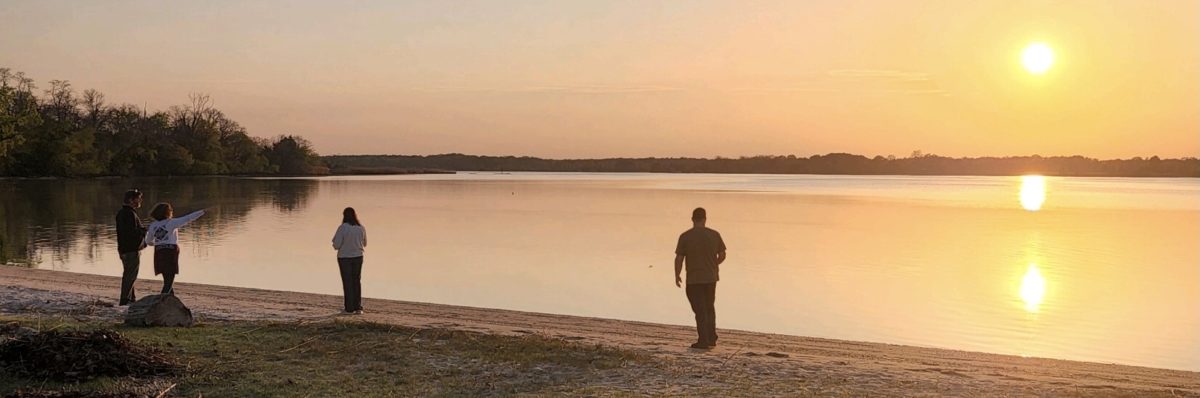
Fall is a time of change, a time of incredible colors, crisp air, clear skies, and fire-pit warmth. My bones know when fall hits. It’s also always been a time of renewal, energy, and new beginnings.
This year, fall is the beginning of year two of seminary through Iona Eastern Shore for seven of us aspirants and postulants. Our studies this year are focused on the history of the Christianity (what happened between the Acts of the Apostles and today) and heavily on homiletics–preaching. I’m especially appreciating lectures, essays, and books by Tom Long, who makes me think that preaching is something that can be taught, even to those of us to whom it doesn’t come naturally.
To borrow a few aspirational sentences from Long’s book “The Witness of Preaching”–
“To have our own lives, our own work, our own words, our own struggles and fears gathered up in some way into that event (preaching) is an occasion of rich and joyful grace… To be a preacher is to be a midwife of the word… we do not establish the time of its arriving; we cannot eliminate the labor pains that surround it; but we serve with gratitude at its coming and exclaim with joy at its birth.”
And:
“Faithful preaching requires such gifts as sensitivity to human need, a discerning eye for the connections between faith and life, an ear attuned to hearing the voice of Scripture, compassion, a growing personal faith, and the courage to tell the truth.”
I have such a long way to go, but I am inspired and encouraged and am becoming a student of the art and event of preaching.
I’ve also been helped along the way this fall by a discernment group who have gathered multiple times to help me discern, distill, and clarify my calling as part of the canonical process toward ordination. The way is each and every step and I am grateful beyond words for the questions, love, and encouragement from these friends.
Romans has given me a particular focus and opportunity for the fall/winter. In the same way that I wrote each week about our small group study of John O’Donohue’s book “Anam Cara,” I’ll be writing about Romans–thoughts from different scholars, snippets from our group discussions, and I am hoping to do some video segments and interviews with folks talking Romans.
I think for many church-goers, Paul’s Letter to the Romans is something experienced piecemeal, here and there, in lectionary readings. People know it’s a big deal, but they never take the time to read it and reckon with it. And that’s understandable–it’s daunting! But it’s also beautiful and potentially transformative. I love this thought by Rev. Jay Sidebotham, in “Conversations with Scripture: Romans,” when he says:
“The expression of trust in God’s grace, a theme of the Letter to the Romans, has the power to change individual lives. It also has the power to change communities, which is why it matters that we enter into this conversation. Such a conversation does not mean that we will like or understand everything in the letter… In the spirit of conversation, a word that suggests companionship on the journey, we hope that faithful attention to this ancient letter may open the door for new insights into the expansiveness of the grace of God.”
Romans has a history of changing lives and communities. Would that our studies might increase our trust in God’s grace.
To Live Prayerfully
Last weekend, Fr. Bill Ortt preached on Luke 18:1-8, the Parable of the Widow and the Unjust Judge. The text starts out by saying, “Jesus told his disciples a parable about their need to pray always and not to lose hope.” This is advice you give people who are going through tough times; people who might reach a point in their lives and their faith where they want to give up.
If we are going to be people for God, who is love, and so people for love, we need to lean in, not give up. We need to live prayerfully. Prayer is not simply asking for things–prayer is our connection to God. Prayer requires listening as much, if not more than talking.
That’s part of the reason why we use Rowan Williams’ book “Being Christian” in our newcomer class. It ends with prayer. And Williams describes three things that are essential for prayer:
First, and most importantly, prayer is God’s work in us… It is the opening of our minds and hearts to the Father…
Second, there is the deep connection… between praying and living justly in the world… Prayer is the life of Jesus coming alive in you, so it is hardly surprising if it is absolutely bound up with a certain way of being human which is about reconciliation, mercy, and freely extending the welcome and the love of God to others.
Third, prayer from our point of view is about fidelity, faithfulness, sticking to it… Just stay there and if in doubt say, ‘O God, make speed to save me.’ Prayer is your promise and pledge to be there for the God who is there for you.
To live a prayerful life is to open our hearts, minds, and lives to God. It’s about praying and living in a way that shows reconciliation, mercy, welcome, and love. And it’s about sticking with it.
It’s a lot to take in. It’s a lot to try. We won’t always get it right. We will stumble and fall. And none of us can do it alone. But with God’s help, and with each other, we can get back up, try again, and keep forward on the way.
I come back to the Thomas Merton Prayer regularly. We prayed it together at the first meeting of our discernment group. And it feels like a good time to offer it here:
Lead in: I am in my second year in seminary through the Iona Eastern Shore program, which allows our cohort to continue working while we are in seminary. October 8-9 was a preaching weekend for me at Christ Church Easton. This is the text of the sermon I gave.
Churches/denominations that use the Revised Common Lectionary have prescribed readings for each day and Gospel readings for each Sunday. So we don’t get to pick what Gospel we preach on.
The Gospel reading for October 9 was Luke 17:11-19, where Jesus heals 10 men with a skin disease and only one, a foreigner, comes back in praise and gratitude.
“Faith and Gratitude”
In today’s Gospel, Jesus is on the road to Jerusalem. Over the past few weeks, we have seen him talking to and teaching his disciples. But today there is a bit of shift.
He’s approached by 10 lepers. What do we know about lepers during this time?
They kept distant from non-lepers.
They formed their own colonies.
They positioned themselves near trafficways so that they could make appeals for charity.
To be let back into society they had to be checked out by a priest, in a kind of certification process.
Leprosy was estrangement from both God and other people. It had a stigma.
When writing his novel, “The Name of the Rose,” Umberto Eco put it like this: “In saying ‘lepers’ we would understand ‘outcast, poor, simple, excluded, uprooted from the countryside, humiliated in the city.’”
They were the fringe of the fringe.
The lepers are keeping their distance and following protocol and they call out to Jesus. And he SEES them. Seeing is important here.
He tells them to go and show themselves to the priests, which is how they would be able to get back into everyday life, to no longer be outcast or untouchable.
And “as they went,” they were made clean. Their healing was connected to their obedience—they did what Jesus told them to do.
One of the lepers, a foreigner, a Samaritan, SAW that he was healed, and his response was to turn back, praise God with a loud voice, and to lie on the ground in front of Jesus and thank him.
It’s notable that the leper doesn’t just thank Jesus as some great healer on the street, he knows the healing has come from God and he praises God before he thanks Jesus.
Jesus SAW the lepers and the one Samaritan leper saw that God had healed him through Jesus. And he was grateful.
We see a lot of healing stories in the Gospels, but in this case, the story Luke tells is less about the healing and more about the response of the one leper.
The three questions Jesus then asks are not really addressed to the grateful Samaritan but they underscore the point of the story:
Were not 10 made clean?
Where are they?
Were none of them found to return and give praise except this foreigner?
Why the Foreigner?
This is not a knock on the nine who did what they were instructed. They followed orders. They were healed. We don’t know what happened to them after—they may have gone on to spread their own stories and good news for the rest of their lives.
But the foreigner, the stranger was different. Why is that? What was it that made him turn around while the others went on their way?
I like a thought that Fred Craddock shared in his book, “Interpretations: A Bible Commentary for Teaching and Preaching—Luke.” In thinking through the stranger in our time, he said:
“It is often the stranger in the church who sings heartily the hymns we have long left to the choir, who expresses gratitude for blessings we had not noticed, who listens attentively to the sermon we think we have already heard, who gets excited about our old Bible, and who becomes actively involved in acts of service to which we send small donations. Must it always be so?”
Fred Craddock
I wonder, do I get complacent? Do we sometimes go about our business doing what was asked of us, but not stopping to give thanks and praise for both remarkable and everyday things that bring us joy? Or those things that connect us to God and to each other?
Reading Scripture: WWJD?
Studying Scripture has so many layers to it, any of which can give us pause, can make us think, can stop us and meet us where we are.
We need to understand the context in which something was written; we need to think about the audience the writer, in this case Luke, was writing for; and we have both God’s Word in the Bible and any number of great commentaries that have been written to help us understand it.
And then we also want to figure out the relevance of something for our lives. What do we do with what we read? Why does it matter? What is the “so what?” of ten lepers getting healed more than 2,000 years ago? Why should we care?
Fr. Bill Ortt often says to think about Scripture as a prism, where you can turn it around to see different facets of it. And if we do that in this story, we’ve got the grateful leper, we’ve got the other nine who were healed, and we’ve got Jesus. We may have a tendency not to put ourselves in Jesus’s place in the story, because, well, he’s Jesus and we’re not.
But these stories are shared for us to learn from. For us to ponder, to take in. And who is the main character in the New Testament who we want to learn about? Jesus.
And why? Maybe to be more like him. What’s the bumper sticker—what’s the saying that is used over and over again: WHAT WOULD JESUS DO?
And how do you know, how can you consider what Jesus would do if you don’t read Scripture to get to know him better?
So in this story, what does Jesus do?
Seeing and Doing
First, Jesus sees the lepers who call out to him. Really sees them and what their problem is. And what he sees is human beings, not lepers. Luke illustrates this point over and over again in his Gospel:
When we meet the demoniac at Gerasene, Luke calls him, “a man from the city who had demons.”
Here, Luke doesn’t say 10 lepers, he says, “10 men with a skin disease.”
In writing his Gospel, Luke doesn’t define people by their afflictions, by their diseases, by what’s wrong with them. Because Jesus doesn’t define people that way. Jesus sees our humanity. And he sees the humanity of these 10 men.
And what does he do once he sees? He acts, he steps in to help, to heal.
If we want to model our lives after Jesus, where does that leave us?
We need to see. Do we take the time to see what is going on around us? We can look nationally and globally—the devastating damage in Florida from Hurricane Ian; the ongoing war in Ukraine; insert your news of struggle and suffering going on in the world.
We can also look closer to home: our family, our friends, our neighbors, and people in our community. We’ve got a lot of people barely holding on around us. Do we see them?
Then, what do we do when we see them? Do we reach out? Do we pray for people? Do we come alongside them when we can and walk with someone who is having a hard time.
Do we do…what we see Jesus doing time and time again in Scripture, and especially in Luke’s Gospel, and in today’s story? See, help, heal.
What do we see?
Do we see the needs, the struggles of others?
And what do we do?
Let’s take some pressure off of ourselves for a minute. Living like Jesus is certainly the goal, but wow, is that tough. Sometimes getting out of bed in the morning and getting through the day without telling someone off seems more attainable.
Gratitude
Let’s look more closely at the Samaritan who was healed and who came back. Let’s walk in his footsteps.
Back to seeing: what does the Samaritan see? He sees that he has been healed. He recognizes that God was at work. And he praises, he humbles himself, and he gives thanks.
We can do that, right? There are times when being grateful is everything. That’s a big part of my story and what has me standing here in front of you.
I caught up with a childhood friend who I haven’t seen in decades. We grew up playing little league baseball together in Oxford and he went on to fly F-16s in the Air Force for 20 years. We had lunch last week and what we both wanted to talk about was faith and spiritual awakenings. And he asked what prompted this calling in me.
My one-word answer was, and is, gratitude.
A little more than seven years ago my younger daughter had a bad seizure caused by brain swelling. She was visiting family outside Pittsburgh and she had to be intubated and flown by helicopter to Children’s Hospital, where she was in pediatric intensive care for 10 days and in the hospital for the next month.
Faith wasn’t a big part of my life then, but as I sat with her in the hospital, as I listened to doctors, as we tried to figure out what was next, people continually reached out to say they were praying and ask how they could help.
And what I could feel, could palpably feel, was a community of prayers changing me. I wouldn’t say I started out where the Grinch was, but my heart grew in significant ways that I am still trying to wrap my head around. And I felt a peace and calm in the midst of so much worry.
When we came home, I was full of capital “G” Gratitude. I didn’t necessarily know where to put it or what to do with it, but a friend invited me to church. That sounded like a good start. And that was the first step on a path that led here, and with gratitude every day it is a walk that is still going.
I saw healing. I felt a change, a kind of healing in me. And giving praise and thanks is my response.
Salvation
Let’s turn our attention back to the grateful leper. Jesus says to him, “Your faith has made you well.” Fred Craddock who I quoted earlier points out that the verb that was used for “made well” is the same word that is often translated, “to be saved.”
Jesus healed 10 people, but only one, the one who came back and was grateful, received something much bigger than physical healing. His faith, as expressed by his gratitude, saved him.
Alan Culpepper in “The New Interpreter’s Bible,” looks at this and says that the story challenges us to regard gratitude as an expression of faith.
That resonates with me. Gratitude feels like a way to express our faith.
Culpepper says further: “If gratitude reveals humility of spirit and a sensitivity to the grace of God in one’s life, then is there any better measure of faith than wonder and thankfulness before what one perceives as unmerited expressions of love and kindness from God and from others?”
Living with a Grateful Heart
What does gratitude look like in our lives? What do we do when we have a grateful heart?
I have one more quick example. When I started working here at Christ Church they gave me the office at the top of the stairs in the Rectory. I end up talking to just about everyone who comes up and down the steps—which aren’t the easiest steps to navigate.
Well, a few times a week, Bruce Richards would come up the steps and go into the bathroom, and when he came out he would stop in and share this amazing smile, and energy, and joy and gratitude.
It turns out at the time that all the Stephen Ministry books, brochures and pins were kept in the bathroom closet, and he would go in to stock up on whatever he needed.
So I had a running joke with Bruce that he had a Clark Kent/Superman phone booth in the bathroom and he would come out as a superhero for pastoral care. Except it wasn’t a joke at all. That’s who Bruce was.
As the years went on, Bruce was slower getting up and down the steps, but his joy, his smile, and his gratitude didn’t change.
We commended Bruce to God on Saturday and I have so many pictures of him on my heart. Bruce carried printed out prayers in his wallet and in his calendar and he sometimes gave me one if he thought I looked like I needed it, or he would tell me to pass it on to someone who did.
Bruce came with us to give Communion to a parishioner in Oxford who had fallen and couldn’t make it to church for a while. For us, it was a special visit, but Bruce did this all the time, in nursing homes, people’s houses, you name it.
And I have a picture of Bruce coming to his door on his 80th birthday, during the height of the pandemic, when a group of us went to sing happy birthday to him with Brenda Wood playing the accordion.
Bruce was a grateful heart personified. He showed us what it looked like to live with gratitude and for him it looked like caring for others, so much so, that he helped begin a new ministry at the church, specifically to care for people going through tough times… by listening to them, praying with them, and walking beside them. And Bruce’s work of 18 years here continues today with all the Stephen Ministers, the care givers and care receivers, who are grateful and helping us create a church community of compassion.
Bruce saw people hurting. He acted, he did something about it, using gifts that he didn’t know he had, always giving thanks with gratitude.
I wish we didn’t have to lose people like Bruce, people in our lives who show us what it is to live with a grateful heart—people we are grateful for. But it makes me even more thankful for the time that we had together and the example he still is for all of us. What a gift to know people like that and to be able to continue their work in love.
Alan Culpepper has a thought here that I’d like to close with, which gets us to the heart of today’s Gospel:
“Faith, like gratitude, is our response to the grace of God as we have experienced it. For those who have become aware of God’s grace, all of life is infused with a sense of gratitude, and each encounter becomes an opportunity to see and respond in the spirit of the grateful leper.”
I think about the movie “Shawshank Redemption” a good bit. In one of the most quotable conversations of the film, Andy Dufresne (Tim Robbins) says to Red (Morgan Freeman):
“It comes down to a simple choice, really. Get busy living or get busy dying.”
And that might be the simplest breakdown, though likely too simple, of the last section of John O’Donohue’s “Anam Cara.” The section is called, “Death: The Horizon is the Well.”
Death has a lot to do with life. In our lives, negativity and fear exile us from our own love and warmth, O’Donohue says, and to live life fully we need to transfigure or transform the negativity and fear “by turning it toward the light of your soul.”
“Eventually what you call the negative side of yourself can become the greatest force for renewal, creativity, and growth within you.”
O’Donohue says that part of transforming this negativity and fear happens by us letting go of it.
“Mystics have always recognized that to come deeper into the divine presence within, you need to practice detachment. When you begin to let go, it is amazing how enriched your life becomes. False things, which you have desperately held on to, move away very quickly from you. Then what is real, what you love deeply, and what really belongs to you comes deeper into you.”
Like the subject of aging, which was the previous section in “Anam Cara,” we don’t like to think or talk about death. It is an absolute fact of life, but it’s not a place we are comfortable going in conversation. We see death as separate from life, an ending, a horizon that we head towards. O’Donohue points out that it doesn’t really work that way. He quotes Hans Georg Gadamer, who says:
“A horizon is something toward which we journey, but it is also something that journeys along with us.”
Death is something that is always with us, not just at the end. And there are ways that we can get to know it.
“The meeting with your own death in the daily forms of failure, pathos, negativity, fear, or destructiveness are actually opportunities to transfigure your ego. These are invitations to move out of that productive, controlling way of being toward an art of being that allows openness and hospitality.”
What we go through in life can help us live more deeply. When we risk something and fail or fall and learn and get back up and move on, we can learn to release our fear and anxiety about it. This is also true of death.
“When you learn to let go of things, a greater generosity, openness, and breath comes into your life. Imagine this letting go multiplied a thousand times at the moment of your death. That release can bring you to a completely new divine belonging.”
Our life and our faith can help us to see death as a release into a completely new divine belonging. We can see examples of the natural life cycle, birth, life, death, rebirth–in the landscape, in nature, and all around us.
In our lives, we can see and feel and know that love goes on beyond death, love is bigger.
If we see death as going into nothingness, O’Donohue points out that “nothingness is the sister of possibility.” There needs to be space, nothingness, in order to create. In the creation story in Genesis, out of a formless void, God uses light and creates space for things to happen.
“Nothingness is the sister of possibility. It makes an urgent space for that which is new, surprising, and unexpected… This is a call from your soul, awakening your life to new possibilities. It is also a sign that your soul longs to transfigure the nothingness of your death into the fullness of a life eternal, which no death can ever touch… Death is not the end; it is a rebirth.”
This is all heady stuff. We are dealing with something we have no first-hand experience of, it is not something we can know. But it’s something we come to know in terms of losing people we love. During the six weeks that our study was together, we had multiple people lose dear and close family members as well as bringing in home hospice care to care for a parent. Death is ever present and devastating when it claims those we love.
Some folks in our group found this chapter helpful, some felt it was a subject that was too close to process. The thing about a study like this, or a Bible study, or any small group of people who you meet with and are close to–I think Ram Dass put it beautifully in saying, “We are all walking each other home.” We need to be there for each other in the tender and tough times of loss and pain.
We get a chance to be there for one another. But as for those who have died, O’Donohue says, why grieve them?
“We do not need to grieve for the dead. Why should we grieve for them? They are now in a place where there is no more shadow, darkness, loneliness, isolation, or pain. They are home. They are with God from whom they came. They have returned to the nest of their identity within the great circle of God. God is the greatest circle of all, the largest embrace in the universe, which holds visible and invisible, temporal, and eternal, as one.”
There is the good stuff. Those who have passed have gone home. They are contained in the circle of God. They have moved from our temporal world into the eternal.
And then O’Donohue does something cool. He talks about how he sees eternal time:
“In eternal time all is now; time is presence. I believe that is what eternal life means: it is a life where all that we seek–goodness, unity, beauty, truth, and love–are no longer distant from us but are now completely present with us.”
Completely present. Complete presence. There is something wonderful, whole, and beautiful to that. In the deepest sense, that is home.
What do we do with all that? How should that inform our lives? Well, if death is a release, a homecoming, a rebirth, then it isn’t something to be feared or ignored. Being at peace with what happens at the end of our lives, we should focus on how we live our lives.
We should transfigure the small deaths–the failures, the fears, the setbacks–and try to grow in presence with others in love, grace, hospitality. We should look for and try to experience eternal presence in our temporal lives (we go back to chronos and kairos again).
O’Donohue reminds us:
“It is a strange and magical fact to be here, walking around in a body, to have a whole world within you and a world at your fingertips outside you. It is an immense privilege, and it is incredible that humans manage to forget the miracle of being here.”
If I think back to Shawshank Redemption, and “get busy living or get busy dying,” I can think of living as taking advantage of the miracle of being here. And I can think of get busy dying is forgetting that privilege, of allowing fear and negativity to control how we live, which would be not living to the fullest.
So Andy Dufresne may still be on to something.
We closed our last class this past Monday with part of a prayer from “A New Zealand Prayer Book,” in their Daily Devotions, excerpting from the Monday prayer. Since it is Monday as I write, we will close here with it as well:
From “A New Zealand Prayer Book”
From Monday Evening
There is nothing in death or life, in the realm of spirits or superhuman powers, in the world as it is or the world as it shall be, in the forces of the universe, in heights or depths – nothing in all creation which can separate us from the love of God which is in Jesus Christ our Lord.
Love never comes to an end.
Holy One, holy and eternal, awesome, exciting and delightful in your holiness; make us pure in heart to see you; make us merciful to receive your kindness, and to share our love with all your human family; then will your name be hallowed on earth as in heaven.
Support us, Lord, all the day long, until the shadows lengthen, and the evening comes, the busy world is hushed, the fever of life is over, and our work done; then Lord, in your mercy, give us safe lodging, a holy rest and peace at the last.
John O’Donohue’s book, “Anam Cara,” begins: “It is strange to be here. The mystery never leaves you.”
And that’s maybe as true a statement as we will ever encounter. Take our consciousness, the fact that we are thinking, feeling beings inhabiting bodies, add science, add faith, add civilization, observations–when you sit and think about it, it is strange to be here. There is no way around it.
At Christ Church Easton, we’ve just begun a six-week study of “Anam Cara.” Rev. Susie Leight and I and 20+ curious and daring friends embarked this week on the first section of the book, “The Mystery of Friendship,” and a power-packed prologue to help set the tone.
O’Donohue was a poet, theologian, philosopher, and former Catholic Priest. When I read about him and his life, I am jealous, thinking–that’s it, that’s how I want to live my life. His way of bringing together Celtic spirituality and Christianity infuses life and sacredness into everything we encounter–God, each other, Creation and the landscape we are a part of–in ways that mainstream western Christianity could do well to remember and to look more closely at. Which is part of what we are doing.
“Anam Cara” is a Gaelic expression translatable as “soul friend.” And O’Donohue lets us know that what he hopes to do with his book is to explore friendship in a “lyrical-speculative” form. His writing is a meandering, meditative way through beauty, friendship, the senses, that can leave me stunned and spinning at times.
It is strange to be here. And given that, friendship, reaching out to an other, another person, is maybe the only sensible thing to do, to find other people to walk through life with.
O’Donohue says that:
“Human presence is a creative and turbulent sacrament, a visible sign of invisible grace. Nowhere is there such intimate and frightening access to the mysterium. Friendship is the sweet grace that liberates us to approach, recognize, and inhabit this adventure.”
Thinking of friendship as a grace, as sacramental, puts us in an open frame of mind. In this strange, lonely world putting ourselves out there, finding friendships with other people, is a courageous and necessary act.
As he wanders through the first section of the book, O’Donohue focuses on light.
“Light is the secret presence of the divine. It keeps life awake. Light is a nurturing presence, which calls forth warmth and color in nature. The soul awakens and lives in light. It helps us to glimpse the sacred depths within us. Once human beings began to search for a meaning to life, light became one of the most powerful metaphors to express the eternity and depth of life.”
This week, reflecting on some of our “Anam Cara” reading, Susie used some of O’Donohue’s thoughts on light and darkness in her own musings. She writes:
“Inspired by JOD’s words, I decided to wake up just before dawn a few mornings a week, to watch “how the darkness breaks” and observe how “light can coax the dark” while pondering & praying the question, “I wonder what this will be?”
Many changes are on the horizon (all very good & exciting, but there is anxiety too) & so rather than placing all sorts of expectations around what is next (which is my tendency) I have decided to sit, watch and listen, trying to separate the artificial from the real, what is of God and the Spirit, of the world or my own. the question seems large enough to hold what is and what may be… ‘just as darkness brings rest and release, so the dawn brings awakening and renewal. In our mediocrity and distraction, we forget each day that we are privileged to live in a wondrous universe. Each day, the dawn unveils the mystery of this universe…’
sometimes my camera does stuff without me trying, thought this was a cool shot. more to come.”
That is wonderful. When we read something challenging, we should let it challenge us, inspire us, help us think. If it doesn’t seep into our everyday lives, our hopes, our dreams, our friendships, then why are we studying it together and discussing it?
In “Anam Cara” we are talking about friendship, we are talking about light, and we are talking about love. Anytime we are talking about God, we should be talking about love. God is love, and love is what unites us in friendship. O’Donohue writes:
“Love is the nature of the soul. When we love and allow ourselves to be loved, we begin more and more to inhabit the kingdom of the eternal. Fear changes into courage, emptiness becomes plenitude, and distance becomes intimate.”
Love is what brings us together, what unites us. And coming together as friends to discuss, to be opened up by, a book about the nature of and need for friendship stands out as significant, in and of itself.
O’Donohue closes the section on “The Mystery of Friendship” with a friendship blessing, which is beautiful, profound, and inspiring. I read it out loud to close our first class. I would encourage you to read it out loud as you read it, and I hope that its words and sentiments bless you today and every day. The photo after it is one of Rev. Susie at her ordination to the deaconate earlier this year, along with our dear friend, the deacon Rev. Barbara Coleman. Soul friends in action.
“A Friendship Blessing” By John O’Donohue
May you be blessed with good friends. May you learn to be a good friend to yourself. May you be able to journey to that place in your soul where there is great love, warmth, feeling, and forgiveness. May this change you. May it transfigure that which is negative, distant, or cold in you. May you be brought in to the real passion, kinship, and affinity of belonging. May you treasure your friends. May you be good to them and may you be there for them; may they bring you all the blessings, challenges, truth, and light that you need for your journey. May you never be isolated. May you always be in the gentle nest of belonging with your anam cara.
Eastern Bluebirds are flying in front of and behind me as I skate onto the Oxford Conservation Park loop. I’ve had their shade of blue and orange in my head since I first saw a bluebird years ago and they still quicken my heart.
It is a Saturday with nothing on the morning calendar and temperatures looking to move into the mid-90s. This early though, there is a breeze and it’s perfect sitting outside weather.
Books frequently open my mind and expand my worldview. The path I am walking (or skating) I owe in part to a Trappist monk named Thomas Merton. Recently I’ve encountered another Trappist monk Thomas, Thomas Keating.
“Grace is a participation in the Divine nature, it’s not just something added on like an overcoat. It’s a radical transformation of the whole of human nature so that it can be a divine human being, meaning it can exercise freedom, compassion, love…”
Fr. Thomas Keating
From reading his books to watching the documentary, “A Rising Tide of Silence,” Keating and a former student of his, an Episcopal priest named Cynthia Bourgeault, have pointed me to the practice of centering prayer. I’ve made this type of silent prayer part of my mornings for the past month or so, and I hope to keep it in my daily routine.
This morning, I want to go outside, to make this time under my sitting tree. After my bluebird greeting, I have a deer run across the cemetery loop about 10 feet in front of me.
I’m traveling light, just a notebook, pen, and binoculars, and I sit on my skateboard on the shoreline looking out onto the cove.
For centering prayer, they recommend picking a word that can bring you back to the moment, Bourgeault describes the word as being like windshield wipers to wipe away the thoughts that always jump in the way for attention. The word I have been using is “rest.” In Matthew’s Gospel, Jesus says, “Come to me, all you who are weary and burdened, and I will give you rest.” (Matthew 11:28). Psalm 37:7 says “Rest in the Lord,” which can also be translated as “Be still in the Lord,” meaning be at peace. I find that to be the right approach and mindset for me.
Sitting by the water, I breathe and close my eyes. A breeze is across my skin and in my ears like a conversation and listening, there is a constant concert of songbird voices. I can hear a fish jump in front of me to the left, and I open my eyes to see the rings it left–a cardinal flies low over the water, like it’s his cue to go on. The ascending sun reflects off the water to the right.
I am new to centering prayer, but even with my limited experience, I find that when I let my passing thoughts go, it gives me an opportunity to be closer to God. Keating’s quote that grace is for us a chance to participate in the work God is doing in the world and the love He has for us and for creation. And I can feel that this morning. And sitting alongside a cemetery, where my grandparents, family, and friends are buried, remembering and feeling them, I feel re-connected over and through time, like we are all sharing these remarkable moments.
Keating writes:
“When the presence of God emerges from our inmost being into our faculties, whether we walk down the street or drink a cup of soup, divine life is pouring into the world.”
For most of my life, this kind of quiet prayer time, these morning moments and experiences have been solo endeavors, an introvert’s delight. And I still need plenty of those. But I also find that I can be around people and still be at peace; I can even delight in what other people are doing. Like Keating says, walking down the street, or having a cup of coffee (too early for soup), I want to take those moments with me into the world, to be a part of that divine life pouring into the world . And I am not ready for the next phase of the day to start, so I head to the Oxford Park.
I stop through Oxford Social, the cafe right next to the park, for the first time. A birding friend from my Oxford Community Center days gets in line and we talk birds a bit, and about Third Haven Quaker Meeting House, and about seminary. I walk down to a bench by the river and sit with coffee, the view, conversations off to my right, kids playing on the swings to my left, and a young boy running with his dog.
I pick up John O’Donohue‘s book “Anam Cara,” a favorite book, which Rev. Susie Leight and I will be leading a book study of starting in July, and I come across this:
“Love is absolutely vital for a human life. For love alone can awaken what is divine with in you. In love, you grow and come to your self. When you learn to love and to let yourself be loved, you come home to the hearth of your own spirit… Love begins with paying attention to others, with an act of gracious self-forgetting. This is the condition in which we grow.”
John O’Donohue, “Anam Cara”
And it’s this openness, this paying attention to others, this self-forgetting, letting go of ourselves, letting go of myself, where I seem to be spending a lot of my time of late. O’Donohue continues:
“Once the soul awakens, the search begins and you can never go back. From then on, you inflamed with a special longing that will never again let you linger in the lowlands of complacency and partial fulfillment. The eternal makes you urgent.”
Maybe this has been a slow build over the last 50 years. Maybe all those different moments I can look back on and feel sitting here now, have all been hints and flickers, breadcrumbs or candles of encouragement. And each epiphany adds to a longing, pushes further into the search. Maybe with the state of the world, the worry, the suffering, the confusion, the time is coming that we need to look at differently and help others do the same; we need to live differently and help others do the same.
Maybe when we have moments of sitting quietly and emptying ourselves out, what’s there that we connect to, is Love (God is Love). And what could be more important to share with each other?
“Sometime in the early life of the world, something happened to shatter the light of the universe into countless pieces. They lodged as sparks inside every part of creation. The highest human calling is to look for this original light from where we sit, to point to it and gather it up and in so doing to repair the world.”
That’s how Krista Tippett tells the Jewish legend behind the idea of “Tikkun Olam,” or “repair the world.”
Tippett goes on to talk about how Dr. Rachel Naomi Remen sees this legend not as just some far off fantasy, but as hopeful and empowering: “It insists that each one of us, flawed and inadequate as we may feel, has exactly what’s needed to help repair the part of the world that we can see and touch.”
Living in a clearly broken world, as clearly broken people and individuals, what is more hopeful than realizing that despite the darkness around us, that there are sparks of light lodged everywhere. And that we can find those sparks, help point others towards them, and gather the light to help diminish the darkness.
This week we looked at Tippett’s calling to “Expose Virtue,” which is a wonderful way to think about the ability and power of conversation, journalism, communication–to show the goodness in the world, one story, one life, one conversation at a time.
Tippett talks about kindness:
“Kindness–an everyday by-product of all the great virtues–is at once the simplest and most weighty discipline human beings can practice. But it is the stuff of moments. It cannot be captured in declarative sentences or conveyed by factual account. It can only be found by looking at ordinary, unsung, endlessly redemptive experience.”
Krista Tippett
Kindness can’t be abstract. It has to be seen, practiced, experienced in the world. It’s not a stretch to connect kindness with repairing the world–it is one of the most needed tools at our disposal.
Tippett talks about “ubuntu,” an African word that points to humanity. “It says, I am through you and you are through me. To the extent that I am estranged from another person, I am less than human.” We can look at this as connected to Jesus telling us to love our neighbors as our selves and/or the Buddhist way of thinking about interdependence.
Something that becomes clear to Tippett as she talks to people is that any notion of kindness, of ubuntu, only start to mean something through telling stories.
“Stories of children changed by adults who care, of groups of colleagues making a difference in a particular corporate culture; of role models and teachers and friendships that altered perspectives and lives. Human relationship–which begins with seeing an “other” as human–is the context in which virtue happens, the context in which character is formed.”
“Speaking of Faith,” as a book is filled with these stories. “On Being,” Tippett’s radio show and podcast is all about sharing these conversations, telling these stories.
Studying the book as a group has made me want to seek out, listen to, and tell the stories that are around me. Our community, and every community is full of people, stories, and kindness, if we shine the light on them. Four Sisters Kabob and Curry and their generosity is a recent one that comes to mind.
But it also makes me want to be a part of more stories, connected to more moments and experiences. Like not missing the opportunity to come together to socially-distanced serenade, with accordion, one of the kindest, most giving, light shiners I have ever encountered, for his 80th birthday.
Tippett talks about a “clear-eyed faith” that–
“asks me to confront my failings and the world’s horrors. It also demands that I search, within all wreckage, for the seeds of creativity, wisdom, and strength. It frees me to see the contours of virtue come alive in the world–of ‘thick’ religion, grounded and refined in practice and thought, text and tradition, and responding in differentiated ways to human reality.”
Despite our failings, we have a chance. Despite my failings, I have a chance.
Especially when it is so easy to be overwhelmed by darkness, our highest calling is to look for light where we sit, where we live, where we work, and share it with others. And in so doing, repair the world.
There’s a good chance that a whole lot of people are feeling stuck at the moment. Stuck at home, stuck in a rut, stuck in the time warp of several weeks known collectively as blursday.
And this won’t do. We are far too busy, we have too much to do to be sitting at home. We believe Tom Cochrane when he tells us, “Life is a highway, I want to drive it all night long.”
Of course, if you are like Holly, Michael, and Daryl from “The Office,” or me, or a lot of people, you realize how old that song gets, how old that way of thinking gets, and how easy it is to get “stuck” and restless with that approach to life.
I say this frequently, but Merton has been one of the most influential thinkers in my faith walk; he not only speaks to my soul, he often speaks my soul, and sends me into wonder and awe and connection and helps me find my own words for my own journey.
In the film, Merton talks about the metaphor of the journey.
“Going off where God leads you… We’re all on a journey, we’re all going somewhere… The geographic pilgrimage is the symbolic acting out of an inner journey. Every moment and every event of every person’s life on earth plants something in their soul.”
Thomas Merton
In the photo, Merton and company have pulled over. They are out of the car. I think that’s significant. Journeys aren’t always about traveling physical distance; you run the risk of missing what’s going on around you.
Pilgrimage is one of my favorite words. It has been since the first time I heard it–it imprinted on me in a deep way, like it was already waiting in me, just to be woken up, and it may end up as part of a tattoo. Pilgrimage is equal parts an interior word as it is exterior/geographic.
There was a great deal of care and thought given to the house where I live by people who lived here before me. There is a winding path of stepping stones from the back deck, around the yard, to what has become my writing shed/sanctuary. The stones sit above the puddles when rain collects in the yard and it also makes a meditative, mindful, intentional walk in any weather. There are days when I try to make each stone a prayer. Among the stepping stones, there are two with pottery, stones, sea glass, rocks and found objects incorporated into them.
“Living is the constant adjustment of thought to life and life to thought in such a way that we are always growing, always experiencing new things in the old and old things in the new. Thus life is always new.”
Thomas Merton, “Thoughts in Solitude”
If I think about it, a walk across the yard can be a symbolic pilgrimage. It can take me somewhere new, even while taking me to the same place each day.
If I take each step as a prayer…
“God utters me like a word, containing a partial thought of himself. Let me seek then the gift of silence and poverty and solitude, where everything I touch is turned into prayer. Where the sky is my prayer; the birds are my prayer; the wind in the trees is my prayer. For God is all, in all.” (Merton, Emergence video)
At the door to the shed is the second art-dazzled stone. It puts creativity right at the doorstep. The kind of journey, the kind of art we need right now, maybe the kind we always need is the kind that connects us. It’s the art where we can see another and be seen by another, in the truest sense. And it’s a journey into and from our own solitude that shows us how we are connected.
Into our solitude…
“What can we gain by sailing to the moon, if we’re not able to cross the abyss that separates us from ourselves? This is the most important of all voyages of discovery and without it all the rest are not only useless but disastrous.” (Merton, Emergence)
And back out…
“Our task now is to learn that if we can voyage to the ends of the earth, and there find ourselves in the stranger who most differs from ourselves, we will have made a fruitful pilgrimage. This is why pilgrimage is necessary, in some shape or other. Mere sitting at home and meditating on the Divine presence is not enough for our time. We have to come to the end of a long journey and see that the stranger we meet there is none other than ourselves.” (Merton, Emergence)
Pilgrimage, really faith is about transformation. It’s both about finding ourselves, which we have to do first, and then seeing ourselves in others and them in us.
Whether we are at home or when we can get back out into the world, we are on the same journey. And if we want to get the most out of it, we are going to have to get out of the car. We’ll want to meet the strangers. And meet ourselves. Maybe we will come out of this pilgrimage at home finding ourselves more connected than when we started.
We all bring something to the table. And what each person brings is necessarily different from what anyone else brings. And if you subscribe to the notion of life taking a village, a community, part of what makes everything work is each of us adding our own gifts.
This week in our Lent small group, we read Matthew 25 in N.T. Wright’s “Lent for Everyone,” which includes the parable of the talents. In the story Jesus tells, the master goes on a journey and leaves a sum of money (talents) with three different slaves. He gives the first slave five talents, the slave turns it into 10; he gives the second two talents, he turns it into four. The master is pleased and rewards them. The last slave is given one talent, is scared, buries the talent, and just gives it back to the master when he gets back. The master is not happy and wants him thrown out into the dark where bad stuff goes down.
The things about parables, about stories, if they aren’t memorable, they aren’t worth much. Some of them are harsh, and each of the stories Jesus tells are meant to get a message across. Whereas a talent in the story is currency or money, it is a word that works for us in our time as well: talking about our own talents.
Wright breaks it down for us in his commentary after the reading:
“…each of us has been put here with a particular purpose and calling, which only we can do. Our task is to find out what that is and to do it. That remains true whether the purpose is playing the trumpet, cooking meals, planting trees, performing heart transplants, or even preaching sermons. Sometimes, of course, it’s a struggle to discover what our calling is.”
N.T. Wright
We could stand to listen to Jesus, and to Wright, during this time of pandemic with COVID-19 calling for so many different responses from all of us. Some of the shining talents that have come to light at Christ Church Easton during this time, are the musical and video editing skills of members of the church’s music ministers, bands, and choirs. “Hold Us Together,” “Stand in Your Love / Chain Breaker,” and “Be Still My Soul,” have each become Facebook phenomena going far beyond anything the church has recorded or media that it has created. The comments about the hope and connection people are feeling from them have had hearts overflowing all over. I still have a hard time getting through any one of the videos without breaking down.
None of this happens if contemporary music minister Ray Remesch doesn’t step up and say he can direct, record, and edit videos; if Alive @ 5 music minister Bruce Strazza isn’t using his technical expertise, above and beyond his musical talent, to make sure the staff and the band have the systems and equipment they need to work remotely; if the musicians and singers don’t make the time to bring their skills to the table; and Tracy Kollinger doesn’t research and figure out the best ways to upload and stream live videos. We’ve had different staff and volunteers who have stepped up and into different hats in both subtle and profound ways.
Obviously these aren’t front-line jobs. The talents of doctors, first responders, school systems and community volunteers working to make sure kids and families are fed; grocery store and restaurant workers coming up with new ways to stay open and feed people; there are so many people offering and stretching their talents in so many ways, that it is nothing short of remarkable. People are stepping up with the gifts they have been given and are increasing their talents, not burying them.
There are also those of us that are waiting, maybe unsure what gifts we bring to the table, and unsure about the timing and way we might use them. In his commentary on the parable of the talents, Wright has some thoughts:
“…each of us is called to exercise the primary, underlying gifts of living as a wise, loving human being, celebrating God’s love, forgiving, praying, seeking justice, acting prudently and courageously, waiting patiently for God’s will to be done.”
Wright
In this case, God’s will has nothing to do with the pandemic virus sweeping the world, but everything to do with how God’s people are called to respond. It’s up to us, to use the talents God has given us to give back to the community, our neighbors, and thereby the world.
It could be praying; it could be reaching out to a friend or family member; it could be supporting local businesses who are going through an unprecedented time; it could be feeding people; it could be staying home and being available when ready; it could be giving hope and humor and peace to someone who needs it.
What’s asked of us is not to bury our talents, but to be open, to increase them, and to share them. There is hope there.
Sometimes it’s there, just below the surface. My mind is distracted, looking for the familiar, but knowing it won’t come from there. It’s something new.
A beautiful morning, or evening, outside, smelling cut grass, swooning in the start of spring. It seems like normal. But go to grab groceries and it hits: it’s eerie. Off. Something is not right. You can feel it.
We are all called to respond in our own ways. To stay home, yes, but also called to look differently, think differently, maybe to live and be differently. I’ve been trying to get my head around it.
Before COVID-19 arrived, Fr. Bill Ortt put out a Lenten challenge at Christ Church Easton: 1) Find a word that speaks to you; 2) choose a Bible verse that uses your word; 3) Memorize your verse and pray, meditate, reflect on your word/verse as a Lenten mantra of sorts; 4) Write your word on one of the small, wooden crosses the church gives out. And if you are inspired to, take a picture and share your cross-verse.
There have been some wholly wonderful responses. “Heal,” “light,” “love,” “pray,” “faith”–it’s been inspiring to see and read how people came to their word (or their word came to them) and what they are doing with the experience.
My word wasn’t there at first. Or it was, but I wasn’t listening.
As a church, when it was clear that we weren’t going to be gathering together for a time, we had to figure out what that meant; what it looked like; how to stay relevant, be there for people; how to continue to shine a light; how to connect; how to help people be hopeful. We had to do things differently.
We had to create something new. Or at least new to us. We moved our meetings, small groups, and prayer gatherings to ZOOM. Worship services (what would worship look like now?) to Facebook Live. And our music ministries became video artists–I stop every time I hear/watch “Hold Us Together,”“Stand in Your Love / Chain Breaker,” or “Be Still My Soul.” These are videos that have been viewed tens of thousands of times now on Facebook and shared widely. They strike a chord, they speak to hope and faith and love and connection. They weren’t a priority before social distancing, until they became one of the key ways to communicate. This is a time that is teaching us how to create, how to be differently, how to look at what’s important. And it’s not about adapting to a temporary predicament–it’s about moving toward, embracing something new.
I am fascinated by stories. As a writer, I read them, listen to them, think about them, and hope to share and tell them in new and interesting ways. But with between work, two teenage daughters, life, it’s not always easy to make time to write.
As I sat, prayed, reflected, my word, both professionally and personally was there all along: CREATE. And when I started looking through Bible verses, Isaiah practically smacked me upside the head:
“For I am about to create new heavens and a new earth; the former things shall not be remembered or come to mind.”
Isaiah, 65:17
In this time, our time, maybe we are called to look at our lives with an eye towards creating better lives.
Maybe we are called to look at our personal and collective stories, and tell new ones.
If our world is necessarily knocked off its axis, perhaps we can look at how to get it spinning around love, kindness, community, sustainability, and creativity.
If I stay home, simply waiting, doing things as I’ve always done them, and at the other end of this pandemic, just shrug, and go back to business as usual, what have I learned or gained from the experience?
This isn’t meant to be some Pollyanna motivational speech. I know my shortcomings. I know I will be lazy, I will fall short, I will miss opportunities. I try to own my humanity, my flaws, and my mistakes. But the idea behind a word, a mantra, a verse to think, pray, reflect on, is what I set my eyes to–what I aim towards, what I strive for. And in the face of a global virus the world is responding to in ways that none of us have seen in our lifetimes, it is a legitimate time to look at our lives and think about where and how we are and where we want to be.
Each spring, I go back to Walt Whitman’s “Leaves of Grass.” It’s become a way to enter the season of rebirth, of resurrection. And this year I am hit especially by his “O ME! O LIFE!” in the same space and way that Robin Williams quoted it in Dead Poets Society.
We are here. We exist. It didn’t have to be, but it is. And in life’s powerful play, we may contribute a verse. That is what we create. But it’s up to us.
I want to wake up open to what it is God is creating in the world and creating in me.
“Create in my a clean heart, O God, and put a new and right spirit within me. Do not cast me away from your presence, and do not take your holy spirit from me. Restore to me the joy of your salvation, and sustain in me a willing spirit.”
We build community by coming together to share meaningful experiences. It’s the same with friendships–it’s by spending time together, doing things we love, or helping each other, creating memories and shared stories together is how we grow closer.
Having church be a part of all those things is still fairly new to me, just a few years old. Over the years, I’ve formed friendships and stories through running and trail running, writing and reading, skateboarding, paddleboarding; through kids and mutual friends; through hiking, and sometimes through coffee houses, book stores, or bars. And of course through work, which is where we spend most of our time.
I’m fortunate and grateful that work and church get to be the same thing for me right now. And that has led to building some wonderful friendships through small groups, Bible studies, and worshiping together. Our stories overlap and intertwine in trying to deepen our connection to God and to each other; in trying to get a better understanding of Scripture; in trying to continue our spiritual journeys collectively and in community (we recently read N.T. Wright telling us, “there is no such thing a solitary Christian”). I especially dig that groups that meet at a church don’t look or act like you might have in your head. There is deep laughter and relevance in Bible studies, groups that have gone kayaking and paddleboarding, and hiking and bonfires at retreats. And there is frequently food.
An afternoon hike and high wire act during an Alpha Retreat in Buckeystown, Md.
Gathering intentionally each week is a great first step. For church, that time is for worship, which is a time to recharge our spiritual batteries; to get inspired; to pray with and for each other; to be lifted up by incredible music; to be united in body and spirit by sharing communion. And then we are sent out “to do the work (God) has given us to do.” Though for so many of us, that is wrapped up in running errands, getting or keeping things straight at home or with our families, doing our jobs.
It’s hard to make time to be intentional about our spiritual lives or formation. What would it look like if we did? And how would we do it. I am biased, but I’ve found small groups–whether at church, a running or hiking group, a workout group, a writing group, a book club, a group of friends–to be such a key way to make things happen. And Lent is a perfect time to start. Make Lent a time for renewal; a time for clearing out habits that aren’t serving us. And a time to begin some practices to enhance our sense of community, our spiritual friendships, and our relationship with God.
A small group from an Alpha Retreat at Camp Arrowhead in Rehoboth Beach, Delaware.
The Alpha Course has been a community-changing and relationship-building program at the church. It is a program designed for people who aren’t sure what they think of church or Christianity, but it can also enliven those who are farther along in their faith walk. Alpha asks questions, including, “Is there more to life than this?” and provides groups to have discussion without judgment or preaching to get a sense of what people think. And Alpha is known for feeding people, so dinner is included as well. We will be starting Alpha on Saturday, February 29 (that’s not a typo, it’s leap year!) after our Alive @ 5 service. Alpha is a free program. There will be a weekend retreat in the spring, which has a cost, which the church can help with if need be. There are a number of people at Christ Church and around the world who will tell you to “Try Alpha” if you can. You can sign up here.
For anyone who is curious about Bible study, or who would like a daily devotional practice during Lent, Christ Church will be offering “Lent for Everyone, Matthew Year A,”where scholar and former bishop N.T. Wright leads us through Matthew’s Gospel from Ash Wednesday to the week after Easter. The group will meet once a week on Wednesday evenings at 6:30 pm (beginning March 4) to discuss the week’s readings. This is a great way to get a feel for the Gospel of Matthew. It is uncanny how relevant it is to our daily lives. Two years ago, we offered the Mark year version of this study, and almost everyone in those classes has gone on to further and deeper Bible study and become a part of groups that meet almost year-long.
“Walk in Love” is a series of talks that focus on listening, compassion and empathy, and walking with someone who is grieving.
The “Walk in Love” Series has been in the works for some time now at the church and folks are excited for how it might help us each to walk in love with each other, through listening, empathy, and being with those who are grieving. It’s a three evening event that will take place on Thursdays of March 19th, 26th, and April 2nd at 6:00pm in the church’s Parish Hall. All three presentations speak to our call to give humbly of ourselves to those we love and those who need our loving compassion, by bringing greater awareness to how we listen, love, and walk with courage with our family, friends, and neighbors. You can come to all three sessions, or whichever ones you can make. The series is free.
Life is tough to do alone. Faith might be even harder, with how easy it is to get distracted or knocked off our paths. Thankfully, there are ways for us to connect, to each other, and to God. Spiritual friendships, small groups, and community, created by time together, by shared meaningful experiences and practices can help us form bonds, memories, and stories to keep us going.