Living the Gospel: vulnerable, dependent, together

Background: Last weekend was a preaching weekend for me at Christ Church Easton. The Gospel reading for the lectionary was Luke 10:1-11, 16-20, where Jesus sends 70 followers out ahead of him to towns and place he will go, with specific instructions as to how they are to interact with people. Following is the transcript of my sermon.

“Living the Gospel: vulnerable, dependent, together”

In last week’s reading, we saw Jesus set his face toward Jerusalem and send people ahead to get things ready for him. The disciples were not well received when they got to a village of Samaritans. This made John and James furious and they wanted to send fire from heaven to consume the Samaritans. Not a very neighborly thing to do.

Jesus rebuked them; he told James and John, this is not how we do things and he gave a series of teachings about how the disciples needed to set their priorities if they were going to follow him.

Last week’s reading was a bit of precursor to this reading, as now Jesus gets 70 people together, he’s not just talking to the 12. And now he’s giving specific instructions to this larger group as he sends them out ahead of him to the towns and places he is going.

No more of this raining down fire from heaven, here’s what I want you all to do:

First of all, “the harvest is plentiful, but the laborers are few.” So we need laborers. What a great place to start. It’s out there, there is abundance—this work you are doing is needed. Given the reception in the last village, that might not be a foregone conclusion to some of Jesus’s disciples, but he sees abundance where others might see scarcity.

“Go on your way. See, I am sending you out like lambs into the midst of wolves. Carry no purse, no bag, no sandals; and greet no one on the road.”

Whenever I hear “sending you out like lambs into the midst of wolves,” I am waiting for that qualifying line, “so be as wise as serpents, but as innocent as doves.” But that’s from Matthew’s Gospel, we don’t get that spelled out in Luke. The disciples just go out like lambs.

Jesus is sending these 70 followers out into a hostile world that may not receive them well, and instead of arming them for battle, he points out their vulnerability. Not only will we not call down fire from heaven, you all are going out like lambs. No purse, or bag, or sandals.

Sending them out as lambs, he is sending them intentionally vulnerable, vulnerable by design. Why would he do that?

If you Google vulnerability today, it’s a guarantee that you will find a slew of quotes from social worker and storyteller Brene Brown. And here is a quote of hers from a book study we did that speaks to what Jesus may have had in mind:

“Vulnerability is the birthplace of love, belonging, joy, courage, empathy, and creativity. It is the source of hope, empathy, accountability, and authenticity. If we want greater clarity in our purpose or deeper and more meaningful spiritual lives, vulnerability is the path.” (Brene Brown, “Daring Greatly”)

Alright, Jesus. We’re getting vulnerable. Now what?

Go to their homes. Offer them peace. If they share in the peace you offer, it will rest on that person, if not it comes back to you. You are going to depend on the people in that house, eating and drinking whatever they give you.

Whenever you enter a town and they welcome you, eat what they give you, cure the sick and tell them the kingdom of God has come near to you.

If a town doesn’t welcome you, it’s the same message, the kingdom of God has come near.

One of the things that strikes me about this reading, Jesus isn’t teaching them theology, he isn’t giving them Scripture 101, he is instructing them in how to interact with people. How to go about their work, dependent on those in the towns and places the disciples are sent to.

In thinking about this, Franciscan Richard Rohr writes:

“All of Jesus’ rules of ministry here, his ‘tips for the road,’ are very interpersonal. They are based on putting people in touch with people. Person-to-person is the way the gospel was originally communicated. Person-in-love-with-person, person-respecting-person, person-forgiving-person, person-touching-person, person-crying-with-person, person-hugging-person: that’s where the Spirit is so beautifully present.” (Richard Rohr, “The Good News According to Luke”)

In fact, Rohr goes so far as to say, “The gospel happens between two or more people.”

Fr. Richard Rohr and Brene Brown

Now, this is something to kick around a bit. Say I am sitting at home in the morning, having my coffee and prayer time, reading my Bible or doing a devotional, and I have a Holy Spirit moment. I feel touched by God; my heart is on fire; I see the interconnectedness of all people; I see how God’s love flows back and forth between us all; I am sure in my heart that I am a child of God.

Then I cut the grass. And I go to the grocery store. And I go about my business. And that realization I had in the morning has no apparent impact on my life. It doesn’t translate into how I love, how I treat other people, how I live.

Have I been true to the realization? If all I do is go to church services and read my Bible, and listen to sermons and music: has love, has grace transformed my life?

Here is one of Rohr’s most impactful thoughts for me. He says:

“The most a preacher does is entice you, attract you, and call you out of yourself to live a new kind of life. But the gospel cannot happen in your head alone. You never think yourself into a new way of living. You invariably “live” yourself into a new way of thinking.”

You don’t THINK yourself into a new way of LIVING. You LIVE yourself into a new way of THINKING.

I wonder if that’s what Jesus has in mind sending his disciples out: that you are going to learn and experience things on the road that I can’t simply teach you here, no matter how brilliant and deep the parable is.

You’ve got to get out there and take this peace, this good news, to others. That’s where the gospel is, that’s where love is, in our interactions with people. That’s where Jesus, that’s where Scripture, and that’s where the Holy Spirit sends us. Out.

When we open ourselves to this interpersonal gospel, this gospel that happens between two or more people, that’s where lasting transformation can happen. I know we are in an era of self-love, and self-love is hugely important—we get ourselves into trouble if we try to love our neighbor as ourselves, but we loathe ourselves, rather than love ourselves. Love yourself for sure.

But love ultimately calls us outside ourselves. Love is bigger than us. And if love is the most powerful force in the world… if God is love and we belong to God… it’s living out this love and experiencing what happens when it is shared and multiplied, that then changes our lives, and the world, in meaningful ways.

Jesus gives his 70 disciples his “tips for the road” and sends them out. And they come back filled with joy saying, Jesus! You were right! In your name even the demons submit to us!”

And Jesus says, “Right??” I’ve seen all this happen and I’ve given you this authority and it will keep you safe.

“Nevertheless, do not rejoice at this, that the spirits submit to you, but rejoice that your names are written in heaven.”

How do we make sense of that? David Lose, writing in “Feasting on the Word” says:

“Jesus declares there is something even more significant than the triumph of the 70… what matters more than the earthly and spiritual successes of Jesus’ followers is the eternal relationship with God they enjoy through him. This relationship is theirs by grace, for they are simultaneously recipients of, and heralds to, the grace and mercy of God embodied in Jesus.”

Jesus knew they were going to have success in the towns and places he sent them. He wanted them to experience that and that was exactly what they needed. And it’s exactly what we need from time to time.

But not all days are going to be like that and not all our encounters with people are going to be infused with love and leave us feeling love. What’s more important than the success of our ministries or our evangelism, is our relationship with God, which we experience through Jesus.

This relationship is theirs, and ours, by grace. And I love this: we are simultaneously RECIPIENTS OF, and HERALDS TO the grace and mercy of God embodied in Jesus.

Let’s go back to our morning coffee revelation, the one we experience by ourselves. There we have the realization: we are the recipients of God’s grace and love. Let’s think of it as light in a frequently dark world.

If we keep that light to ourselves, it doesn’t do much to spread the light that the world needs to get out of the darkness. So we take that light and we become heralds TO it, this grace and love that we are shown in Jesus.

Jesus sends the 70 disciples, and us, out with this light. He sends us out to others, in humility and vulnerability, asking us to be dependent on him and on those who we encounter.

But don’t lose focus. There will be great days. There will be crappy days. There will be in-between days. And sometimes all three in one day.

We can’t control those things. What we can do is rejoice and be grateful for our relationship with God. That we get to do this work, that we get to experience and share this light, this grace; that God is with us, and that this good news, this gospel of love that we share, is exactly what the world needs right now.

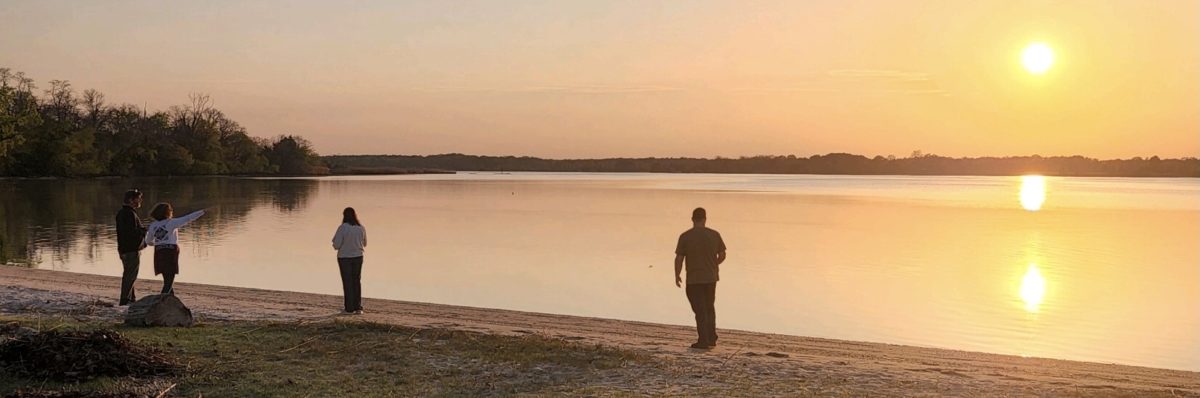
The 2025 Christ Church Easton/Diocese of Easton Mission Team in Wilmington, NC.

Let’s pray: Lord, you give us stories in Scripture for our learning, so that we can find you and find ourselves in them. Help us hear what your story is saying to each of our hearts. Let us locate where you are calling us, and how to amend our lives by your love and grace, so we can get there. And help us receive, experience, and share your gospel, your good news, in the world, with each other.

Amen.

What will we remember?

Remember. Never forget. And we shouldn’t. How could we? But what do we remember? What will we remember?

Those who lost their lives. Yes. Always. Those who responded, went straight into harm’s way to help others? Yes. Always. The fact that we were attacked on our own soil in a way that my generation and younger had never known, or maybe didn’t even think was possible? Absolutely. September 11, 2001, is for us what Pearl Harbor was for my grandparents.

But what else? A friend, Ted Daly, wrote this on September 11, 2013:

“Never forget, and here is what I would like everyone to remember:
Remember the two weeks following the attacks, when we were suddenly so nice to one another? We met and greeted our neighbors, we let drivers in front of us, we offered help to those in need, no matter how large or small the effort required…then, once the third week began, we were right back to the same old same old. Was it so hard, or the effort so unbearable? We could inspire each other to these same acts every day. What kind of world would that be?”

I hope we can remember that. Remember that in the face of tragedy and horror, we helped each other. That we cared about each other. That we didn’t call each other stupid because we didn’t hold the same political beliefs; that we could disagree and be kind; we could disagree and still support one another. I hope we can remember that, because even in the middle of heartfelt and right as rain remembering the lost and the responders, and the horror of that day, it certainly seems like we have forgotten how to help those people, our neighbors and our friends, who don’t agree with us.

NASA posted this picture of the smoke plumes in New York City, visible from space that day.

Station Commander Frank Culbertson, looking down from space, wrote this:

“It’s horrible to see smoke pouring from wounds in your own country from such a fantastic vantage point. The dichotomy of being on a spacecraft dedicated to improving life on the earth and watching life being destroyed by such willful, terrible acts is jolting to the psyche, no matter who you are.”

We may never get to see the earth from that perspective, but we can all hear and feel his words.

Never forget, from our own lives since 9/11. After. On September 11, 2011, I was working in DC, for the Coast Guard. I walked onto Ft. McNair and had lunch on the river bank. And I wrote this:

Sandburg and I sit on the river bank, eating lunch, talking about Chicago and how people are. On the other shore, two helicopters take off, bank over the river and fly directly overhead. These are the same helicopters that carried a different President to St. Michaels when I worked there and got to see him speak.

Then, like now, was after. After we looked at machines flying over cities differently. After flying machines were flown into buildings and the President we saw in St. Michaels got interrupted talking to school children; children that could have been my daughters, but weren’t. Children who wished they were in that school because it would have meant they were far away from New York and didn’t lose their parents.

That day, before, I was in Easton. I didn’t work in Washington, like now, after.

Now, I sit with Sandburg on the river bank of the Anacostia, watching planes landing and taking off at Reagan National. Watching Presidential Helicopters flying overhead.

Sandburg’s Chicago didn’t have planes flying into buildings. It wasn’t something he thought about. But our girls, and their children, will learn it as part of their history classes. It’s part of their story, part of our story, now, after. 

Now it’s 17 years after. We say we will never forget. We say we will remember. And we will. There is no doubt. But what will we remember? What will we do about it? And how will it change our lives?

Just Get Living

“Just Keep Livin,” was a notion from David Wooderson, Matthew McConaughey’s character from the movie “Dazed and Confused.” The motto struck McConaughey so much that he named his foundation after it. I have dug it as a way of going about life–you struggle, you fall down, if you are lucky enough to get back up, just keep livin. You have great moments, you celebrate, you drink it in, just keep livin. What else can you do?

But what if you get to a point in life, you come to a crossroads, you have an awakening of some sort, and you look at life differently? What if you wake up to a revelation you can’t go back from? You are compelled to do something. You have to act.

Our destiny is to live out what we think, because unless we live what we know, we do not even know it. It is only by making our knowledge part of ourselves, through action, that we enter into the reality that is signified by our concepts. – Thomas Merton, “Thoughts in Solitude”

You can know something all you want, right down into your very being, but unless you act on it, act in accordance with it, unless it means enough to live it, what do you really have?

Thought and life, thought and action, need to be aligned. They need to have each other’s back, to prove one another. It can be a feedback loop:

Living is the constant adjustment of thought to life and life to thought in such a way that we are always growing, always experiencing new things in the old and old things in the new. – Merton

2016-oct-cove-sunrise

I would venture to say, if you live in an area where you grew up, and you love life, you are tapping into something like experiencing new things in the old and old in the new. Coming at something familiar with fresh eyes is huge for me.

Let’s get back to action. We are a society whose actions don’t line up with our words. We see it in churches, politics, sports, schools, you name it. We are all guilty of it to some extent. But we can do something about it in our own lives.

I’ve been pretty good at thinking elevated thoughts, finding and mining great experiences outside, or as a father;  having moments, minor epiphanies that leave me reeling; riding that stoke, maybe writing it down, on to the next. Surely they are moments to be savored, to carry with us, to seek out.

Then I come to a place in life, where things look different. Things feel different. Life the way it was falls apart, shakes to pieces. And a new life is opened up–opened up and connected, or uncovered to be part of something bigger. Like I’ve been given the gift of a new way of seeing and being. If I do nothing with that, if I put it on a shelf to come back to later, or I just keep living the same way, and sit on it, then what do I know differently? What have I done with the gift?

The spiritual life if first of all a life. It is not merely something to be known and studied, it is to be lived. – Merton

When you know things to be different than they were, it is no longer okay to just keep living. It’s more a matter to just get living.

There’s a funny thing about an awakening where God is concerned. That kind of awakening is not a matter of: go to church, be good, color inside the lines and everything will be okay. Anybody can do that and churches are full of people who like that safe approach to spirituality: follow the rules, keep your arms and legs inside the car at all times. It’s comfortable, reassuring.

Look back at the lives that the early prophets lived, the life that Jesus lived, the lives the disciples lived. Did they play it safe? Not so much.

The prophets, too, were a wild bunch. They had to be because they were the spokespeople of a wild God, a God who didn’t care much about temples and offerings but who cared a lot about the way people were treated and the opening of the human heart. – Richard Rohr, “From Wild Man to Wise Man”

In my mind, any kind of spiritual life is not about playing it safe, but following, being led by the spirit, or more specifically, the Holy Spirit working through us. The opening of the human heart. And that can be some scary stuff. But it’s when and where the adventure begins. It’s where it gets good. It’s open eyes, new eyes, wide eyes, looking down a path, taking it all in, and walking it to see where it goes.

2016-oct-harper-wye

Hold on, what’s different? I’ve walked paths, walked and run trails for years? What’s new? The difference is a new understanding: it’s not about me, or my walk specifically. I’m not just randomly picking paths. I’m trying to go where I am led, called, and trust it, trust God. I’m not setting out down a path I would have chosen or thought about prior to now. I’m trying to act on thoughts that I don’t exactly know how they came to me.

Wisdom is God Himself, living in us, revealing Himself to us only in so far as we live it. – Merton

I’m trying to wise up. And just get living.

The Head, the Hand, and the Heart

I don’t know much about John Ruskin. But maybe he knew something about living. Ruskin said:

Fine art is that in which the hand, the head, and the heart of man go together.

I’m not so much worried about fine art as about living fully, deeply, integrated, connected to God. And I’ve been thinking about when you get two of three of those things–the head, the hand, and the heart.

In church we’ve been talking about the head (beliefs) and the hand (actions) going together. If you believe something, truly believe it and hold it to be important, then your actions should show it. That seems wholly true to me. If your actions don’t show your beliefs, what good are your beliefs? But there seems to be something missing. I think it’s the heart.

If you put the head and the heart together, you get a band. One I’ve been listening to a bit lately.

the-head-and-the-heart

Their song, “Lost in My Mind” gets stuck in mine. It’s a great song. Getting lost in my mind is an easy tendency.  “Oh my brother, your wisdom is older than me.” There is a notion in the song I dig:

How’s that bricklayin’ comin?

How’s that engine runnin?

Is that bridge getting built?

Are your hand getting filled?

Won’t you tell me, my brother?

Cause there’s stars

up above

We can start

moving forward

It’s that notion of work versus dreams. You are working, making a living, but are you filling your heart, your soul, with the good stuff? The wonders of the Universe. The deeper aspects of life that we miss entirely if we don’t pay attention: raising kids; watching a sunrise on the beach with someone you love; playing an instrument; staring at the stars; writing a book; whatever it is that fills your heart.

But if you have just your head and your heart, you are missing your hand: you are holding your dreams, but not acting on them. Not trying to build them.

It’s not easy to yoke those three things together and drive them forward. For me, thinking and dreaming come easy. It’s building that takes work and effort. And attention.

At 44 years old, I’m not one to let go of dreams. As a father, I’m not about to wildly chase a dream that doesn’t help, include, or provide for my girls. A conundrum? Maybe.

Sooner or later, if we’re lucky, we come to learn a pretty big lesson: it’s not all about me. Though I try to shape them, use them, and do the best I can with them, I didn’t make or create my head, my heart, or my hands. I have to admit there are bigger things, bigger hands, hearts, and minds at work than mine. And if I want to put mine out there and try to make something of them, it requires a couple things: faith and risk.

I get a daily e-mail to contemplate every morning from Richard Rohr, Franciscan priest, Christian mystic, founder of the Center for Contemplation and Action. This morning’s musings came together like this:

This is probably why Jesus praised faith and trust even more than love. It takes a foundational trust to fall or to fail–and not to fall apart. Faith alone holds you while you stand waiting and hoping and trusting. Then, and only then, will deeper love happen. It’s no surprise at all that in English (and, I am told, in other languages as well) we speak of “falling” in love. I think falling is the only way to get to authentic love. None would go freely, if we knew ahead of time what love is going to ask of us. Very human faith lays the necessary foundation for the ongoing discovery of love. Have no doubt though: great love is always a discovery, a revelation, a wonderful surprise, a falling into “something” much bigger and deeper that is literally beyond us and larger than us.

We need our heads–our thoughts and our beliefs. We need our hands–our actions. And we need our heart–love, passion. And love is something that goes beyond us, is bigger than us, involves a letting go, a surrender; involves faith; involves God.

I’ve still got more questions than I’ll ever have answers. But I like to think about living life the way Ruskin describes fine art. And I like to think of giving my head, hand, heart, over to faith, to love, to God, and trying to build dreams, to build life, with a little Help.

2016 Hammock Swing


* The photo at the top came from Living Outdoor. It represents something of a dream for me–living and writing outside in the woods, in a simple cabin.