
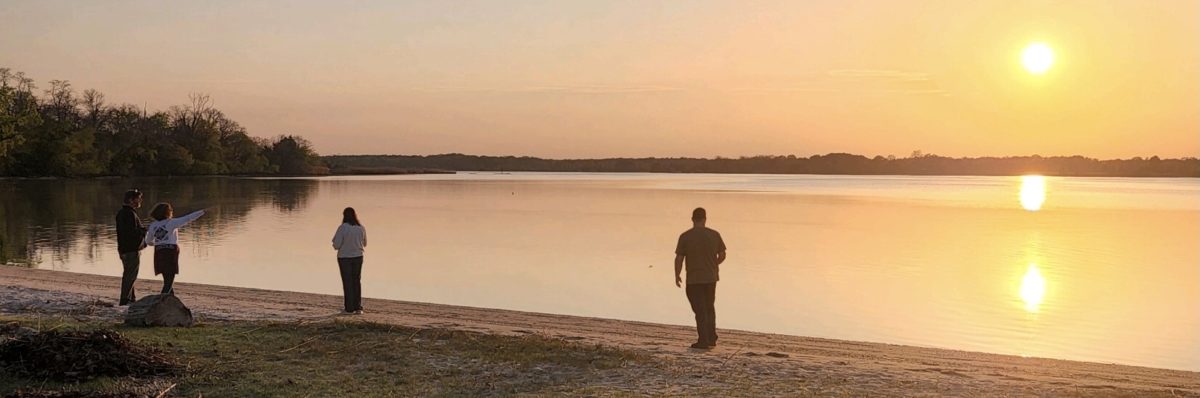

Jesus walked. A lot. Walking, praying, eating with friends, hanging with the unruly–these are some of the things he spent the most time doing. The pace and intentionality of Jesus’ life are among his key examples for us.
Barbara Brown Taylor, in her book “An Altar in the World,” talks about Jesus’ walking practice:
“Sometimes he had a destination and sometimes he didn’t. For many who followed him around, he was the destination. Whether he was going somewhere or nowhere at all, going with him was the point. Food tasted better at the pace he set. Stories lasted longer. Talk went deeper. While many of his present-day admirers pay close attention to what he said and did, they pay less attention to the pace at which he did it. Jesus was a walker, not a rider. He took his sweet time.”
[Aside: it makes it really hard to stomach when some bonehead says if Jesus lived today, he’d have a private jet to go around the world. You might want to go back and review the Sermon on the Mount, or say, anything he said in the Gospels…]

When I think about my best days, there is some part of each of them that have been spent walking, exploring, hiking, doing something at a slower, intentional pace, even if it’s around the yard. We’re in a hurry often enough, taking time to walk, to slow down, seems essential.
I like any chance I can get to drop some wisdom from Gary Snyder. In “Practice of the Wild,” he links walking with adventure and humility:
“Walking is the great adventure, the first meditation, a practice of heartiness and soul primary to humankind. Walking is the exact balance between spirit and humility.”

I think that’s part of it, the slow pace of walking and the vastness of the planet, it is humbling and beautiful at the same time. It puts us in our bodies and lets our souls breathe.
If you’ve been around Oxford for any period of time, you’ve likely come across Bruce Mills. When I was growing up, Bruce lived down the street from us, and spent a lot of time in the park, playing electric guitar, spreading out black and white photographs he had taken and developed, laughing and philosophizing, later on doing Tai Chi. For the better part of a few decades, Bruce rides his bike from Trappe to Oxford to paint houses. The times that he’s had a car, he felt like he missed out.
“When I get into a car, I turn the key and I’m there,” he once said. “When I ride my bike, I can breathe, I can smell the earth, I can get my thoughts together, I take my time.”
I like so much about that. I think Jesus might have a bike if he lived bodily in today’s world. But it wouldn’t be a fancy, upscale bike, and I can’t see him decked out in spandex with a GPS and figuring out his pace and heart rate. Personally, I think Jesus would have a beach cruiser, letting go of the hurry, and smiling in the breeze.


 y mind to see my life reflected in a 6-mile paddle–for memories and mistakes, for joy and love and dreams, for connection to place and to You and Your creation. Thank you for not giving up on me when I was distant from you. Thank you for ears to hear your voice.


 “…the process of personal transformation at the center of the Christian life: to be born again involves death and resurrection. It means dying to an old way of being and being born into a new way of being, dying to an old identity and being born into a new identity–a way of being and an identity centered in the sacred, in spirit, in Christ, in God.”
 Who knows what adventures year number 46 holds? I’ve learned I don’t know much. But I’m trying to get better as I go on about listening to my life and to hearing God speak. I am trying to use life up to this point, scars and all, to invite transformation and embrace new life ahead, centered in the sacred, centered in Christ, centered in God.
 Wright goes on:


