Delusions of Knowledge

When I look up at the stars, my response is wonder. When I watch a hummingbird hovering in the yard, I am fascinated. In neither case is my first instinct to analyze, label, figure things out.

Likewise, when I think about God, it isn’t to solve the Mystery, but to dwell in the Mystery, sit with it, let it wash over me. Not to try to pull it apart.

The mystery of creation is like the darkness of night–it is great. Delusions of knowledge are like the fog of the morning. – Rabindranath Tagore

Tagore is a writer who I have recently been drawn to more and more. He was the first non-European writer to win the Nobel Prize for Literature, in 1913. His “Stray Birds” are several, rapid fire blasts of sunlight, glimpses of illumination that cut through the shadows of unchecked rational thought. The painting at the top of the page is Tagore’s as well.

I’ve been sitting with the idea of paradox a lot lately–the notion that two things taken together are seemingly impossible, but actually true. Like when physicists say that light is made up of (behaves like) waves and particles at the same time.

Science and scripture are full of paradoxes. How can Jesus be both a Lamb and a Lion; how are the worldly poor the spiritually rich? Why do you have to let go in order to have everything? Why is surrendering the only way to victory? Jesus loved paradoxes and deep thinkers like Einstein saw them everywhere.

Why is that? One reason might be that our intellect by itself is not the right faculty to get us to the deeper truths. It would be like trying to use smell or taste to figure out the tip when you get the check from dinner–could be interesting, but ultimately not helpful.

I am never more frustrated than when I try to have all the answers; when I want to have things figured out before I move forward. I am never more at peace than when I allow myself to be in the moment, to be happy with/by/from the things and people that make me happy. And it is still hard not to want to know that I am moving in the right direction, doing the right thing, moving further up the mountain rather than backpedaling.

“One of the great constants in life is change.” That was the doctrine of Heraclitus, a Pre-Socratic Greek philosopher. A paradox and a truth. And not new information.

How we deal with change, how we deal with the mind coming up just short of what it is we want to know, those responses to life are what our lives become. There are all kinds of options: we can doubt, fear, bury our head in the sand and not give it thought, we can lose ourselves in work, we can party like it’s 1999.

I go back to a favorite Thomas Merton thought:

You do not need to know precisely what is happening, or exactly where it is all going. What you need is to recognize the possibilities and challenges offered by the present moment, and to embrace them with courage, faith, and hope.

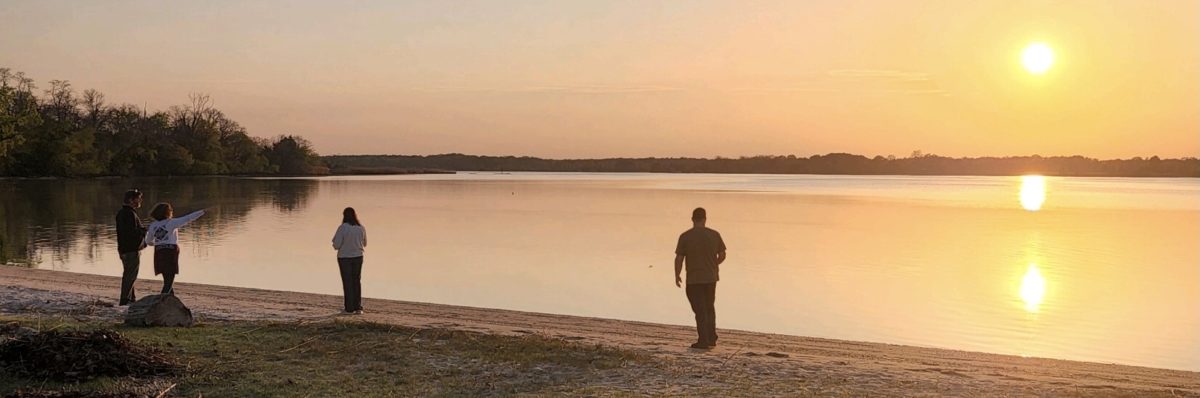
That feels right. So when I walk outside after the storm and through the boat yard to catch the last bit of sunset and see this…

2016 Sunset Owl

And I walk back to the house and hear an owl in the top of a tree and then watch he or she take off and fly with outspread wings, I smile and sit with Tagore’s words that have been in my head on a Sunday:

That I exist is a perpetual surprise which is life.


Wonder and Wildness

Jesus was not a city slicker. Sure, he hung out and preached in towns, but when it all got to be too much, or he had stuff to work out, or just needed a break, he went for wilderness. Wilderness, both literal and figurative, was his place of transformation, of discernment, of revelation.

Over the course of my reading life, anytime I have found my peeps, ancestors to whatever aesthetic, experiential, existential tribe I belong to, it’s been the folks who hit the wilderness. Whitman, Thoreau, and the American Transcendentalists; John Muir, Edward Abbey, Gary Snyder; and the British Romanticism crew. When I read Blake, Wordsworth, Coleridge, Byron and company, it almost felt like Superman ditching his tie and collared shirt. Wordsworth in particular, had come to grips and written about his soul’s need to go to nature and finding his way:

The earth is all before me: with a heart
Joyous, nor scared of its own liberty,
I look about, and should the guide I choose
Be nothing better than a wandering cloud
I cannot miss my way. I breathe again:
Trances of thought and mountings of the mind
Come fast upon me.

Wordsworth Prelude

Wordsworth’s “Prelude” is getting back to nature. The importance and role of nature in the unfolding of our souls and minds, as individuals, was a spark for the Romantics.

One of the things about wilderness, is that it can inspire us, and reconnect us to our own wildness. I could feel that the first times I went trail running. Nothing felt so freeing as running through the woods, the mountains, in tune, in touch, heart pounding and smiling from the soul.

Delaware Trail Marathon 2008

The times I feel most lost, most disconnected, are when I realize I have lost touch with that part of myself. Going outside, way outside, helps. But it’s not the only way. I have to remember to bring something from those times back with me; to ignite that spark; turn it to flame; and keep it burning through the work week; through daily life. Not to lose touch with it.

It often seems like we live in a world where we get points for being tamed. From schools, to cubicles, the better you sit still, assimilate, regurgitate, and fill out your TPS reports, the further along you are.

Yeah… no. That’s never been my path. And anytime I’ve seemed to start down it, God has seemed to redirect and remind me… wake up, look around, is this what you want? There is so much more.

There are daily reminders in town. There is a fox who lives in our neighborhood, whose gait and speed, and coat make me smile and wake me up a bit. Paddleboarding or kayaking. The sublimity of a sunrise. The power of a storm rolling in on the water. The vastness of the stars on a clear night.

At the same time we are earnest to explore and learn all things, we require that all things be mysterious and unexplorable, that land and sea be infinitely wild, unsurveyed and unfathomed by us because unfathomable. We can never have enough of nature. – Henry David Thoreau

We lose our wildness at our own risk. We lose it in as much as we are happy to be tamed. That doesn’t make me happy.

Sparking our sense of wonder. Rekindling our wildness. Every time I do those things, God seems to show me more–about life, the world, myself.

* Featured image from Space Attraction.